AI SaaS Lead Qualification Tools That Save Time & Boost
Dec 30, 2025
SaaS
AI Automation
Sales Operations
SaaS
AI Automation
Sales Operations
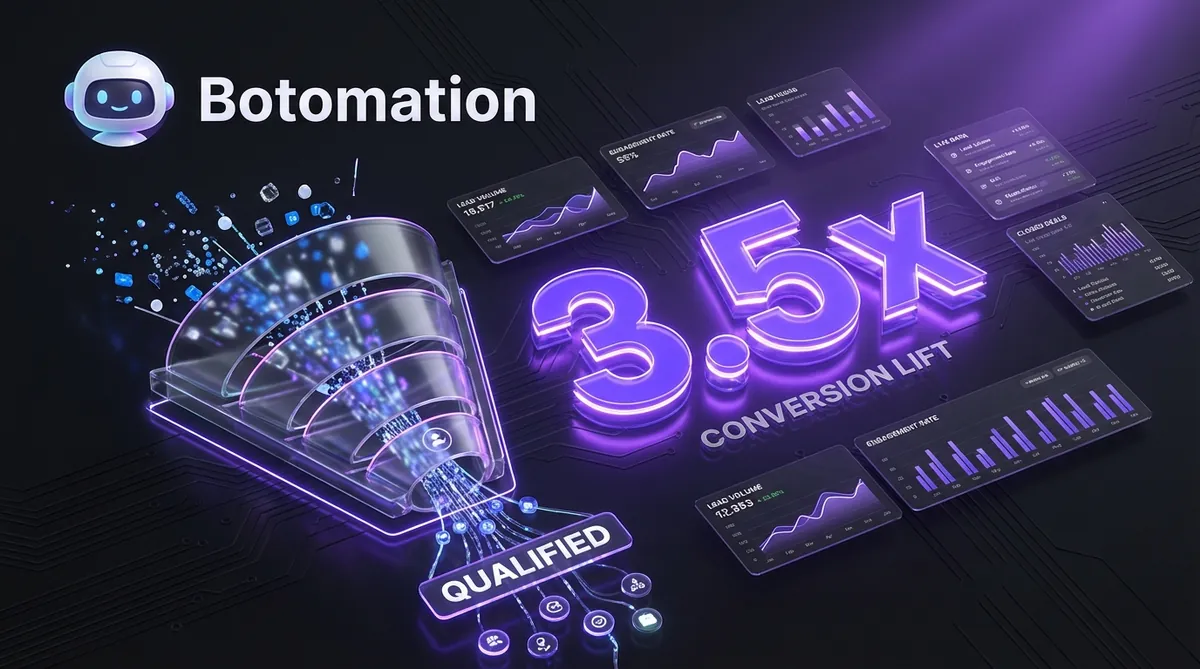
SaaS sales teams in 2026 face a paradox: they possess more data than ever before, yet actual conversion rates often remain stagnant or decline due to overwhelming volume. The "leaky bucket" syndrome has become a silent growth killer for mid-sized software companies. When sales development representatives spend the majority of their day sifting through "noise" leads—those who downloaded a whitepaper but lack intent to buy—you are essentially paying premium salaries for manual data entry and administrative filtering. This inefficiency creates a massive bottleneck, preventing high-value accounts from receiving the attention they deserve.
The shift toward automated lead qualification is no longer a luxury for early adopters; it is the baseline for survival in a saturated market. By integrating advanced machine learning models into the top of the funnel, companies are seeing a fundamental shift in how they prioritize human effort. A recent case study involving a mid-sized insurance firm illustrates this perfectly: they achieved 3.5x higher conversion rates simply by removing human bias from the initial qualification stage. Our team at Botomation has observed that when you replace "gut feeling" with algorithmic precision, the entire sales velocity accelerates.
Modern AI B2B prospecting tools that save time do more than just score a lead based on a job title. They analyze thousands of micro-signals across the web to determine if a prospect is actually in a buying window. This article explores the technical architecture of these systems, the specific tools dominating the landscape in 2026, and how partnering with an expert agency like Botomation can transform your prospecting from a manual grind into an automated revenue engine. We will break down the math, the models, and the methods that separate market leaders from those still stuck in the "Old Way" of manual prospecting.
The SaaS Lead Qualification Challenge: Why Traditional Methods Fall Short
The reality of manual lead qualification is a grim landscape of wasted hours and missed opportunities. Research consistently shows that sales professionals spend between 60% and 80% of their total working hours on prospecting and administrative tasks rather than selling. When you analyze the economics of a standard sales team, this represents a staggering loss of capital. If a senior sales rep earns a $120,000 salary but 70% of their time is spent qualifying leads that will never close, you are effectively burning over $80,000 annually on low-value activities.
Statistics from the 2024–2026 fiscal year indicate that roughly 70% of leads generated through standard marketing channels are not sales-ready at the moment of first contact. Without a sophisticated qualification layer, these leads either clutter the CRM or are ignored entirely, often resulting in lead list decay because the sales team is overwhelmed. The VTT Technical Research Center highlighted this issue in a recent report, noting that studied organizations spent an average of 1,000 hours annually just on manual verification of lead data. This is time that could have been spent on strategic account management or closing high-ticket deals.
Traditional qualification often relies on static BANT (Budget, Authority, Need, Timeline) frameworks, which are increasingly irrelevant in the complex B2B SaaS buying cycles of 2026. Buyers are more informed, and their journeys are non-linear. Relying on a human to manually check LinkedIn profiles or company news to find "hooks" is a slow, error-prone process that cannot scale. The "Old Way" of qualifying leads is a linear process in a multi-dimensional world, and it is failing to keep pace with the speed of digital commerce.
Time Wastage in Manual Qualification
Manual research is the primary culprit behind the erosion of sales productivity. A typical SDR might spend twenty minutes researching a single prospect before sending a personalized email, only to discover days later that the company just signed a long-term contract with a competitor. This data verification process—checking for recent funding, leadership changes, or technology stack updates—is a repetitive task that humans naturally perform inconsistently. When these processes are not automated, following up on low-quality prospects consumes the same energy as engaging "whale" accounts.
The lack of systematic qualification criteria further compounds this problem. Without a hard-coded algorithmic filter, one sales rep might qualify a lead based on company size, while another might qualify them based on personal rapport. This inconsistency makes it impossible for leadership to forecast revenue with accuracy. Productivity decreases as frustration mounts, leading to high turnover rates in sales departments that feel they are "panning for gold in a muddy river" without the right tools.
Quality Issues with Manual Lead Qualification
Human bias is an inescapable element of manual rating systems. We tend to favor leads from recognizable brands or those who share a common background, even if the data suggests they are a poor fit. This subjectivity leads to a "clogged" pipeline where late-stage rejection of leads becomes common. When a lead is rejected at the proposal stage because they were never qualified for technical requirements, the cost of that failure includes all the hours spent by the sales engineer and the account executive.
Manual evaluation also limits the number of data points a human can realistically consider. A person might look at five or six signals, such as job title and industry. In contrast, an AI-driven system can analyze hundreds of signals simultaneously, including technographic data, recent social media sentiment, and historical buying patterns. By ignoring these deeper layers of data, manual qualification misses subtle indicators that a lead is ready to buy, resulting in lost opportunities that competitors with better automation will inevitably capture.
AI-Powered Lead Qualification: Machine Learning Algorithms That Work for SaaS
The move toward AI-powered lead qualification is driven by the integration of sophisticated machine learning algorithms that process vast amounts of unstructured data. Unlike the simple "if-then" logic of the past, modern systems utilize automated lead scoring through Random Forest models, Logistic Regression, and Neural Networks to provide a nuanced view of lead potential. These models do not just look at who a person is; they analyze what that person and their company are doing in real-time across the digital ecosystem.
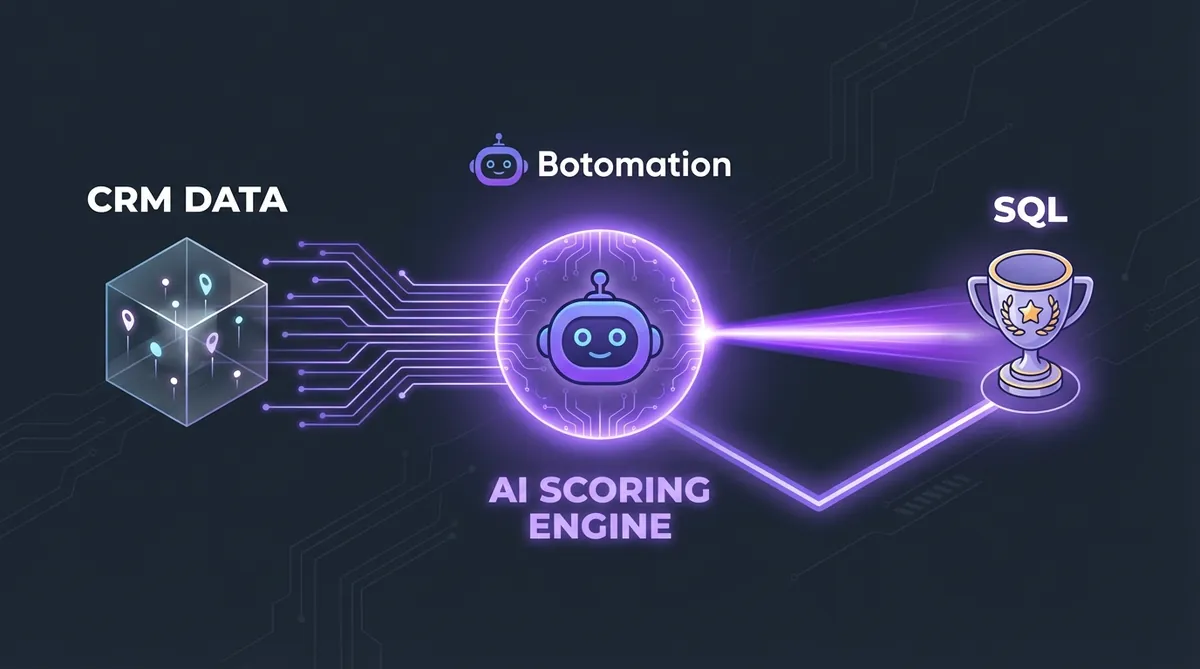
Technical specifications for these AI models show impressive accuracy rates, often hovering between 85% and 92% in identifying high-intent prospects. This level of precision is achieved by training models on historical CRM data—learning exactly what the "DNA" of a successful customer looks like. When integrated with CRM platforms like Salesforce or HubSpot, these systems act as a continuous filter, re-scoring leads as new information becomes available. This ensures that the sales team always focuses on the most promising opportunities.
| Feature | Traditional Qualification | AI-Powered Qualification |
|---|---|---|
| **Data Processing** | Manual & Linear | Automated & Parallel |
| **Signal Count** | 5-10 data points | 100+ data points |
| **Consistency** | Subjective / High Bias | Objective / Low Bias |
| **Update Frequency** | Periodic / Manual | Real-time / Continuous |
| **Accuracy Rate** | 40-60% | 85-92% |
Machine Learning Algorithms Explained
Random Forest algorithms are particularly effective for SaaS lead scoring because they excel at multi-signal recognition. By creating a multitude of "decision trees" and merging them, the model can handle complex interactions between variables—such as how a specific job title in a specific industry might respond differently to certain content. This prevents over-reliance on a single factor and provides a balanced score. Logistic Regression is often used alongside this to provide a clear probability of conversion, helping sales leaders understand the logic behind a lead's score.
Neural Networks represent the most advanced tier of this technology, often used for multi-modal inputs. These systems can ingest text from emails, audio from recorded calls, and behavioral data from website visits to create a holistic profile. Natural Language Processing (NLP) is the engine here, identifying sentiment and intent within the language used by the lead. If a prospect mentions a "budget cycle" in a LinkedIn comment, the NLP layer flags this as a high-intent signal, instantly boosting their priority in the sales queue.
Data Points Analyzed by AI Qualification Systems
The depth of analysis performed by these systems covers three distinct categories: explicit, implicit, and contextual signals. Explicit signals are the basics, such as form fills or demo requests. However, the real value lies in implicit signals, such as the frequency of pricing page visits or specific sections of a technical whitepaper a prospect engages with. By tracking these behavioral breadcrumbs, the AI predicts intent long before the prospect ever speaks to a human.
Contextual timing is perhaps the most critical data point for SaaS companies. AI systems monitor external triggers like company funding rounds, new leadership hires, or geographic expansions. For example, if a target company just raised a Series B round, their need for a scalable SaaS solution likely just skyrocketed. Technographic indicators also play a role, as the system scans for the prospect's current software stack. If they use an outdated competitor product nearing its end-of-life, the AI identifies this as a "perfect storm" for a displacement sale.
Top AI Lead Qualification Tools for SaaS Companies in 2026
Choosing the right stack of SaaS lead qualification tools that save time requires an understanding of how different platforms handle data. While many tools claim to use "AI," the difference lies in the quality of underlying data sets and the sophistication of predictive models. In 2026, the market has bifurcated into generalist data providers and specialist qualification engines. For a SaaS company looking to scale, the goal is to find a combination that provides both breadth of data and depth of insight.
The following tools represent the current gold standard for automated qualification. However, remember that these are tools, not complete solutions. A tool requires a skilled hand to operate, whereas a partnership with an agency like Botomation provides the entire engine. Our experts do not just provide software; we build the custom workflows and integrations that ensure these tools deliver the 3.5x conversion rates mentioned earlier.
Smartlead - AI Lead Scoring and Qualification
Smartlead has evolved significantly by 2026, moving beyond simple email sequencing into a predictive scoring powerhouse. It uses machine learning to analyze engagement patterns across thousands of campaigns to determine which behavioral triggers actually lead to closed deals. If a prospect opens an email three times within an hour, Smartlead does not just notify the rep; it can automatically trigger a high-priority task in the CRM or initiate a secondary, more aggressive outreach sequence.
The primary benefit of this automation is the sheer volume of manual tasks it eliminates. Companies using Smartlead's advanced qualification features report saving an average of 25 hours per week per sales rep. By automating the "if-this-then-that" logic of follow-ups and qualification, the platform ensures that no lead falls through the cracks. It essentially acts as a 24/7 digital assistant that only presents the "warmest" leads to the human sales team.
ZoomInfo - Technographic and Firmographic Qualification
ZoomInfo remains a titan in the B2B space because of its massive, proprietary database. In 2026, its AI capabilities allow for deep technographic analysis, identifying exactly what software a company is running behind their firewall. For a SaaS company, this is invaluable. If your product integrates perfectly with AWS but struggles with Azure, ZoomInfo can filter your entire lead list to only show companies currently using the AWS ecosystem.
The platform's "Intent Data" feature is another pillar of modern qualification. By tracking what topics companies are researching across the web, ZoomInfo flags accounts that are currently in a "buying mode" for specific categories of software. When this data is enriched and pushed directly into your CRM, your sales team is not just making cold calls; they are making "informed" calls to people already looking for a solution like yours.
Persana AI - Conversational Qualification System
Persana AI represents the "New Way" of handling inbound interest, much like how specialized WhatsApp AI agents for B2B lead qualification engage the prospect instantly instead of making them wait 24 hours for a human review. These are not the clunky chatbots of the past; they are sophisticated conversational interfaces capable of handling 80% of routine qualification queries. They can ask about budget, current pain points, and technical requirements in a natural, helpful way.
If a lead meets pre-defined qualification criteria during the chat, Persana can automatically book a meeting directly into a sales rep's calendar, which can reduce no-shows by 70%. This removes the friction of the "back-and-forth" email chain that often kills momentum. By the time the human rep joins the call, they already have a full transcript of the AI's qualification conversation, allowing them to skip the basics and analyze the strategic value proposition immediately.
Implementing Automated Lead Qualification: Step-by-Step Guide
Transitioning from a manual process to an automated one requires a structured approach to ensure data integrity and team alignment. You cannot simply "turn on" an AI and expect it to understand your business nuances. The first phase involves a deep audit of your current sales cycle and identifying the specific "success markers" that define your ideal customer profile (ICP). Without this foundational work, the AI will simply automate your existing inefficiencies.
Our team at Botomation follows a rigorous implementation framework that prioritizes "clean data" over "fast data." We have found that the most successful SaaS companies map their data flow before choosing tools. This ensures that information gathered by a prospecting tool can be seamlessly used by a qualification engine and eventually acted upon by a human sales rep.
Data Preparation and Integration
The first step in any automation project is connecting your various data silos. This usually involves linking your CRM, marketing automation platform, and any external data providers. Implementing a robust CRM email integration ensures that no communication data is lost during the handoff. Cleaning and standardizing this data is a non-negotiable requirement. If half of your records list "VP of Engineering" and the other half list "Vice President of Eng," your AI model will struggle to find patterns. Standardizing these fields ensures machine learning algorithms process information accurately.
Historical data analysis is the next critical component. To train a model to find future customers, you must show it who your past customers were. By analyzing common traits and behaviors of your top 20% of accounts, the AI can build a "lookalike" model. This involves examining the specific sequence of events that led to a sale—did they visit the blog first? Did they attend a webinar? How many people from the organization were involved in the initial research phase?
Qualification Model Configuration
Once the data is ready, you must define specific weights for your scoring model. Not all data points are created equal. For high-ticket enterprise SaaS, automated lead filtering based on company size is vital; a "Director" title at a Fortune 500 company might be worth 50 points, while a "Manager" title at a startup might only be worth 10. These weights should be based on historical win rates rather than gut feeling. Configuring these behavioral triggers allows the system to act autonomously when a prospect crosses a certain threshold.
Establish clear handoff criteria between the automated system and the human sales team. This is where many companies fail. You must decide exactly what constitutes a "Sales Qualified Lead" (SQL) in the eyes of the AI. Is it a score of 80? Is it three visits to the pricing page in 48 hours? By setting these hard boundaries, you eliminate the ambiguity that leads to friction between marketing and sales departments.
How to Set Up Your Lead Qualification Engine
Step-by-Step Tutorial: Automating Your Pipeline
1. Map Your ICP Data Points: Identify the 15-20 firmographic and technographic signals that correlate most strongly with your closed-won deals.
2. Integrate Your Data Stack: Use a middleware or native integration to connect your prospecting tools (like ZoomInfo) with your CRM and engagement platform.
3. Set Scoring Weights: Assign numerical values to each signal (e.g., +20 for "Increased Hiring in Engineering," -50 for "Recent Downround").
4. Automate the "First Touch": Set up an AI-driven outreach or chatbot sequence to verify basic qualification questions (Budget/Timeline) instantly.
5. Establish a Feedback Loop: Review the AI's "Qualified" vs. "Disqualified" decisions weekly with the sales team to refine the scoring weights.
Measuring Success: Metrics That Matter for Automated Lead Qualification
The ultimate goal of automating lead qualification is to increase capital efficiency and personnel productivity. However, you cannot manage what you do not measure, which is why automated reporting is critical for tracking these KPIs. In 2026, standard metrics like "number of leads" or "number of calls" are being replaced by more sophisticated KPIs that reflect the actual health of the revenue engine. We focus on metrics that show the direct impact of automation on the bottom line.
A compelling example of this is a recent project where a client saw a 1.5% increase in total profit—equating to millions of dollars—simply by achieving 90% accuracy in identifying high-conversion leads. By not wasting resources on the bottom 50% of their pipeline, they doubled down on the accounts that actually mattered. This kind of surgical precision is what separates the "New Way" of selling from the traditional "spray and pray" approach.
Lead Quality and Conversion Metrics
The most important metric to track is the lead-to-customer conversion rate comparison. You should compare the conversion rate of leads qualified by the AI versus those qualified through traditional manual methods. In almost every case, AI-qualified leads convert at a significantly higher rate because they are caught at the exact moment of peak intent. Additionally, look at the average deal size. Qualified leads often result in larger deals because the sales rep has the time to conduct a more thorough discovery process.
Time-to-close is another critical indicator. When a lead is properly qualified before the first human interaction, the sales cycle is naturally compressed. The rep does not have to spend the first two calls "checking boxes"; they can jump straight into solving the customer's problems. If your average sales cycle drops from 90 days to 65 days after implementing automation, that is a massive win for your company's cash flow and forecasting accuracy.
Efficiency and Time Savings Metrics
To truly understand the ROI of your automation, you must calculate the reduction in manual qualification time. If your team was spending 25 hours per week on research and that has been reduced to 2 hours, you have effectively "hired" a new full-time employee without the overhead costs. Let's look at the math for a team of five SDRs:
- Manual Qualification Cost: 5 reps x 20 hours/week x $45/hour = $4,500/week.
- Automated Qualification Cost: Software fees + $200/week for oversight = ~$800/week.
- Weekly Savings: $3,700.
- Annual Savings: $192,400.
Beyond the raw dollars, the reallocation of time is where the transformation occurs. When reps are freed from the drudgery of data entry, they can focus on high-value activities like personalized video outreach, strategic account mapping, and deepening relationships with key stakeholders. This leads to higher job satisfaction, lower turnover, and a more professional sales culture focused on excellence rather than activity for its own sake.
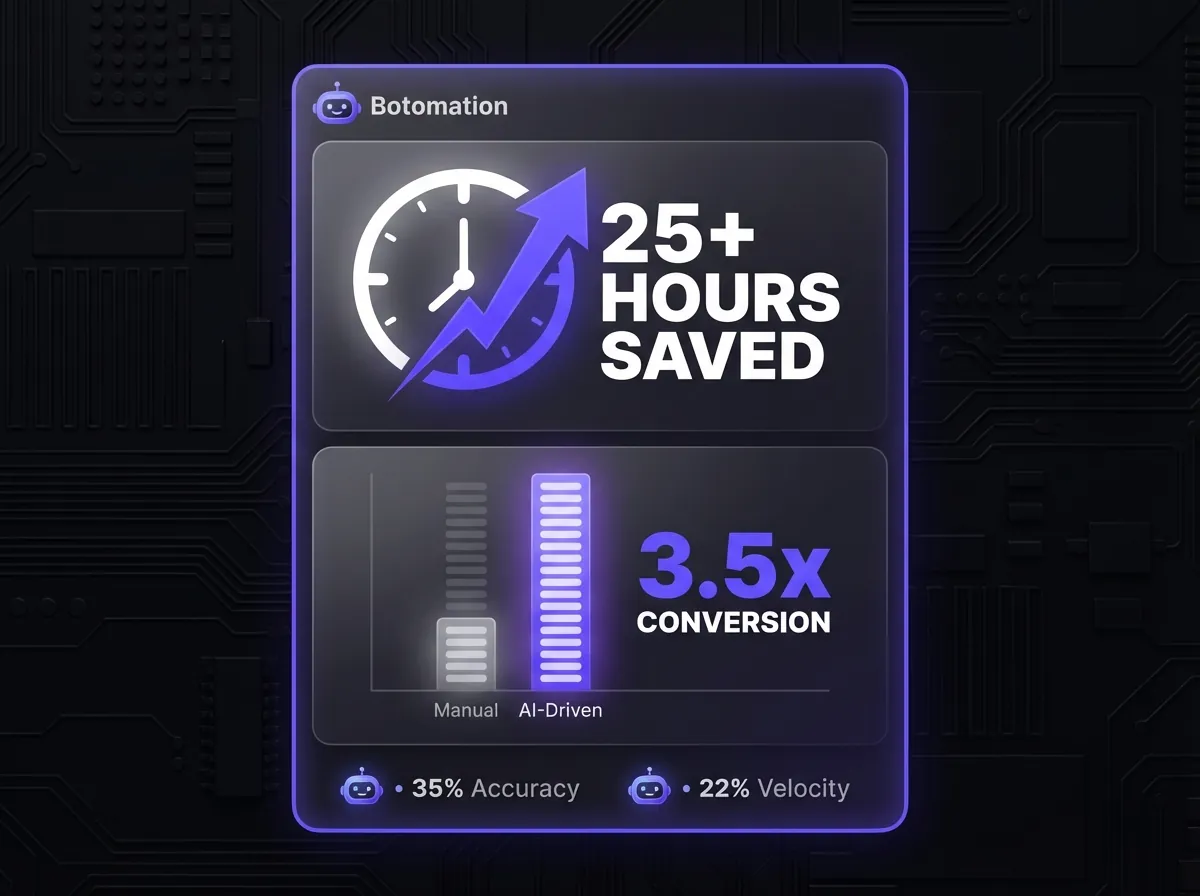
The Productivity Stat Box
* Time Saved: 25+ hours per week per SDR.
* Accuracy Boost: 35% increase in lead scoring precision.
* Conversion Lift: 3.5x average increase in lead-to-opportunity rates.
* Revenue Impact: Average 22% increase in sales velocity within the first 6 months.
Why Botomation is the Superior Choice for Your Growth
While the tools mentioned in this article are powerful, they are not a "set it and forget it" solution. Many SaaS companies make the mistake of buying software and expecting overworked sales managers to become AI experts overnight. This leads to "tool sprawl," where you pay for expensive subscriptions that are only used to 10% of their potential.
This is where Botomation changes the game. We are not just a software platform; we are a premium agency of experts who build and manage these engines for you. We provide the "New Way" of prospecting by delivering fresh, qualified leads to your sales team every single morning. You do not have to worry about Random Forest models or API integrations. Our team handles the technical heavy lifting, competitor tracking, and automated pricing analysis so your sales team can focus on what they do best: closing deals.
Partnering with Botomation means you are not just buying a tool; you are buying a result. We scan the web using custom-built agents to find potential clients that your competitors have not even identified yet. We monitor competitor pricing and industry trends in real-time, giving you the actionable data needed to win in a crowded market. If you are tired of stale lead lists and the constant grind of manual research, the choice is clear.
The landscape of SaaS sales in 2026 does not reward effort; it rewards efficiency. Continuing to qualify leads manually is a choice to remain in the "Old Way"—a choice that leads to stagnation as agile, automated competitors capture your market share. The 3.5x conversion rates achieved by leaders in the space are the result of automated pipeline building and a systematic, algorithmic approach to lead generation.
By choosing Botomation, you leapfrog the learning curve and implement a world-class automation engine immediately. Our experts become an extension of your growth team, ensuring your pipeline is always full of high-intent, high-value prospects. Stop letting your sales team drown in administrative noise and start giving them the qualified leads they need to hit their targets.
Frequently Asked Questions
How long does it take to see results from lead qualification automation?
Most of our clients see a measurable shift in their sales velocity within the first 30 to 45 days. The initial period is focused on data integration and model training, but once the automated prospecting engine begins delivering leads, the impact on the pipeline is almost immediate.
Will AI replace my sales development representatives?
No. AI is designed to replace the repetitive tasks that SDRs find tedious, not the SDRs themselves. By automating research and initial qualification, your reps can spend their time on high-level strategy and human-to-human relationship building, which are tasks AI still cannot perform effectively in 2026.
Is my company too small for this level of automation?
If you have at least one full-time sales professional and a clear ideal customer profile, you are ready for automation. In fact, smaller teams often benefit the most because they have the least human bandwidth to waste on manual tasks.
How does Botomation differ from just buying a tool like ZoomInfo?
ZoomInfo provides the data, but you still must build the processes to use it. Botomation is an agency that provides the entire service—we build the custom tools, manage the data flow, and deliver the final, qualified leads directly to your team. We are the architects and the engine, not just the raw materials.
Ready to automate your growth? Stop losing money on manual prospecting today and give your sales team the edge they deserve. Book a call below.
SaaS sales teams in 2026 face a paradox: they possess more data than ever before, yet actual conversion rates often remain stagnant or decline due to overwhelming volume. The "leaky bucket" syndrome has become a silent growth killer for mid-sized software companies. When sales development representatives spend the majority of their day sifting through "noise" leads—those who downloaded a whitepaper but lack intent to buy—you are essentially paying premium salaries for manual data entry and administrative filtering. This inefficiency creates a massive bottleneck, preventing high-value accounts from receiving the attention they deserve.
The shift toward automated lead qualification is no longer a luxury for early adopters; it is the baseline for survival in a saturated market. By integrating advanced machine learning models into the top of the funnel, companies are seeing a fundamental shift in how they prioritize human effort. A recent case study involving a mid-sized insurance firm illustrates this perfectly: they achieved 3.5x higher conversion rates simply by removing human bias from the initial qualification stage. Our team at Botomation has observed that when you replace "gut feeling" with algorithmic precision, the entire sales velocity accelerates.
Modern AI B2B prospecting tools that save time do more than just score a lead based on a job title. They analyze thousands of micro-signals across the web to determine if a prospect is actually in a buying window. This article explores the technical architecture of these systems, the specific tools dominating the landscape in 2026, and how partnering with an expert agency like Botomation can transform your prospecting from a manual grind into an automated revenue engine. We will break down the math, the models, and the methods that separate market leaders from those still stuck in the "Old Way" of manual prospecting.
The SaaS Lead Qualification Challenge: Why Traditional Methods Fall Short
The reality of manual lead qualification is a grim landscape of wasted hours and missed opportunities. Research consistently shows that sales professionals spend between 60% and 80% of their total working hours on prospecting and administrative tasks rather than selling. When you analyze the economics of a standard sales team, this represents a staggering loss of capital. If a senior sales rep earns a $120,000 salary but 70% of their time is spent qualifying leads that will never close, you are effectively burning over $80,000 annually on low-value activities.
Statistics from the 2024–2026 fiscal year indicate that roughly 70% of leads generated through standard marketing channels are not sales-ready at the moment of first contact. Without a sophisticated qualification layer, these leads either clutter the CRM or are ignored entirely, often resulting in lead list decay because the sales team is overwhelmed. The VTT Technical Research Center highlighted this issue in a recent report, noting that studied organizations spent an average of 1,000 hours annually just on manual verification of lead data. This is time that could have been spent on strategic account management or closing high-ticket deals.
Traditional qualification often relies on static BANT (Budget, Authority, Need, Timeline) frameworks, which are increasingly irrelevant in the complex B2B SaaS buying cycles of 2026. Buyers are more informed, and their journeys are non-linear. Relying on a human to manually check LinkedIn profiles or company news to find "hooks" is a slow, error-prone process that cannot scale. The "Old Way" of qualifying leads is a linear process in a multi-dimensional world, and it is failing to keep pace with the speed of digital commerce.
Time Wastage in Manual Qualification
Manual research is the primary culprit behind the erosion of sales productivity. A typical SDR might spend twenty minutes researching a single prospect before sending a personalized email, only to discover days later that the company just signed a long-term contract with a competitor. This data verification process—checking for recent funding, leadership changes, or technology stack updates—is a repetitive task that humans naturally perform inconsistently. When these processes are not automated, following up on low-quality prospects consumes the same energy as engaging "whale" accounts.
The lack of systematic qualification criteria further compounds this problem. Without a hard-coded algorithmic filter, one sales rep might qualify a lead based on company size, while another might qualify them based on personal rapport. This inconsistency makes it impossible for leadership to forecast revenue with accuracy. Productivity decreases as frustration mounts, leading to high turnover rates in sales departments that feel they are "panning for gold in a muddy river" without the right tools.
Quality Issues with Manual Lead Qualification
Human bias is an inescapable element of manual rating systems. We tend to favor leads from recognizable brands or those who share a common background, even if the data suggests they are a poor fit. This subjectivity leads to a "clogged" pipeline where late-stage rejection of leads becomes common. When a lead is rejected at the proposal stage because they were never qualified for technical requirements, the cost of that failure includes all the hours spent by the sales engineer and the account executive.
Manual evaluation also limits the number of data points a human can realistically consider. A person might look at five or six signals, such as job title and industry. In contrast, an AI-driven system can analyze hundreds of signals simultaneously, including technographic data, recent social media sentiment, and historical buying patterns. By ignoring these deeper layers of data, manual qualification misses subtle indicators that a lead is ready to buy, resulting in lost opportunities that competitors with better automation will inevitably capture.
AI-Powered Lead Qualification: Machine Learning Algorithms That Work for SaaS
The move toward AI-powered lead qualification is driven by the integration of sophisticated machine learning algorithms that process vast amounts of unstructured data. Unlike the simple "if-then" logic of the past, modern systems utilize automated lead scoring through Random Forest models, Logistic Regression, and Neural Networks to provide a nuanced view of lead potential. These models do not just look at who a person is; they analyze what that person and their company are doing in real-time across the digital ecosystem.
Technical specifications for these AI models show impressive accuracy rates, often hovering between 85% and 92% in identifying high-intent prospects. This level of precision is achieved by training models on historical CRM data—learning exactly what the "DNA" of a successful customer looks like. When integrated with CRM platforms like Salesforce or HubSpot, these systems act as a continuous filter, re-scoring leads as new information becomes available. This ensures that the sales team always focuses on the most promising opportunities.
| Feature | Traditional Qualification | AI-Powered Qualification |
|---|---|---|
| **Data Processing** | Manual & Linear | Automated & Parallel |
| **Signal Count** | 5-10 data points | 100+ data points |
| **Consistency** | Subjective / High Bias | Objective / Low Bias |
| **Update Frequency** | Periodic / Manual | Real-time / Continuous |
| **Accuracy Rate** | 40-60% | 85-92% |
Machine Learning Algorithms Explained
Random Forest algorithms are particularly effective for SaaS lead scoring because they excel at multi-signal recognition. By creating a multitude of "decision trees" and merging them, the model can handle complex interactions between variables—such as how a specific job title in a specific industry might respond differently to certain content. This prevents over-reliance on a single factor and provides a balanced score. Logistic Regression is often used alongside this to provide a clear probability of conversion, helping sales leaders understand the logic behind a lead's score.
Neural Networks represent the most advanced tier of this technology, often used for multi-modal inputs. These systems can ingest text from emails, audio from recorded calls, and behavioral data from website visits to create a holistic profile. Natural Language Processing (NLP) is the engine here, identifying sentiment and intent within the language used by the lead. If a prospect mentions a "budget cycle" in a LinkedIn comment, the NLP layer flags this as a high-intent signal, instantly boosting their priority in the sales queue.
Data Points Analyzed by AI Qualification Systems
The depth of analysis performed by these systems covers three distinct categories: explicit, implicit, and contextual signals. Explicit signals are the basics, such as form fills or demo requests. However, the real value lies in implicit signals, such as the frequency of pricing page visits or specific sections of a technical whitepaper a prospect engages with. By tracking these behavioral breadcrumbs, the AI predicts intent long before the prospect ever speaks to a human.
Contextual timing is perhaps the most critical data point for SaaS companies. AI systems monitor external triggers like company funding rounds, new leadership hires, or geographic expansions. For example, if a target company just raised a Series B round, their need for a scalable SaaS solution likely just skyrocketed. Technographic indicators also play a role, as the system scans for the prospect's current software stack. If they use an outdated competitor product nearing its end-of-life, the AI identifies this as a "perfect storm" for a displacement sale.
Top AI Lead Qualification Tools for SaaS Companies in 2026
Choosing the right stack of SaaS lead qualification tools that save time requires an understanding of how different platforms handle data. While many tools claim to use "AI," the difference lies in the quality of underlying data sets and the sophistication of predictive models. In 2026, the market has bifurcated into generalist data providers and specialist qualification engines. For a SaaS company looking to scale, the goal is to find a combination that provides both breadth of data and depth of insight.
The following tools represent the current gold standard for automated qualification. However, remember that these are tools, not complete solutions. A tool requires a skilled hand to operate, whereas a partnership with an agency like Botomation provides the entire engine. Our experts do not just provide software; we build the custom workflows and integrations that ensure these tools deliver the 3.5x conversion rates mentioned earlier.
Smartlead - AI Lead Scoring and Qualification
Smartlead has evolved significantly by 2026, moving beyond simple email sequencing into a predictive scoring powerhouse. It uses machine learning to analyze engagement patterns across thousands of campaigns to determine which behavioral triggers actually lead to closed deals. If a prospect opens an email three times within an hour, Smartlead does not just notify the rep; it can automatically trigger a high-priority task in the CRM or initiate a secondary, more aggressive outreach sequence.
The primary benefit of this automation is the sheer volume of manual tasks it eliminates. Companies using Smartlead's advanced qualification features report saving an average of 25 hours per week per sales rep. By automating the "if-this-then-that" logic of follow-ups and qualification, the platform ensures that no lead falls through the cracks. It essentially acts as a 24/7 digital assistant that only presents the "warmest" leads to the human sales team.
ZoomInfo - Technographic and Firmographic Qualification
ZoomInfo remains a titan in the B2B space because of its massive, proprietary database. In 2026, its AI capabilities allow for deep technographic analysis, identifying exactly what software a company is running behind their firewall. For a SaaS company, this is invaluable. If your product integrates perfectly with AWS but struggles with Azure, ZoomInfo can filter your entire lead list to only show companies currently using the AWS ecosystem.
The platform's "Intent Data" feature is another pillar of modern qualification. By tracking what topics companies are researching across the web, ZoomInfo flags accounts that are currently in a "buying mode" for specific categories of software. When this data is enriched and pushed directly into your CRM, your sales team is not just making cold calls; they are making "informed" calls to people already looking for a solution like yours.
Persana AI - Conversational Qualification System
Persana AI represents the "New Way" of handling inbound interest, much like how specialized WhatsApp AI agents for B2B lead qualification engage the prospect instantly instead of making them wait 24 hours for a human review. These are not the clunky chatbots of the past; they are sophisticated conversational interfaces capable of handling 80% of routine qualification queries. They can ask about budget, current pain points, and technical requirements in a natural, helpful way.
If a lead meets pre-defined qualification criteria during the chat, Persana can automatically book a meeting directly into a sales rep's calendar, which can reduce no-shows by 70%. This removes the friction of the "back-and-forth" email chain that often kills momentum. By the time the human rep joins the call, they already have a full transcript of the AI's qualification conversation, allowing them to skip the basics and analyze the strategic value proposition immediately.
Implementing Automated Lead Qualification: Step-by-Step Guide
Transitioning from a manual process to an automated one requires a structured approach to ensure data integrity and team alignment. You cannot simply "turn on" an AI and expect it to understand your business nuances. The first phase involves a deep audit of your current sales cycle and identifying the specific "success markers" that define your ideal customer profile (ICP). Without this foundational work, the AI will simply automate your existing inefficiencies.
Our team at Botomation follows a rigorous implementation framework that prioritizes "clean data" over "fast data." We have found that the most successful SaaS companies map their data flow before choosing tools. This ensures that information gathered by a prospecting tool can be seamlessly used by a qualification engine and eventually acted upon by a human sales rep.
Data Preparation and Integration
The first step in any automation project is connecting your various data silos. This usually involves linking your CRM, marketing automation platform, and any external data providers. Implementing a robust CRM email integration ensures that no communication data is lost during the handoff. Cleaning and standardizing this data is a non-negotiable requirement. If half of your records list "VP of Engineering" and the other half list "Vice President of Eng," your AI model will struggle to find patterns. Standardizing these fields ensures machine learning algorithms process information accurately.
Historical data analysis is the next critical component. To train a model to find future customers, you must show it who your past customers were. By analyzing common traits and behaviors of your top 20% of accounts, the AI can build a "lookalike" model. This involves examining the specific sequence of events that led to a sale—did they visit the blog first? Did they attend a webinar? How many people from the organization were involved in the initial research phase?
Qualification Model Configuration
Once the data is ready, you must define specific weights for your scoring model. Not all data points are created equal. For high-ticket enterprise SaaS, automated lead filtering based on company size is vital; a "Director" title at a Fortune 500 company might be worth 50 points, while a "Manager" title at a startup might only be worth 10. These weights should be based on historical win rates rather than gut feeling. Configuring these behavioral triggers allows the system to act autonomously when a prospect crosses a certain threshold.
Establish clear handoff criteria between the automated system and the human sales team. This is where many companies fail. You must decide exactly what constitutes a "Sales Qualified Lead" (SQL) in the eyes of the AI. Is it a score of 80? Is it three visits to the pricing page in 48 hours? By setting these hard boundaries, you eliminate the ambiguity that leads to friction between marketing and sales departments.
How to Set Up Your Lead Qualification Engine
Step-by-Step Tutorial: Automating Your Pipeline
1. Map Your ICP Data Points: Identify the 15-20 firmographic and technographic signals that correlate most strongly with your closed-won deals.
2. Integrate Your Data Stack: Use a middleware or native integration to connect your prospecting tools (like ZoomInfo) with your CRM and engagement platform.
3. Set Scoring Weights: Assign numerical values to each signal (e.g., +20 for "Increased Hiring in Engineering," -50 for "Recent Downround").
4. Automate the "First Touch": Set up an AI-driven outreach or chatbot sequence to verify basic qualification questions (Budget/Timeline) instantly.
5. Establish a Feedback Loop: Review the AI's "Qualified" vs. "Disqualified" decisions weekly with the sales team to refine the scoring weights.
Measuring Success: Metrics That Matter for Automated Lead Qualification
The ultimate goal of automating lead qualification is to increase capital efficiency and personnel productivity. However, you cannot manage what you do not measure, which is why automated reporting is critical for tracking these KPIs. In 2026, standard metrics like "number of leads" or "number of calls" are being replaced by more sophisticated KPIs that reflect the actual health of the revenue engine. We focus on metrics that show the direct impact of automation on the bottom line.
A compelling example of this is a recent project where a client saw a 1.5% increase in total profit—equating to millions of dollars—simply by achieving 90% accuracy in identifying high-conversion leads. By not wasting resources on the bottom 50% of their pipeline, they doubled down on the accounts that actually mattered. This kind of surgical precision is what separates the "New Way" of selling from the traditional "spray and pray" approach.
Lead Quality and Conversion Metrics
The most important metric to track is the lead-to-customer conversion rate comparison. You should compare the conversion rate of leads qualified by the AI versus those qualified through traditional manual methods. In almost every case, AI-qualified leads convert at a significantly higher rate because they are caught at the exact moment of peak intent. Additionally, look at the average deal size. Qualified leads often result in larger deals because the sales rep has the time to conduct a more thorough discovery process.
Time-to-close is another critical indicator. When a lead is properly qualified before the first human interaction, the sales cycle is naturally compressed. The rep does not have to spend the first two calls "checking boxes"; they can jump straight into solving the customer's problems. If your average sales cycle drops from 90 days to 65 days after implementing automation, that is a massive win for your company's cash flow and forecasting accuracy.
Efficiency and Time Savings Metrics
To truly understand the ROI of your automation, you must calculate the reduction in manual qualification time. If your team was spending 25 hours per week on research and that has been reduced to 2 hours, you have effectively "hired" a new full-time employee without the overhead costs. Let's look at the math for a team of five SDRs:
- Manual Qualification Cost: 5 reps x 20 hours/week x $45/hour = $4,500/week.
- Automated Qualification Cost: Software fees + $200/week for oversight = ~$800/week.
- Weekly Savings: $3,700.
- Annual Savings: $192,400.
Beyond the raw dollars, the reallocation of time is where the transformation occurs. When reps are freed from the drudgery of data entry, they can focus on high-value activities like personalized video outreach, strategic account mapping, and deepening relationships with key stakeholders. This leads to higher job satisfaction, lower turnover, and a more professional sales culture focused on excellence rather than activity for its own sake.
The Productivity Stat Box
* Time Saved: 25+ hours per week per SDR.
* Accuracy Boost: 35% increase in lead scoring precision.
* Conversion Lift: 3.5x average increase in lead-to-opportunity rates.
* Revenue Impact: Average 22% increase in sales velocity within the first 6 months.
Why Botomation is the Superior Choice for Your Growth
While the tools mentioned in this article are powerful, they are not a "set it and forget it" solution. Many SaaS companies make the mistake of buying software and expecting overworked sales managers to become AI experts overnight. This leads to "tool sprawl," where you pay for expensive subscriptions that are only used to 10% of their potential.
This is where Botomation changes the game. We are not just a software platform; we are a premium agency of experts who build and manage these engines for you. We provide the "New Way" of prospecting by delivering fresh, qualified leads to your sales team every single morning. You do not have to worry about Random Forest models or API integrations. Our team handles the technical heavy lifting, competitor tracking, and automated pricing analysis so your sales team can focus on what they do best: closing deals.
Partnering with Botomation means you are not just buying a tool; you are buying a result. We scan the web using custom-built agents to find potential clients that your competitors have not even identified yet. We monitor competitor pricing and industry trends in real-time, giving you the actionable data needed to win in a crowded market. If you are tired of stale lead lists and the constant grind of manual research, the choice is clear.
The landscape of SaaS sales in 2026 does not reward effort; it rewards efficiency. Continuing to qualify leads manually is a choice to remain in the "Old Way"—a choice that leads to stagnation as agile, automated competitors capture your market share. The 3.5x conversion rates achieved by leaders in the space are the result of automated pipeline building and a systematic, algorithmic approach to lead generation.
By choosing Botomation, you leapfrog the learning curve and implement a world-class automation engine immediately. Our experts become an extension of your growth team, ensuring your pipeline is always full of high-intent, high-value prospects. Stop letting your sales team drown in administrative noise and start giving them the qualified leads they need to hit their targets.
Frequently Asked Questions
How long does it take to see results from lead qualification automation?
Most of our clients see a measurable shift in their sales velocity within the first 30 to 45 days. The initial period is focused on data integration and model training, but once the automated prospecting engine begins delivering leads, the impact on the pipeline is almost immediate.
Will AI replace my sales development representatives?
No. AI is designed to replace the repetitive tasks that SDRs find tedious, not the SDRs themselves. By automating research and initial qualification, your reps can spend their time on high-level strategy and human-to-human relationship building, which are tasks AI still cannot perform effectively in 2026.
Is my company too small for this level of automation?
If you have at least one full-time sales professional and a clear ideal customer profile, you are ready for automation. In fact, smaller teams often benefit the most because they have the least human bandwidth to waste on manual tasks.
How does Botomation differ from just buying a tool like ZoomInfo?
ZoomInfo provides the data, but you still must build the processes to use it. Botomation is an agency that provides the entire service—we build the custom tools, manage the data flow, and deliver the final, qualified leads directly to your team. We are the architects and the engine, not just the raw materials.
Ready to automate your growth? Stop losing money on manual prospecting today and give your sales team the edge they deserve. Book a call below.
SaaS sales teams in 2026 face a paradox: they possess more data than ever before, yet actual conversion rates often remain stagnant or decline due to overwhelming volume. The "leaky bucket" syndrome has become a silent growth killer for mid-sized software companies. When sales development representatives spend the majority of their day sifting through "noise" leads—those who downloaded a whitepaper but lack intent to buy—you are essentially paying premium salaries for manual data entry and administrative filtering. This inefficiency creates a massive bottleneck, preventing high-value accounts from receiving the attention they deserve.
The shift toward automated lead qualification is no longer a luxury for early adopters; it is the baseline for survival in a saturated market. By integrating advanced machine learning models into the top of the funnel, companies are seeing a fundamental shift in how they prioritize human effort. A recent case study involving a mid-sized insurance firm illustrates this perfectly: they achieved 3.5x higher conversion rates simply by removing human bias from the initial qualification stage. Our team at Botomation has observed that when you replace "gut feeling" with algorithmic precision, the entire sales velocity accelerates.
Modern AI B2B prospecting tools that save time do more than just score a lead based on a job title. They analyze thousands of micro-signals across the web to determine if a prospect is actually in a buying window. This article explores the technical architecture of these systems, the specific tools dominating the landscape in 2026, and how partnering with an expert agency like Botomation can transform your prospecting from a manual grind into an automated revenue engine. We will break down the math, the models, and the methods that separate market leaders from those still stuck in the "Old Way" of manual prospecting.
The SaaS Lead Qualification Challenge: Why Traditional Methods Fall Short
The reality of manual lead qualification is a grim landscape of wasted hours and missed opportunities. Research consistently shows that sales professionals spend between 60% and 80% of their total working hours on prospecting and administrative tasks rather than selling. When you analyze the economics of a standard sales team, this represents a staggering loss of capital. If a senior sales rep earns a $120,000 salary but 70% of their time is spent qualifying leads that will never close, you are effectively burning over $80,000 annually on low-value activities.
Statistics from the 2024–2026 fiscal year indicate that roughly 70% of leads generated through standard marketing channels are not sales-ready at the moment of first contact. Without a sophisticated qualification layer, these leads either clutter the CRM or are ignored entirely, often resulting in lead list decay because the sales team is overwhelmed. The VTT Technical Research Center highlighted this issue in a recent report, noting that studied organizations spent an average of 1,000 hours annually just on manual verification of lead data. This is time that could have been spent on strategic account management or closing high-ticket deals.
Traditional qualification often relies on static BANT (Budget, Authority, Need, Timeline) frameworks, which are increasingly irrelevant in the complex B2B SaaS buying cycles of 2026. Buyers are more informed, and their journeys are non-linear. Relying on a human to manually check LinkedIn profiles or company news to find "hooks" is a slow, error-prone process that cannot scale. The "Old Way" of qualifying leads is a linear process in a multi-dimensional world, and it is failing to keep pace with the speed of digital commerce.
Time Wastage in Manual Qualification
Manual research is the primary culprit behind the erosion of sales productivity. A typical SDR might spend twenty minutes researching a single prospect before sending a personalized email, only to discover days later that the company just signed a long-term contract with a competitor. This data verification process—checking for recent funding, leadership changes, or technology stack updates—is a repetitive task that humans naturally perform inconsistently. When these processes are not automated, following up on low-quality prospects consumes the same energy as engaging "whale" accounts.
The lack of systematic qualification criteria further compounds this problem. Without a hard-coded algorithmic filter, one sales rep might qualify a lead based on company size, while another might qualify them based on personal rapport. This inconsistency makes it impossible for leadership to forecast revenue with accuracy. Productivity decreases as frustration mounts, leading to high turnover rates in sales departments that feel they are "panning for gold in a muddy river" without the right tools.
Quality Issues with Manual Lead Qualification
Human bias is an inescapable element of manual rating systems. We tend to favor leads from recognizable brands or those who share a common background, even if the data suggests they are a poor fit. This subjectivity leads to a "clogged" pipeline where late-stage rejection of leads becomes common. When a lead is rejected at the proposal stage because they were never qualified for technical requirements, the cost of that failure includes all the hours spent by the sales engineer and the account executive.
Manual evaluation also limits the number of data points a human can realistically consider. A person might look at five or six signals, such as job title and industry. In contrast, an AI-driven system can analyze hundreds of signals simultaneously, including technographic data, recent social media sentiment, and historical buying patterns. By ignoring these deeper layers of data, manual qualification misses subtle indicators that a lead is ready to buy, resulting in lost opportunities that competitors with better automation will inevitably capture.
AI-Powered Lead Qualification: Machine Learning Algorithms That Work for SaaS
The move toward AI-powered lead qualification is driven by the integration of sophisticated machine learning algorithms that process vast amounts of unstructured data. Unlike the simple "if-then" logic of the past, modern systems utilize automated lead scoring through Random Forest models, Logistic Regression, and Neural Networks to provide a nuanced view of lead potential. These models do not just look at who a person is; they analyze what that person and their company are doing in real-time across the digital ecosystem.
Technical specifications for these AI models show impressive accuracy rates, often hovering between 85% and 92% in identifying high-intent prospects. This level of precision is achieved by training models on historical CRM data—learning exactly what the "DNA" of a successful customer looks like. When integrated with CRM platforms like Salesforce or HubSpot, these systems act as a continuous filter, re-scoring leads as new information becomes available. This ensures that the sales team always focuses on the most promising opportunities.
| Feature | Traditional Qualification | AI-Powered Qualification |
|---|---|---|
| **Data Processing** | Manual & Linear | Automated & Parallel |
| **Signal Count** | 5-10 data points | 100+ data points |
| **Consistency** | Subjective / High Bias | Objective / Low Bias |
| **Update Frequency** | Periodic / Manual | Real-time / Continuous |
| **Accuracy Rate** | 40-60% | 85-92% |
Machine Learning Algorithms Explained
Random Forest algorithms are particularly effective for SaaS lead scoring because they excel at multi-signal recognition. By creating a multitude of "decision trees" and merging them, the model can handle complex interactions between variables—such as how a specific job title in a specific industry might respond differently to certain content. This prevents over-reliance on a single factor and provides a balanced score. Logistic Regression is often used alongside this to provide a clear probability of conversion, helping sales leaders understand the logic behind a lead's score.
Neural Networks represent the most advanced tier of this technology, often used for multi-modal inputs. These systems can ingest text from emails, audio from recorded calls, and behavioral data from website visits to create a holistic profile. Natural Language Processing (NLP) is the engine here, identifying sentiment and intent within the language used by the lead. If a prospect mentions a "budget cycle" in a LinkedIn comment, the NLP layer flags this as a high-intent signal, instantly boosting their priority in the sales queue.
Data Points Analyzed by AI Qualification Systems
The depth of analysis performed by these systems covers three distinct categories: explicit, implicit, and contextual signals. Explicit signals are the basics, such as form fills or demo requests. However, the real value lies in implicit signals, such as the frequency of pricing page visits or specific sections of a technical whitepaper a prospect engages with. By tracking these behavioral breadcrumbs, the AI predicts intent long before the prospect ever speaks to a human.
Contextual timing is perhaps the most critical data point for SaaS companies. AI systems monitor external triggers like company funding rounds, new leadership hires, or geographic expansions. For example, if a target company just raised a Series B round, their need for a scalable SaaS solution likely just skyrocketed. Technographic indicators also play a role, as the system scans for the prospect's current software stack. If they use an outdated competitor product nearing its end-of-life, the AI identifies this as a "perfect storm" for a displacement sale.
Top AI Lead Qualification Tools for SaaS Companies in 2026
Choosing the right stack of SaaS lead qualification tools that save time requires an understanding of how different platforms handle data. While many tools claim to use "AI," the difference lies in the quality of underlying data sets and the sophistication of predictive models. In 2026, the market has bifurcated into generalist data providers and specialist qualification engines. For a SaaS company looking to scale, the goal is to find a combination that provides both breadth of data and depth of insight.
The following tools represent the current gold standard for automated qualification. However, remember that these are tools, not complete solutions. A tool requires a skilled hand to operate, whereas a partnership with an agency like Botomation provides the entire engine. Our experts do not just provide software; we build the custom workflows and integrations that ensure these tools deliver the 3.5x conversion rates mentioned earlier.
Smartlead - AI Lead Scoring and Qualification
Smartlead has evolved significantly by 2026, moving beyond simple email sequencing into a predictive scoring powerhouse. It uses machine learning to analyze engagement patterns across thousands of campaigns to determine which behavioral triggers actually lead to closed deals. If a prospect opens an email three times within an hour, Smartlead does not just notify the rep; it can automatically trigger a high-priority task in the CRM or initiate a secondary, more aggressive outreach sequence.
The primary benefit of this automation is the sheer volume of manual tasks it eliminates. Companies using Smartlead's advanced qualification features report saving an average of 25 hours per week per sales rep. By automating the "if-this-then-that" logic of follow-ups and qualification, the platform ensures that no lead falls through the cracks. It essentially acts as a 24/7 digital assistant that only presents the "warmest" leads to the human sales team.
ZoomInfo - Technographic and Firmographic Qualification
ZoomInfo remains a titan in the B2B space because of its massive, proprietary database. In 2026, its AI capabilities allow for deep technographic analysis, identifying exactly what software a company is running behind their firewall. For a SaaS company, this is invaluable. If your product integrates perfectly with AWS but struggles with Azure, ZoomInfo can filter your entire lead list to only show companies currently using the AWS ecosystem.
The platform's "Intent Data" feature is another pillar of modern qualification. By tracking what topics companies are researching across the web, ZoomInfo flags accounts that are currently in a "buying mode" for specific categories of software. When this data is enriched and pushed directly into your CRM, your sales team is not just making cold calls; they are making "informed" calls to people already looking for a solution like yours.
Persana AI - Conversational Qualification System
Persana AI represents the "New Way" of handling inbound interest, much like how specialized WhatsApp AI agents for B2B lead qualification engage the prospect instantly instead of making them wait 24 hours for a human review. These are not the clunky chatbots of the past; they are sophisticated conversational interfaces capable of handling 80% of routine qualification queries. They can ask about budget, current pain points, and technical requirements in a natural, helpful way.
If a lead meets pre-defined qualification criteria during the chat, Persana can automatically book a meeting directly into a sales rep's calendar, which can reduce no-shows by 70%. This removes the friction of the "back-and-forth" email chain that often kills momentum. By the time the human rep joins the call, they already have a full transcript of the AI's qualification conversation, allowing them to skip the basics and analyze the strategic value proposition immediately.
Implementing Automated Lead Qualification: Step-by-Step Guide
Transitioning from a manual process to an automated one requires a structured approach to ensure data integrity and team alignment. You cannot simply "turn on" an AI and expect it to understand your business nuances. The first phase involves a deep audit of your current sales cycle and identifying the specific "success markers" that define your ideal customer profile (ICP). Without this foundational work, the AI will simply automate your existing inefficiencies.
Our team at Botomation follows a rigorous implementation framework that prioritizes "clean data" over "fast data." We have found that the most successful SaaS companies map their data flow before choosing tools. This ensures that information gathered by a prospecting tool can be seamlessly used by a qualification engine and eventually acted upon by a human sales rep.
Data Preparation and Integration
The first step in any automation project is connecting your various data silos. This usually involves linking your CRM, marketing automation platform, and any external data providers. Implementing a robust CRM email integration ensures that no communication data is lost during the handoff. Cleaning and standardizing this data is a non-negotiable requirement. If half of your records list "VP of Engineering" and the other half list "Vice President of Eng," your AI model will struggle to find patterns. Standardizing these fields ensures machine learning algorithms process information accurately.
Historical data analysis is the next critical component. To train a model to find future customers, you must show it who your past customers were. By analyzing common traits and behaviors of your top 20% of accounts, the AI can build a "lookalike" model. This involves examining the specific sequence of events that led to a sale—did they visit the blog first? Did they attend a webinar? How many people from the organization were involved in the initial research phase?
Qualification Model Configuration
Once the data is ready, you must define specific weights for your scoring model. Not all data points are created equal. For high-ticket enterprise SaaS, automated lead filtering based on company size is vital; a "Director" title at a Fortune 500 company might be worth 50 points, while a "Manager" title at a startup might only be worth 10. These weights should be based on historical win rates rather than gut feeling. Configuring these behavioral triggers allows the system to act autonomously when a prospect crosses a certain threshold.
Establish clear handoff criteria between the automated system and the human sales team. This is where many companies fail. You must decide exactly what constitutes a "Sales Qualified Lead" (SQL) in the eyes of the AI. Is it a score of 80? Is it three visits to the pricing page in 48 hours? By setting these hard boundaries, you eliminate the ambiguity that leads to friction between marketing and sales departments.
How to Set Up Your Lead Qualification Engine
Step-by-Step Tutorial: Automating Your Pipeline
1. Map Your ICP Data Points: Identify the 15-20 firmographic and technographic signals that correlate most strongly with your closed-won deals.
2. Integrate Your Data Stack: Use a middleware or native integration to connect your prospecting tools (like ZoomInfo) with your CRM and engagement platform.
3. Set Scoring Weights: Assign numerical values to each signal (e.g., +20 for "Increased Hiring in Engineering," -50 for "Recent Downround").
4. Automate the "First Touch": Set up an AI-driven outreach or chatbot sequence to verify basic qualification questions (Budget/Timeline) instantly.
5. Establish a Feedback Loop: Review the AI's "Qualified" vs. "Disqualified" decisions weekly with the sales team to refine the scoring weights.
Measuring Success: Metrics That Matter for Automated Lead Qualification
The ultimate goal of automating lead qualification is to increase capital efficiency and personnel productivity. However, you cannot manage what you do not measure, which is why automated reporting is critical for tracking these KPIs. In 2026, standard metrics like "number of leads" or "number of calls" are being replaced by more sophisticated KPIs that reflect the actual health of the revenue engine. We focus on metrics that show the direct impact of automation on the bottom line.
A compelling example of this is a recent project where a client saw a 1.5% increase in total profit—equating to millions of dollars—simply by achieving 90% accuracy in identifying high-conversion leads. By not wasting resources on the bottom 50% of their pipeline, they doubled down on the accounts that actually mattered. This kind of surgical precision is what separates the "New Way" of selling from the traditional "spray and pray" approach.
Lead Quality and Conversion Metrics
The most important metric to track is the lead-to-customer conversion rate comparison. You should compare the conversion rate of leads qualified by the AI versus those qualified through traditional manual methods. In almost every case, AI-qualified leads convert at a significantly higher rate because they are caught at the exact moment of peak intent. Additionally, look at the average deal size. Qualified leads often result in larger deals because the sales rep has the time to conduct a more thorough discovery process.
Time-to-close is another critical indicator. When a lead is properly qualified before the first human interaction, the sales cycle is naturally compressed. The rep does not have to spend the first two calls "checking boxes"; they can jump straight into solving the customer's problems. If your average sales cycle drops from 90 days to 65 days after implementing automation, that is a massive win for your company's cash flow and forecasting accuracy.
Efficiency and Time Savings Metrics
To truly understand the ROI of your automation, you must calculate the reduction in manual qualification time. If your team was spending 25 hours per week on research and that has been reduced to 2 hours, you have effectively "hired" a new full-time employee without the overhead costs. Let's look at the math for a team of five SDRs:
- Manual Qualification Cost: 5 reps x 20 hours/week x $45/hour = $4,500/week.
- Automated Qualification Cost: Software fees + $200/week for oversight = ~$800/week.
- Weekly Savings: $3,700.
- Annual Savings: $192,400.
Beyond the raw dollars, the reallocation of time is where the transformation occurs. When reps are freed from the drudgery of data entry, they can focus on high-value activities like personalized video outreach, strategic account mapping, and deepening relationships with key stakeholders. This leads to higher job satisfaction, lower turnover, and a more professional sales culture focused on excellence rather than activity for its own sake.
The Productivity Stat Box
* Time Saved: 25+ hours per week per SDR.
* Accuracy Boost: 35% increase in lead scoring precision.
* Conversion Lift: 3.5x average increase in lead-to-opportunity rates.
* Revenue Impact: Average 22% increase in sales velocity within the first 6 months.
Why Botomation is the Superior Choice for Your Growth
While the tools mentioned in this article are powerful, they are not a "set it and forget it" solution. Many SaaS companies make the mistake of buying software and expecting overworked sales managers to become AI experts overnight. This leads to "tool sprawl," where you pay for expensive subscriptions that are only used to 10% of their potential.
This is where Botomation changes the game. We are not just a software platform; we are a premium agency of experts who build and manage these engines for you. We provide the "New Way" of prospecting by delivering fresh, qualified leads to your sales team every single morning. You do not have to worry about Random Forest models or API integrations. Our team handles the technical heavy lifting, competitor tracking, and automated pricing analysis so your sales team can focus on what they do best: closing deals.
Partnering with Botomation means you are not just buying a tool; you are buying a result. We scan the web using custom-built agents to find potential clients that your competitors have not even identified yet. We monitor competitor pricing and industry trends in real-time, giving you the actionable data needed to win in a crowded market. If you are tired of stale lead lists and the constant grind of manual research, the choice is clear.
The landscape of SaaS sales in 2026 does not reward effort; it rewards efficiency. Continuing to qualify leads manually is a choice to remain in the "Old Way"—a choice that leads to stagnation as agile, automated competitors capture your market share. The 3.5x conversion rates achieved by leaders in the space are the result of automated pipeline building and a systematic, algorithmic approach to lead generation.
By choosing Botomation, you leapfrog the learning curve and implement a world-class automation engine immediately. Our experts become an extension of your growth team, ensuring your pipeline is always full of high-intent, high-value prospects. Stop letting your sales team drown in administrative noise and start giving them the qualified leads they need to hit their targets.
Frequently Asked Questions
How long does it take to see results from lead qualification automation?
Most of our clients see a measurable shift in their sales velocity within the first 30 to 45 days. The initial period is focused on data integration and model training, but once the automated prospecting engine begins delivering leads, the impact on the pipeline is almost immediate.
Will AI replace my sales development representatives?
No. AI is designed to replace the repetitive tasks that SDRs find tedious, not the SDRs themselves. By automating research and initial qualification, your reps can spend their time on high-level strategy and human-to-human relationship building, which are tasks AI still cannot perform effectively in 2026.
Is my company too small for this level of automation?
If you have at least one full-time sales professional and a clear ideal customer profile, you are ready for automation. In fact, smaller teams often benefit the most because they have the least human bandwidth to waste on manual tasks.
How does Botomation differ from just buying a tool like ZoomInfo?
ZoomInfo provides the data, but you still must build the processes to use it. Botomation is an agency that provides the entire service—we build the custom tools, manage the data flow, and deliver the final, qualified leads directly to your team. We are the architects and the engine, not just the raw materials.
Ready to automate your growth? Stop losing money on manual prospecting today and give your sales team the edge they deserve. Book a call below.
Get Started
Book a FREE Consultation Right NOW!
Schedule a Call with Our Team To Make Your Business More Efficient with AI Instantly.
Read More

AI SaaS Lead Qualification Tools That Save Time & Boost
Discover how AI-powered lead qualification tools can save time and boost conversion rates by 3.5x for SaaS companies in 2026.
7 Steps to Automate YouTube International Expansion with Voice Cloning
Learn how WhatsApp AI slashes support costs for e-commerce & SaaS. Proven strategies to boost sales, recover carts, and scale 24/7 service.