Creative Burnout Solutions for Content Creators - 2026 Guide
Jan 7, 2026
Content Creation
AI Automation
Mental Health
Content Creation
AI Automation
Mental Health
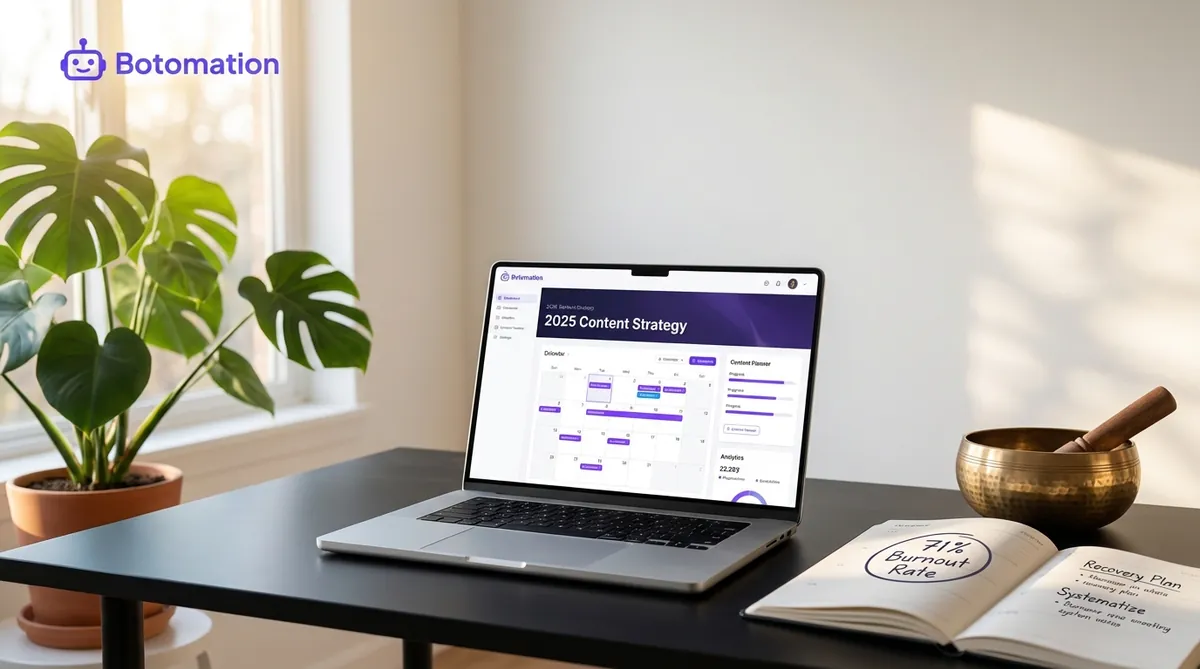
The content landscape in 2026 has reached a fever pitch that few predicted even a few years ago. While the tools for creation have become more sophisticated, finding effective creative burnout solutions content creators can trust is now a priority for anyone looking to maintain a long-term career. Creative burnout is no longer just a "rough patch" or a period of social media writer's block; it is a systemic exhaustion that threatens the very livelihood of modern creators. Recent industry data from late 2024 suggests that over 71% of full-time content creators have experienced at least one episode of severe burnout in the last twelve months. This guide examines why this happens and, more importantly, how you can rebuild your creative engine using AI tools to prevent content creator burnout and expert-led automation.
Recognizing the Need for Creative Burnout Solutions Content Creators Can Use
Identifying burnout requires an honest assessment of your daily habits and internal state. It is a state of emotional, physical, and mental exhaustion caused by excessive and prolonged stress. In the context of content creation, it often manifests as a feeling of being "drained" of ideas and the energy to execute them. You might find yourself staring at a blank screen for hours, not because you lack talent, but because your brain is literally refusing to engage with the task.
The distinction between normal stress and burnout lies in the duration and the "rebound" factor. Normal stress is often tied to a specific project or deadline; once the task is finished, the stress dissipates, and you feel a sense of accomplishment. Burnout is a lingering cloud that remains even after a project is done. It carries a sense of cynicism and detachment from the work you once loved.
Take the case of Maria R., a tech influencer who saw her engagement skyrocket in early 2024. To keep up with the momentum, she increased her output to three high-quality videos per day across four platforms. Initially, the adrenaline carried her through, but by month six, she noticed she was neglecting her physical health and snapping at her team over minor errors. Her experience highlights that burnout often hits during periods of high success, not just during failure.
Physical Symptoms and Indicators
The body often knows you are burnt out before your mind is willing to admit it. Chronic fatigue is the most common indicator, but it isn't the kind of tiredness that a single night of sleep can fix. Creators often report "tired-wired" symptoms, where they feel exhausted all day but find their minds racing the moment they try to sleep. This disruption in sleep patterns leads to a vicious cycle of caffeine dependency and further adrenal fatigue.
Beyond sleep, many creators experience physical tension that manifests as chronic headaches or neck and shoulder pain. This is often the result of "holding" stress while sitting at a desk or behind a camera for ten to twelve hours a day. You might also notice changes in your appetite—either a complete loss of interest in food or a tendency to "stress eat" high-sugar snacks to maintain energy levels. These physical markers are your body’s way of sounding an alarm that your current pace is unsustainable.
Emotional and Cognitive Signs
The emotional toll of burnout is perhaps the most devastating aspect for a creative professional. A loss of passion for your niche is a major red flag. If the topics that used to excite you now feel like a chore, your brain is likely trying to protect itself from further overstimulation. This often leads to increased irritability, where minor technical glitches or constructive criticism from your audience feel like personal attacks.
Cognitively, burnout impairs your ability to focus and make decisions. You might find yourself "doom scrolling" for hours under the guise of "research" because you lack the mental energy to start your own work. This brain fog makes simple tasks take twice as long, which then increases your stress because you feel behind schedule. This feeling of inadequacy, especially when comparing your "behind-the-scenes" struggle to another creator's "highlight reel," creates a downward spiral of low self-esteem.
Why the Current Content Landscape Is Built for Burnout
To solve the problem, we must understand the environment that creates it. The 2026 creator economy is built on the "Old Way" of manual, high-frequency production. Algorithms on platforms like TikTok and Instagram have evolved to favor creators who post multiple times a day, creating a "content treadmill" that never stops, unless you learn to scale social media content with automation to keep up with demand. This pressure to remain visible is the primary driver of the current mental health crisis in the industry.
Research from 2024 studies on the content creator mental health landscape showed that the "always-on" nature of social media is the leading cause of anxiety among brand builders. Unlike a traditional job, there is no "clocking out" when your office is your phone and your product is your personality. This lack of separation between the self and the brand makes every dip in views feel like a personal rejection. The irregular income associated with many creator paths only adds a layer of financial insecurity that keeps people running on empty.
External Pressures and Expectations
The constant shift in platform algorithms creates a state of perpetual "visibility anxiety." A strategy that worked last month might be obsolete today, forcing creators into a state of constant pivoting and re-learning. This uncertainty makes it difficult to plan for the long term, leading to a reactive rather than proactive workflow. When you are constantly reacting to the latest trend or algorithm change, you lose the "creative flow" that makes your content unique.
Furthermore, audience expectations have reached an all-time high. In 2026, followers don't just want content; they want community, responsiveness, and total authenticity. Managing thousands of comments and direct messages while trying to maintain a brand voice is a full-time job in itself. When you add the demands of brand partnerships—which often come with strict deadlines and specific creative constraints—the pressure to perform becomes overwhelming.
Internal Factors Contributing to Burnout
Perfectionism is the silent killer of many creative careers. The desire to make every post "viral-worthy" prevents many creators from actually finishing their work, even though creating viral Instagram Reels and TikTok content is more about psychology and systems than perfectionism. This internal critic is often louder than any external hater, leading to hours of unnecessary editing and re-shooting. When your identity is tied directly to your social media success, a "flop" post feels like a failure of character rather than just a data point in a marketing strategy.
The difficulty in separating personal and professional life is another major internal hurdle. When your "lifestyle" is your content, every dinner, vacation, or personal milestone becomes a potential "content opportunity." This prevents the brain from ever entering a state of true rest. Without a clear boundary between when you are "on" and when you are "off," your nervous system remains in a state of high alert, eventually leading to the total depletion of your creative reserves.
Implementing Creative Burnout Solutions Content Creators Trust: A Step-by-Step Recovery
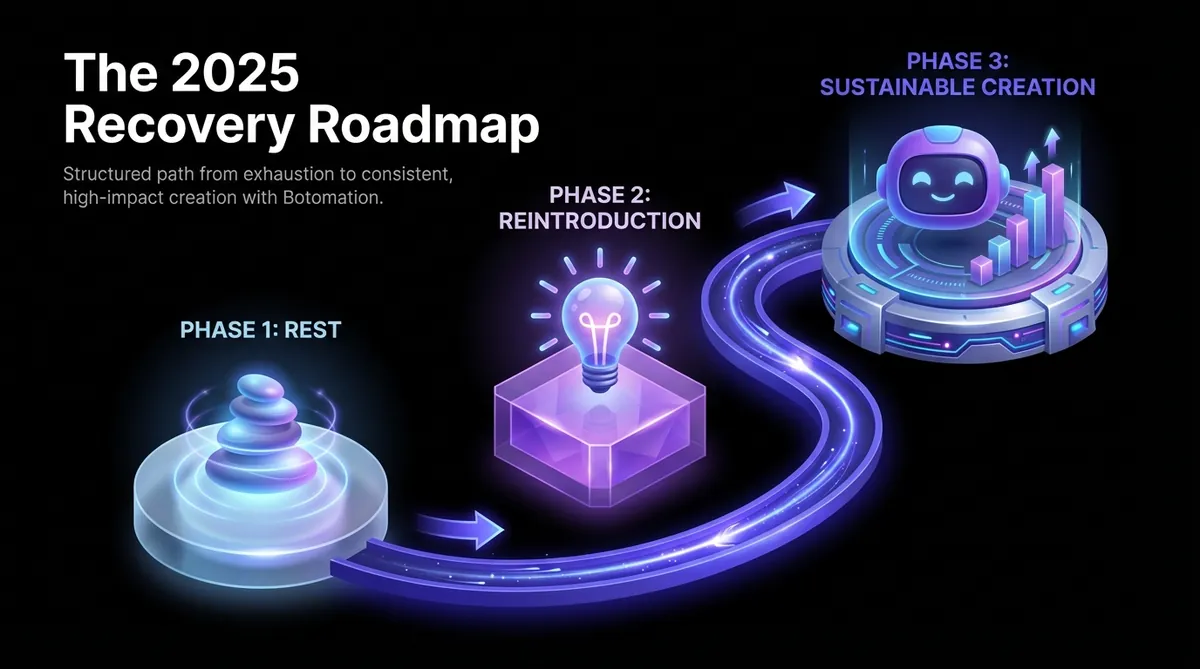
Recovery from burnout is not a weekend activity; it is a phased process that requires a fundamental shift in how you approach your work. Psychology research suggests that the brain needs a specific sequence of rest and re-engagement to heal from chronic stress. Jumping back into a full production schedule too early is the fastest way to trigger a relapse. You must treat your recovery with the same professional rigor you apply to your content strategy.
Consider the journey of David L., a YouTuber who specialized in long-form video essays. By late 2024, he was so burnt out that he couldn't even look at his editing software without feeling nauseous. He followed a three-month structured recovery plan that moved him from total rest to a sustainable "New Way" of creating. His story serves as a blueprint for anyone looking to rebuild their career on a more solid foundation.
Phase 1: Total Rest and Recovery (Weeks 1-2)
The first two weeks of recovery must involve a complete break from content creation and consumption. This means deleting social media apps from your phone and informing your audience or clients that you are taking a scheduled hiatus. Your primary goal during this phase is to lower your cortisol levels and allow your nervous system to reset. You cannot think your way out of burnout; you have to "rest" your way out of it.
During this period, focus on physical restoration and self-care for social media creators. This includes establishing a consistent sleep schedule and engaging in low-intensity physical activity like walking or stretching. Activities that involve "manual" creativity—such as cooking, gardening, or painting—can help your brain rediscover the joy of making things without the pressure of an audience. Monitor your progress by noting when your "brain fog" begins to lift and your natural curiosity starts to return.
Phase 2: Gradual Reintroduction (Weeks 3-6)
Once you feel your energy returning, you can begin light creative activities, but they must remain "pressure-free." This is the time to rediscover why you started creating in the first place, exploring various creative block recovery methods to restart your engine. Spend time journaling or sketching ideas without the intention of publishing them. This phase is about rebuilding the habit of creation without the weight of expectations or metrics.
During these weeks, you should also begin setting the boundaries that will protect you in the future. This might include deciding on specific "work hours" or identifying which types of content you will no longer produce because they are too draining. Building sustainable habits now is crucial. If you find yourself slipping back into old patterns of overworking during this phase, it is a sign that you need to slow down and re-evaluate your boundaries.
Phase 3: Transitioning to Sustainable Creation (Weeks 7+)
Entering the final phase of recovery requires a complete overhaul of your production systems. You cannot go back to the "Old Way" of manual grinding. This is where you implement high-level systems and expert-led automation to handle the repetitive, soul-crushing parts of the job. By integrating these burnout prevention strategies into your workflow, you ensure that your return to creation is both profitable and sustainable.
The focus here is on building creative resilience. This involves creating a "content buffer" so you are never working on a post the day it needs to go live, often by using tools to automate your social media posting schedule across platforms. It also means leaning on experts to handle the tasks that lead to your burnout. By delegating the heavy lifting of distribution and initial drafting to a team of specialists, you can focus purely on the high-level strategy and unique creative input that only you can provide.
Building Mental Resilience and Emotional Regulation
Long-term success in the creator economy requires more than just a good schedule; it requires a resilient mindset. Cognitive behavioral techniques (CBT) are highly effective for managing the specific stresses of a digital career. These techniques help you identify the "thought traps" that lead to burnout, such as the belief that you are only as good as your last post. By reframing your relationship with metrics, you can create a more stable emotional foundation.
Mindfulness and meditation are no longer just "wellness" trends; they are essential tools for content creator stress management. Research from 2026 indicates that creators who practice daily mindfulness are 40% less likely to experience severe burnout symptoms. These practices help you develop the ability to observe your stress without being consumed by it. Integrating these habits into your daily workflow ensures that you stay grounded even when a post goes viral or a campaign underperforms.
Cognitive Restructuring for the Creator Mindset
The first step in cognitive restructuring is identifying negative thought patterns. Many creators suffer from "all-or-nothing" thinking, which is a major factor in social media mental health struggles. Challenging these thoughts with evidence-based reasoning helps reduce the emotional weight of each individual project. You are building a brand over years, not days, and one underperforming post is statistically insignificant in the grand scheme of a decade-long career.
Building self-compassion is equally important. We often speak to ourselves in ways we would never speak to a colleague or friend. When you miss a deadline or make a mistake, treat yourself with the same grace you would offer someone else. Managing social comparison and the "Fear Of Missing Out" (FOMO) requires a conscious effort to limit your intake of other people's curated successes. Remember that you are seeing their "front of house," while you are intimately familiar with your own "backstage."
Mindfulness and Meditation Practices
Daily mindfulness exercises don't have to be time-consuming. Even five minutes of focused breathing before you start your workday can significantly lower your baseline stress. For creators, "flow state" meditation is particularly useful. This involves focusing on the sensory details of your creative process—the feel of the keyboard, the sound of the camera shutter—to bring your attention back to the present moment and away from future-focused anxieties.
There are numerous apps and tools available in 2026 that offer guided practices specifically tailored for creative professionals. Some focus on overcoming "creative blocks," while others are designed to help you wind down after a long day of screen time. Integrating these into your workflow—perhaps as a transition between "creation time" and "admin time"—creates a mental buffer that prevents stress from accumulating throughout the day.
Creating Sustainable Content Systems and Boundaries
The most effective way to prevent burnout is to stop doing everything yourself. The "Old Way" of manual production is a recipe for disaster. To scale in 2026, you need to transition to a "Media Engine" model. This involves using professional services like Botomation to automate the repetitive aspects of content creation, such as automated visual design, caption writing, and multi-platform publishing. When you remove the friction from your daily tasks, you preserve your "creative capital" for the work that truly matters.
Time Blocking and Scheduling Systems
Time management for creators should focus on "energy management" rather than just "time blocking." We all have peaks and valleys in our creative energy throughout the day. By scheduling your most demanding creative tasks during your peak hours and leaving the administrative or repetitive tasks for your low-energy periods, you work with your biology rather than against it. Protecting your non-creation time is just as important as protecting your work hours.
Comparing the Old Way vs. The New Way
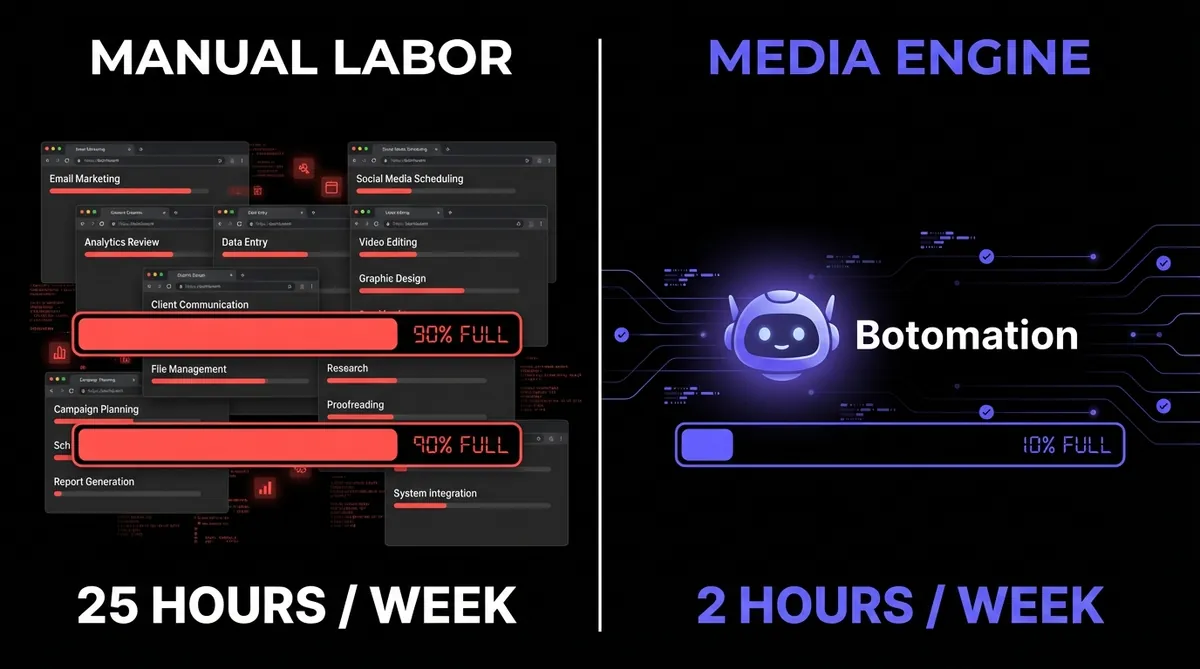
To understand the value of a system-based approach, look at the breakdown of time spent on manual content production versus an automated engine.
| Task Category | The Old Manual Way (Hours/Week) | The New Botomation Way (Hours/Week) |
|---|---|---|
| **Market Research** | 4-6 Hours | 0.5 Hours (Expert-led) |
| **Scripting & Copy** | 8-10 Hours | 1 Hour (Reviewing Drafts) |
| **Visual Design** | 10-12 Hours | 0 Hours (Automated) |
| **Publishing/Scheduling** | 3-5 Hours | 0 Hours (Automated) |
| **Total Weekly Labor** | **25-33 Hours** | **1.5-2 Hours** |
As the table shows, the manual approach consumes nearly a full work week just on the "logistics" of content. This leaves almost no time for high-level strategy, brand building, or, most importantly, rest. By partnering with our team at Botomation, you reclaim over 20 hours of your week. This isn't just "saving time"; it is reclaiming your mental health and preventing the very burnout that threatens your career.
Boundary Setting and Communication
Setting professional boundaries is often the hardest part for creators who have built their brand on "accessibility." However, your audience will respect you more if you are consistent and healthy than if you are "available" but falling apart. Clearly communicate your availability and response times in your bio or through automated replies. This manages expectations and reduces the pressure to be "always on."
Managing brand partnerships also requires a firm hand. Learn to say no to opportunities that don't align with your values or that impose unrealistic deadlines. A single high-paying but high-stress contract can often do more damage to your long-term productivity than it is worth in the short term. Protecting your personal life from professional demands is not a luxury; it is a business necessity.
Building a Support Network for Long-term Success
Isolation is one of the biggest contributors to creator burnout. When you work alone, every problem feels magnified, and every failure feels like it’s only happening to you, making it essential to automate content creation without growing your team. Finding a community of peers who understand the unique challenges of the creator economy is vital. Whether it's through online collectives, mastermind groups, or local meetups, having a space to vent and share strategies can significantly reduce your emotional load.
Professional support is also a key component of a long-term career. In 2026, many therapists and coaches specialize specifically in the issues faced by digital performers and influencers. They can provide tailored strategies for managing public scrutiny and the psychological impact of fluctuating metrics. Additionally, having a team of business experts to handle your financial planning, legal contracts, and administrative tasks allows you to stay in your "zone of genius" without being weighed down by the "business" side of being a creator.
Peer Support and Collaboration
Collaborating with other creators is about more than just "growth hacking"; it’s about mutual support. When you work with others, you share the creative and promotional load, making the process more enjoyable and less taxing. Mentorship is another powerful tool. Finding someone who is further along in their journey can provide perspective and help you avoid the pitfalls they’ve already navigated.
Virtual and in-person meetups allow for the kind of "water cooler talk" that creators often miss out on. These interactions remind you that you are part of a larger industry and that your struggles are shared by many others. This sense of belonging is a powerful antidote to the loneliness that often precedes burnout. Accountability partnerships, where you check in with a peer once a week, can also help you stay committed to your new boundaries and health goals.
Professional Support Resources
If you find that your burnout symptoms are not improving despite taking a break, it may be time to seek professional help. A therapist specializing in performance anxiety or burnout can help you navigate the deeper psychological roots of your stress. Coaching is also an excellent option for creators who need help with the practical aspects of business scaling and time management.
Don't overlook the "boring" parts of professional support, such as financial and legal advice. Much of the stress in a creator's life comes from the uncertainty of irregular income and the complexity of brand contracts. By hiring experts to manage these areas, you remove a significant source of background anxiety. This allows you to focus on your creative output with a clear mind, knowing that the foundation of your business is secure.
Frequently Asked Questions
How long does it actually take to recover from creative burnout?
The burnout recovery timeline varies significantly based on the severity of the burnout and how long the symptoms were ignored. For a mild case, a two-week "hard reset" followed by a month of gradual reintroduction might be enough. For severe, chronic burnout, it often takes three to six months of structured recovery to fully return to peak performance. The key is not to rush the process; your brain needs time to physically repair the neural pathways damaged by chronic stress.
Can I still post anything while I am in the recovery phase?
During Phase 1 (Rest), we strongly recommend a total blackout. However, we understand the fear of "losing the algorithm." This is why many creators choose to partner with our experts at Botomation before they go on break. Our team can manage your existing content, repurpose high-performing "evergreen" posts, and keep your accounts active 24/7 without you having to lift a finger. This allows you to rest fully while your brand continues to grow.
Should I be transparent with my audience about my burnout?
Transparency is generally a positive in 2026, as audiences value authenticity more than ever. Sharing that you are taking a break to prioritize your health can actually build a deeper emotional connection with your followers. However, you don't owe anyone the intimate details of your mental health. A simple message stating that you are taking a scheduled break to work on new systems for the brand is often enough to maintain trust while protecting your privacy.
Reclaiming Your Creative Future
Creative burnout is not an inevitable part of being a content creator; it is a symptom of an outdated, manual way of working. By recognizing the signs early and following a science-backed recovery process, you can rebuild your career on a foundation of sustainability. Treating your mental health with the same importance as your engagement metrics is the only way to ensure long-term success in this fast-paced industry. The 2026 landscape demands a new approach—one that balances human creativity with expert-led systems.
The "Old Way" of grinding out every post manually is a path to exhaustion and diminishing returns. To stay competitive and healthy, you must transition to a model where you are the director of your brand, not just the laborer. This means surrounding yourself with a support network and utilizing professional services that can handle the "heavy lifting" of content production. When you free yourself from the content treadmill, you find the space to innovate and create work that truly resonates.
At Botomation, we specialize in helping creators and brand builders escape the burnout cycle. Our team of experts provides an end-to-end Content & Media Engine that handles everything from viral script writing and visual design to 24/7 automated publishing. We don't just provide a tool; we provide a partnership that maintains your unique brand voice while removing the manual labor that leads to exhaustion. By letting our experts manage the consistency, you can focus on the high-level strategy and creative vision that only you can provide.
Ready to automate your growth? Book a free consultation call below.
The content landscape in 2026 has reached a fever pitch that few predicted even a few years ago. While the tools for creation have become more sophisticated, finding effective creative burnout solutions content creators can trust is now a priority for anyone looking to maintain a long-term career. Creative burnout is no longer just a "rough patch" or a period of social media writer's block; it is a systemic exhaustion that threatens the very livelihood of modern creators. Recent industry data from late 2024 suggests that over 71% of full-time content creators have experienced at least one episode of severe burnout in the last twelve months. This guide examines why this happens and, more importantly, how you can rebuild your creative engine using AI tools to prevent content creator burnout and expert-led automation.
Recognizing the Need for Creative Burnout Solutions Content Creators Can Use
Identifying burnout requires an honest assessment of your daily habits and internal state. It is a state of emotional, physical, and mental exhaustion caused by excessive and prolonged stress. In the context of content creation, it often manifests as a feeling of being "drained" of ideas and the energy to execute them. You might find yourself staring at a blank screen for hours, not because you lack talent, but because your brain is literally refusing to engage with the task.
The distinction between normal stress and burnout lies in the duration and the "rebound" factor. Normal stress is often tied to a specific project or deadline; once the task is finished, the stress dissipates, and you feel a sense of accomplishment. Burnout is a lingering cloud that remains even after a project is done. It carries a sense of cynicism and detachment from the work you once loved.
Take the case of Maria R., a tech influencer who saw her engagement skyrocket in early 2024. To keep up with the momentum, she increased her output to three high-quality videos per day across four platforms. Initially, the adrenaline carried her through, but by month six, she noticed she was neglecting her physical health and snapping at her team over minor errors. Her experience highlights that burnout often hits during periods of high success, not just during failure.
Physical Symptoms and Indicators
The body often knows you are burnt out before your mind is willing to admit it. Chronic fatigue is the most common indicator, but it isn't the kind of tiredness that a single night of sleep can fix. Creators often report "tired-wired" symptoms, where they feel exhausted all day but find their minds racing the moment they try to sleep. This disruption in sleep patterns leads to a vicious cycle of caffeine dependency and further adrenal fatigue.
Beyond sleep, many creators experience physical tension that manifests as chronic headaches or neck and shoulder pain. This is often the result of "holding" stress while sitting at a desk or behind a camera for ten to twelve hours a day. You might also notice changes in your appetite—either a complete loss of interest in food or a tendency to "stress eat" high-sugar snacks to maintain energy levels. These physical markers are your body’s way of sounding an alarm that your current pace is unsustainable.
Emotional and Cognitive Signs
The emotional toll of burnout is perhaps the most devastating aspect for a creative professional. A loss of passion for your niche is a major red flag. If the topics that used to excite you now feel like a chore, your brain is likely trying to protect itself from further overstimulation. This often leads to increased irritability, where minor technical glitches or constructive criticism from your audience feel like personal attacks.
Cognitively, burnout impairs your ability to focus and make decisions. You might find yourself "doom scrolling" for hours under the guise of "research" because you lack the mental energy to start your own work. This brain fog makes simple tasks take twice as long, which then increases your stress because you feel behind schedule. This feeling of inadequacy, especially when comparing your "behind-the-scenes" struggle to another creator's "highlight reel," creates a downward spiral of low self-esteem.
Why the Current Content Landscape Is Built for Burnout
To solve the problem, we must understand the environment that creates it. The 2026 creator economy is built on the "Old Way" of manual, high-frequency production. Algorithms on platforms like TikTok and Instagram have evolved to favor creators who post multiple times a day, creating a "content treadmill" that never stops, unless you learn to scale social media content with automation to keep up with demand. This pressure to remain visible is the primary driver of the current mental health crisis in the industry.
Research from 2024 studies on the content creator mental health landscape showed that the "always-on" nature of social media is the leading cause of anxiety among brand builders. Unlike a traditional job, there is no "clocking out" when your office is your phone and your product is your personality. This lack of separation between the self and the brand makes every dip in views feel like a personal rejection. The irregular income associated with many creator paths only adds a layer of financial insecurity that keeps people running on empty.
External Pressures and Expectations
The constant shift in platform algorithms creates a state of perpetual "visibility anxiety." A strategy that worked last month might be obsolete today, forcing creators into a state of constant pivoting and re-learning. This uncertainty makes it difficult to plan for the long term, leading to a reactive rather than proactive workflow. When you are constantly reacting to the latest trend or algorithm change, you lose the "creative flow" that makes your content unique.
Furthermore, audience expectations have reached an all-time high. In 2026, followers don't just want content; they want community, responsiveness, and total authenticity. Managing thousands of comments and direct messages while trying to maintain a brand voice is a full-time job in itself. When you add the demands of brand partnerships—which often come with strict deadlines and specific creative constraints—the pressure to perform becomes overwhelming.
Internal Factors Contributing to Burnout
Perfectionism is the silent killer of many creative careers. The desire to make every post "viral-worthy" prevents many creators from actually finishing their work, even though creating viral Instagram Reels and TikTok content is more about psychology and systems than perfectionism. This internal critic is often louder than any external hater, leading to hours of unnecessary editing and re-shooting. When your identity is tied directly to your social media success, a "flop" post feels like a failure of character rather than just a data point in a marketing strategy.
The difficulty in separating personal and professional life is another major internal hurdle. When your "lifestyle" is your content, every dinner, vacation, or personal milestone becomes a potential "content opportunity." This prevents the brain from ever entering a state of true rest. Without a clear boundary between when you are "on" and when you are "off," your nervous system remains in a state of high alert, eventually leading to the total depletion of your creative reserves.
Implementing Creative Burnout Solutions Content Creators Trust: A Step-by-Step Recovery
Recovery from burnout is not a weekend activity; it is a phased process that requires a fundamental shift in how you approach your work. Psychology research suggests that the brain needs a specific sequence of rest and re-engagement to heal from chronic stress. Jumping back into a full production schedule too early is the fastest way to trigger a relapse. You must treat your recovery with the same professional rigor you apply to your content strategy.
Consider the journey of David L., a YouTuber who specialized in long-form video essays. By late 2024, he was so burnt out that he couldn't even look at his editing software without feeling nauseous. He followed a three-month structured recovery plan that moved him from total rest to a sustainable "New Way" of creating. His story serves as a blueprint for anyone looking to rebuild their career on a more solid foundation.
Phase 1: Total Rest and Recovery (Weeks 1-2)
The first two weeks of recovery must involve a complete break from content creation and consumption. This means deleting social media apps from your phone and informing your audience or clients that you are taking a scheduled hiatus. Your primary goal during this phase is to lower your cortisol levels and allow your nervous system to reset. You cannot think your way out of burnout; you have to "rest" your way out of it.
During this period, focus on physical restoration and self-care for social media creators. This includes establishing a consistent sleep schedule and engaging in low-intensity physical activity like walking or stretching. Activities that involve "manual" creativity—such as cooking, gardening, or painting—can help your brain rediscover the joy of making things without the pressure of an audience. Monitor your progress by noting when your "brain fog" begins to lift and your natural curiosity starts to return.
Phase 2: Gradual Reintroduction (Weeks 3-6)
Once you feel your energy returning, you can begin light creative activities, but they must remain "pressure-free." This is the time to rediscover why you started creating in the first place, exploring various creative block recovery methods to restart your engine. Spend time journaling or sketching ideas without the intention of publishing them. This phase is about rebuilding the habit of creation without the weight of expectations or metrics.
During these weeks, you should also begin setting the boundaries that will protect you in the future. This might include deciding on specific "work hours" or identifying which types of content you will no longer produce because they are too draining. Building sustainable habits now is crucial. If you find yourself slipping back into old patterns of overworking during this phase, it is a sign that you need to slow down and re-evaluate your boundaries.
Phase 3: Transitioning to Sustainable Creation (Weeks 7+)
Entering the final phase of recovery requires a complete overhaul of your production systems. You cannot go back to the "Old Way" of manual grinding. This is where you implement high-level systems and expert-led automation to handle the repetitive, soul-crushing parts of the job. By integrating these burnout prevention strategies into your workflow, you ensure that your return to creation is both profitable and sustainable.
The focus here is on building creative resilience. This involves creating a "content buffer" so you are never working on a post the day it needs to go live, often by using tools to automate your social media posting schedule across platforms. It also means leaning on experts to handle the tasks that lead to your burnout. By delegating the heavy lifting of distribution and initial drafting to a team of specialists, you can focus purely on the high-level strategy and unique creative input that only you can provide.
Building Mental Resilience and Emotional Regulation
Long-term success in the creator economy requires more than just a good schedule; it requires a resilient mindset. Cognitive behavioral techniques (CBT) are highly effective for managing the specific stresses of a digital career. These techniques help you identify the "thought traps" that lead to burnout, such as the belief that you are only as good as your last post. By reframing your relationship with metrics, you can create a more stable emotional foundation.
Mindfulness and meditation are no longer just "wellness" trends; they are essential tools for content creator stress management. Research from 2026 indicates that creators who practice daily mindfulness are 40% less likely to experience severe burnout symptoms. These practices help you develop the ability to observe your stress without being consumed by it. Integrating these habits into your daily workflow ensures that you stay grounded even when a post goes viral or a campaign underperforms.
Cognitive Restructuring for the Creator Mindset
The first step in cognitive restructuring is identifying negative thought patterns. Many creators suffer from "all-or-nothing" thinking, which is a major factor in social media mental health struggles. Challenging these thoughts with evidence-based reasoning helps reduce the emotional weight of each individual project. You are building a brand over years, not days, and one underperforming post is statistically insignificant in the grand scheme of a decade-long career.
Building self-compassion is equally important. We often speak to ourselves in ways we would never speak to a colleague or friend. When you miss a deadline or make a mistake, treat yourself with the same grace you would offer someone else. Managing social comparison and the "Fear Of Missing Out" (FOMO) requires a conscious effort to limit your intake of other people's curated successes. Remember that you are seeing their "front of house," while you are intimately familiar with your own "backstage."
Mindfulness and Meditation Practices
Daily mindfulness exercises don't have to be time-consuming. Even five minutes of focused breathing before you start your workday can significantly lower your baseline stress. For creators, "flow state" meditation is particularly useful. This involves focusing on the sensory details of your creative process—the feel of the keyboard, the sound of the camera shutter—to bring your attention back to the present moment and away from future-focused anxieties.
There are numerous apps and tools available in 2026 that offer guided practices specifically tailored for creative professionals. Some focus on overcoming "creative blocks," while others are designed to help you wind down after a long day of screen time. Integrating these into your workflow—perhaps as a transition between "creation time" and "admin time"—creates a mental buffer that prevents stress from accumulating throughout the day.
Creating Sustainable Content Systems and Boundaries
The most effective way to prevent burnout is to stop doing everything yourself. The "Old Way" of manual production is a recipe for disaster. To scale in 2026, you need to transition to a "Media Engine" model. This involves using professional services like Botomation to automate the repetitive aspects of content creation, such as automated visual design, caption writing, and multi-platform publishing. When you remove the friction from your daily tasks, you preserve your "creative capital" for the work that truly matters.
Time Blocking and Scheduling Systems
Time management for creators should focus on "energy management" rather than just "time blocking." We all have peaks and valleys in our creative energy throughout the day. By scheduling your most demanding creative tasks during your peak hours and leaving the administrative or repetitive tasks for your low-energy periods, you work with your biology rather than against it. Protecting your non-creation time is just as important as protecting your work hours.
Comparing the Old Way vs. The New Way
To understand the value of a system-based approach, look at the breakdown of time spent on manual content production versus an automated engine.
| Task Category | The Old Manual Way (Hours/Week) | The New Botomation Way (Hours/Week) |
|---|---|---|
| **Market Research** | 4-6 Hours | 0.5 Hours (Expert-led) |
| **Scripting & Copy** | 8-10 Hours | 1 Hour (Reviewing Drafts) |
| **Visual Design** | 10-12 Hours | 0 Hours (Automated) |
| **Publishing/Scheduling** | 3-5 Hours | 0 Hours (Automated) |
| **Total Weekly Labor** | **25-33 Hours** | **1.5-2 Hours** |
As the table shows, the manual approach consumes nearly a full work week just on the "logistics" of content. This leaves almost no time for high-level strategy, brand building, or, most importantly, rest. By partnering with our team at Botomation, you reclaim over 20 hours of your week. This isn't just "saving time"; it is reclaiming your mental health and preventing the very burnout that threatens your career.
Boundary Setting and Communication
Setting professional boundaries is often the hardest part for creators who have built their brand on "accessibility." However, your audience will respect you more if you are consistent and healthy than if you are "available" but falling apart. Clearly communicate your availability and response times in your bio or through automated replies. This manages expectations and reduces the pressure to be "always on."
Managing brand partnerships also requires a firm hand. Learn to say no to opportunities that don't align with your values or that impose unrealistic deadlines. A single high-paying but high-stress contract can often do more damage to your long-term productivity than it is worth in the short term. Protecting your personal life from professional demands is not a luxury; it is a business necessity.
Building a Support Network for Long-term Success
Isolation is one of the biggest contributors to creator burnout. When you work alone, every problem feels magnified, and every failure feels like it’s only happening to you, making it essential to automate content creation without growing your team. Finding a community of peers who understand the unique challenges of the creator economy is vital. Whether it's through online collectives, mastermind groups, or local meetups, having a space to vent and share strategies can significantly reduce your emotional load.
Professional support is also a key component of a long-term career. In 2026, many therapists and coaches specialize specifically in the issues faced by digital performers and influencers. They can provide tailored strategies for managing public scrutiny and the psychological impact of fluctuating metrics. Additionally, having a team of business experts to handle your financial planning, legal contracts, and administrative tasks allows you to stay in your "zone of genius" without being weighed down by the "business" side of being a creator.
Peer Support and Collaboration
Collaborating with other creators is about more than just "growth hacking"; it’s about mutual support. When you work with others, you share the creative and promotional load, making the process more enjoyable and less taxing. Mentorship is another powerful tool. Finding someone who is further along in their journey can provide perspective and help you avoid the pitfalls they’ve already navigated.
Virtual and in-person meetups allow for the kind of "water cooler talk" that creators often miss out on. These interactions remind you that you are part of a larger industry and that your struggles are shared by many others. This sense of belonging is a powerful antidote to the loneliness that often precedes burnout. Accountability partnerships, where you check in with a peer once a week, can also help you stay committed to your new boundaries and health goals.
Professional Support Resources
If you find that your burnout symptoms are not improving despite taking a break, it may be time to seek professional help. A therapist specializing in performance anxiety or burnout can help you navigate the deeper psychological roots of your stress. Coaching is also an excellent option for creators who need help with the practical aspects of business scaling and time management.
Don't overlook the "boring" parts of professional support, such as financial and legal advice. Much of the stress in a creator's life comes from the uncertainty of irregular income and the complexity of brand contracts. By hiring experts to manage these areas, you remove a significant source of background anxiety. This allows you to focus on your creative output with a clear mind, knowing that the foundation of your business is secure.
Frequently Asked Questions
How long does it actually take to recover from creative burnout?
The burnout recovery timeline varies significantly based on the severity of the burnout and how long the symptoms were ignored. For a mild case, a two-week "hard reset" followed by a month of gradual reintroduction might be enough. For severe, chronic burnout, it often takes three to six months of structured recovery to fully return to peak performance. The key is not to rush the process; your brain needs time to physically repair the neural pathways damaged by chronic stress.
Can I still post anything while I am in the recovery phase?
During Phase 1 (Rest), we strongly recommend a total blackout. However, we understand the fear of "losing the algorithm." This is why many creators choose to partner with our experts at Botomation before they go on break. Our team can manage your existing content, repurpose high-performing "evergreen" posts, and keep your accounts active 24/7 without you having to lift a finger. This allows you to rest fully while your brand continues to grow.
Should I be transparent with my audience about my burnout?
Transparency is generally a positive in 2026, as audiences value authenticity more than ever. Sharing that you are taking a break to prioritize your health can actually build a deeper emotional connection with your followers. However, you don't owe anyone the intimate details of your mental health. A simple message stating that you are taking a scheduled break to work on new systems for the brand is often enough to maintain trust while protecting your privacy.
Reclaiming Your Creative Future
Creative burnout is not an inevitable part of being a content creator; it is a symptom of an outdated, manual way of working. By recognizing the signs early and following a science-backed recovery process, you can rebuild your career on a foundation of sustainability. Treating your mental health with the same importance as your engagement metrics is the only way to ensure long-term success in this fast-paced industry. The 2026 landscape demands a new approach—one that balances human creativity with expert-led systems.
The "Old Way" of grinding out every post manually is a path to exhaustion and diminishing returns. To stay competitive and healthy, you must transition to a model where you are the director of your brand, not just the laborer. This means surrounding yourself with a support network and utilizing professional services that can handle the "heavy lifting" of content production. When you free yourself from the content treadmill, you find the space to innovate and create work that truly resonates.
At Botomation, we specialize in helping creators and brand builders escape the burnout cycle. Our team of experts provides an end-to-end Content & Media Engine that handles everything from viral script writing and visual design to 24/7 automated publishing. We don't just provide a tool; we provide a partnership that maintains your unique brand voice while removing the manual labor that leads to exhaustion. By letting our experts manage the consistency, you can focus on the high-level strategy and creative vision that only you can provide.
Ready to automate your growth? Book a free consultation call below.
Get Started
Book a FREE Consultation Right NOW!
Schedule a Call with Our Team To Make Your Business More Efficient with AI Instantly.
Read More