Shopify WhatsApp Integration for Order Status Updates 2026
Jan 8, 2026
Shopify
AI Automation
E-commerce
Shopify
AI Automation
E-commerce
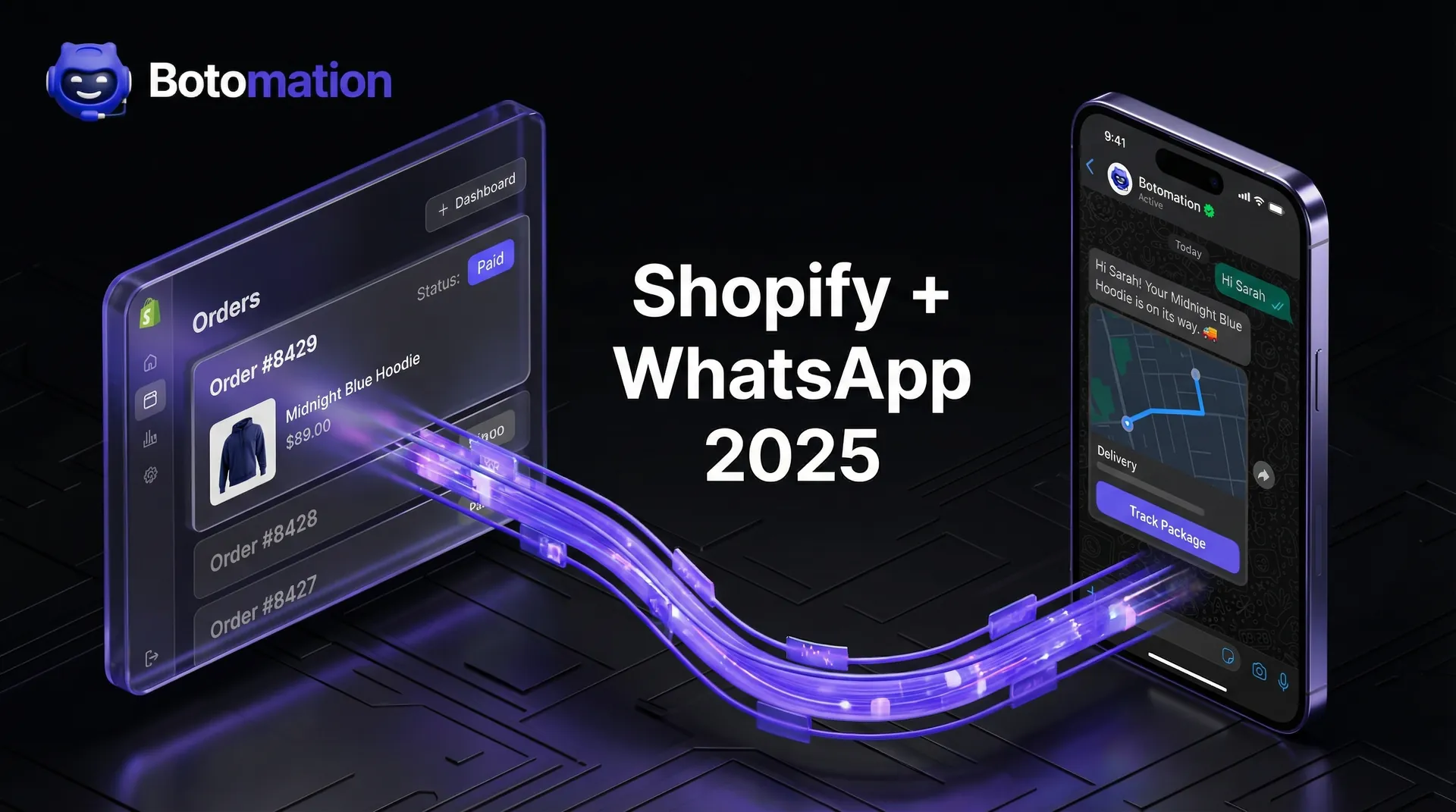
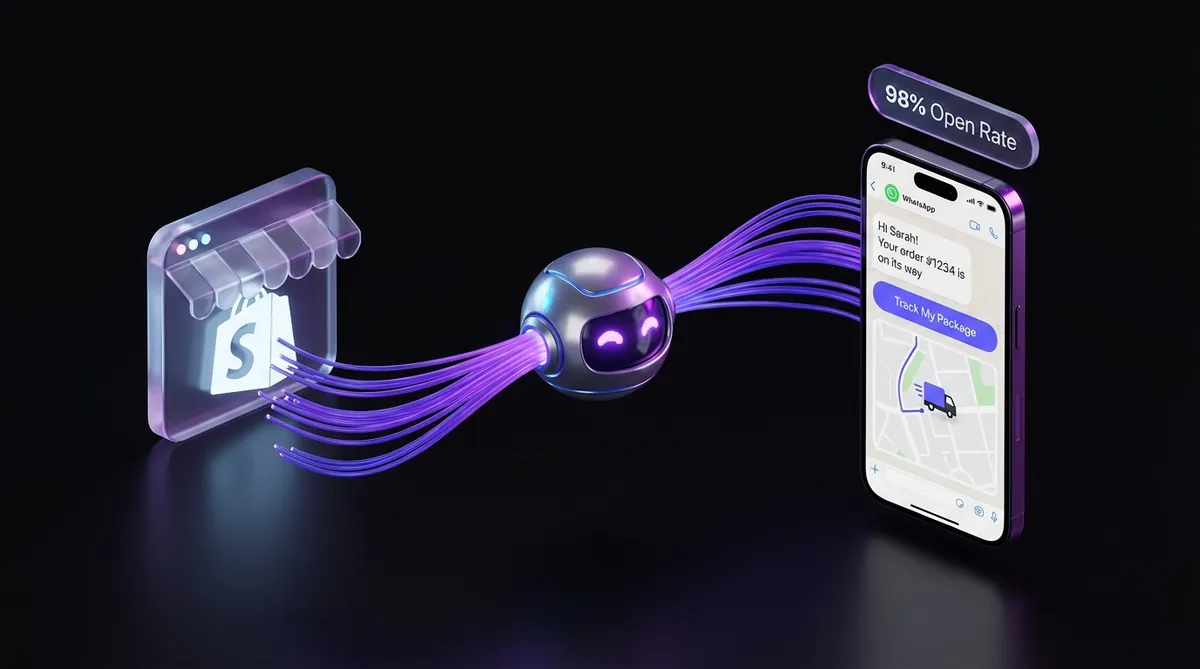
Implementing a shopify whatsapp integration for order status updates has become the gold standard for e-commerce brands in late 2026. The landscape has shifted fundamentally away from passive communication toward instant, conversational commerce. With the landmark partnership between Shopify and Meta finalized earlier this year, providing real-time updates through automated order tracking notifications via WhatsApp has become a baseline expectation for high-growth brands. Statistics from 2026 show that Shopify merchants who have successfully implemented a deep WhatsApp integration report a staggering 40% improvement in customer satisfaction scores.
Technical shifts have made this integration more powerful than ever before. The release of the Shopify Plus API v2026-04 introduced enhanced webhook capabilities specifically designed to handle the high-concurrency demands of WhatsApp's global infrastructure. For brands scaling past the $10M ARR mark, relying on traditional email notifications is a recipe for high support ticket volume and customer anxiety. Email open rates continue to dwindle, while WhatsApp messages boast a near-100% open rate with response times measured in minutes rather than hours. This guide explores how to navigate this technical transition, whether you are looking for a quick app-based fix or a sophisticated WhatsApp bot for 24/7 Shopify support handled by our team of experts.
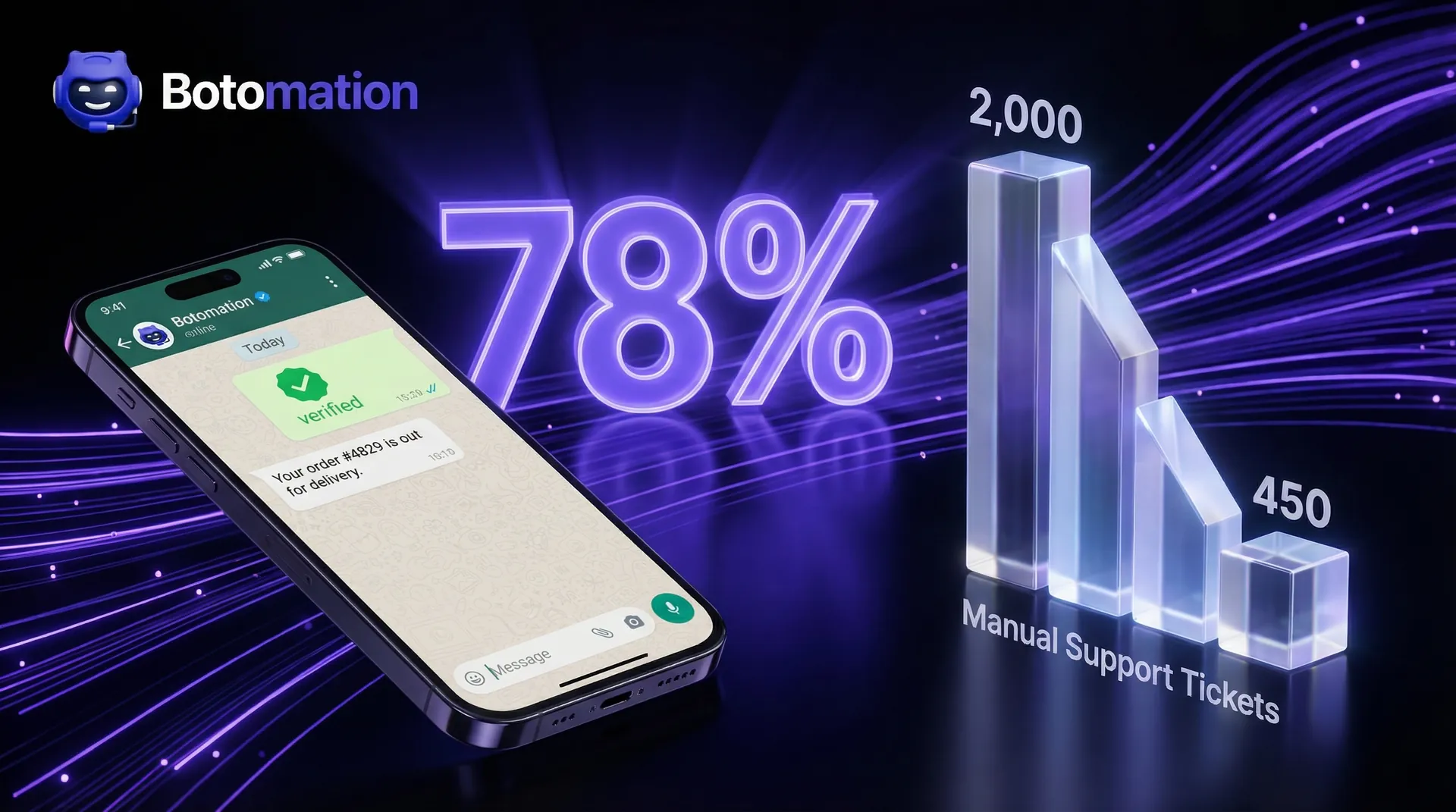
The business case for this integration is rooted in the reduction of support tickets related to "Where Is My Order" (WISMO) inquiries. Our internal data at Botomation suggests that these repetitive queries can account for up to 60% of a support team's daily workload. By using tools that reduce Shopify support tickets by 78% through a direct WhatsApp bridge, brands can refocus their human talent on automated lead qualification and complex problem-solving. As we look at the specific technical requirements and strategic implementations available in January 2026, it becomes clear that the "Old Way" of siloed communication is rapidly being replaced by the integrated, AI-driven "New Way."
"The brands winning in 2026 are those that treat the post-purchase experience as the beginning of the next sale, not the end of the current one." — Senior E-commerce Consultant at Botomation.
How to Choose the Right Shopify WhatsApp Integration for Order Status Updates
Selecting an integration method requires a clear understanding of your current volume and your long-term scalability goals. In 2026, there are three primary routes: off-the-shelf third-party apps, custom-built bridges, and the advanced solutions reserved for Shopify Plus merchants. The Shopify WhatsApp Business solution, released in January 2026, has introduced built-in template management that simplifies the process for smaller stores, but it often lacks the deep data hooks required by sophisticated DTC brands. When our team evaluates a brand's needs, we look at the complexity of their fulfillment logic and the necessity for personalized, dynamic content that goes beyond a simple tracking number.
| Feature | Third-Party Apps | Custom Integration | Shopify Plus Advanced |
|---|---|---|---|
| **Setup Speed** | 1-2 Days | 4-6 Weeks | 2-3 Weeks |
| **Monthly Cost** | $20 - $100 | Low (API usage only) | Included in Tier |
| **Customization** | Limited Templates | Unlimited | High (via Scripts) |
| **Data Ownership** | Shared with Provider | Full Ownership | Full Ownership |
| **AI Capabilities** | Basic Chatbots | Advanced GPT-5 Agents | Enterprise AI |
The cost of these solutions varies significantly. While a $50/month app might seem attractive initially, the "hidden" costs of limited data flexibility and generic branding can hurt your long-term ROI, especially if they don't help you improve website speed for better conversions. For a growing brand, investing in custom web development for marketing to build a custom solution—typically ranging from $3,000 to $10,000—often pays for itself within the first quarter by eliminating the need for additional support hires. If you consider that a junior support representative costs roughly $56,250 annually ($45,000 base + $11,250 benefits), reducing their workload by 80% through automation represents a massive bottom-line win.
Third Party App Solutions for Shopify
For smaller merchants or those just starting their journey into conversational commerce, finding the best WhatsApp order tracking automation for small business usually starts with the Shopify App Store. Tools like the updated Zoko Integration or the 2026 version of WhatsApp Business for Shopify provide a "plug-and-play" experience that handles the heavy lifting of API connections. These platforms manage the message templates and the connection to the Meta Business Suite on your behalf, which is ideal if you do not have an in-house development team to monitor API changes.
However, these apps often come with significant limitations regarding the "look and feel" of the customer journey. You are often restricted to their specific workflows, and if their servers experience latency, your customers feel the delay. Most of these providers also charge a markup on every message sent, which can become a substantial expense as your order volume scales into the thousands per month. For brands that prioritize a unique brand voice and absolute control over the data flow, these "Old Way" app solutions are usually just a temporary bridge to a more permanent, custom setup.
Custom Integration Development Approach
The custom route is where high-volume Shopify stores find their competitive edge, often leveraging custom web development to build a direct bridge between the Shopify API and the WhatsApp Cloud API, our experts allow your brand to trigger messages based on any data point in your ecosystem. This might mean sending a different message to a first-time buyer compared to a VIP customer who has made ten purchases. You aren't just sending a tracking link; you are sending a curated experience that reflects the customer's history with your brand.
Maintenance is the primary consideration for this approach. Because you are dealing with two evolving APIs, you need a partner who can ensure the bridge remains functional through every update. At Botomation, we handle this ongoing technical oversight, ensuring that when Shopify updates its webhook structures or Meta changes its template approval process, your integration doesn't skip a beat. The flexibility to integrate with your specific CRM, inventory management system (IMS), and even your loyalty program makes the custom approach the gold standard for 2026 e-commerce.
Setting Up Your WhatsApp Business Account and API Access
Before a single message can be sent, you must navigate the Meta ecosystem. This process has become more streamlined with the release of the WhatsApp Cloud API in January 2026, but it still requires a disciplined approach to verification. You will need a verified Meta Business Manager account, which acts as the central hub for your brand's identity across Facebook, Instagram, and WhatsApp. The verification process involves submitting legal documentation to prove your business's legitimacy, a step that Meta has become increasingly strict about to prevent spam and fraud.
Compliance is not optional in 2026. You must adhere to the WhatsApp Business Messaging Policy, which dictates everything from the types of content you can send to the mandatory "opt-out" options you must provide. Our team ensures that your setup is fully compliant with regional regulations like GDPR in Europe and CCPA in California. Failing to follow these rules doesn't just result in a blocked account; it can lead to significant legal liabilities and the loss of a primary communication channel with your customers.
Meta Business Manager Setup and Verification
The first step is creating or optimizing your Meta Business Manager. This involves more than just filling out a profile; you must link your official website, verify your domain, and ensure that your business address matches your legal filings. Once the account is active, you will add a WhatsApp Business Account (WABA) to the manager. This is the specific container that will hold your phone numbers, message templates, and API credentials.
Security is a major focus in the 2026 update. We require all our partners to implement robust two-factor authentication and role-based access controls. You shouldn't give every team member full administrative access; instead, use the "least privilege" model to ensure that developers have the API keys they need while support staff only have access to the messaging interface. This protects your brand from internal errors and external threats that could compromise your customer data.
WhatsApp Business Account Configuration
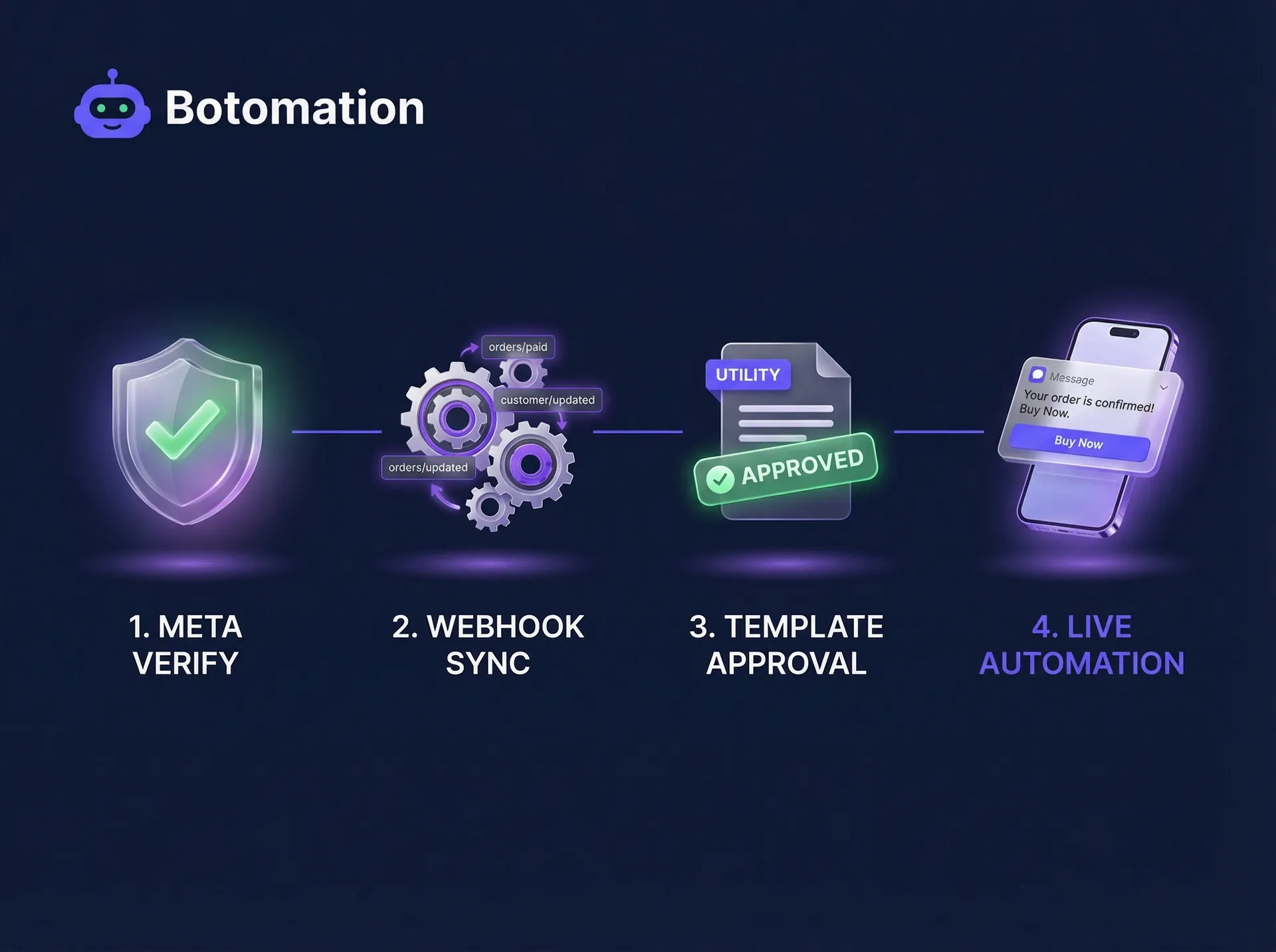
Once your WABA is established, the configuration phase begins. This is where you define how your brand appears to the customer. You will add a high-resolution logo, a professional business description, and your contact information. One of the most powerful features released in 2026 is the deep catalog integration, which allows you to link your Shopify product feed directly to WhatsApp. This means that if a customer asks a question about their order, your AI agent can provide personalized product recommendations with a direct "Buy Now" button inside the chat.
Message templates are the heart of the system. Every proactive message sent by a business—meaning any message sent outside of a 24-hour window from the customer's last response—must be an approved template. These templates are categorized by Meta (e.g., Utility, Marketing, Authentication). For order status updates, you will primarily use "Utility" templates. These must be written clearly, without overly promotional language, to pass the automated approval process. Our experts specialize in crafting templates that are both functional and brand-aligned, ensuring they get approved on the first attempt.
Developing the Shopify WhatsApp Integration Bridge
The technical bridge is the engine that drives your automation. It functions as a listener, waiting for specific events to happen in your Shopify store—such as a payment being processed or a package being scanned by the carrier—and then translating that data into a WhatsApp message. In mid-2026, the release of Shopify CLI 3.0 has made the development of these "listeners" more efficient, allowing for faster deployment of custom webhook endpoints.
Security during this data transfer is paramount. We implement end-to-end encryption and use Shopify's HMAC (Hash-based Message Authentication Code) verification to ensure that every request hitting your server actually comes from Shopify and hasn't been tampered with. This prevents "man-in-the-middle" attacks and ensures that sensitive customer information, like home addresses and purchase history, remains private.
Shopify Webhook Configuration for Order Events
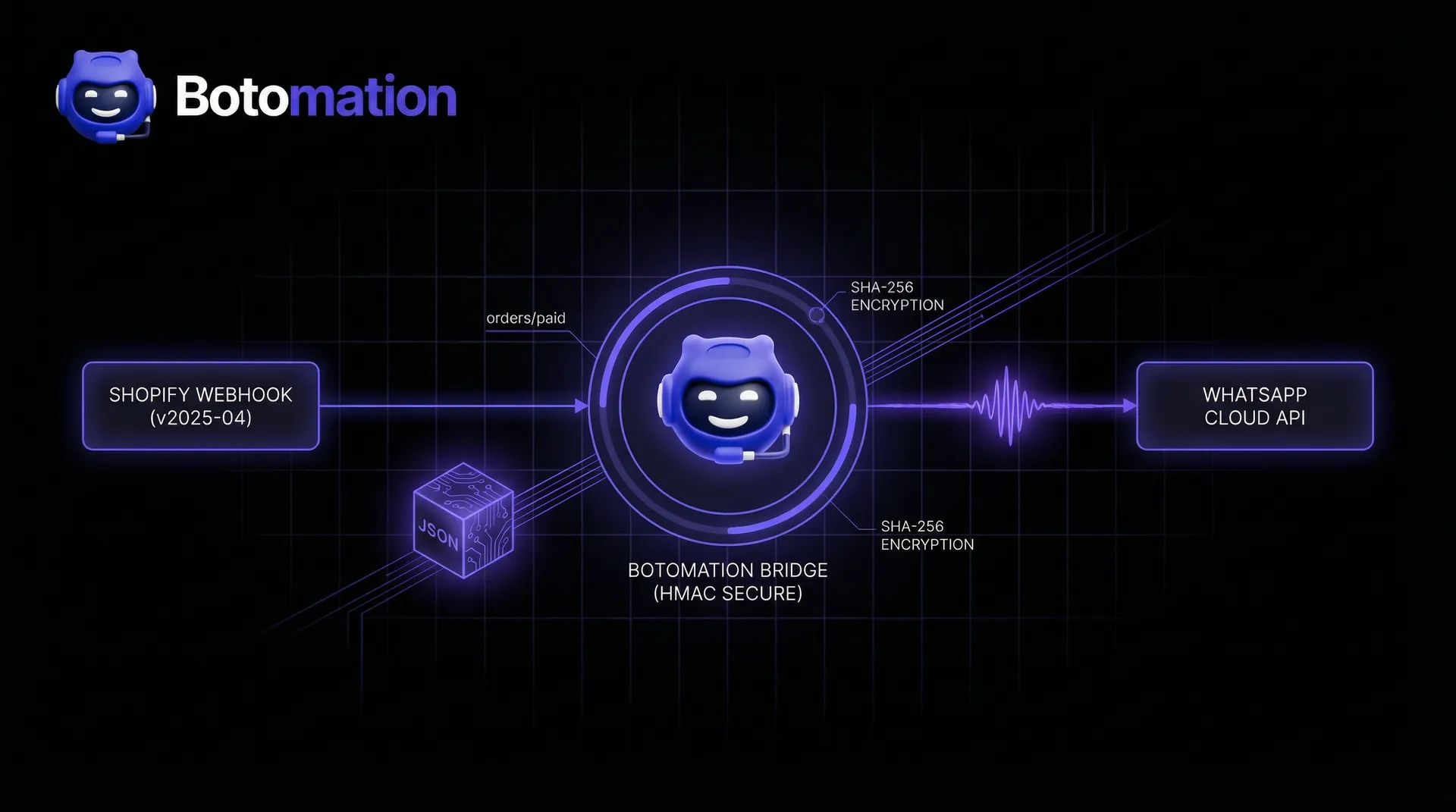
Webhooks are the primary way Shopify communicates with external systems. Instead of your server constantly asking Shopify "Is there a new order?", Shopify "pushes" the data to you the moment the event occurs. For a complete order tracking system, we configure listeners for several key event types: orders/paid, orders/fulfilled, fulfillment_events/created, and orders/cancelled. Each of these triggers a specific branch in our messaging logic.
The payload data sent by Shopify is comprehensive, including everything from the customer's phone number to the specific line items in the order. However, this data is often raw and needs to be cleaned and formatted before it can be used in a WhatsApp template. We also implement sophisticated queuing systems. During high-volume periods like Black Friday or Cyber Monday, your store might process hundreds of orders per minute. A robust integration must be able to queue these events and send them to WhatsApp at a rate that respects Meta's API limits without causing delays for the customer.
WhatsApp API Message Sending Implementation
Once the Shopify data is received and verified, the bridge must call the WhatsApp Cloud API to send the message. This requires more than just a simple "send" command. The system must select the correct template ID, inject the dynamic variables (like the customer's name and tracking number), and specify the recipient's phone number in the correct international format. If a message fails to send—perhaps due to an invalid phone number—the system must log that error and, in some cases, attempt a retry.
Rate limiting is a critical factor here. Meta assigns a "quality rating" to your phone number based on how customers interact with your messages. If you send too many messages that are marked as spam, your rating drops, and your daily message limit is throttled. Our integration logic includes "reputation-aware" sending, which monitors your quality score in real-time and alerts our team if there are any signs of customer dissatisfaction. This proactive approach ensures your communication channel remains open and healthy.
Database Design for Message Tracking and Customer Preferences
A successful integration doesn't just send messages; it remembers them. We design a dedicated database schema that maps Shopify order IDs to WhatsApp conversation IDs. This allows for a "threaded" experience where the customer can see their entire order history in one continuous chat window. It also enables our AI agents to have context; if a customer asks "Where is my stuff?", the agent knows exactly which order they are referring to without asking for an order number.
Customer preferences are also stored here. In 2026, privacy and "the right to be left alone" are major consumer trends. We build preference centers that allow customers to choose which types of updates they want to receive. Some might want every single delivery scan, while others only want a message when the package is delivered. By respecting these boundaries, you reduce the likelihood of being blocked and build deeper trust with your audience. Our systems also handle "STOP" and "UNSUBSCRIBE" commands automatically, ensuring total compliance with global anti-spam laws.
Creating and Managing WhatsApp Message Templates for Order Status
The content of your messages is just as important as the technology that sends them. In January 2026, WhatsApp v2.8 introduced the ability to include rich multimedia in utility templates. This means your order confirmation can now include a high-quality image of the product purchased, or your delivery notification can include a map showing the package's real-time location. These visual cues significantly improve the user experience and make the messages feel more like a premium service and less like a generic notification.
Dynamic content is what makes these templates feel personal. Instead of "Your order has shipped," a high-performing template in 2026 looks like: "Hi Sarah! Good news—your Midnight Blue Hoodie is on its way. You can track it here: [Link]." By using variables for the customer's name, the specific product, and even the estimated delivery time, you create a sense of individual attention that is impossible to achieve with bulk email.
Order Confirmation and Payment Status Templates
The order confirmation is the most important message in the customer journey. It provides immediate relief to the "buyer's remorse" that often sets in right after a purchase. This message should be sent within five minutes of the orders/paid event. It needs to include the order number, a summary of the items, the total price, and an expected delivery window.
We recommend including a clear "What's Next" section in this message. Tell the customer that they will receive another update as soon as the package leaves the warehouse. This is a critical part of Shopify post-purchase follow-up that sets expectations and prevents them from reaching out to support the next morning to ask if their order was processed. By being proactive, you are essentially training the customer to rely on WhatsApp for their updates, which keeps them within your controlled communication ecosystem.
Shipping and Delivery Status Templates
As the package moves through the carrier network, the integration should trigger updates for key milestones. The "Out for Delivery" message is particularly effective, as it has the highest engagement rate of any transactional message. In 2026, we use carrier API integrations to provide even more granular detail. If a package is delayed due to weather or a logistical issue, sending a proactive "We're sorry, your package is running a bit late" message can turn a potentially negative experience into a positive one.
The final "Delivered" message should be more than just a notification. It is a key touchpoint to boost customer retention and the perfect time to ask for a quick rating or to provide a link to a "How to Use" video for the product they just received. Because the customer is already in the WhatsApp thread, the friction for providing feedback is almost zero. This is how our partners at Botomation use order tracking as a springboard for reviews and user-generated content, further increasing the ROI of the integration.
Testing and Optimizing Your Shopify WhatsApp Integration for Order Status Updates
A "set it and forget it" mentality is the biggest mistake a brand can make with automation. The digital environment is too dynamic for that approach. We follow a rigorous testing phase that begins in a sandbox environment, where we simulate hundreds of different order scenarios to ensure the logic holds up. This includes testing for edge cases, such as international phone numbers, split shipments, and order cancellations that happen mid-fulfillment.
Optimization is an ongoing process. We use the WhatsApp Business Platform testing dashboard, released in January 2026, to monitor engagement metrics in real-time. If we notice that a particular template has a high "block rate," we immediately pivot and test new copy. We are looking for the "sweet spot" of communication—frequent enough to be helpful, but not so frequent that it becomes an annoyance.
Comprehensive Testing Strategy
Before going live, we perform load testing to ensure the integration can handle your peak traffic. If you are planning a major product drop, your system needs to be able to process thousands of webhooks without crashing. We also conduct "User Experience" (UX) testing with a small beta group of your actual customers. Their feedback is invaluable for identifying points of confusion in the message wording or the timing of the notifications.
Integration testing is the final step. We verify that the data flowing from Shopify matches exactly what is being sent to WhatsApp. A single typo in a tracking link variable can result in thousands of frustrated customers and a flooded support inbox. Our automated testing suite runs these checks continuously, even after the system is live, to catch any regressions that might be introduced by API updates.
Performance Optimization Techniques
Once the system is stable, we focus on performance. This involves A/B testing different message formats. Does a message with an emoji perform better than one without? Does sending the delivery notification at 9:00 AM lead to more positive reviews than sending it at 6:00 PM? These small tweaks, combined with strategies to increase Shopify AOV by 35%, can have a significant cumulative impact on your customer lifetime value (LTV).
We also optimize for "Delivery Success Rates." In some regions, mobile network issues can prevent WhatsApp messages from being delivered. Our system monitors these failures and can automatically fall back to a standard SMS or an email if the WhatsApp message isn't delivered within a certain timeframe. This ensures that the customer always gets their information, regardless of the technical hurdles.
Security, Compliance, and Maintenance Best Practices
As we move toward 2026, the regulatory environment surrounding data privacy is only getting stricter. The WhatsApp Business Policy v3.1, released in January 2026, introduced even more stringent requirements for how customer data is handled. Brands that ignore these updates risk more than just their WhatsApp account; they risk their entire reputation. At Botomation, we treat security as a foundational element of every integration we build.
Maintenance is the "hidden" part of the iceberg. A custom integration is a living piece of software. When Shopify or Meta releases a new version of their API, the bridge must be updated to remain compatible. We provide ongoing monitoring and maintenance services to ensure that your automation remains a reliable asset for your business.
Data Security and Privacy Compliance
Encryption is the first line of defense. All customer data is encrypted both in transit and at rest. We also implement strict data retention policies, ensuring that we only store the information necessary to facilitate the messaging. If a customer exercises their "Right to be Forgotten" under GDPR, our system can automatically purge their data from the integration database while keeping your Shopify records intact.
Opt-out mechanisms must be clear and easy to use. We include a "Reply STOP to opt-out" message in the initial confirmation, and our AI agents are trained to recognize various ways a customer might ask to stop receiving messages (e.g., "please stop," "no more texts," "unsubscribe"). This proactive compliance keeps your phone number's reputation high and ensures you stay on the right side of the law.
Ongoing Maintenance and Monitoring
Our real-time dashboard provides a bird's-eye view of your integration's health. We track the number of messages sent, delivery rates, and any errors that occur. If the Shopify API goes down—which is rare but possible—our system automatically alerts our team so we can implement a contingency plan.
Cost monitoring is also essential. As your volume grows, your API usage costs will increase. We help you optimize your message volume to ensure you are getting the maximum benefit for every dollar spent. By analyzing which messages drive the most value, we can help you trim unnecessary notifications and focus your budget on the communication that truly moves the needle for your brand.
Integrating WhatsApp for order status updates is no longer a "nice-to-have" feature; it is a critical component of a modern e-commerce strategy. By moving away from the "Old Way" of fragmented, slow communication and embracing the "New Way" of instant, AI-driven updates, you are doing more than just reducing support tickets. You are building a relationship with your customers based on transparency and reliability.
The technical complexity of building a truly deep integration—one that handles high volume, remains compliant, and uses advanced AI to drive sales—is significant. While basic apps exist, they cannot provide the level of customization and strategic advantage that a custom-built solution offers. Our team at Botomation specializes in these high-level integrations, acting as your technical partner to ensure your Shopify store remains at the cutting edge of conversational commerce.
Frequently Asked Questions
Will this integration work with my existing customer support platform?
Yes, a properly built custom integration can sync with major support platforms like Gorgias or Zendesk. This ensures that if a customer replies to an automated order update, the conversation is seamlessly handed off to your human support team or an advanced AI agent within your existing workflow.
How long does it take to get a custom WhatsApp integration live?
While a basic app can be set up in a day, a fully customized, robust integration handled by our experts typically takes between 4 to 6 weeks. This includes the time for Meta business verification, template approval, custom development, and rigorous testing to ensure everything works perfectly at scale.
Is WhatsApp better than SMS for order updates?
In 2026, the answer is a resounding yes. WhatsApp supports rich media (images, videos, maps), provides delivery and read receipts, and is significantly cheaper than international SMS for global brands. Furthermore, customers perceive WhatsApp as a more premium and secure channel for communication.
What happens if a customer doesn't use WhatsApp?
Our integration logic includes a fallback system. If the system detects that a phone number is not registered on WhatsApp, it can automatically trigger a traditional email or SMS notification. This ensures that 100% of your customers receive their updates, regardless of their preferred platform.
Can I use this for more than just order updates?
Absolutely. Once the bridge is built, it can be used for WhatsApp abandoned cart recovery, personalized product recommendations, and automated returns processing. This is why we view the integration as a platform for growth, not just a tool for support.
Ready to automate your growth? Book a call below.
Implementing a shopify whatsapp integration for order status updates has become the gold standard for e-commerce brands in late 2026. The landscape has shifted fundamentally away from passive communication toward instant, conversational commerce. With the landmark partnership between Shopify and Meta finalized earlier this year, providing real-time updates through automated order tracking notifications via WhatsApp has become a baseline expectation for high-growth brands. Statistics from 2026 show that Shopify merchants who have successfully implemented a deep WhatsApp integration report a staggering 40% improvement in customer satisfaction scores.
Technical shifts have made this integration more powerful than ever before. The release of the Shopify Plus API v2026-04 introduced enhanced webhook capabilities specifically designed to handle the high-concurrency demands of WhatsApp's global infrastructure. For brands scaling past the $10M ARR mark, relying on traditional email notifications is a recipe for high support ticket volume and customer anxiety. Email open rates continue to dwindle, while WhatsApp messages boast a near-100% open rate with response times measured in minutes rather than hours. This guide explores how to navigate this technical transition, whether you are looking for a quick app-based fix or a sophisticated WhatsApp bot for 24/7 Shopify support handled by our team of experts.
The business case for this integration is rooted in the reduction of support tickets related to "Where Is My Order" (WISMO) inquiries. Our internal data at Botomation suggests that these repetitive queries can account for up to 60% of a support team's daily workload. By using tools that reduce Shopify support tickets by 78% through a direct WhatsApp bridge, brands can refocus their human talent on automated lead qualification and complex problem-solving. As we look at the specific technical requirements and strategic implementations available in January 2026, it becomes clear that the "Old Way" of siloed communication is rapidly being replaced by the integrated, AI-driven "New Way."
"The brands winning in 2026 are those that treat the post-purchase experience as the beginning of the next sale, not the end of the current one." — Senior E-commerce Consultant at Botomation.
How to Choose the Right Shopify WhatsApp Integration for Order Status Updates
Selecting an integration method requires a clear understanding of your current volume and your long-term scalability goals. In 2026, there are three primary routes: off-the-shelf third-party apps, custom-built bridges, and the advanced solutions reserved for Shopify Plus merchants. The Shopify WhatsApp Business solution, released in January 2026, has introduced built-in template management that simplifies the process for smaller stores, but it often lacks the deep data hooks required by sophisticated DTC brands. When our team evaluates a brand's needs, we look at the complexity of their fulfillment logic and the necessity for personalized, dynamic content that goes beyond a simple tracking number.
| Feature | Third-Party Apps | Custom Integration | Shopify Plus Advanced |
|---|---|---|---|
| **Setup Speed** | 1-2 Days | 4-6 Weeks | 2-3 Weeks |
| **Monthly Cost** | $20 - $100 | Low (API usage only) | Included in Tier |
| **Customization** | Limited Templates | Unlimited | High (via Scripts) |
| **Data Ownership** | Shared with Provider | Full Ownership | Full Ownership |
| **AI Capabilities** | Basic Chatbots | Advanced GPT-5 Agents | Enterprise AI |
The cost of these solutions varies significantly. While a $50/month app might seem attractive initially, the "hidden" costs of limited data flexibility and generic branding can hurt your long-term ROI, especially if they don't help you improve website speed for better conversions. For a growing brand, investing in custom web development for marketing to build a custom solution—typically ranging from $3,000 to $10,000—often pays for itself within the first quarter by eliminating the need for additional support hires. If you consider that a junior support representative costs roughly $56,250 annually ($45,000 base + $11,250 benefits), reducing their workload by 80% through automation represents a massive bottom-line win.
Third Party App Solutions for Shopify
For smaller merchants or those just starting their journey into conversational commerce, finding the best WhatsApp order tracking automation for small business usually starts with the Shopify App Store. Tools like the updated Zoko Integration or the 2026 version of WhatsApp Business for Shopify provide a "plug-and-play" experience that handles the heavy lifting of API connections. These platforms manage the message templates and the connection to the Meta Business Suite on your behalf, which is ideal if you do not have an in-house development team to monitor API changes.
However, these apps often come with significant limitations regarding the "look and feel" of the customer journey. You are often restricted to their specific workflows, and if their servers experience latency, your customers feel the delay. Most of these providers also charge a markup on every message sent, which can become a substantial expense as your order volume scales into the thousands per month. For brands that prioritize a unique brand voice and absolute control over the data flow, these "Old Way" app solutions are usually just a temporary bridge to a more permanent, custom setup.
Custom Integration Development Approach
The custom route is where high-volume Shopify stores find their competitive edge, often leveraging custom web development to build a direct bridge between the Shopify API and the WhatsApp Cloud API, our experts allow your brand to trigger messages based on any data point in your ecosystem. This might mean sending a different message to a first-time buyer compared to a VIP customer who has made ten purchases. You aren't just sending a tracking link; you are sending a curated experience that reflects the customer's history with your brand.
Maintenance is the primary consideration for this approach. Because you are dealing with two evolving APIs, you need a partner who can ensure the bridge remains functional through every update. At Botomation, we handle this ongoing technical oversight, ensuring that when Shopify updates its webhook structures or Meta changes its template approval process, your integration doesn't skip a beat. The flexibility to integrate with your specific CRM, inventory management system (IMS), and even your loyalty program makes the custom approach the gold standard for 2026 e-commerce.
Setting Up Your WhatsApp Business Account and API Access
Before a single message can be sent, you must navigate the Meta ecosystem. This process has become more streamlined with the release of the WhatsApp Cloud API in January 2026, but it still requires a disciplined approach to verification. You will need a verified Meta Business Manager account, which acts as the central hub for your brand's identity across Facebook, Instagram, and WhatsApp. The verification process involves submitting legal documentation to prove your business's legitimacy, a step that Meta has become increasingly strict about to prevent spam and fraud.
Compliance is not optional in 2026. You must adhere to the WhatsApp Business Messaging Policy, which dictates everything from the types of content you can send to the mandatory "opt-out" options you must provide. Our team ensures that your setup is fully compliant with regional regulations like GDPR in Europe and CCPA in California. Failing to follow these rules doesn't just result in a blocked account; it can lead to significant legal liabilities and the loss of a primary communication channel with your customers.
Meta Business Manager Setup and Verification
The first step is creating or optimizing your Meta Business Manager. This involves more than just filling out a profile; you must link your official website, verify your domain, and ensure that your business address matches your legal filings. Once the account is active, you will add a WhatsApp Business Account (WABA) to the manager. This is the specific container that will hold your phone numbers, message templates, and API credentials.
Security is a major focus in the 2026 update. We require all our partners to implement robust two-factor authentication and role-based access controls. You shouldn't give every team member full administrative access; instead, use the "least privilege" model to ensure that developers have the API keys they need while support staff only have access to the messaging interface. This protects your brand from internal errors and external threats that could compromise your customer data.
WhatsApp Business Account Configuration
Once your WABA is established, the configuration phase begins. This is where you define how your brand appears to the customer. You will add a high-resolution logo, a professional business description, and your contact information. One of the most powerful features released in 2026 is the deep catalog integration, which allows you to link your Shopify product feed directly to WhatsApp. This means that if a customer asks a question about their order, your AI agent can provide personalized product recommendations with a direct "Buy Now" button inside the chat.
Message templates are the heart of the system. Every proactive message sent by a business—meaning any message sent outside of a 24-hour window from the customer's last response—must be an approved template. These templates are categorized by Meta (e.g., Utility, Marketing, Authentication). For order status updates, you will primarily use "Utility" templates. These must be written clearly, without overly promotional language, to pass the automated approval process. Our experts specialize in crafting templates that are both functional and brand-aligned, ensuring they get approved on the first attempt.
Developing the Shopify WhatsApp Integration Bridge
The technical bridge is the engine that drives your automation. It functions as a listener, waiting for specific events to happen in your Shopify store—such as a payment being processed or a package being scanned by the carrier—and then translating that data into a WhatsApp message. In mid-2026, the release of Shopify CLI 3.0 has made the development of these "listeners" more efficient, allowing for faster deployment of custom webhook endpoints.
Security during this data transfer is paramount. We implement end-to-end encryption and use Shopify's HMAC (Hash-based Message Authentication Code) verification to ensure that every request hitting your server actually comes from Shopify and hasn't been tampered with. This prevents "man-in-the-middle" attacks and ensures that sensitive customer information, like home addresses and purchase history, remains private.
Shopify Webhook Configuration for Order Events
Webhooks are the primary way Shopify communicates with external systems. Instead of your server constantly asking Shopify "Is there a new order?", Shopify "pushes" the data to you the moment the event occurs. For a complete order tracking system, we configure listeners for several key event types: orders/paid, orders/fulfilled, fulfillment_events/created, and orders/cancelled. Each of these triggers a specific branch in our messaging logic.
The payload data sent by Shopify is comprehensive, including everything from the customer's phone number to the specific line items in the order. However, this data is often raw and needs to be cleaned and formatted before it can be used in a WhatsApp template. We also implement sophisticated queuing systems. During high-volume periods like Black Friday or Cyber Monday, your store might process hundreds of orders per minute. A robust integration must be able to queue these events and send them to WhatsApp at a rate that respects Meta's API limits without causing delays for the customer.
WhatsApp API Message Sending Implementation
Once the Shopify data is received and verified, the bridge must call the WhatsApp Cloud API to send the message. This requires more than just a simple "send" command. The system must select the correct template ID, inject the dynamic variables (like the customer's name and tracking number), and specify the recipient's phone number in the correct international format. If a message fails to send—perhaps due to an invalid phone number—the system must log that error and, in some cases, attempt a retry.
Rate limiting is a critical factor here. Meta assigns a "quality rating" to your phone number based on how customers interact with your messages. If you send too many messages that are marked as spam, your rating drops, and your daily message limit is throttled. Our integration logic includes "reputation-aware" sending, which monitors your quality score in real-time and alerts our team if there are any signs of customer dissatisfaction. This proactive approach ensures your communication channel remains open and healthy.
Database Design for Message Tracking and Customer Preferences
A successful integration doesn't just send messages; it remembers them. We design a dedicated database schema that maps Shopify order IDs to WhatsApp conversation IDs. This allows for a "threaded" experience where the customer can see their entire order history in one continuous chat window. It also enables our AI agents to have context; if a customer asks "Where is my stuff?", the agent knows exactly which order they are referring to without asking for an order number.
Customer preferences are also stored here. In 2026, privacy and "the right to be left alone" are major consumer trends. We build preference centers that allow customers to choose which types of updates they want to receive. Some might want every single delivery scan, while others only want a message when the package is delivered. By respecting these boundaries, you reduce the likelihood of being blocked and build deeper trust with your audience. Our systems also handle "STOP" and "UNSUBSCRIBE" commands automatically, ensuring total compliance with global anti-spam laws.
Creating and Managing WhatsApp Message Templates for Order Status
The content of your messages is just as important as the technology that sends them. In January 2026, WhatsApp v2.8 introduced the ability to include rich multimedia in utility templates. This means your order confirmation can now include a high-quality image of the product purchased, or your delivery notification can include a map showing the package's real-time location. These visual cues significantly improve the user experience and make the messages feel more like a premium service and less like a generic notification.
Dynamic content is what makes these templates feel personal. Instead of "Your order has shipped," a high-performing template in 2026 looks like: "Hi Sarah! Good news—your Midnight Blue Hoodie is on its way. You can track it here: [Link]." By using variables for the customer's name, the specific product, and even the estimated delivery time, you create a sense of individual attention that is impossible to achieve with bulk email.
Order Confirmation and Payment Status Templates
The order confirmation is the most important message in the customer journey. It provides immediate relief to the "buyer's remorse" that often sets in right after a purchase. This message should be sent within five minutes of the orders/paid event. It needs to include the order number, a summary of the items, the total price, and an expected delivery window.
We recommend including a clear "What's Next" section in this message. Tell the customer that they will receive another update as soon as the package leaves the warehouse. This is a critical part of Shopify post-purchase follow-up that sets expectations and prevents them from reaching out to support the next morning to ask if their order was processed. By being proactive, you are essentially training the customer to rely on WhatsApp for their updates, which keeps them within your controlled communication ecosystem.
Shipping and Delivery Status Templates
As the package moves through the carrier network, the integration should trigger updates for key milestones. The "Out for Delivery" message is particularly effective, as it has the highest engagement rate of any transactional message. In 2026, we use carrier API integrations to provide even more granular detail. If a package is delayed due to weather or a logistical issue, sending a proactive "We're sorry, your package is running a bit late" message can turn a potentially negative experience into a positive one.
The final "Delivered" message should be more than just a notification. It is a key touchpoint to boost customer retention and the perfect time to ask for a quick rating or to provide a link to a "How to Use" video for the product they just received. Because the customer is already in the WhatsApp thread, the friction for providing feedback is almost zero. This is how our partners at Botomation use order tracking as a springboard for reviews and user-generated content, further increasing the ROI of the integration.
Testing and Optimizing Your Shopify WhatsApp Integration for Order Status Updates
A "set it and forget it" mentality is the biggest mistake a brand can make with automation. The digital environment is too dynamic for that approach. We follow a rigorous testing phase that begins in a sandbox environment, where we simulate hundreds of different order scenarios to ensure the logic holds up. This includes testing for edge cases, such as international phone numbers, split shipments, and order cancellations that happen mid-fulfillment.
Optimization is an ongoing process. We use the WhatsApp Business Platform testing dashboard, released in January 2026, to monitor engagement metrics in real-time. If we notice that a particular template has a high "block rate," we immediately pivot and test new copy. We are looking for the "sweet spot" of communication—frequent enough to be helpful, but not so frequent that it becomes an annoyance.
Comprehensive Testing Strategy
Before going live, we perform load testing to ensure the integration can handle your peak traffic. If you are planning a major product drop, your system needs to be able to process thousands of webhooks without crashing. We also conduct "User Experience" (UX) testing with a small beta group of your actual customers. Their feedback is invaluable for identifying points of confusion in the message wording or the timing of the notifications.
Integration testing is the final step. We verify that the data flowing from Shopify matches exactly what is being sent to WhatsApp. A single typo in a tracking link variable can result in thousands of frustrated customers and a flooded support inbox. Our automated testing suite runs these checks continuously, even after the system is live, to catch any regressions that might be introduced by API updates.
Performance Optimization Techniques
Once the system is stable, we focus on performance. This involves A/B testing different message formats. Does a message with an emoji perform better than one without? Does sending the delivery notification at 9:00 AM lead to more positive reviews than sending it at 6:00 PM? These small tweaks, combined with strategies to increase Shopify AOV by 35%, can have a significant cumulative impact on your customer lifetime value (LTV).
We also optimize for "Delivery Success Rates." In some regions, mobile network issues can prevent WhatsApp messages from being delivered. Our system monitors these failures and can automatically fall back to a standard SMS or an email if the WhatsApp message isn't delivered within a certain timeframe. This ensures that the customer always gets their information, regardless of the technical hurdles.
Security, Compliance, and Maintenance Best Practices
As we move toward 2026, the regulatory environment surrounding data privacy is only getting stricter. The WhatsApp Business Policy v3.1, released in January 2026, introduced even more stringent requirements for how customer data is handled. Brands that ignore these updates risk more than just their WhatsApp account; they risk their entire reputation. At Botomation, we treat security as a foundational element of every integration we build.
Maintenance is the "hidden" part of the iceberg. A custom integration is a living piece of software. When Shopify or Meta releases a new version of their API, the bridge must be updated to remain compatible. We provide ongoing monitoring and maintenance services to ensure that your automation remains a reliable asset for your business.
Data Security and Privacy Compliance
Encryption is the first line of defense. All customer data is encrypted both in transit and at rest. We also implement strict data retention policies, ensuring that we only store the information necessary to facilitate the messaging. If a customer exercises their "Right to be Forgotten" under GDPR, our system can automatically purge their data from the integration database while keeping your Shopify records intact.
Opt-out mechanisms must be clear and easy to use. We include a "Reply STOP to opt-out" message in the initial confirmation, and our AI agents are trained to recognize various ways a customer might ask to stop receiving messages (e.g., "please stop," "no more texts," "unsubscribe"). This proactive compliance keeps your phone number's reputation high and ensures you stay on the right side of the law.
Ongoing Maintenance and Monitoring
Our real-time dashboard provides a bird's-eye view of your integration's health. We track the number of messages sent, delivery rates, and any errors that occur. If the Shopify API goes down—which is rare but possible—our system automatically alerts our team so we can implement a contingency plan.
Cost monitoring is also essential. As your volume grows, your API usage costs will increase. We help you optimize your message volume to ensure you are getting the maximum benefit for every dollar spent. By analyzing which messages drive the most value, we can help you trim unnecessary notifications and focus your budget on the communication that truly moves the needle for your brand.
Integrating WhatsApp for order status updates is no longer a "nice-to-have" feature; it is a critical component of a modern e-commerce strategy. By moving away from the "Old Way" of fragmented, slow communication and embracing the "New Way" of instant, AI-driven updates, you are doing more than just reducing support tickets. You are building a relationship with your customers based on transparency and reliability.
The technical complexity of building a truly deep integration—one that handles high volume, remains compliant, and uses advanced AI to drive sales—is significant. While basic apps exist, they cannot provide the level of customization and strategic advantage that a custom-built solution offers. Our team at Botomation specializes in these high-level integrations, acting as your technical partner to ensure your Shopify store remains at the cutting edge of conversational commerce.
Frequently Asked Questions
Will this integration work with my existing customer support platform?
Yes, a properly built custom integration can sync with major support platforms like Gorgias or Zendesk. This ensures that if a customer replies to an automated order update, the conversation is seamlessly handed off to your human support team or an advanced AI agent within your existing workflow.
How long does it take to get a custom WhatsApp integration live?
While a basic app can be set up in a day, a fully customized, robust integration handled by our experts typically takes between 4 to 6 weeks. This includes the time for Meta business verification, template approval, custom development, and rigorous testing to ensure everything works perfectly at scale.
Is WhatsApp better than SMS for order updates?
In 2026, the answer is a resounding yes. WhatsApp supports rich media (images, videos, maps), provides delivery and read receipts, and is significantly cheaper than international SMS for global brands. Furthermore, customers perceive WhatsApp as a more premium and secure channel for communication.
What happens if a customer doesn't use WhatsApp?
Our integration logic includes a fallback system. If the system detects that a phone number is not registered on WhatsApp, it can automatically trigger a traditional email or SMS notification. This ensures that 100% of your customers receive their updates, regardless of their preferred platform.
Can I use this for more than just order updates?
Absolutely. Once the bridge is built, it can be used for WhatsApp abandoned cart recovery, personalized product recommendations, and automated returns processing. This is why we view the integration as a platform for growth, not just a tool for support.
Ready to automate your growth? Book a call below.
Get Started
Book a FREE Consultation Right NOW!
Schedule a Call with Our Team To Make Your Business More Efficient with AI Instantly.
Read More
Shopify WhatsApp Integration for Order Status Updates 2026
Shopify WhatsApp integration for order status updates reduces WISMO by 80%. Automate support, tracking, and recovery with AI for e-commerce in 2026.
Automate Order Tracking Notifications with WhatsApp (2026)
Learn how WhatsApp AI slashes support costs for e-commerce & SaaS. Proven strategies to boost sales, recover carts, and scale 24/7 service.