Track Competitor Pricing Automatically - 2026 AI Strategy
Jan 8, 2026
AI Automation
E-commerce
Market Intelligence
AI Automation
E-commerce
Market Intelligence
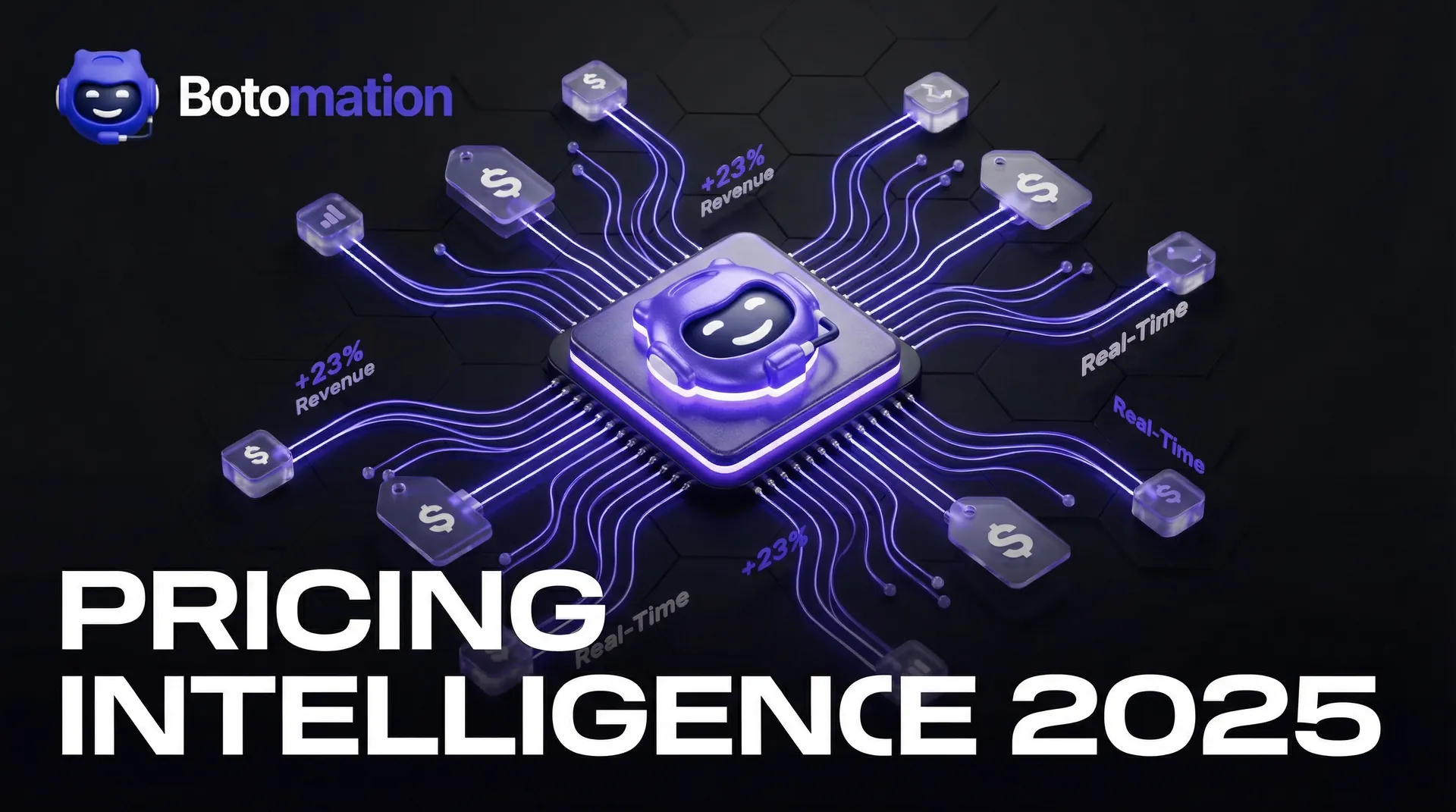
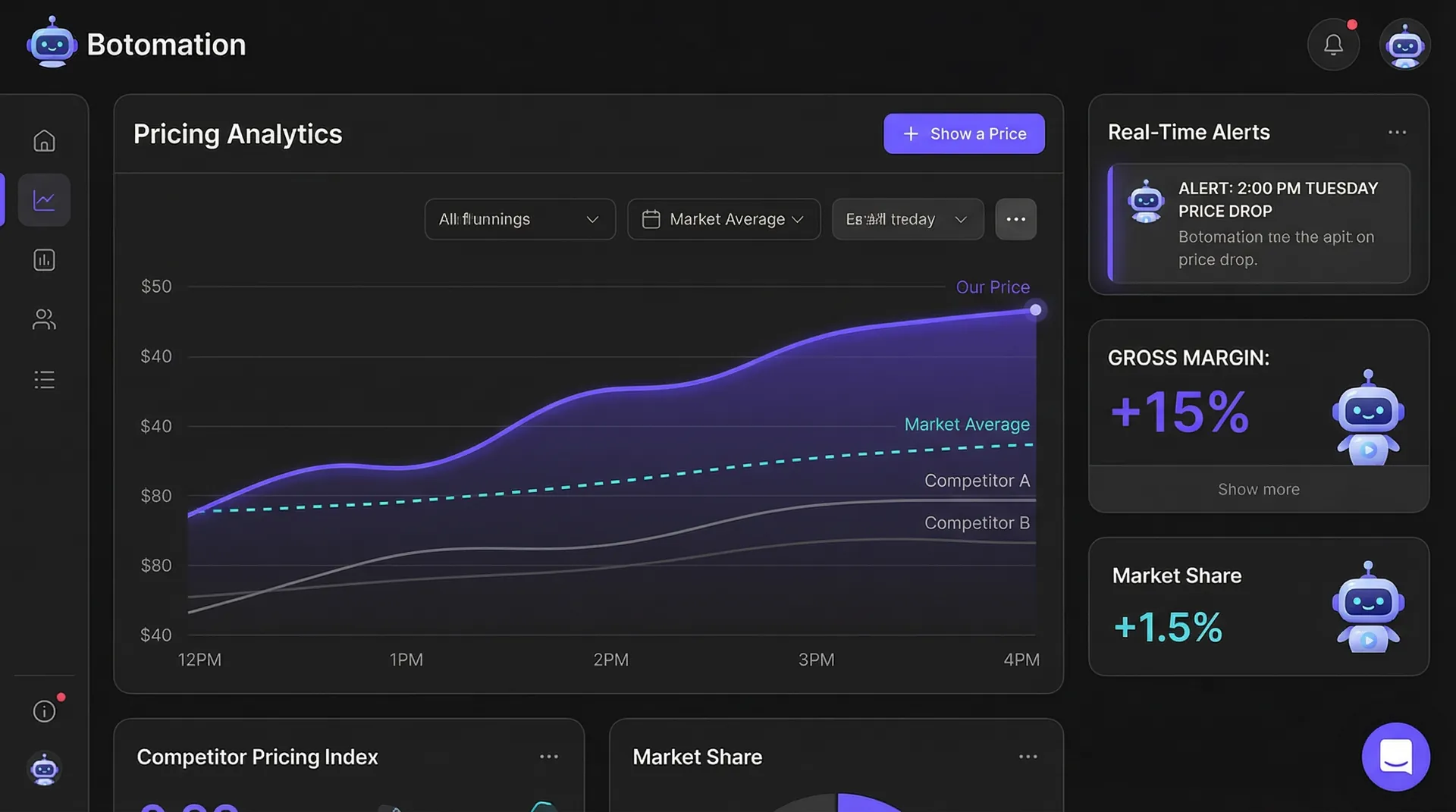
In January 2026, the ability to track competitor pricing automatically has become the baseline for survival in both retail and B2B sectors. Manual price adjustments are no longer just inefficient; they are a liability. When a competitor drops their price at 2:00 PM on a Tuesday, waiting until your team performs a weekly audit on Friday results in three days of lost conversions. Modern buyers now utilize browser extensions and AI shopping agents that scan the entire web in milliseconds to secure the best deals. If your pricing does not reflect the current market reality in real-time, your brand becomes essentially invisible to a significant portion of your target audience.
Recent industry reports from late 2024 and early 2026 highlight a stark divide in performance based on data adoption. Businesses that track competitor pricing automatically saw an average revenue growth 23% higher than those relying on manual methods. This growth is not merely about lowering prices to undercut the competition; it is about possessing the intelligence to raise prices when a competitor goes out of stock or misses a trend. Pricing intelligence has transitioned from a defensive tactic to a primary driver of profit margins, especially when delivered as automated daily market intelligence directly to decision-makers.
The emergence of sophisticated AI-driven pricing tools has fundamentally changed the rules of engagement. By utilizing the best competitor analysis tools for 2026, we are no longer limited to simple web scrapers that fail whenever a website updates its layout. Today’s systems utilize machine learning to understand product context, ensuring that a "leather chair" on one site is accurately matched with the identical model on another, even if descriptions differ. Our team at Botomation has observed that companies moving away from the "guess and check" method toward an automated framework see an immediate stabilization in market share.
Understanding How to Track Competitor Pricing Automatically in 2026
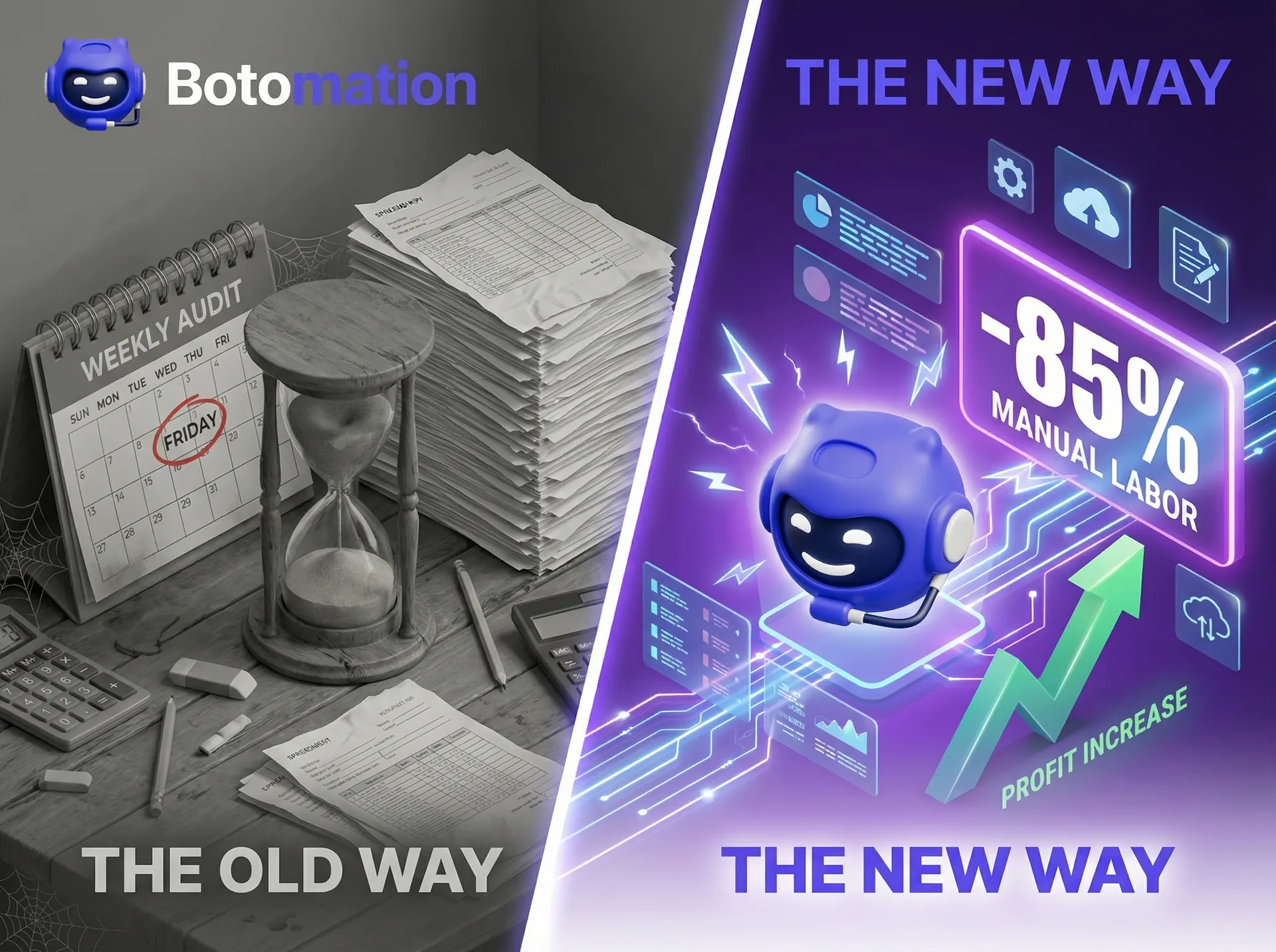
Pricing intelligence has evolved from a luxury reserved for Fortune 500 companies into a foundational requirement for any scaling business. In the early days, tracking meant having an intern refresh a dozen browser tabs and record numbers in a spreadsheet. This "Old Way" was plagued by human error, latency, and an inherent inability to scale. As we progress through 2026, the "New Way" involves autonomous systems that handle data collection, cleaning, and analysis without human intervention.
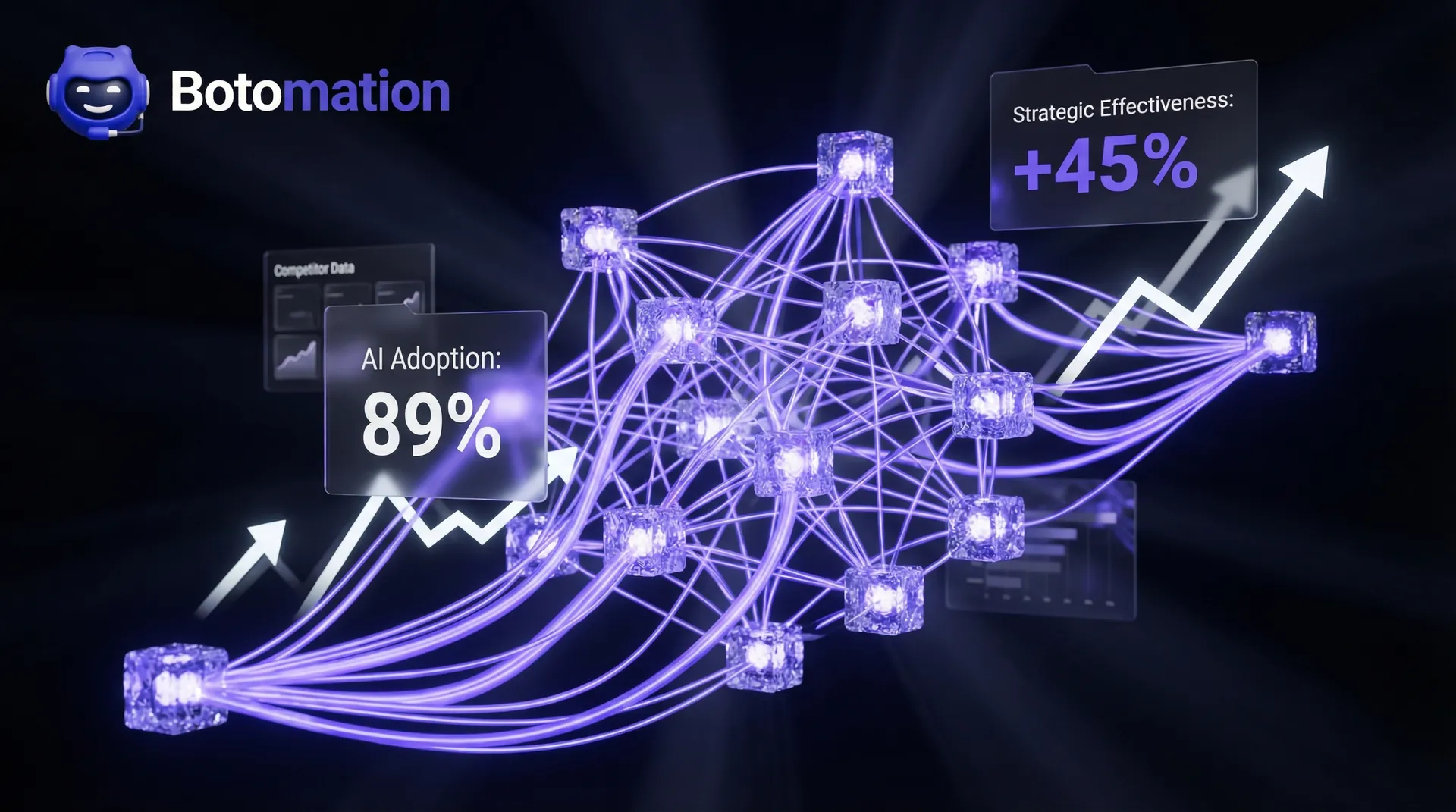
The current market is dominated by tools like Prisync v4.2 and Price2Spy’s updated AI engine, which have set new benchmarks for speed and accuracy. These systems do more than pull numbers; they interpret market sentiment and inventory levels to provide a holistic view of the competitive landscape. According to a DigitalCommerce360 2024 survey, 78% of retailers have now integrated some form of automated pricing tool into their workflow. This high adoption rate means that if you are not using these tools, you are competing against algorithms that are faster and more informed than any human team.
Market Impact Note
Businesses utilizing automated pricing intelligence reported a 15% increase in gross margins by identifying opportunities to raise prices when competitors were low on stock, proving that automation is about optimization, not just discounting.
The Evolution from Manual to Automated Pricing Tracking
Looking back at the trajectory of retail technology, the shift toward automation was inevitable. Manual tracking was limited by the physical capacity of a team to visit sites and log data. This resulted in "stale data," where decisions were made based on what a competitor did yesterday or even last week. In a high-frequency trading environment—which e-commerce has effectively become—yesterday's price is irrelevant.
A notable case study from 2024 involved Best Buy, which overhauled its competitor monitoring framework. By moving to a fully automated system, they reduced manual labor associated with price checks by 85%. This allowed their procurement and marketing teams to focus on strategy rather than data entry. The result was a significantly more agile response to market shifts, particularly during high-stakes periods like Black Friday and Cyber Monday.
The impact of real-time data extends beyond the price tag. It influences inventory management and marketing spend. If a competitor is consistently undercutting you on a specific category, an automated system alerts you to pivot your ad spend toward products where you maintain a price advantage. This level of responsiveness is impossible to achieve through manual observation.
AI-Powered Pricing Intelligence Features
The "AI" in modern pricing tools refers to specific machine learning models designed for pattern recognition. These algorithms can predict when a competitor is likely to run a promotion based on historical data patterns. For example, if a rival brand consistently drops prices on the third Thursday of the month, the system flags this as a high-probability event, allowing you to prepare your counter-offer in advance.
Natural language processing (NLP) plays a critical role in monitoring promotional changes. AI can now scan product descriptions and "limited time offer" banners to determine the actual value of a competitor's deal. It distinguishes between a permanent price drop and a temporary clearance sale. This nuance prevents your system from triggering a permanent price reduction in response to a competitor's one-day flash sale.
Integration with dynamic pricing APIs represents the final piece of the puzzle. Once the data is gathered and analyzed, the system can automatically update your own storefront. This creates a closed-loop system where the market moves, your tools detect the movement, and your prices adjust within minutes. This level of sophistication ensures that your business remains competitive 24/7, even while your team is offline.
Key Features to Track Competitor Pricing Automatically
When evaluating the current crop of tools, specific features separate professional-grade solutions from basic scrapers. A comprehensive automated pricing tool must provide more than just a list of numbers; it needs to offer a window into the competitor’s strategy. Systems like Komprise v7.5 have led the way by offering deep-dive analytics that show not just what the price is, but how it has trended over the last six months across multiple regions.
Reliability is the most critical feature in 2026. Competitor websites have become better at blocking simple bots, making it necessary to extract competitor pricing data with web scraping using advanced 'stealth' capabilities. The best tools use rotating residential proxies and browser fingerprinting to ensure they can access data without being detected or served "decoy" prices. Without these features, the data you collect might be intentionally misleading, leading to poor business decisions.
Real-Time Monitoring and Data Collection
Modern data collection is a high-frequency operation. Leveraging web scraping for competitor intelligence, tools such as PriceMonitor API are now capable of fetching data multiple times per day, with some enterprise configurations checking top-tier competitors every hour. This is vital for industries with high price volatility, such as electronics or travel. If a competitor changes a price, you need to know about it while the "buying window" is still open.
Scraping technologies have reached a level of sophistication where they can detect changes within a 15-minute window. This rapid detection is standard for market leaders. Consider Amazon’s internal monitoring system, which reportedly tracks over 1.5 million price changes every single day. While a mid-sized business does not need that scale, the principle remains: speed is the ultimate competitive advantage.
The accuracy of this data is bolstered by AI-driven matching. In the past, if a competitor titled a product "Ultra-HD 4K Screen" and you titled it "4K LED Monitor," a standard scraper might miss the connection. Modern AI matching looks at technical specifications, SKU patterns, and even image recognition to ensure you are comparing apples to apples. This reduces the "noise" in your data and ensures your price adjustments are based on genuine competition.
Alert Systems and Notifications
Data is only useful if the right people see it at the right time. Customizable alerts are the backbone of any automated pricing strategy. You can set thresholds so that you are only notified if a price changes by more than 5%, or if a specific "key competitor" makes a move. This prevents "alert fatigue," ensuring that when your team receives a notification, it actually requires their attention.
Integration with the tools your team already uses is a non-negotiable requirement. High-performing teams link their pricing alerts directly into Slack, Microsoft Teams, or their CRM. This allows for instant collaboration. A sales manager can see a competitor's price drop and immediately authorize a discount for a pending deal, all within the same interface.
Advanced systems are now moving toward predictive alerts. By analyzing historical trends and current market velocity, these tools can forecast a price change before it happens. If a competitor’s inventory is dwindling while their price remains high, the system might predict an upcoming restock followed by a promotional push. Being able to anticipate these moves allows you to stay one step ahead rather than constantly playing catch-up.
Best Tools to Track Competitor Pricing Automatically
Choosing the right tool depends heavily on your scale and the complexity of your market. In 2026, the market has bifurcated into "all-in-one" platforms and specialized APIs that feed into custom-built dashboards. For most businesses, a platform that balances ease of use with deep analytical capabilities is the ideal choice. We often see companies struggle when they try to build these systems from scratch without the necessary data engineering expertise.
The following table provides a comparison of the top-performing tools in the current market, focusing on their core strengths and target users.
| Tool Name | Key Strength | Best For | 2026 Feature Highlight |
|---|---|---|---|
| **Komprise v7.5** | High-speed detection | Enterprise Retailers | ML-based anomaly detection |
| **Price2Spy** | Broad API integration | Multi-channel Brands | API v3.1 with 200+ sources |
| **Prisync v4.2** | Ease of use | SMB E-commerce | Automated Google Shopping sync |
| **Pricefx** | Strategic optimization | B2B Manufacturing | AI-driven "What-if" simulations |
Komprise and Advanced AI Features
Komprise has solidified its position as a leader for large-scale operations with the release of version 7.5. Their standout feature is a machine learning-powered change detection system that identifies 99.2% of competitor updates in real-time. This level of precision is achieved through a hybrid approach that combines traditional scraping with visual analysis of the webpage. If a competitor changes their layout to hide price data, Komprise’s AI "sees" the page like a human would and finds the information anyway.
When compared to traditional tools, Komprise has shown 40% faster response times. In a direct competition, this means you can have your price updated on your site before the competitor’s change has even fully propagated across all their regional servers. Their integration capabilities are equally impressive, allowing for direct connections to SAP, Salesforce, and major e-commerce backends.
For businesses that require a high degree of customization, Komprise provides a "headless" mode. This allows your internal developers to use the Komprise engine to power custom internal applications. This flexibility is a major reason why many enterprise-level growth teams prefer it over more rigid, out-of-the-box solutions.
Price2Spy Integration Capabilities
Price2Spy remains a favorite for companies that sell across a wide variety of platforms, from Amazon and eBay to niche industry marketplaces. Their API v3.1 is a powerhouse, connecting to over 200 different data sources automatically. This is particularly useful for brands that need to monitor not just direct competitors, but also third-party resellers who might be violating Minimum Advertised Price (MAP) policies.
The dashboard features in Price2Spy are designed for clarity. They provide a "Price Matrix" that shows exactly where you stand in relation to the market average, the cheapest competitor, and the most expensive. This visual representation makes it easy for executives to grasp the market landscape at a glance without needing to dig into raw data sheets.
Pricing for Price2Spy is structured to scale with your business. Basic monitoring starts around $49 per month, which is perfect for small shops tracking a handful of items. For enterprise features, including full API access and high-frequency checks, the cost can reach $499 per month or more. This tiered approach ensures that you only pay for the level of data density you actually need to make decisions.
Alternative Solutions for Different Business Sizes
Not every business needs a $500-a-month subscription to stay competitive. Small businesses can often get by with a combination of free tools and targeted manual checks, though larger firms should follow the proven steps to automate competitor intelligence for B2B sales to maintain a professional edge. Google Alerts, while basic, can be configured to track mentions of competitor "sale" pages or specific product price drops. While it lacks the structured data of a dedicated tool, it provides a free entry point into market monitoring.
A case study involving a boutique electronics retailer showed that by using a combination of free browser extensions and a basic Prisync plan, they achieved a competitive positioning improvement of 34%. They didn't need to track 10,000 products; they only needed to track the 50 items that drove 80% of their revenue. This "80/20" approach to pricing intelligence allows smaller players to compete with giants without an enterprise budget.
The ROI on these tools is usually very clear. If a $100-a-month tool helps you avoid a single "pricing race to the bottom" or identifies one opportunity to raise prices by 5% on a high-volume item, it pays for itself in days. Most companies see a full investment payback within the first three to four months of implementation, provided they actually act on the data the tool provides.
Setting Up Automated Competitor Price Monitoring Systems
Implementation is where many businesses stumble. It isn't enough to just buy a subscription; you have to configure the system to align with your specific business goals. A common mistake is trying to track everything at once, which leads to a flood of data that no one knows how to use. Instead, start with your most profitable products and your three most dangerous competitors.
The setup process should be viewed as a foundational project. If the initial configuration is messy, the resulting data will be unreliable. You need to ensure that the "matching" is perfect. If the software thinks a 10-pack of batteries is the same as a 20-pack because the titles are similar, your automated pricing will be disastrously wrong.
Step-by-Step Implementation Guide
Setting up your system requires a logical progression from identification to automation. Follow these steps to ensure a clean rollout:
- Identify Core Competitors: List your top 5-10 direct competitors. Include "indirect" competitors like Amazon or specialized marketplaces that might undercut you on specific categories.
- Select Your "Hero" Products: Choose the products that are most price-sensitive. These are usually your best-sellers or items where customers are most likely to comparison shop.
- Configure Monitoring Parameters: Set how often you want the system to check prices. For high-volume items, 4 times per day is standard. For slower-moving goods, once a day is sufficient.
- Establish Price Floors and Ceilings: This is critical. Never let an automated tool lower your price below your break-even point. Set "hard stops" to protect your margins.
- Test the Matching Logic: Run the system for a week in "report only" mode. Check the matches manually to ensure the AI is correctly identifying identical products across different sites.
- Enable Alerts and Integrations: Connect the tool to your communication channels (Slack/Email) so the team is notified of significant shifts immediately.
Data Integration and Workflow Automation
The real power of automated pricing is realized when data flows into your other business systems, helping you eliminate data silos between business applications for a unified strategy. Connecting pricing data to Google Analytics, for instance, allows you to see how competitor price changes directly impact your conversion rates. You might find that when a specific competitor drops their price, your traffic stays the same but your sales plummet. This insight tells you exactly who your customers are comparing you against.
Automated decision-making workflows are the next level of maturity. You can set rules such as: "If Competitor A drops their price, match them, but only if my margin remains above 15%." Or: "If all competitors are out of stock, raise my price by 10%." These rules allow your business to respond to market conditions at 3:00 AM without a human ever touching a keyboard.
API integrations with platforms like Shopify or WooCommerce make these updates instantaneous. Instead of exporting a CSV and uploading it to your store, the pricing tool sends a command directly to your website's backend. This reduces the "time to market" for your price changes to near zero. In the fast-moving world of 2026, this speed is what separates the winners from those who are constantly wondering why their sales have dried up.
Strategic Implementation of Automated Pricing Intelligence
Automation provides the data, but strategy determines how you use it. You shouldn't always aim to be the cheapest. In fact, being the cheapest can often signal lower quality to savvy consumers. Instead, use the data to find the "sweet spot"—the highest price you can charge while still appearing as a high-value option to your target audience.
A classic example of strategic response can be seen in Walmart’s 2024 pricing strategy. They didn't try to beat Amazon on every single item. Instead, they used automated monitoring to identify items where Amazon was slow to update prices or had shipping delays. Walmart then aggressively priced those specific items and highlighted their "in-store pickup" advantage. They used pricing data to find a weakness, not just to match a number.
Developing Competitive Pricing Strategies
Data allows you to move into the realm of psychological pricing. By seeing how competitors price their goods, you can position yourself just slightly differently. If everyone is priced at $19.99, pricing at $19.50 might make you look like a bargain, while $21.00 with "Free Premium Shipping" might attract a higher-tier customer. Without the data, you are just guessing which of these strategies will work.
Dynamic pricing models are another benefit. These models adjust prices based on a variety of factors, including competitor moves, time of day, and even weather patterns. If you know a competitor is about to run out of stock because your tracking tool shows their inventory levels are "low," you can proactively raise your price to capture more margin from the remaining market demand.
Seasonal adjustments also become much easier. You can track when competitors start their "Back to School" or "Holiday" promotions and adjust your timing accordingly. If you notice a competitor always starts their sale two days before you, you can shift your calendar to beat them to the punch next year. This proactive approach is only possible when you have a multi-year history of automated data to look back on.
Measuring ROI and Success Metrics
To justify the investment in these systems, you must track the right KPIs. Market share growth is a primary indicator, but you should also look at revenue per visitor and overall conversion rates. If your conversion rate increases after implementing automated pricing, it’s a sign that your prices are now better aligned with customer expectations.
The financial return is often significant. On average, companies that implement these systems correctly see a 127% ROI within the first year. This comes from a combination of increased sales volume and optimized margins. You stop leaving money on the table by charging too little when you could charge more, and you stop losing sales by charging too much when the market has moved.
Target’s 2024 performance serves as a benchmark here. After refining their automated pricing systems, they reported a 22% increase in online sales. They attributed this not to being the "cheapest," but to being "consistently competitive." Customers began to trust that Target would always have a fair price, reducing the need for those customers to shop around. That trust is the ultimate goal of a pricing strategy.
Frequently Asked Questions
How often should I monitor competitor prices?
For most retail environments, 2-4 updates per day provide a solid balance between data freshness and system cost. However, if you are in a high-volatility niche like consumer electronics or travel, you may need hourly updates for your top 10% of products.
What happens if a competitor blocks my tracking tool?
Professional tools like Price2Spy and Komprise use advanced proxy networks to avoid detection. If a block does occur, these systems automatically rotate to a different IP address or use a different browser fingerprint to regain access. This is why using a professional service is superior to building an in-house scraper.
Can I integrate this data with my existing ERP?
Yes, most modern pricing intelligence tools offer robust APIs or pre-built connectors for major ERP systems like SAP, Oracle, and NetSuite. This allows pricing data to inform not just your storefront, but also your procurement and financial forecasting.
Is automated competitor price monitoring legal?
Yes, tracking publicly available pricing information is entirely legal. You are simply automating the process of looking at a public website. However, you must ensure that your scraping activities do not violate the "Terms of Service" of the target site in a way that causes technical harm.
How do I avoid a "race to the bottom"?
The best way to avoid a race to the bottom is to set "price floors" in your automation rules. You should also focus on "value-based" rules rather than just "price-matching" rules. For example, you might decide to always stay 2% above the cheapest competitor to maintain a premium brand image.
The reality of late 2026 is that the "Old Way" of manual research and stale spreadsheets is a recipe for stagnation. While tools like Prisync, Price2Spy, and Komprise offer powerful capabilities, implementing them correctly requires an expertise that most internal teams lack the time to develop. This is where the "New Way" truly shines.
At Botomation, we don't just provide a tool; we deliver a complete, custom-engineered market intelligence engine. Our expertise in custom web development for marketing ensures your data is not just collected, but converted into revenue. Our team of experts builds and manages the systems that scan the web, identify your competitors’ every move, and deliver actionable leads and pricing data to your sales team every single morning. We handle the technical complexities of proxy rotation, AI matching, and system integration so you can focus on what you do best: closing deals and growing your business.
Relying on off-the-shelf software often leads to "tool fatigue," where you have the data but no clear path to utilize it. Partnering with our agency ensures that your market research is not just automated, but strategic. We transform raw competitor data into a clear roadmap for your growth. Stop losing money to faster competitors and start using the most advanced automation strategies available today.
Ready to automate your growth? Book a call below.
In January 2026, the ability to track competitor pricing automatically has become the baseline for survival in both retail and B2B sectors. Manual price adjustments are no longer just inefficient; they are a liability. When a competitor drops their price at 2:00 PM on a Tuesday, waiting until your team performs a weekly audit on Friday results in three days of lost conversions. Modern buyers now utilize browser extensions and AI shopping agents that scan the entire web in milliseconds to secure the best deals. If your pricing does not reflect the current market reality in real-time, your brand becomes essentially invisible to a significant portion of your target audience.
Recent industry reports from late 2024 and early 2026 highlight a stark divide in performance based on data adoption. Businesses that track competitor pricing automatically saw an average revenue growth 23% higher than those relying on manual methods. This growth is not merely about lowering prices to undercut the competition; it is about possessing the intelligence to raise prices when a competitor goes out of stock or misses a trend. Pricing intelligence has transitioned from a defensive tactic to a primary driver of profit margins, especially when delivered as automated daily market intelligence directly to decision-makers.
The emergence of sophisticated AI-driven pricing tools has fundamentally changed the rules of engagement. By utilizing the best competitor analysis tools for 2026, we are no longer limited to simple web scrapers that fail whenever a website updates its layout. Today’s systems utilize machine learning to understand product context, ensuring that a "leather chair" on one site is accurately matched with the identical model on another, even if descriptions differ. Our team at Botomation has observed that companies moving away from the "guess and check" method toward an automated framework see an immediate stabilization in market share.
Understanding How to Track Competitor Pricing Automatically in 2026
Pricing intelligence has evolved from a luxury reserved for Fortune 500 companies into a foundational requirement for any scaling business. In the early days, tracking meant having an intern refresh a dozen browser tabs and record numbers in a spreadsheet. This "Old Way" was plagued by human error, latency, and an inherent inability to scale. As we progress through 2026, the "New Way" involves autonomous systems that handle data collection, cleaning, and analysis without human intervention.
The current market is dominated by tools like Prisync v4.2 and Price2Spy’s updated AI engine, which have set new benchmarks for speed and accuracy. These systems do more than pull numbers; they interpret market sentiment and inventory levels to provide a holistic view of the competitive landscape. According to a DigitalCommerce360 2024 survey, 78% of retailers have now integrated some form of automated pricing tool into their workflow. This high adoption rate means that if you are not using these tools, you are competing against algorithms that are faster and more informed than any human team.
Market Impact Note
Businesses utilizing automated pricing intelligence reported a 15% increase in gross margins by identifying opportunities to raise prices when competitors were low on stock, proving that automation is about optimization, not just discounting.
The Evolution from Manual to Automated Pricing Tracking
Looking back at the trajectory of retail technology, the shift toward automation was inevitable. Manual tracking was limited by the physical capacity of a team to visit sites and log data. This resulted in "stale data," where decisions were made based on what a competitor did yesterday or even last week. In a high-frequency trading environment—which e-commerce has effectively become—yesterday's price is irrelevant.
A notable case study from 2024 involved Best Buy, which overhauled its competitor monitoring framework. By moving to a fully automated system, they reduced manual labor associated with price checks by 85%. This allowed their procurement and marketing teams to focus on strategy rather than data entry. The result was a significantly more agile response to market shifts, particularly during high-stakes periods like Black Friday and Cyber Monday.
The impact of real-time data extends beyond the price tag. It influences inventory management and marketing spend. If a competitor is consistently undercutting you on a specific category, an automated system alerts you to pivot your ad spend toward products where you maintain a price advantage. This level of responsiveness is impossible to achieve through manual observation.
AI-Powered Pricing Intelligence Features
The "AI" in modern pricing tools refers to specific machine learning models designed for pattern recognition. These algorithms can predict when a competitor is likely to run a promotion based on historical data patterns. For example, if a rival brand consistently drops prices on the third Thursday of the month, the system flags this as a high-probability event, allowing you to prepare your counter-offer in advance.
Natural language processing (NLP) plays a critical role in monitoring promotional changes. AI can now scan product descriptions and "limited time offer" banners to determine the actual value of a competitor's deal. It distinguishes between a permanent price drop and a temporary clearance sale. This nuance prevents your system from triggering a permanent price reduction in response to a competitor's one-day flash sale.
Integration with dynamic pricing APIs represents the final piece of the puzzle. Once the data is gathered and analyzed, the system can automatically update your own storefront. This creates a closed-loop system where the market moves, your tools detect the movement, and your prices adjust within minutes. This level of sophistication ensures that your business remains competitive 24/7, even while your team is offline.
Key Features to Track Competitor Pricing Automatically
When evaluating the current crop of tools, specific features separate professional-grade solutions from basic scrapers. A comprehensive automated pricing tool must provide more than just a list of numbers; it needs to offer a window into the competitor’s strategy. Systems like Komprise v7.5 have led the way by offering deep-dive analytics that show not just what the price is, but how it has trended over the last six months across multiple regions.
Reliability is the most critical feature in 2026. Competitor websites have become better at blocking simple bots, making it necessary to extract competitor pricing data with web scraping using advanced 'stealth' capabilities. The best tools use rotating residential proxies and browser fingerprinting to ensure they can access data without being detected or served "decoy" prices. Without these features, the data you collect might be intentionally misleading, leading to poor business decisions.
Real-Time Monitoring and Data Collection
Modern data collection is a high-frequency operation. Leveraging web scraping for competitor intelligence, tools such as PriceMonitor API are now capable of fetching data multiple times per day, with some enterprise configurations checking top-tier competitors every hour. This is vital for industries with high price volatility, such as electronics or travel. If a competitor changes a price, you need to know about it while the "buying window" is still open.
Scraping technologies have reached a level of sophistication where they can detect changes within a 15-minute window. This rapid detection is standard for market leaders. Consider Amazon’s internal monitoring system, which reportedly tracks over 1.5 million price changes every single day. While a mid-sized business does not need that scale, the principle remains: speed is the ultimate competitive advantage.
The accuracy of this data is bolstered by AI-driven matching. In the past, if a competitor titled a product "Ultra-HD 4K Screen" and you titled it "4K LED Monitor," a standard scraper might miss the connection. Modern AI matching looks at technical specifications, SKU patterns, and even image recognition to ensure you are comparing apples to apples. This reduces the "noise" in your data and ensures your price adjustments are based on genuine competition.
Alert Systems and Notifications
Data is only useful if the right people see it at the right time. Customizable alerts are the backbone of any automated pricing strategy. You can set thresholds so that you are only notified if a price changes by more than 5%, or if a specific "key competitor" makes a move. This prevents "alert fatigue," ensuring that when your team receives a notification, it actually requires their attention.
Integration with the tools your team already uses is a non-negotiable requirement. High-performing teams link their pricing alerts directly into Slack, Microsoft Teams, or their CRM. This allows for instant collaboration. A sales manager can see a competitor's price drop and immediately authorize a discount for a pending deal, all within the same interface.
Advanced systems are now moving toward predictive alerts. By analyzing historical trends and current market velocity, these tools can forecast a price change before it happens. If a competitor’s inventory is dwindling while their price remains high, the system might predict an upcoming restock followed by a promotional push. Being able to anticipate these moves allows you to stay one step ahead rather than constantly playing catch-up.
Best Tools to Track Competitor Pricing Automatically
Choosing the right tool depends heavily on your scale and the complexity of your market. In 2026, the market has bifurcated into "all-in-one" platforms and specialized APIs that feed into custom-built dashboards. For most businesses, a platform that balances ease of use with deep analytical capabilities is the ideal choice. We often see companies struggle when they try to build these systems from scratch without the necessary data engineering expertise.
The following table provides a comparison of the top-performing tools in the current market, focusing on their core strengths and target users.
| Tool Name | Key Strength | Best For | 2026 Feature Highlight |
|---|---|---|---|
| **Komprise v7.5** | High-speed detection | Enterprise Retailers | ML-based anomaly detection |
| **Price2Spy** | Broad API integration | Multi-channel Brands | API v3.1 with 200+ sources |
| **Prisync v4.2** | Ease of use | SMB E-commerce | Automated Google Shopping sync |
| **Pricefx** | Strategic optimization | B2B Manufacturing | AI-driven "What-if" simulations |
Komprise and Advanced AI Features
Komprise has solidified its position as a leader for large-scale operations with the release of version 7.5. Their standout feature is a machine learning-powered change detection system that identifies 99.2% of competitor updates in real-time. This level of precision is achieved through a hybrid approach that combines traditional scraping with visual analysis of the webpage. If a competitor changes their layout to hide price data, Komprise’s AI "sees" the page like a human would and finds the information anyway.
When compared to traditional tools, Komprise has shown 40% faster response times. In a direct competition, this means you can have your price updated on your site before the competitor’s change has even fully propagated across all their regional servers. Their integration capabilities are equally impressive, allowing for direct connections to SAP, Salesforce, and major e-commerce backends.
For businesses that require a high degree of customization, Komprise provides a "headless" mode. This allows your internal developers to use the Komprise engine to power custom internal applications. This flexibility is a major reason why many enterprise-level growth teams prefer it over more rigid, out-of-the-box solutions.
Price2Spy Integration Capabilities
Price2Spy remains a favorite for companies that sell across a wide variety of platforms, from Amazon and eBay to niche industry marketplaces. Their API v3.1 is a powerhouse, connecting to over 200 different data sources automatically. This is particularly useful for brands that need to monitor not just direct competitors, but also third-party resellers who might be violating Minimum Advertised Price (MAP) policies.
The dashboard features in Price2Spy are designed for clarity. They provide a "Price Matrix" that shows exactly where you stand in relation to the market average, the cheapest competitor, and the most expensive. This visual representation makes it easy for executives to grasp the market landscape at a glance without needing to dig into raw data sheets.
Pricing for Price2Spy is structured to scale with your business. Basic monitoring starts around $49 per month, which is perfect for small shops tracking a handful of items. For enterprise features, including full API access and high-frequency checks, the cost can reach $499 per month or more. This tiered approach ensures that you only pay for the level of data density you actually need to make decisions.
Alternative Solutions for Different Business Sizes
Not every business needs a $500-a-month subscription to stay competitive. Small businesses can often get by with a combination of free tools and targeted manual checks, though larger firms should follow the proven steps to automate competitor intelligence for B2B sales to maintain a professional edge. Google Alerts, while basic, can be configured to track mentions of competitor "sale" pages or specific product price drops. While it lacks the structured data of a dedicated tool, it provides a free entry point into market monitoring.
A case study involving a boutique electronics retailer showed that by using a combination of free browser extensions and a basic Prisync plan, they achieved a competitive positioning improvement of 34%. They didn't need to track 10,000 products; they only needed to track the 50 items that drove 80% of their revenue. This "80/20" approach to pricing intelligence allows smaller players to compete with giants without an enterprise budget.
The ROI on these tools is usually very clear. If a $100-a-month tool helps you avoid a single "pricing race to the bottom" or identifies one opportunity to raise prices by 5% on a high-volume item, it pays for itself in days. Most companies see a full investment payback within the first three to four months of implementation, provided they actually act on the data the tool provides.
Setting Up Automated Competitor Price Monitoring Systems
Implementation is where many businesses stumble. It isn't enough to just buy a subscription; you have to configure the system to align with your specific business goals. A common mistake is trying to track everything at once, which leads to a flood of data that no one knows how to use. Instead, start with your most profitable products and your three most dangerous competitors.
The setup process should be viewed as a foundational project. If the initial configuration is messy, the resulting data will be unreliable. You need to ensure that the "matching" is perfect. If the software thinks a 10-pack of batteries is the same as a 20-pack because the titles are similar, your automated pricing will be disastrously wrong.
Step-by-Step Implementation Guide
Setting up your system requires a logical progression from identification to automation. Follow these steps to ensure a clean rollout:
- Identify Core Competitors: List your top 5-10 direct competitors. Include "indirect" competitors like Amazon or specialized marketplaces that might undercut you on specific categories.
- Select Your "Hero" Products: Choose the products that are most price-sensitive. These are usually your best-sellers or items where customers are most likely to comparison shop.
- Configure Monitoring Parameters: Set how often you want the system to check prices. For high-volume items, 4 times per day is standard. For slower-moving goods, once a day is sufficient.
- Establish Price Floors and Ceilings: This is critical. Never let an automated tool lower your price below your break-even point. Set "hard stops" to protect your margins.
- Test the Matching Logic: Run the system for a week in "report only" mode. Check the matches manually to ensure the AI is correctly identifying identical products across different sites.
- Enable Alerts and Integrations: Connect the tool to your communication channels (Slack/Email) so the team is notified of significant shifts immediately.
Data Integration and Workflow Automation
The real power of automated pricing is realized when data flows into your other business systems, helping you eliminate data silos between business applications for a unified strategy. Connecting pricing data to Google Analytics, for instance, allows you to see how competitor price changes directly impact your conversion rates. You might find that when a specific competitor drops their price, your traffic stays the same but your sales plummet. This insight tells you exactly who your customers are comparing you against.
Automated decision-making workflows are the next level of maturity. You can set rules such as: "If Competitor A drops their price, match them, but only if my margin remains above 15%." Or: "If all competitors are out of stock, raise my price by 10%." These rules allow your business to respond to market conditions at 3:00 AM without a human ever touching a keyboard.
API integrations with platforms like Shopify or WooCommerce make these updates instantaneous. Instead of exporting a CSV and uploading it to your store, the pricing tool sends a command directly to your website's backend. This reduces the "time to market" for your price changes to near zero. In the fast-moving world of 2026, this speed is what separates the winners from those who are constantly wondering why their sales have dried up.
Strategic Implementation of Automated Pricing Intelligence
Automation provides the data, but strategy determines how you use it. You shouldn't always aim to be the cheapest. In fact, being the cheapest can often signal lower quality to savvy consumers. Instead, use the data to find the "sweet spot"—the highest price you can charge while still appearing as a high-value option to your target audience.
A classic example of strategic response can be seen in Walmart’s 2024 pricing strategy. They didn't try to beat Amazon on every single item. Instead, they used automated monitoring to identify items where Amazon was slow to update prices or had shipping delays. Walmart then aggressively priced those specific items and highlighted their "in-store pickup" advantage. They used pricing data to find a weakness, not just to match a number.
Developing Competitive Pricing Strategies
Data allows you to move into the realm of psychological pricing. By seeing how competitors price their goods, you can position yourself just slightly differently. If everyone is priced at $19.99, pricing at $19.50 might make you look like a bargain, while $21.00 with "Free Premium Shipping" might attract a higher-tier customer. Without the data, you are just guessing which of these strategies will work.
Dynamic pricing models are another benefit. These models adjust prices based on a variety of factors, including competitor moves, time of day, and even weather patterns. If you know a competitor is about to run out of stock because your tracking tool shows their inventory levels are "low," you can proactively raise your price to capture more margin from the remaining market demand.
Seasonal adjustments also become much easier. You can track when competitors start their "Back to School" or "Holiday" promotions and adjust your timing accordingly. If you notice a competitor always starts their sale two days before you, you can shift your calendar to beat them to the punch next year. This proactive approach is only possible when you have a multi-year history of automated data to look back on.
Measuring ROI and Success Metrics
To justify the investment in these systems, you must track the right KPIs. Market share growth is a primary indicator, but you should also look at revenue per visitor and overall conversion rates. If your conversion rate increases after implementing automated pricing, it’s a sign that your prices are now better aligned with customer expectations.
The financial return is often significant. On average, companies that implement these systems correctly see a 127% ROI within the first year. This comes from a combination of increased sales volume and optimized margins. You stop leaving money on the table by charging too little when you could charge more, and you stop losing sales by charging too much when the market has moved.
Target’s 2024 performance serves as a benchmark here. After refining their automated pricing systems, they reported a 22% increase in online sales. They attributed this not to being the "cheapest," but to being "consistently competitive." Customers began to trust that Target would always have a fair price, reducing the need for those customers to shop around. That trust is the ultimate goal of a pricing strategy.
Frequently Asked Questions
How often should I monitor competitor prices?
For most retail environments, 2-4 updates per day provide a solid balance between data freshness and system cost. However, if you are in a high-volatility niche like consumer electronics or travel, you may need hourly updates for your top 10% of products.
What happens if a competitor blocks my tracking tool?
Professional tools like Price2Spy and Komprise use advanced proxy networks to avoid detection. If a block does occur, these systems automatically rotate to a different IP address or use a different browser fingerprint to regain access. This is why using a professional service is superior to building an in-house scraper.
Can I integrate this data with my existing ERP?
Yes, most modern pricing intelligence tools offer robust APIs or pre-built connectors for major ERP systems like SAP, Oracle, and NetSuite. This allows pricing data to inform not just your storefront, but also your procurement and financial forecasting.
Is automated competitor price monitoring legal?
Yes, tracking publicly available pricing information is entirely legal. You are simply automating the process of looking at a public website. However, you must ensure that your scraping activities do not violate the "Terms of Service" of the target site in a way that causes technical harm.
How do I avoid a "race to the bottom"?
The best way to avoid a race to the bottom is to set "price floors" in your automation rules. You should also focus on "value-based" rules rather than just "price-matching" rules. For example, you might decide to always stay 2% above the cheapest competitor to maintain a premium brand image.
The reality of late 2026 is that the "Old Way" of manual research and stale spreadsheets is a recipe for stagnation. While tools like Prisync, Price2Spy, and Komprise offer powerful capabilities, implementing them correctly requires an expertise that most internal teams lack the time to develop. This is where the "New Way" truly shines.
At Botomation, we don't just provide a tool; we deliver a complete, custom-engineered market intelligence engine. Our expertise in custom web development for marketing ensures your data is not just collected, but converted into revenue. Our team of experts builds and manages the systems that scan the web, identify your competitors’ every move, and deliver actionable leads and pricing data to your sales team every single morning. We handle the technical complexities of proxy rotation, AI matching, and system integration so you can focus on what you do best: closing deals and growing your business.
Relying on off-the-shelf software often leads to "tool fatigue," where you have the data but no clear path to utilize it. Partnering with our agency ensures that your market research is not just automated, but strategic. We transform raw competitor data into a clear roadmap for your growth. Stop losing money to faster competitors and start using the most advanced automation strategies available today.
Ready to automate your growth? Book a call below.
Get Started
Book a FREE Consultation Right NOW!
Schedule a Call with Our Team To Make Your Business More Efficient with AI Instantly.
Read More
Track Competitor Pricing Automatically - 2026 AI Strategy
Track competitor pricing automatically using AI. Master market intelligence, lead generation, and dynamic pricing with 2026's top automation tools.
SaaS Pipeline Automation for 496 Percent Growth
Learn how WhatsApp AI slashes support costs for e-commerce & SaaS. Proven strategies to boost sales, recover carts, and scale 24/7 service.