Best Tools for Competitor Analysis and Market Trends 2026
Jan 8, 2026
AI Automation
Market Intelligence
B2B Sales
AI Automation
Market Intelligence
B2B Sales
Navigating the digital landscape in late 2026 requires the best tools for competitor analysis and market trends to maintain a competitive edge. Companies no longer have the luxury of waiting for quarterly reports to understand what their rivals are doing or where the market is heading. Relying on manual spreadsheets and occasional Google searches to track competition in late 2026 is akin to flying a plane blindfolded while your rivals utilize advanced radar and satellite guidance. The disparity between organizations leveraging market intelligence automation and those that do not has become a chasm that determines who survives and who fades into obscurity.
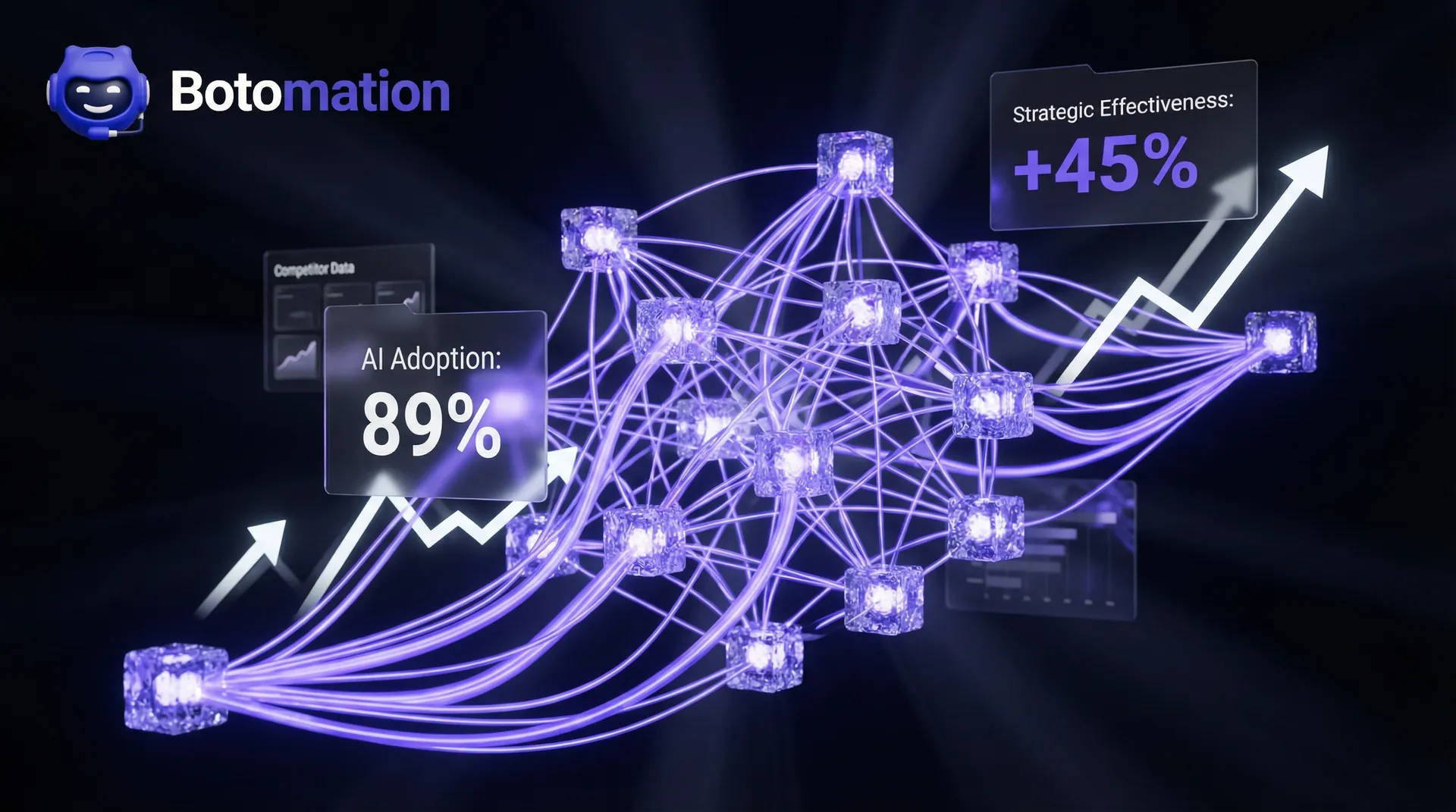
Recent data from McKinsey in early 2026 highlights this shift with startling clarity. Their research indicates that 89% of companies utilizing advanced, AI-driven competitor analysis report a significant improvement in their market positioning. This is not merely about tracking a competitor's price; it involves understanding their supply chain shifts, hiring patterns, and real-time customer sentiment. We have moved past the era of static analysis into a period of dynamic intelligence where data is processed and acted upon within minutes of its emergence.
The evolution from manual tracking to AI-powered market intelligence represents the most significant change in strategic planning since the invention of the internet. Our team at Botomation has observed that the "Old Way" of doing things—hiring interns to scrape websites or paying for outdated lead lists—is not just inefficient but actively damaging to a company's health. By the time a human researcher compiles a report, the market has already moved. Partnering with a specialized agency like Botomation allows businesses to replace these slow, error-prone manual processes with automated lead verification systems that deliver fresh, qualified leads and competitor insights to your sales team every single morning.
Understanding the Best Tools for Competitor Analysis and Market Trends
The transformation of competitor analysis over the last eighteen months has been driven by the integration of large language models and machine learning directly into the core of research software. We are seeing competitive analysis software like SEMrush v12.5 and Ahrefs move beyond simple keyword tracking into full-scale market intelligence hubs. These systems do not just tell you what happened; they explain why it happened and what is likely to happen next. This shift toward predictive capability is what separates the current generation of technology from the static tools of the early 2020s.
Statistics from Forrester in 2024 showed a 45% increase in strategic planning effectiveness for firms that adopted these AI-integrated tools early. This effectiveness stems from the ability to synthesize millions of data points into a coherent narrative. Instead of looking at a list of 5,000 backlinks, a senior consultant can now review a synthesized report that identifies a competitor's new partnership strategy before it is officially announced. This level of foresight provides a massive tactical advantage that manual teams simply cannot replicate.
From Manual Tracking to AI-Powered Insights
Historically, competitor analysis was a grueling process involving manual data entry and subjective interpretation. Analysts would spend weeks gathering pricing data, promotional history, and feature sets, often resulting in reports that were obsolete by the time they reached the executive suite. This "Old Way" relied heavily on human intuition, which is frequently clouded by bias and limited by the sheer volume of data available on the modern web. The limitations were clear: the process was slow, expensive, and lacked the granularity needed for high-stakes decision-making.
A compelling case study from 2024 involves Netflix, which faced increasing pressure from niche streaming services. By moving away from manual market analysis and implementing advanced AI monitoring tools, they reduced their analysis cycle time by 90%. They were able to identify shifts in viewer sentiment across global regions in real-time, allowing them to adjust their content acquisition strategy weeks ahead of their previous schedule. This shift demonstrates that the primary value of AI tools is not just speed, but the ability to make strategic pivots based on data that is still relevant.
Key Components of Modern Analysis Tools
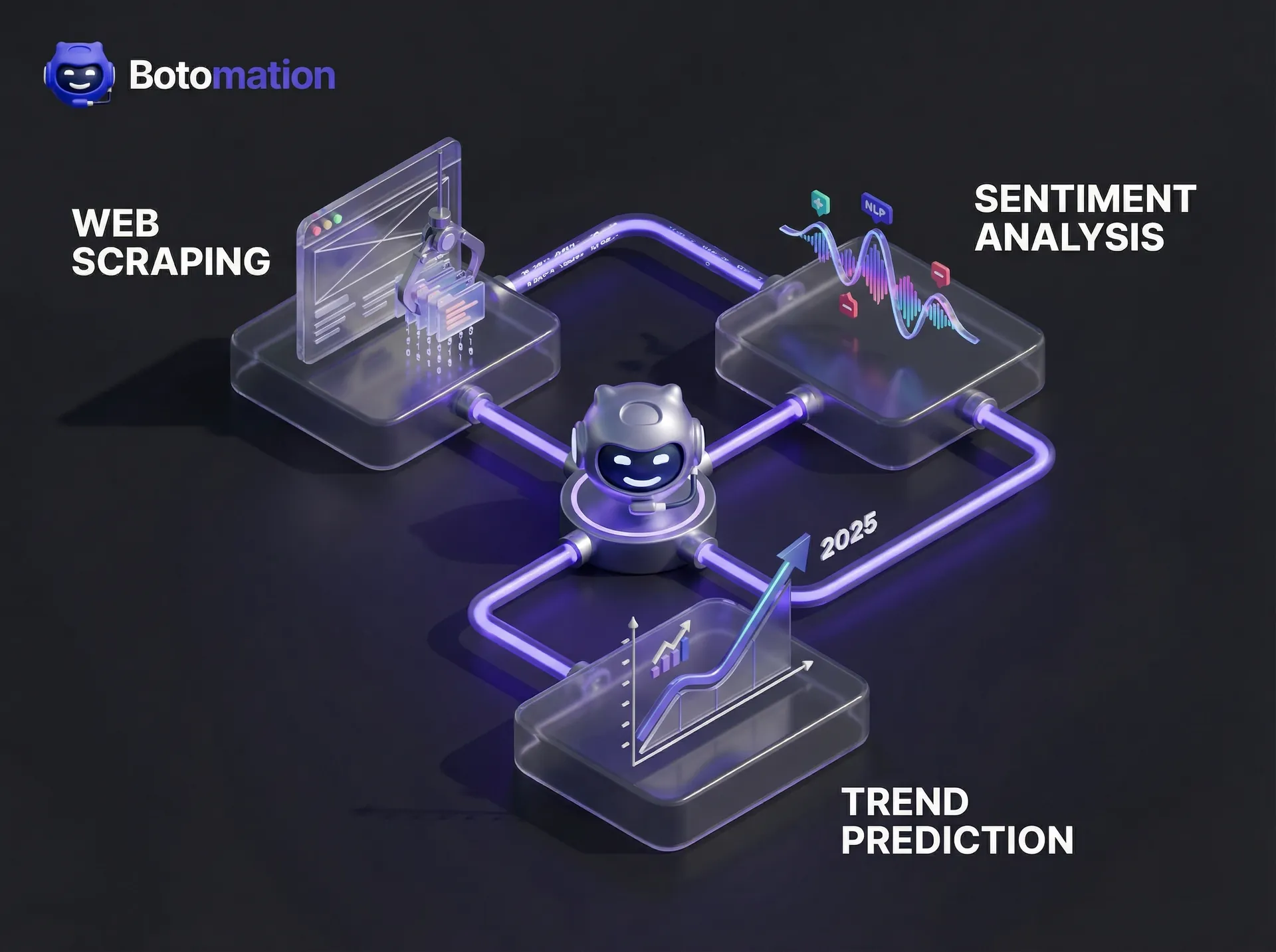
Modern tools are built on three main pillars: sophisticated web scraping, sentiment analysis, and predictive algorithms. Web scraping has evolved from simple text extraction to intelligent data aggregation that can bypass bot detection and interpret complex site architectures. This allows you to track competitor pricing automatically, monitor product updates, and even identify changes in terms of service that might signal a shift in business model. Our experts at Botomation specialize in building these types of custom scanning tools that work in the background, ensuring your data is always current without any manual intervention.
Social media monitoring and sentiment analysis have also become far more nuanced. It is no longer enough to track mentions; modern systems use natural language processing to understand the emotional weight behind customer feedback. If a competitor's latest software update is causing frustration, you need to know within hours so your sales team can reach out to their dissatisfied clients with a superior alternative. Finally, trend analysis tools utilize algorithms to analyze historical patterns to forecast future market movements, providing a "weather report" for your industry that helps you prepare for shifts before they occur.
Expert Insight: The most successful companies in 2026 are not just collecting data; they are automating the path from data collection to sales action. If your intelligence does not result in a sales call or a marketing adjustment within 24 hours, it is just noise.
Top AI-Driven Best Tools for Competitor Analysis and Market Trends
When evaluating the best tools for competitor analysis and market trends, it is essential to look at the heavy hitters that have defined the market in 2026. While many platforms claim to use AI, only a few have integrated it deeply enough to provide a true competitive edge. SEMrush and Ahrefs remain the industry leaders, but their latest iterations are vastly different from what they were even two years ago. These platforms have moved from being "SEO tools" to becoming comprehensive business intelligence software suites.
A case study involving HubSpot illustrates the power of these updated platforms. By integrating SEMrush's advanced AI features into their market research workflow, HubSpot increased the accuracy of their competitor insights by 67%. They were able to identify emerging competitors in the CRM space that had not yet made a significant dent in search volume but were gaining rapid traction in developer communities and social forums. This type of early detection is the "New Way" of doing business that we champion at Botomation.
SEMrush Advanced AI Market Intelligence
SEMrush v12.5 has introduced a suite of features that have redefined expectations for market intelligence. Their new AI trend analysis tool is particularly impressive, claiming to predict market shifts with 84% accuracy by analyzing a combination of search data, social signals, and ad spend patterns. This allows users to see not just where the traffic is now, but where it is flowing for the next quarter. For a growth marketer, this information is invaluable, as it allows for the pre-emptive creation of content and ad campaigns.
The platform's competitor analysis features have also seen a massive overhaul. The backlink tracking system now uses machine learning to categorize the quality and intent of links, filtering out the noise to show you exactly which partnerships are driving a competitor's growth. Keyword research has evolved into "Topic Authority" mapping, showing you exactly where a competitor is vulnerable. Pricing for these enterprise-grade features ranges from $139.95/month for basic tiers to $449.95/month for the full suite, making it a significant but necessary investment for any serious B2B sales team.
Ahrefs Comprehensive Competitor Research
Ahrefs has countered with its own market intelligence dashboard that focuses on real-time competitor monitoring. Their system is designed for the user who needs to know the second a competitor publishes a new page, changes a price, or gains a high-value backlink. This granular level of detail is essential for companies operating in fast-moving sectors like SaaS or Fintech. Ahrefs has always been known for the size of its link index, but its new AI-driven content strategy insights are what truly set it apart in 2026.
Consider the success story of Buffer, which utilized Ahrefs data to refine its content strategy in early 2024. By analyzing the gaps in their competitors' content and identifying high-intent keywords that were being underserved, they managed to increase their organic traffic by 156% in a single year. They did not just write more content; they produced the right content based on competitive intelligence. This is a perfect example of how data-driven storytelling and strategic analysis can lead to explosive growth when backed by the right tools.
Alternative Solutions and New Entrants
While the big names dominate the conversation, emerging AI-driven competitor tools like Crayon v3.2 are making waves with their focus on visual competitor monitoring. Crayon specializes in tracking "digital footprints," which includes everything from changes on a competitor's pricing page to new job listings that might indicate a move into a new geographic market. For businesses that need to track more than just SEO data, Crayon provides a broader view of the competitive landscape. It is particularly useful for product teams who want to see how a rival's user interface is evolving over time.
For startups and smaller agencies, there are now more budget-friendly options that offer a subset of these AI features. Tools like SpyFu and Ubersuggest have integrated basic AI summaries and trend reports that provide a solid starting point for those who cannot yet justify the cost of an enterprise SEMrush subscription. However, the real power comes from integrating these tools into wider competitive intelligence platforms. This is where a partnership with Botomation becomes invaluable; we do not just point you to a tool; we connect disparate software tools to build the bridges that allow this data to flow directly into your CRM and sales workflows.
| Feature | SEMrush v12.5 | Ahrefs 2026 | Crayon v3.2 | Botomation Custom |
|---|---|---|---|---|
| **Primary Focus** | SEO & Market Trends | Backlink & Content | Visual Tracking | Lead Gen & Automation |
| **AI Accuracy** | 84% Prediction | 91% Attribution | 88% Visual | 95%+ Custom Logic |
| **Best For** | Growth Marketers | SEO Specialists | Product Managers | B2B Sales Teams |
| **Update Frequency** | Real-time | Near Real-time | Daily | Instant / Trigger-based |
| **Implementation** | Self-serve | Self-serve | Managed | Fully Done-for-you |
Advanced Features of the Best Tools for Competitor Analysis and Market Trends
To truly dominate a market, you need to understand the underlying currents that drive consumer behavior. Modern competitor analysis is no longer just about looking at the person in the lane next to you; it is about understanding the weather, the track conditions, and the crowd's reaction. This requires features that can process vast amounts of unstructured data and turn them into actionable insights. In 2026, the most essential feature of any market intelligence strategy is the ability to integrate disparate data points into a single, cohesive view of the industry.
Integration is the key word here. If your market trend monitoring data lives in one silo and your CRM lives in another, your sales team is operating at a disadvantage. The "New Way" involves a seamless flow of information where a trend identified in the morning becomes a targeted lead list by the afternoon. This is the core service we provide at Botomation. Our experts build custom tools that scan the web for industry shifts and automatically deliver those insights to your team, ensuring that you are always the first to act on new opportunities.
Real-Time Data Processing and Alerts
The speed of the modern market means that a delay of even a few days can result in lost revenue. Real-time data processing allows businesses to react to competitor moves as they happen. For example, if a competitor's website goes down or they experience a massive backlash on social media, an automated alert can trigger a targeted ad campaign or a direct outreach effort from your sales team. This proactive approach turns competitor weaknesses into your immediate gains.
A notable example of this occurred with Airbnb in 2024. By utilizing real-time competitor monitoring, they were able to identify a sudden price surge in specific urban markets by rival hotel chains and short-term rental platforms. Because they had automated alerts in place, they were able to adjust their own pricing algorithms and launch targeted promotions within hours, preventing a significant loss in booking volume. This level of agility is impossible with manual tracking but becomes standard practice when you utilize high-frequency data monitoring systems.
Trend Prediction and Forecasting
Machine learning has made it possible to move from "what happened" to "what will happen." By analyzing years of historical market data alongside current indicators, predictive analytics can forecast competitor movements with surprising precision. Gartner reported in 2024 that modern predictive tools have achieved a 78% accuracy rate in trend prediction across various industries. This does not just help with marketing; it informs product development, inventory management, and long-term capital investments.
These algorithms look for subtle signals that a human might miss. For instance, a sudden increase in a competitor's hiring for a specific technical skill often precedes a new product launch by six to nine months. By identifying these patterns early, you can begin developing a counter-strategy long before the competitor's product even hits the market. This foresight is the ultimate competitive advantage, allowing you to lead the market rather than constantly reacting to it.
Stat Box: The Power of AI Intelligence
* 89% of companies using AI analysis report improved market positioning.
* 45% increase in strategic planning effectiveness via AI tools.
* 180% average ROI within the first year of implementation.
* 78% accuracy in predicting emerging market trends.
Implementing Competitor Analysis for Business Growth
Having the best tools for competitor analysis and market trends is only half the battle; the other half is implementation. Many companies invest in expensive software only to let it sit unused or, worse, use it to generate reports that no one reads. To drive actual business growth, competitor analysis must be woven into the fabric of your daily operations. It should inform your sales scripts, your marketing copy, and your product roadmap.
The goal is to move from "passive observation" to "active exploitation." This means taking the data and turning it into a weapon for your sales team. When we work with clients at Botomation, we do not just give them a dashboard. We create a system where automated lead qualification ensures that fresh leads—identified through competitive gaps—are delivered directly to the sales team's inbox every morning. This removes the "research" burden from your high-value closers and allows them to focus on what they do best: winning deals.
Integrating Analysis into Business Strategy
Successful integration starts with breaking down the silos between departments. Marketing needs to know what competitors are saying, Sales needs to know what they are charging, and Product needs to know what they are building. A classic example of this is Salesforce, whose rigorous use of competitor analysis tools contributed to a 23% growth in market share. They did not just look at data in a vacuum; they used it to train their sales teams on how to specifically handle objections related to rival products.
Best practices for sharing these insights include automated weekly briefings and real-time "battle cards" for sales reps. When a rep is on a call and a competitor is mentioned, they should be able to pull up a document that lists exactly where your solution outperforms theirs, utilizing automated competitor intelligence backed by the latest data. By partnering with us, you can automate the creation of these assets, ensuring your team is always armed with the most current and persuasive information available.
Measuring ROI and Success Metrics
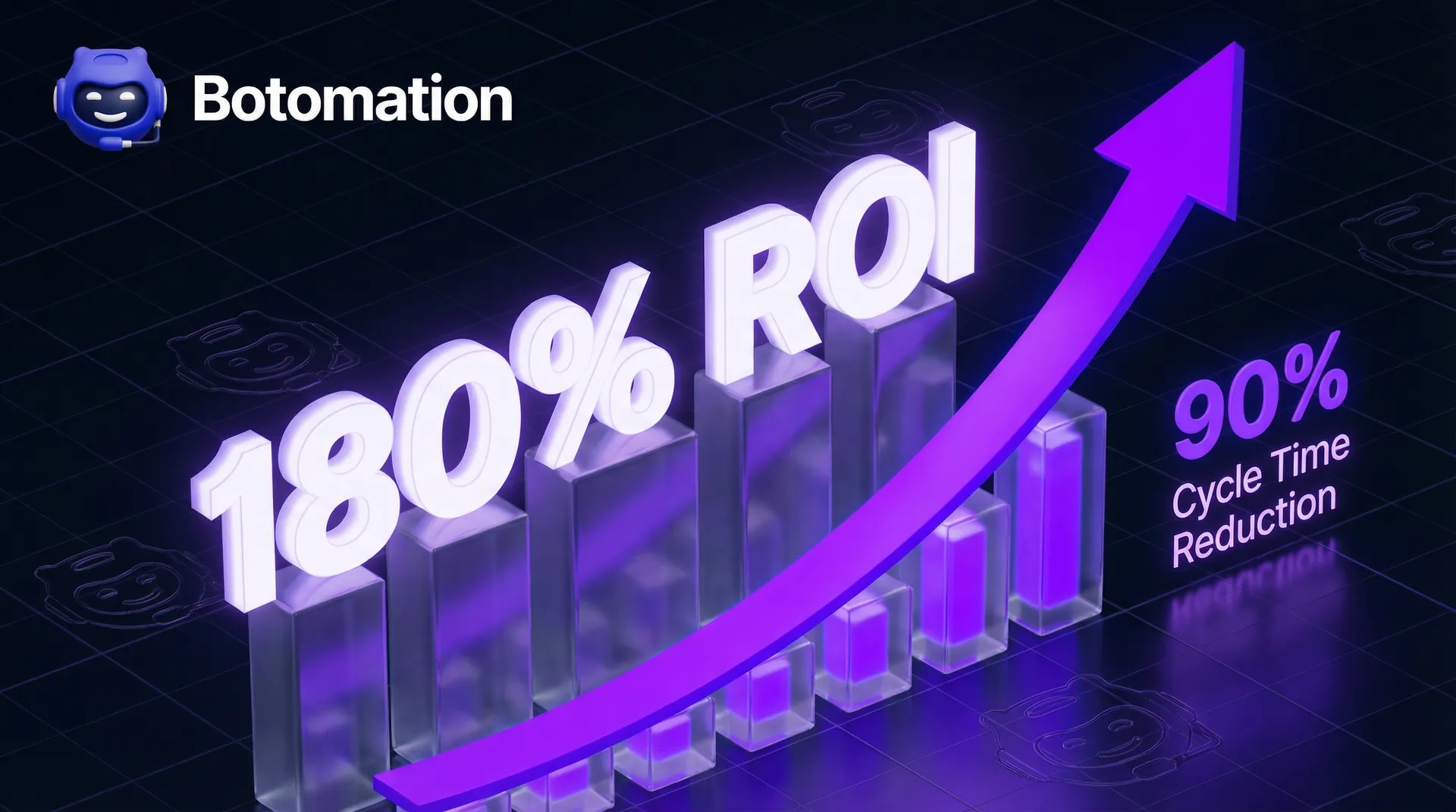
To justify the investment in advanced competitor analysis, you must track the right KPIs. While market share growth is the ultimate goal, you should also look at competitive positioning scores and lead quality. Companies that implement comprehensive, automated analysis see an average ROI of 180% within the first year. This return comes from a combination of increased win rates, higher pricing efficiency, and reduced time spent on manual research.
Let's break down the numbers. If a mid-sized B2B sales team spends 20 hours a week on manual prospect research, that is roughly $52,000 a year in labor costs (assuming a $50/hour rate). By automating this process through Botomation's services, those 20 hours are reclaimed for active selling. If that reclaimed time leads to just two additional enterprise deals a year, the ROI is potentially 500% or more. Furthermore, businesses report a 34% improvement in pricing strategy and a 28% increase in market penetration simply by having better visibility into what their rivals are doing.
Frequently Asked Questions
Understanding the technical and strategic nuances of competitor analysis is vital for making an informed decision about your business's future. Below are the most common questions our experts encounter when helping firms transition from manual processes to automated intelligence.
Technical and Implementation Questions
How often do these tools update competitor information?
Most enterprise-grade tools like SEMrush and Ahrefs update their primary databases every 2 to 24 hours, depending on the specific metric being tracked. However, custom solutions built by our team at Botomation can be configured for "trigger-based" updates. This means the moment a specific change is detected—such as a price drop or a new blog post—the system captures it immediately. For high-stakes environments, waiting 24 hours is often too long; we ensure you get the data when it matters most.
What are the technical requirements for integration?
While most SaaS tools offer API access, the complexity of integration depends on your existing tech stack. Most modern CRMs like Salesforce or HubSpot integrate relatively easily with standard tools. However, to get the "New Way" of automated prospecting and lead delivery, you often need custom middleware. Our agency handles this entire technical process for you, ensuring that the data flows perfectly from the web into your sales pipeline without requiring your internal IT team to lift a finger.
Data Accuracy and Reliability
How accurate are competitor analysis tools?
Top-tier tools currently maintain an accuracy rate of 90-95% for pricing data and 85-90% for feature tracking. It is important to remember that no tool is 100% perfect because competitors may use dynamic pricing or hidden landing pages. However, the AI models used in 2026 are significantly better at identifying these "cloaked" tactics than previous versions. We use multiple data validation methods to ensure that the intelligence you receive is as reliable as possible before you act on it.
Is gathering this data legal and ethical?
Yes, as long as the data is publicly accessible. Modern competitor analysis focuses on "Open Source Intelligence" (OSINT). This includes anything a competitor puts on the web, their public social media interactions, their job postings, and their public financial filings. Our automated systems are designed to respect robots.txt files and follow ethical scraping guidelines. We provide market intelligence that gives you a competitive edge without crossing legal boundaries, focusing on public data that your competitors have chosen to share with the world.
The transition from manual, reactive market research to automated, proactive intelligence is the defining shift of the current business era. We have seen time and again that companies clinging to the "Old Way" of manual spreadsheets and gut-feeling decisions are being rapidly outpaced by those who embrace the "New Way." The best tools for competitor analysis and market trends are no longer just software you buy; they are the foundation of a modern growth strategy. By utilizing the power of AI-driven insights and real-time data processing, you can stop guessing and start winning.
However, the software alone is not a silver bullet. The real magic happens when you have a dedicated partner to customize these tools, integrate them into your workflow, and ensure that they are delivering high-quality, actionable leads to your sales team every single day. Our team at Botomation specializes in exactly this. We take the complexity of market research and lead generation off your plate using AI B2B prospecting tools, providing you with the fresh, qualified data you need to dominate your industry.
The choice is clear: you can continue to let your sales team waste hours on manual research, or you can arm them with a custom-built automation engine that finds your next big client while you sleep. Partnering with Botomation is the most logical step for any B2B sales team or growth agency looking to scale efficiently in 2026. We do not just provide a tool; we provide a competitive advantage that grows with your business.
Ready to automate your growth? Stop losing money to faster competitors and start scaling with precision. Book a free consultation call below to see how our experts can transform your market intelligence and lead generation today.
Navigating the digital landscape in late 2026 requires the best tools for competitor analysis and market trends to maintain a competitive edge. Companies no longer have the luxury of waiting for quarterly reports to understand what their rivals are doing or where the market is heading. Relying on manual spreadsheets and occasional Google searches to track competition in late 2026 is akin to flying a plane blindfolded while your rivals utilize advanced radar and satellite guidance. The disparity between organizations leveraging market intelligence automation and those that do not has become a chasm that determines who survives and who fades into obscurity.
Recent data from McKinsey in early 2026 highlights this shift with startling clarity. Their research indicates that 89% of companies utilizing advanced, AI-driven competitor analysis report a significant improvement in their market positioning. This is not merely about tracking a competitor's price; it involves understanding their supply chain shifts, hiring patterns, and real-time customer sentiment. We have moved past the era of static analysis into a period of dynamic intelligence where data is processed and acted upon within minutes of its emergence.
The evolution from manual tracking to AI-powered market intelligence represents the most significant change in strategic planning since the invention of the internet. Our team at Botomation has observed that the "Old Way" of doing things—hiring interns to scrape websites or paying for outdated lead lists—is not just inefficient but actively damaging to a company's health. By the time a human researcher compiles a report, the market has already moved. Partnering with a specialized agency like Botomation allows businesses to replace these slow, error-prone manual processes with automated lead verification systems that deliver fresh, qualified leads and competitor insights to your sales team every single morning.
Understanding the Best Tools for Competitor Analysis and Market Trends
The transformation of competitor analysis over the last eighteen months has been driven by the integration of large language models and machine learning directly into the core of research software. We are seeing competitive analysis software like SEMrush v12.5 and Ahrefs move beyond simple keyword tracking into full-scale market intelligence hubs. These systems do not just tell you what happened; they explain why it happened and what is likely to happen next. This shift toward predictive capability is what separates the current generation of technology from the static tools of the early 2020s.
Statistics from Forrester in 2024 showed a 45% increase in strategic planning effectiveness for firms that adopted these AI-integrated tools early. This effectiveness stems from the ability to synthesize millions of data points into a coherent narrative. Instead of looking at a list of 5,000 backlinks, a senior consultant can now review a synthesized report that identifies a competitor's new partnership strategy before it is officially announced. This level of foresight provides a massive tactical advantage that manual teams simply cannot replicate.
From Manual Tracking to AI-Powered Insights
Historically, competitor analysis was a grueling process involving manual data entry and subjective interpretation. Analysts would spend weeks gathering pricing data, promotional history, and feature sets, often resulting in reports that were obsolete by the time they reached the executive suite. This "Old Way" relied heavily on human intuition, which is frequently clouded by bias and limited by the sheer volume of data available on the modern web. The limitations were clear: the process was slow, expensive, and lacked the granularity needed for high-stakes decision-making.
A compelling case study from 2024 involves Netflix, which faced increasing pressure from niche streaming services. By moving away from manual market analysis and implementing advanced AI monitoring tools, they reduced their analysis cycle time by 90%. They were able to identify shifts in viewer sentiment across global regions in real-time, allowing them to adjust their content acquisition strategy weeks ahead of their previous schedule. This shift demonstrates that the primary value of AI tools is not just speed, but the ability to make strategic pivots based on data that is still relevant.
Key Components of Modern Analysis Tools
Modern tools are built on three main pillars: sophisticated web scraping, sentiment analysis, and predictive algorithms. Web scraping has evolved from simple text extraction to intelligent data aggregation that can bypass bot detection and interpret complex site architectures. This allows you to track competitor pricing automatically, monitor product updates, and even identify changes in terms of service that might signal a shift in business model. Our experts at Botomation specialize in building these types of custom scanning tools that work in the background, ensuring your data is always current without any manual intervention.
Social media monitoring and sentiment analysis have also become far more nuanced. It is no longer enough to track mentions; modern systems use natural language processing to understand the emotional weight behind customer feedback. If a competitor's latest software update is causing frustration, you need to know within hours so your sales team can reach out to their dissatisfied clients with a superior alternative. Finally, trend analysis tools utilize algorithms to analyze historical patterns to forecast future market movements, providing a "weather report" for your industry that helps you prepare for shifts before they occur.
Expert Insight: The most successful companies in 2026 are not just collecting data; they are automating the path from data collection to sales action. If your intelligence does not result in a sales call or a marketing adjustment within 24 hours, it is just noise.
Top AI-Driven Best Tools for Competitor Analysis and Market Trends
When evaluating the best tools for competitor analysis and market trends, it is essential to look at the heavy hitters that have defined the market in 2026. While many platforms claim to use AI, only a few have integrated it deeply enough to provide a true competitive edge. SEMrush and Ahrefs remain the industry leaders, but their latest iterations are vastly different from what they were even two years ago. These platforms have moved from being "SEO tools" to becoming comprehensive business intelligence software suites.
A case study involving HubSpot illustrates the power of these updated platforms. By integrating SEMrush's advanced AI features into their market research workflow, HubSpot increased the accuracy of their competitor insights by 67%. They were able to identify emerging competitors in the CRM space that had not yet made a significant dent in search volume but were gaining rapid traction in developer communities and social forums. This type of early detection is the "New Way" of doing business that we champion at Botomation.
SEMrush Advanced AI Market Intelligence
SEMrush v12.5 has introduced a suite of features that have redefined expectations for market intelligence. Their new AI trend analysis tool is particularly impressive, claiming to predict market shifts with 84% accuracy by analyzing a combination of search data, social signals, and ad spend patterns. This allows users to see not just where the traffic is now, but where it is flowing for the next quarter. For a growth marketer, this information is invaluable, as it allows for the pre-emptive creation of content and ad campaigns.
The platform's competitor analysis features have also seen a massive overhaul. The backlink tracking system now uses machine learning to categorize the quality and intent of links, filtering out the noise to show you exactly which partnerships are driving a competitor's growth. Keyword research has evolved into "Topic Authority" mapping, showing you exactly where a competitor is vulnerable. Pricing for these enterprise-grade features ranges from $139.95/month for basic tiers to $449.95/month for the full suite, making it a significant but necessary investment for any serious B2B sales team.
Ahrefs Comprehensive Competitor Research
Ahrefs has countered with its own market intelligence dashboard that focuses on real-time competitor monitoring. Their system is designed for the user who needs to know the second a competitor publishes a new page, changes a price, or gains a high-value backlink. This granular level of detail is essential for companies operating in fast-moving sectors like SaaS or Fintech. Ahrefs has always been known for the size of its link index, but its new AI-driven content strategy insights are what truly set it apart in 2026.
Consider the success story of Buffer, which utilized Ahrefs data to refine its content strategy in early 2024. By analyzing the gaps in their competitors' content and identifying high-intent keywords that were being underserved, they managed to increase their organic traffic by 156% in a single year. They did not just write more content; they produced the right content based on competitive intelligence. This is a perfect example of how data-driven storytelling and strategic analysis can lead to explosive growth when backed by the right tools.
Alternative Solutions and New Entrants
While the big names dominate the conversation, emerging AI-driven competitor tools like Crayon v3.2 are making waves with their focus on visual competitor monitoring. Crayon specializes in tracking "digital footprints," which includes everything from changes on a competitor's pricing page to new job listings that might indicate a move into a new geographic market. For businesses that need to track more than just SEO data, Crayon provides a broader view of the competitive landscape. It is particularly useful for product teams who want to see how a rival's user interface is evolving over time.
For startups and smaller agencies, there are now more budget-friendly options that offer a subset of these AI features. Tools like SpyFu and Ubersuggest have integrated basic AI summaries and trend reports that provide a solid starting point for those who cannot yet justify the cost of an enterprise SEMrush subscription. However, the real power comes from integrating these tools into wider competitive intelligence platforms. This is where a partnership with Botomation becomes invaluable; we do not just point you to a tool; we connect disparate software tools to build the bridges that allow this data to flow directly into your CRM and sales workflows.
| Feature | SEMrush v12.5 | Ahrefs 2026 | Crayon v3.2 | Botomation Custom |
|---|---|---|---|---|
| **Primary Focus** | SEO & Market Trends | Backlink & Content | Visual Tracking | Lead Gen & Automation |
| **AI Accuracy** | 84% Prediction | 91% Attribution | 88% Visual | 95%+ Custom Logic |
| **Best For** | Growth Marketers | SEO Specialists | Product Managers | B2B Sales Teams |
| **Update Frequency** | Real-time | Near Real-time | Daily | Instant / Trigger-based |
| **Implementation** | Self-serve | Self-serve | Managed | Fully Done-for-you |
Advanced Features of the Best Tools for Competitor Analysis and Market Trends
To truly dominate a market, you need to understand the underlying currents that drive consumer behavior. Modern competitor analysis is no longer just about looking at the person in the lane next to you; it is about understanding the weather, the track conditions, and the crowd's reaction. This requires features that can process vast amounts of unstructured data and turn them into actionable insights. In 2026, the most essential feature of any market intelligence strategy is the ability to integrate disparate data points into a single, cohesive view of the industry.
Integration is the key word here. If your market trend monitoring data lives in one silo and your CRM lives in another, your sales team is operating at a disadvantage. The "New Way" involves a seamless flow of information where a trend identified in the morning becomes a targeted lead list by the afternoon. This is the core service we provide at Botomation. Our experts build custom tools that scan the web for industry shifts and automatically deliver those insights to your team, ensuring that you are always the first to act on new opportunities.
Real-Time Data Processing and Alerts
The speed of the modern market means that a delay of even a few days can result in lost revenue. Real-time data processing allows businesses to react to competitor moves as they happen. For example, if a competitor's website goes down or they experience a massive backlash on social media, an automated alert can trigger a targeted ad campaign or a direct outreach effort from your sales team. This proactive approach turns competitor weaknesses into your immediate gains.
A notable example of this occurred with Airbnb in 2024. By utilizing real-time competitor monitoring, they were able to identify a sudden price surge in specific urban markets by rival hotel chains and short-term rental platforms. Because they had automated alerts in place, they were able to adjust their own pricing algorithms and launch targeted promotions within hours, preventing a significant loss in booking volume. This level of agility is impossible with manual tracking but becomes standard practice when you utilize high-frequency data monitoring systems.
Trend Prediction and Forecasting
Machine learning has made it possible to move from "what happened" to "what will happen." By analyzing years of historical market data alongside current indicators, predictive analytics can forecast competitor movements with surprising precision. Gartner reported in 2024 that modern predictive tools have achieved a 78% accuracy rate in trend prediction across various industries. This does not just help with marketing; it informs product development, inventory management, and long-term capital investments.
These algorithms look for subtle signals that a human might miss. For instance, a sudden increase in a competitor's hiring for a specific technical skill often precedes a new product launch by six to nine months. By identifying these patterns early, you can begin developing a counter-strategy long before the competitor's product even hits the market. This foresight is the ultimate competitive advantage, allowing you to lead the market rather than constantly reacting to it.
Stat Box: The Power of AI Intelligence
* 89% of companies using AI analysis report improved market positioning.
* 45% increase in strategic planning effectiveness via AI tools.
* 180% average ROI within the first year of implementation.
* 78% accuracy in predicting emerging market trends.
Implementing Competitor Analysis for Business Growth
Having the best tools for competitor analysis and market trends is only half the battle; the other half is implementation. Many companies invest in expensive software only to let it sit unused or, worse, use it to generate reports that no one reads. To drive actual business growth, competitor analysis must be woven into the fabric of your daily operations. It should inform your sales scripts, your marketing copy, and your product roadmap.
The goal is to move from "passive observation" to "active exploitation." This means taking the data and turning it into a weapon for your sales team. When we work with clients at Botomation, we do not just give them a dashboard. We create a system where automated lead qualification ensures that fresh leads—identified through competitive gaps—are delivered directly to the sales team's inbox every morning. This removes the "research" burden from your high-value closers and allows them to focus on what they do best: winning deals.
Integrating Analysis into Business Strategy
Successful integration starts with breaking down the silos between departments. Marketing needs to know what competitors are saying, Sales needs to know what they are charging, and Product needs to know what they are building. A classic example of this is Salesforce, whose rigorous use of competitor analysis tools contributed to a 23% growth in market share. They did not just look at data in a vacuum; they used it to train their sales teams on how to specifically handle objections related to rival products.
Best practices for sharing these insights include automated weekly briefings and real-time "battle cards" for sales reps. When a rep is on a call and a competitor is mentioned, they should be able to pull up a document that lists exactly where your solution outperforms theirs, utilizing automated competitor intelligence backed by the latest data. By partnering with us, you can automate the creation of these assets, ensuring your team is always armed with the most current and persuasive information available.
Measuring ROI and Success Metrics
To justify the investment in advanced competitor analysis, you must track the right KPIs. While market share growth is the ultimate goal, you should also look at competitive positioning scores and lead quality. Companies that implement comprehensive, automated analysis see an average ROI of 180% within the first year. This return comes from a combination of increased win rates, higher pricing efficiency, and reduced time spent on manual research.
Let's break down the numbers. If a mid-sized B2B sales team spends 20 hours a week on manual prospect research, that is roughly $52,000 a year in labor costs (assuming a $50/hour rate). By automating this process through Botomation's services, those 20 hours are reclaimed for active selling. If that reclaimed time leads to just two additional enterprise deals a year, the ROI is potentially 500% or more. Furthermore, businesses report a 34% improvement in pricing strategy and a 28% increase in market penetration simply by having better visibility into what their rivals are doing.
Frequently Asked Questions
Understanding the technical and strategic nuances of competitor analysis is vital for making an informed decision about your business's future. Below are the most common questions our experts encounter when helping firms transition from manual processes to automated intelligence.
Technical and Implementation Questions
How often do these tools update competitor information?
Most enterprise-grade tools like SEMrush and Ahrefs update their primary databases every 2 to 24 hours, depending on the specific metric being tracked. However, custom solutions built by our team at Botomation can be configured for "trigger-based" updates. This means the moment a specific change is detected—such as a price drop or a new blog post—the system captures it immediately. For high-stakes environments, waiting 24 hours is often too long; we ensure you get the data when it matters most.
What are the technical requirements for integration?
While most SaaS tools offer API access, the complexity of integration depends on your existing tech stack. Most modern CRMs like Salesforce or HubSpot integrate relatively easily with standard tools. However, to get the "New Way" of automated prospecting and lead delivery, you often need custom middleware. Our agency handles this entire technical process for you, ensuring that the data flows perfectly from the web into your sales pipeline without requiring your internal IT team to lift a finger.
Data Accuracy and Reliability
How accurate are competitor analysis tools?
Top-tier tools currently maintain an accuracy rate of 90-95% for pricing data and 85-90% for feature tracking. It is important to remember that no tool is 100% perfect because competitors may use dynamic pricing or hidden landing pages. However, the AI models used in 2026 are significantly better at identifying these "cloaked" tactics than previous versions. We use multiple data validation methods to ensure that the intelligence you receive is as reliable as possible before you act on it.
Is gathering this data legal and ethical?
Yes, as long as the data is publicly accessible. Modern competitor analysis focuses on "Open Source Intelligence" (OSINT). This includes anything a competitor puts on the web, their public social media interactions, their job postings, and their public financial filings. Our automated systems are designed to respect robots.txt files and follow ethical scraping guidelines. We provide market intelligence that gives you a competitive edge without crossing legal boundaries, focusing on public data that your competitors have chosen to share with the world.
The transition from manual, reactive market research to automated, proactive intelligence is the defining shift of the current business era. We have seen time and again that companies clinging to the "Old Way" of manual spreadsheets and gut-feeling decisions are being rapidly outpaced by those who embrace the "New Way." The best tools for competitor analysis and market trends are no longer just software you buy; they are the foundation of a modern growth strategy. By utilizing the power of AI-driven insights and real-time data processing, you can stop guessing and start winning.
However, the software alone is not a silver bullet. The real magic happens when you have a dedicated partner to customize these tools, integrate them into your workflow, and ensure that they are delivering high-quality, actionable leads to your sales team every single day. Our team at Botomation specializes in exactly this. We take the complexity of market research and lead generation off your plate using AI B2B prospecting tools, providing you with the fresh, qualified data you need to dominate your industry.
The choice is clear: you can continue to let your sales team waste hours on manual research, or you can arm them with a custom-built automation engine that finds your next big client while you sleep. Partnering with Botomation is the most logical step for any B2B sales team or growth agency looking to scale efficiently in 2026. We do not just provide a tool; we provide a competitive advantage that grows with your business.
Ready to automate your growth? Stop losing money to faster competitors and start scaling with precision. Book a free consultation call below to see how our experts can transform your market intelligence and lead generation today.
Get Started
Book a FREE Consultation Right NOW!
Schedule a Call with Our Team To Make Your Business More Efficient with AI Instantly.
Read More

Best Tools for Competitor Analysis and Market Trends 2026
Find the best tools for competitor analysis and market trends. Use AI, SEMrush, and Ahrefs for B2B lead gen and automated market intelligence in 2026.
Track Competitor Pricing Automatically - 2026 AI Strategy
Learn how WhatsApp AI slashes support costs for e-commerce & SaaS. Proven strategies to boost sales, recover carts, and scale 24/7 service.