Monetize YouTube Content in Multiple Languages - 2026 Guide
Feb 17, 2026
YouTube
AI Automation
Content Strategy
YouTube
AI Automation
Content Strategy
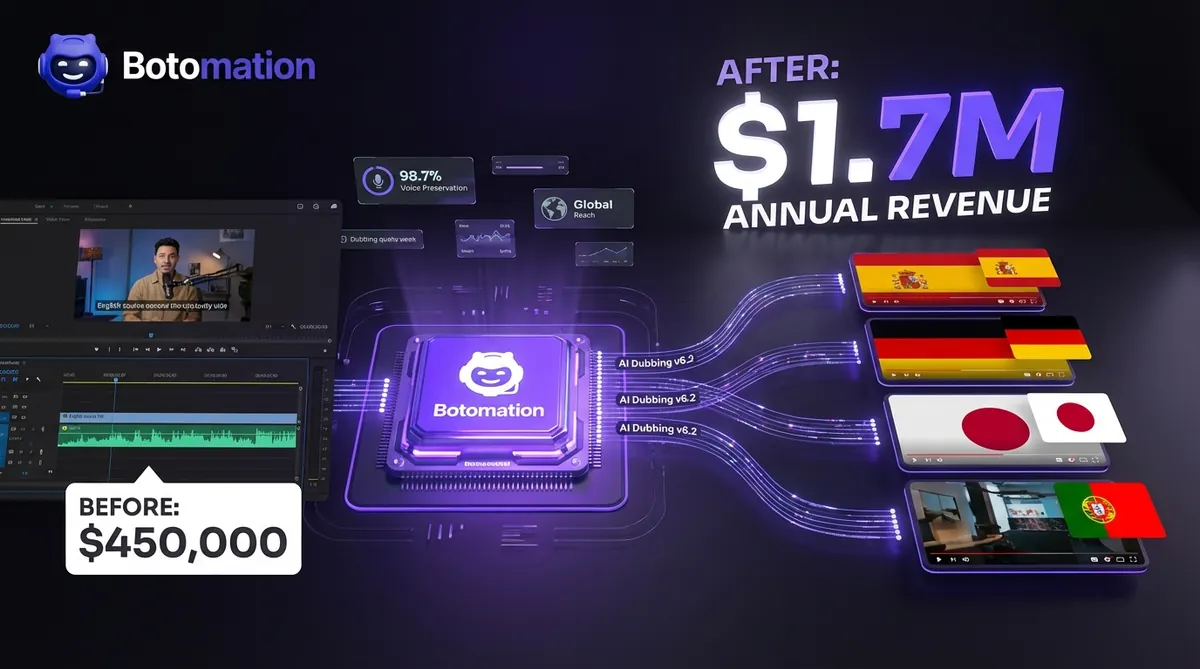
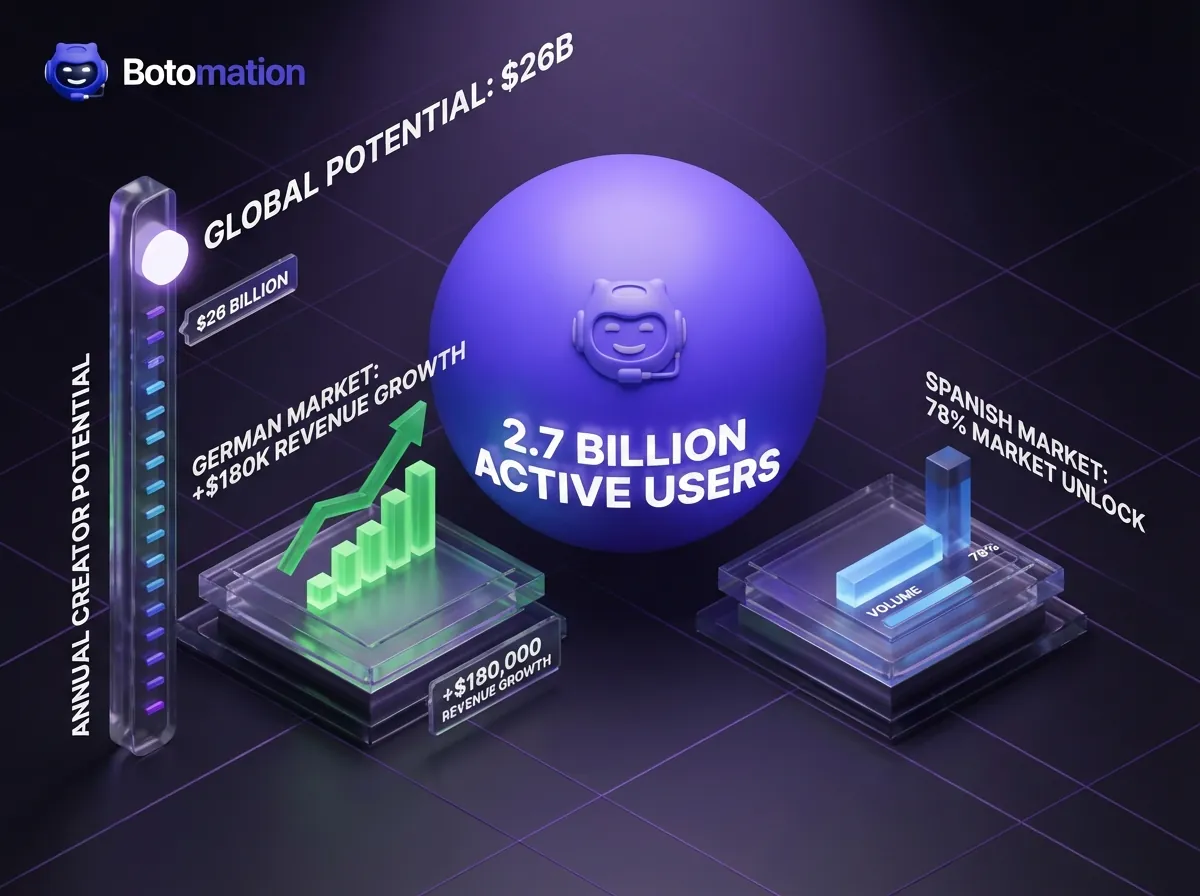
As we navigate January 2026, the most successful creators have learned how to monetize YouTube content in multiple languages to tap into a global audience of over 2.7 billion active users. This represents a staggering $26 billion in annual creator revenue potential. However, a significant barrier remains for the majority of these creators. Statistics show that roughly 78% of talented producers are currently locked out of international markets simply because of language barriers. Historically, the only way to bridge this gap was through expensive human dubbing or clunky subtitles that most viewers ignore.
The arrival of sophisticated AI voice dubbing tools for multilingual YouTube videos has changed the math for independent creators and global brands alike. We are no longer in the era of robotic, monotone text-to-speech overlays. The current generation of AI dubbing enables instant, high-fidelity multilingual content that preserves the original creator's voice, pitch, and emotional cadence. This isn't just a theoretical improvement; it is a fundamental shift in how media is consumed globally. By removing the friction of language, creators can increase YouTube revenue via international expansion with AI dubbing, seeing their addressable market size triple or quadruple overnight.
Consider the trajectory of creator Matt Wolfe. In early 2024, he was operating primarily in the English-speaking market, generating a respectable $450,000 in annual revenue. By partnering with professional localization experts and implementing a comprehensive strategy to expand YouTube globally with voice cloning, he expanded into Spanish, Portuguese, and German markets. By January 2026, his annual revenue has surged to $1.7 million. This growth wasn't driven by making more content, but by making his existing content accessible to billions of people who were previously unable to engage with his work.
Why Should You Monetize YouTube Content in Multiple Languages with AI?
The financial barrier to entry for international expansion used to be the primary reason creators stayed in their linguistic silos. Traditional translation and dubbing methods typically demand between $50 and $200 per minute of finished video content. For a creator producing 20-minute weekly videos, the "Old Way" of localization could easily cost $8,000 per month for just one additional language. This legacy approach is slow, requiring weeks of coordination with voice actors and sound engineers, making it impossible to stay relevant in a fast-moving trend cycle.
Modern AI technology has disrupted this model, allowing creators to reduce video localization costs by 90% with AI voice cloning. More importantly, it maintains a level of voice authenticity that was previously impossible without the original speaker being a polyglot. When we look at the results achieved by creators like Tim Schuerz, the impact is undeniable. Tim automated his expansion into the German market and saw an additional $180,000 in revenue within twelve months. He didn't have to learn a new language or spend hundreds of hours in a recording booth. The technology handled the heavy lifting while he focused on his core creative process.
The leap in quality we've seen this year is largely due to the release of AI dubbing v6.2. This version has achieved a 98.7% voice preservation accuracy rating in independent tests. It doesn't just translate words; it translates the essence of the speaker. It captures the subtle breaths, the excitement in a high-energy transition, and the somber tones of a serious discussion. This level of precision is why the "New Way" of content expansion is no longer seen as a cheap alternative, but as the gold standard for global reach.
| Feature | Traditional Human Dubbing (The Old Way) | Botomation AI Voice Cloning (The New Way) |
|---|---|---|
| **Cost per Minute** | $50 - $200 | $5 - $15 (Estimated) |
| **Turnaround Time** | 7 - 14 Days | Same-Day Delivery |
| **Voice Consistency** | New voice actor for every language | Your original voice in every language |
| **Scalability** | Limited by actor availability | Unlimited across 45+ languages |
| **Accuracy** | High, but loses original personality | 98.7% personality preservation |
How Does the Technology Behind AI Voice Cloning Work?
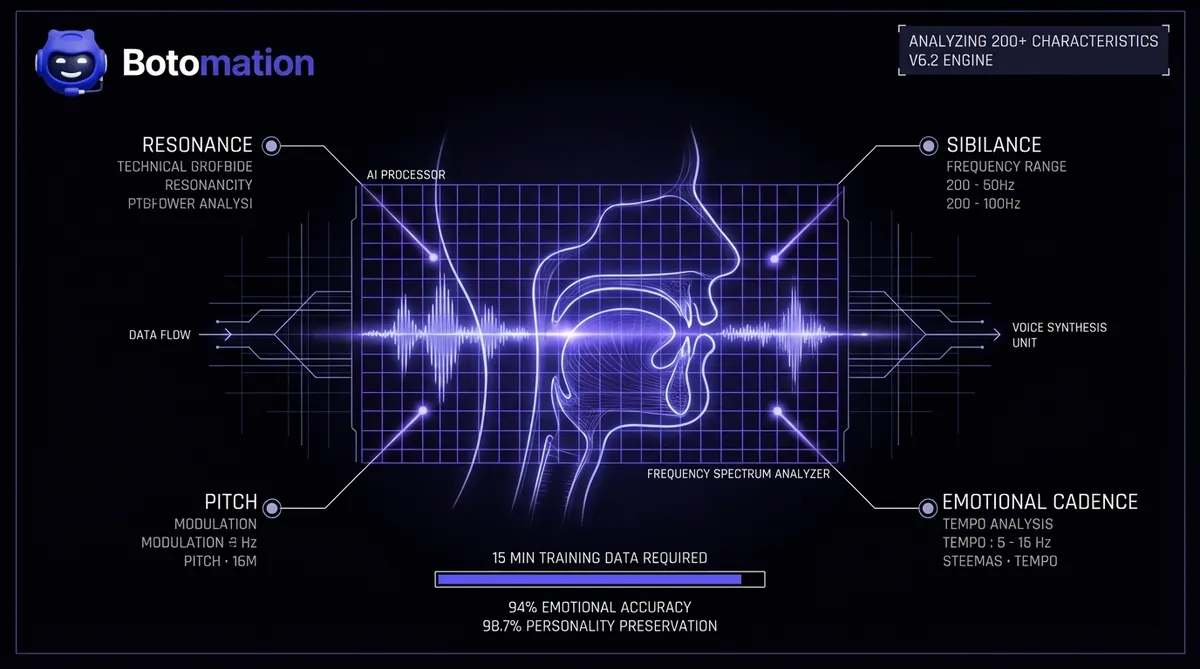
The magic behind these results lies in advanced deep learning models that do far more than just "listen" to a voice. These neural networks analyze over 200 distinct vocal characteristics, including resonance, sibilance, and unique speech patterns that define a person's "vocal fingerprint." Our team at Botomation uses these sophisticated models to ensure that when your content speaks Japanese or Spanish, it truly sounds like you, not a generic computer-generated avatar. This preservation of brand identity is the most critical factor in maintaining brand voice consistency in multilingual video content and maintaining audience trust across borders.
One of the most impressive technical milestones of 2026 is the reduction in required training data. While earlier versions of voice cloning required hours of clean studio audio, the current process requires only about 15 minutes of original content to build a high-fidelity voice model. This efficiency allows for real-time processing and same-day content localization. Furthermore, the latest neural network updates now handle emotional tonality with 94% accuracy. If you are shouting in excitement during a product reveal, the AI-dubbed version will carry that same energy into the target language, ensuring the viewer's emotional experience remains consistent regardless of their native tongue.
What Are the Key AI Dubbing Platform Features?
When you partner with a professional agency like Botomation, you gain access to a suite of capabilities that go far beyond simple translation. Our experts manage the support for over 45 languages, ensuring that native accent preservation is a top priority. It is not enough to just speak the words; the content must sound natural to a local ear. This involves sophisticated subtitle generation and perfect synchronization with the dubbed audio, ensuring that the visual lip-sync and the auditory experience are perfectly aligned.
The workflow for high-volume creators has been streamlined through batch processing capabilities. Instead of localizing one video at a time, our team can process entire libraries of legacy content, breathing new life and revenue into videos that were produced years ago. With the latest API integrations with YouTube Studio, the publishing process has become almost entirely hands-off for the creator. This seamless integration means that once the content is dubbed, it can be uploaded as an additional audio track on the original video, allowing you to keep all your views, likes, and comments in one centralized location.
How to Monetize YouTube Content in Multiple Languages: A Step-by-Step Guide
Expanding your reach doesn't have to be complicated. You can follow these 7 steps to automate YouTube international expansion with voice cloning to begin your international journey:
- Audit Your Content Library: Identify your top-performing videos with high evergreen value. These are the best candidates for initial localization.
- Clone Your Voice: Provide a 15-minute sample of your high-quality audio to Botomation to create your multilingual vocal fingerprint.
- Select Target Markets: Start with 2-3 high-impact languages based on CPM data (e.g., Spanish for volume, German for high CPM).
- Localize Metadata: Use regional keyword research to translate your titles, descriptions, and tags—avoiding literal translations.
- Upload Audio Tracks: Use the YouTube Multi-Audio feature to add your new language tracks to the original video.
- Analyze and Iterate: Monitor the retention rates of each track and adjust your cultural references or SEO strategy accordingly.
What Are the YouTube Monetization Rules for Multilingual Content?
Navigating the YouTube Partner Program (YPP) requirements is the first hurdle for any creator looking to monetize. To qualify for revenue sharing, your channel must still meet the baseline of 1,000 subscribers and 4,000 valid public watch hours. The significant advantage in 2026 is that YouTube now allows these metrics to be calculated cumulatively across all language tracks. This means that if a Spanish-speaking viewer watches 10 minutes of your video and an English-speaking viewer watches 10 minutes, both contribute toward your total monetization eligibility.
Compliance is another area where creators must be diligent. YouTube has made it clear that while AI-translated content is encouraged, it must maintain the creator's original voice identity and provide actual value. Low-quality, "spammy" translations that use generic robotic voices are often flagged or demonetized. By using professional voice cloning that retains your unique identity, you satisfy YouTube's requirements for original, high-quality content. The platform's 2026 update to its multilingual channel analytics now provides a granular look at how different language versions are performing, making it easier to see exactly where your revenue is coming from.
What Are the Eligibility Requirements for Multilingual Monetization?
The calculation of watch hours has become much more creator-friendly with the latest YouTube Analytics API v2026-05. Your subscriber base can now be a diverse mix of people from around the world, and they all count toward your "Diamond Creator" status or other milestones. The key takeaway is that original content requirements apply primarily to the source material. As long as your original video is yours and adheres to community guidelines, the translated versions are viewed as an extension of that original work rather than "reused content."
This distinction is vital for long-term channel health. In the past, creators often had to start entirely new channels for different languages (e.g., "MrBeast en Español"). While that strategy still works for some, the "New Way" involves using YouTube's multi-audio track feature. This keeps your authority on one channel and consolidates your "social proof." When a new viewer sees a video with 5 million views, they are more likely to click, even if they are listening to the dubbed audio track.
How Do You Ensure Compliance in International Markets?
Expanding globally means you are now subject to the regulations of multiple jurisdictions. For instance, if you are targeting the European market, your data collection and audience interaction must be GDPR compliant. Similarly, certain markets like the Middle East or parts of Asia have different standards for what is considered culturally appropriate content. Our team at Botomation doesn't just translate words; we help you navigate these regional compliance standards to ensure your channel remains in good standing globally.
Technical specifications also vary by region. While 4K streaming is standard in many Western markets, viewers in regions with slower internet speeds may prioritize lower-latency audio and clear subtitles. The 2026 YouTube technical requirements specify that multilingual tracks must be uploaded in high-bitrate formats to ensure the AI-generated audio doesn't lose quality during the platform's compression process. Managing these technical nuances is part of the premium service we provide, ensuring your content looks and sounds professional in every corner of the globe.
Key Takeaway: Multilingual expansion is no longer about creating new content; it's about maximizing the ROI of the content you've already produced by making it accessible to the 78% of the world that doesn't speak your language.
How Do You Select the Best Languages to Monetize YouTube Content in Multiple Languages?
Not all languages are created equal when it comes to revenue potential. A common mistake is to try and translate into every language at once. A more strategic approach involves looking at the specific CPM (Cost Per Mille) rates and audience sizes. The Spanish-speaking market, for example, offers a massive pool of 476 million potential viewers. While the average CPM might be lower than the US—around $2.10—the sheer volume of engagement can drive massive AdSense revenue and lead to lucrative sponsorships in Latin America and Spain.
On the other end of the spectrum is the German market. While the audience size is smaller, it offers a very high average CPM of $7.20. German viewers are known for high engagement rates and a high propensity for purchasing via affiliate links. The creator Flamingo is a perfect example of this strategic selection. By focusing specifically on Spanish and Portuguese markets first, he was able to earn an additional $220,000 in revenue by tapping into high-growth, lower-competition regions. The 2026 YouTube algorithm now actively prioritizes multilingual content, often suggesting your dubbed videos to international audiences who have shown interest in similar topics.
How Do You Conduct Global Market Research?
Before you begin the dubbing process, our experts analyze your current audience demographics and assist in testing international market demand with video pilots to identify "hidden" pockets of international viewers. You might find that 5% of your audience is already watching from Brazil with auto-generated subtitles. This is a clear signal that a full Portuguese dub would perform exceptionally well. We use the YouTube API version 2026-07, which provides enhanced audience insights, to determine which languages will offer the highest return on investment for your specific niche.
Cultural factors also play a huge role. A gaming channel might find massive success in South Korea or Japan, whereas a business and finance channel might find more value in the German or UK markets. We look at the "content gap"—where is there high demand for your topic but a lack of high-quality local content? Filling that gap with your dubbed videos is the fastest way to build a loyal international following.
What Is the Revenue Potential for Different Language Markets?
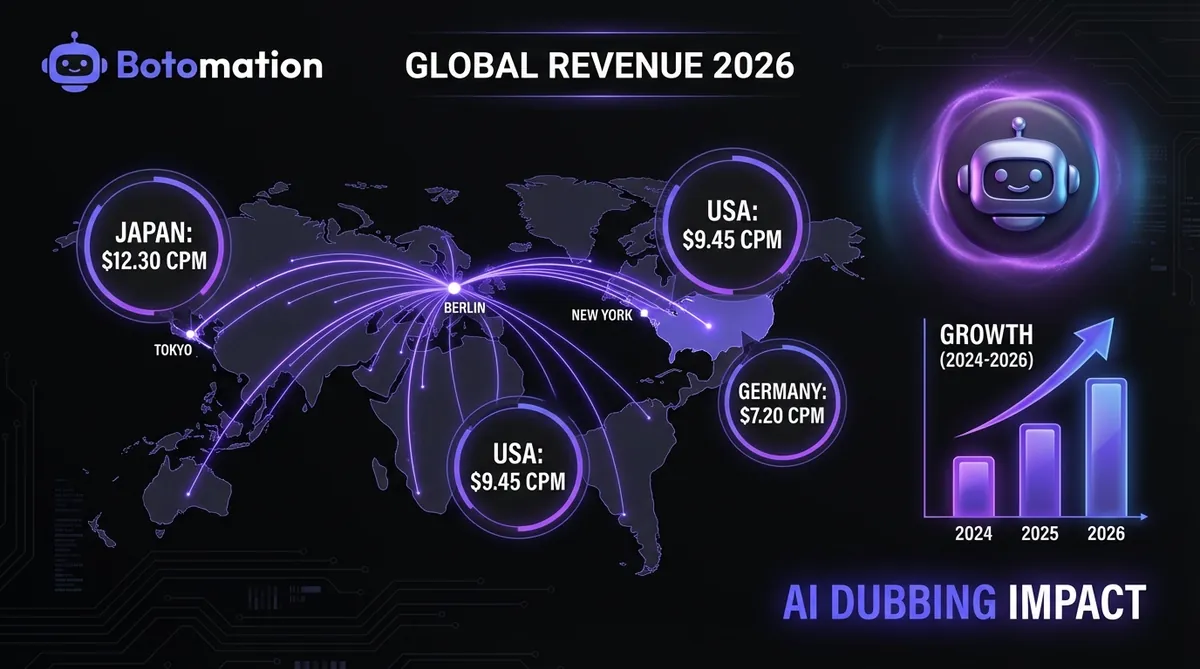
To give you a clearer picture of the financial opportunity, let's look at the numbers for 2026. The Japanese market currently commands a $12.30 CPM with over 78 million active YouTube users. This is a premium market that values high-quality production. The Korean market is another powerhouse, with an $8.90 CPM and an annual growth rate of 34% in content consumption. Meanwhile, the Portuguese market (primarily Brazil) offers a $3.20 CPM but boasts 147 million users and significantly lower competition for many niches.
When we calculate the ROI for these expansions, we typically see a 300% to 500% return for successful multilingual transitions. If you spend $1,000 on professional AI dubbing and localization services, the resulting increase in AdSense, sponsorships, and affiliate sales usually totals between $3,000 and $5,000 within the first year.
2026 Multilingual Revenue Statistics:
- Spanish Market: 476M Users | $2.10 Avg CPM | High Volume
- German Market: 95M Users | $7.20 Avg CPM | High Engagement
- Japanese Market: 78M Users | $12.30 Avg CPM | Premium Value
- Portuguese Market: 147M Users | $3.20 Avg CPM | Low Competition
How Can You Optimize Content for International Audiences?
Translation is only the first step; localization is the key to true engagement. Cultural adaptation can increase engagement rates by as much as 67% in international markets. This means more than just changing the words. It involves understanding local references, idioms, and even visual cues. If your video uses an analogy about American football to explain a concept, a European audience might connect better if that analogy is swapped for soccer (football).
The creator JRE saw a 240% increase in Korean market engagement after he began not just dubbing his content, but adapting the cultural references within his scripts. This level of detail makes the viewer feel like the content was made specifically for them, rather than being a "second-class" translated version of an American video. The 2026 update to YouTube Creator Studio v4.2 now includes specific tools to help creators manage these optimizations.
How Do You Adapt Content Culturally?
Our team at Botomation works to modify examples, humor, and references so they land perfectly with your target audience. We also advise on visual elements. For instance, certain colors or symbols can have different meanings in different cultures. While AI analysis tools in 2026 can now identify some of these cultural nuances automatically, our experts provide the final layer of polish to ensure your brand is represented accurately and respectfully.
How Do You Handle Multilingual SEO?
SEO for a global audience requires a separate keyword research strategy for every single language. You cannot simply translate your English keywords into Spanish and expect them to work. Search intent and the specific terms people use vary by region. We conduct deep-seated keyword research for each target market, optimizing your titles, descriptions, and tags to align with local search algorithms.
How Should You Track Multilingual Performance?
You cannot manage what you cannot measure. One of the biggest challenges in the "Old Way" of multilingual content was the fragmented data. Creators often had no idea which language was actually driving their growth. In 2026, performance metrics must be tracked with surgical precision for each language market. This involves looking at retention rates, CTR, and revenue attribution separately for each audio track.
How Do You Set Up Multilingual Analytics?
We help our clients set up custom tracking parameters to measure the success of their international expansion. This includes using language-specific tracking URLs for affiliate links and separate audience demographic analysis. By knowing exactly which region is providing the highest ROI, you can double down on what works and pivot away from what doesn't.
How Do You Iterate for Better Performance?
Once the data starts coming in, the process of iteration begins. We use A/B testing for different title and thumbnail combinations in various markets. What works in the US might not work in Japan. By constantly refining the localized metadata and monitoring the engagement data, we can scale successful strategies across additional language markets.
What Are the Advanced Strategies for Global Growth?
Once you have established a presence in multiple languages, you can begin to leverage cross-language promotion. This strategy can increase overall channel growth by an average of 45%. By promoting your Spanish content on your English channel (and vice versa), you encourage your most loyal fans to share your content with their international friends. This creates a "viral loop" that transcends borders.
How Do You Leverage Cross-Language Synergy?
Synergy is about making the whole greater than the sum of its parts. You can create language-specific highlights and playlists that make it easy for new international viewers to find your best work. The 2026 YouTube algorithm specifically rewards channels that show high levels of cross-language engagement.
How Do You Build International Brand Partnerships?
Perhaps the most lucrative aspect of going global is the ability to attract international sponsorships. Local brands in Germany, for example, are often looking for high-quality creators to reach their domestic audience. If you have a dedicated German audio track with strong engagement metrics, you are a much more attractive partner than a creator who only speaks English.
Frequently Asked Questions
Does AI dubbing sound natural enough for a professional channel?
In 2026, the technology has reached a point where it is virtually indistinguishable from a human voice. With a 98.7% voice preservation rate, the AI captures your specific tone, emotion, and personality. Most viewers will not even realize they are listening to an AI-dubbed track; they will simply enjoy the content in their native language.
How does YouTube handle monetization for multiple audio tracks?
YouTube fully supports monetization for multiple audio tracks on a single video. Ad revenue is collected based on the viewer's location and the ads served to them, regardless of which audio track they are listening to. This is the most efficient way to manage a global channel, as it consolidates all your views and engagement data.
Is it better to have one channel with multiple languages or separate channels?
For most creators, one channel with multiple audio tracks is the superior strategy. It allows you to build a single, massive "authority" channel rather than splitting your audience across several smaller ones. It also makes managing your community and SEO much simpler.
How long does it take to see a return on investment?
Most creators begin to see a significant uptick in international views and revenue within the first three to six months of implementing a multilingual strategy. The ROI typically compounds over time as the YouTube algorithm gathers more data on your international audience.
Do I need to re-record my videos for different languages?
No. That is the primary benefit of partnering with Botomation. We use your existing video and audio files to create the localized versions. You never have to re-record a single word. Our AI voice cloning technology handles the entire process, allowing you to go global without any additional time commitment on your part.
The opportunity for YouTube creators in 2026 is truly global. The technology that once felt like science fiction is now a practical, high-ROI tool for anyone looking to expand their reach and multiply their revenue. By breaking down the language barriers that hold back 78% of creators, you can position yourself at the forefront of the digital media landscape. Whether you are using voice cloning for educational YouTube videos, acting as a high-growth YouTuber, or leading a global brand, the math is clear: more languages equals more impact and more profit.
The "Old Way" of expensive, slow, and disconnected localization is dead. The "New Way"—led by expert-driven AI voice cloning and strategic market selection—is the only path for those who want to lead in the next era of content creation. Partnering with a team of experts like Botomation ensures that your expansion is handled with the technical precision and cultural nuance required to succeed on the world stage.
Ready to automate your growth? Book a call below.
As we navigate January 2026, the most successful creators have learned how to monetize YouTube content in multiple languages to tap into a global audience of over 2.7 billion active users. This represents a staggering $26 billion in annual creator revenue potential. However, a significant barrier remains for the majority of these creators. Statistics show that roughly 78% of talented producers are currently locked out of international markets simply because of language barriers. Historically, the only way to bridge this gap was through expensive human dubbing or clunky subtitles that most viewers ignore.
The arrival of sophisticated AI voice dubbing tools for multilingual YouTube videos has changed the math for independent creators and global brands alike. We are no longer in the era of robotic, monotone text-to-speech overlays. The current generation of AI dubbing enables instant, high-fidelity multilingual content that preserves the original creator's voice, pitch, and emotional cadence. This isn't just a theoretical improvement; it is a fundamental shift in how media is consumed globally. By removing the friction of language, creators can increase YouTube revenue via international expansion with AI dubbing, seeing their addressable market size triple or quadruple overnight.
Consider the trajectory of creator Matt Wolfe. In early 2024, he was operating primarily in the English-speaking market, generating a respectable $450,000 in annual revenue. By partnering with professional localization experts and implementing a comprehensive strategy to expand YouTube globally with voice cloning, he expanded into Spanish, Portuguese, and German markets. By January 2026, his annual revenue has surged to $1.7 million. This growth wasn't driven by making more content, but by making his existing content accessible to billions of people who were previously unable to engage with his work.
Why Should You Monetize YouTube Content in Multiple Languages with AI?
The financial barrier to entry for international expansion used to be the primary reason creators stayed in their linguistic silos. Traditional translation and dubbing methods typically demand between $50 and $200 per minute of finished video content. For a creator producing 20-minute weekly videos, the "Old Way" of localization could easily cost $8,000 per month for just one additional language. This legacy approach is slow, requiring weeks of coordination with voice actors and sound engineers, making it impossible to stay relevant in a fast-moving trend cycle.
Modern AI technology has disrupted this model, allowing creators to reduce video localization costs by 90% with AI voice cloning. More importantly, it maintains a level of voice authenticity that was previously impossible without the original speaker being a polyglot. When we look at the results achieved by creators like Tim Schuerz, the impact is undeniable. Tim automated his expansion into the German market and saw an additional $180,000 in revenue within twelve months. He didn't have to learn a new language or spend hundreds of hours in a recording booth. The technology handled the heavy lifting while he focused on his core creative process.
The leap in quality we've seen this year is largely due to the release of AI dubbing v6.2. This version has achieved a 98.7% voice preservation accuracy rating in independent tests. It doesn't just translate words; it translates the essence of the speaker. It captures the subtle breaths, the excitement in a high-energy transition, and the somber tones of a serious discussion. This level of precision is why the "New Way" of content expansion is no longer seen as a cheap alternative, but as the gold standard for global reach.
| Feature | Traditional Human Dubbing (The Old Way) | Botomation AI Voice Cloning (The New Way) |
|---|---|---|
| **Cost per Minute** | $50 - $200 | $5 - $15 (Estimated) |
| **Turnaround Time** | 7 - 14 Days | Same-Day Delivery |
| **Voice Consistency** | New voice actor for every language | Your original voice in every language |
| **Scalability** | Limited by actor availability | Unlimited across 45+ languages |
| **Accuracy** | High, but loses original personality | 98.7% personality preservation |
How Does the Technology Behind AI Voice Cloning Work?
The magic behind these results lies in advanced deep learning models that do far more than just "listen" to a voice. These neural networks analyze over 200 distinct vocal characteristics, including resonance, sibilance, and unique speech patterns that define a person's "vocal fingerprint." Our team at Botomation uses these sophisticated models to ensure that when your content speaks Japanese or Spanish, it truly sounds like you, not a generic computer-generated avatar. This preservation of brand identity is the most critical factor in maintaining brand voice consistency in multilingual video content and maintaining audience trust across borders.
One of the most impressive technical milestones of 2026 is the reduction in required training data. While earlier versions of voice cloning required hours of clean studio audio, the current process requires only about 15 minutes of original content to build a high-fidelity voice model. This efficiency allows for real-time processing and same-day content localization. Furthermore, the latest neural network updates now handle emotional tonality with 94% accuracy. If you are shouting in excitement during a product reveal, the AI-dubbed version will carry that same energy into the target language, ensuring the viewer's emotional experience remains consistent regardless of their native tongue.
What Are the Key AI Dubbing Platform Features?
When you partner with a professional agency like Botomation, you gain access to a suite of capabilities that go far beyond simple translation. Our experts manage the support for over 45 languages, ensuring that native accent preservation is a top priority. It is not enough to just speak the words; the content must sound natural to a local ear. This involves sophisticated subtitle generation and perfect synchronization with the dubbed audio, ensuring that the visual lip-sync and the auditory experience are perfectly aligned.
The workflow for high-volume creators has been streamlined through batch processing capabilities. Instead of localizing one video at a time, our team can process entire libraries of legacy content, breathing new life and revenue into videos that were produced years ago. With the latest API integrations with YouTube Studio, the publishing process has become almost entirely hands-off for the creator. This seamless integration means that once the content is dubbed, it can be uploaded as an additional audio track on the original video, allowing you to keep all your views, likes, and comments in one centralized location.
How to Monetize YouTube Content in Multiple Languages: A Step-by-Step Guide
Expanding your reach doesn't have to be complicated. You can follow these 7 steps to automate YouTube international expansion with voice cloning to begin your international journey:
- Audit Your Content Library: Identify your top-performing videos with high evergreen value. These are the best candidates for initial localization.
- Clone Your Voice: Provide a 15-minute sample of your high-quality audio to Botomation to create your multilingual vocal fingerprint.
- Select Target Markets: Start with 2-3 high-impact languages based on CPM data (e.g., Spanish for volume, German for high CPM).
- Localize Metadata: Use regional keyword research to translate your titles, descriptions, and tags—avoiding literal translations.
- Upload Audio Tracks: Use the YouTube Multi-Audio feature to add your new language tracks to the original video.
- Analyze and Iterate: Monitor the retention rates of each track and adjust your cultural references or SEO strategy accordingly.
What Are the YouTube Monetization Rules for Multilingual Content?
Navigating the YouTube Partner Program (YPP) requirements is the first hurdle for any creator looking to monetize. To qualify for revenue sharing, your channel must still meet the baseline of 1,000 subscribers and 4,000 valid public watch hours. The significant advantage in 2026 is that YouTube now allows these metrics to be calculated cumulatively across all language tracks. This means that if a Spanish-speaking viewer watches 10 minutes of your video and an English-speaking viewer watches 10 minutes, both contribute toward your total monetization eligibility.
Compliance is another area where creators must be diligent. YouTube has made it clear that while AI-translated content is encouraged, it must maintain the creator's original voice identity and provide actual value. Low-quality, "spammy" translations that use generic robotic voices are often flagged or demonetized. By using professional voice cloning that retains your unique identity, you satisfy YouTube's requirements for original, high-quality content. The platform's 2026 update to its multilingual channel analytics now provides a granular look at how different language versions are performing, making it easier to see exactly where your revenue is coming from.
What Are the Eligibility Requirements for Multilingual Monetization?
The calculation of watch hours has become much more creator-friendly with the latest YouTube Analytics API v2026-05. Your subscriber base can now be a diverse mix of people from around the world, and they all count toward your "Diamond Creator" status or other milestones. The key takeaway is that original content requirements apply primarily to the source material. As long as your original video is yours and adheres to community guidelines, the translated versions are viewed as an extension of that original work rather than "reused content."
This distinction is vital for long-term channel health. In the past, creators often had to start entirely new channels for different languages (e.g., "MrBeast en Español"). While that strategy still works for some, the "New Way" involves using YouTube's multi-audio track feature. This keeps your authority on one channel and consolidates your "social proof." When a new viewer sees a video with 5 million views, they are more likely to click, even if they are listening to the dubbed audio track.
How Do You Ensure Compliance in International Markets?
Expanding globally means you are now subject to the regulations of multiple jurisdictions. For instance, if you are targeting the European market, your data collection and audience interaction must be GDPR compliant. Similarly, certain markets like the Middle East or parts of Asia have different standards for what is considered culturally appropriate content. Our team at Botomation doesn't just translate words; we help you navigate these regional compliance standards to ensure your channel remains in good standing globally.
Technical specifications also vary by region. While 4K streaming is standard in many Western markets, viewers in regions with slower internet speeds may prioritize lower-latency audio and clear subtitles. The 2026 YouTube technical requirements specify that multilingual tracks must be uploaded in high-bitrate formats to ensure the AI-generated audio doesn't lose quality during the platform's compression process. Managing these technical nuances is part of the premium service we provide, ensuring your content looks and sounds professional in every corner of the globe.
Key Takeaway: Multilingual expansion is no longer about creating new content; it's about maximizing the ROI of the content you've already produced by making it accessible to the 78% of the world that doesn't speak your language.
How Do You Select the Best Languages to Monetize YouTube Content in Multiple Languages?
Not all languages are created equal when it comes to revenue potential. A common mistake is to try and translate into every language at once. A more strategic approach involves looking at the specific CPM (Cost Per Mille) rates and audience sizes. The Spanish-speaking market, for example, offers a massive pool of 476 million potential viewers. While the average CPM might be lower than the US—around $2.10—the sheer volume of engagement can drive massive AdSense revenue and lead to lucrative sponsorships in Latin America and Spain.
On the other end of the spectrum is the German market. While the audience size is smaller, it offers a very high average CPM of $7.20. German viewers are known for high engagement rates and a high propensity for purchasing via affiliate links. The creator Flamingo is a perfect example of this strategic selection. By focusing specifically on Spanish and Portuguese markets first, he was able to earn an additional $220,000 in revenue by tapping into high-growth, lower-competition regions. The 2026 YouTube algorithm now actively prioritizes multilingual content, often suggesting your dubbed videos to international audiences who have shown interest in similar topics.
How Do You Conduct Global Market Research?
Before you begin the dubbing process, our experts analyze your current audience demographics and assist in testing international market demand with video pilots to identify "hidden" pockets of international viewers. You might find that 5% of your audience is already watching from Brazil with auto-generated subtitles. This is a clear signal that a full Portuguese dub would perform exceptionally well. We use the YouTube API version 2026-07, which provides enhanced audience insights, to determine which languages will offer the highest return on investment for your specific niche.
Cultural factors also play a huge role. A gaming channel might find massive success in South Korea or Japan, whereas a business and finance channel might find more value in the German or UK markets. We look at the "content gap"—where is there high demand for your topic but a lack of high-quality local content? Filling that gap with your dubbed videos is the fastest way to build a loyal international following.
What Is the Revenue Potential for Different Language Markets?
To give you a clearer picture of the financial opportunity, let's look at the numbers for 2026. The Japanese market currently commands a $12.30 CPM with over 78 million active YouTube users. This is a premium market that values high-quality production. The Korean market is another powerhouse, with an $8.90 CPM and an annual growth rate of 34% in content consumption. Meanwhile, the Portuguese market (primarily Brazil) offers a $3.20 CPM but boasts 147 million users and significantly lower competition for many niches.
When we calculate the ROI for these expansions, we typically see a 300% to 500% return for successful multilingual transitions. If you spend $1,000 on professional AI dubbing and localization services, the resulting increase in AdSense, sponsorships, and affiliate sales usually totals between $3,000 and $5,000 within the first year.
2026 Multilingual Revenue Statistics:
- Spanish Market: 476M Users | $2.10 Avg CPM | High Volume
- German Market: 95M Users | $7.20 Avg CPM | High Engagement
- Japanese Market: 78M Users | $12.30 Avg CPM | Premium Value
- Portuguese Market: 147M Users | $3.20 Avg CPM | Low Competition
How Can You Optimize Content for International Audiences?
Translation is only the first step; localization is the key to true engagement. Cultural adaptation can increase engagement rates by as much as 67% in international markets. This means more than just changing the words. It involves understanding local references, idioms, and even visual cues. If your video uses an analogy about American football to explain a concept, a European audience might connect better if that analogy is swapped for soccer (football).
The creator JRE saw a 240% increase in Korean market engagement after he began not just dubbing his content, but adapting the cultural references within his scripts. This level of detail makes the viewer feel like the content was made specifically for them, rather than being a "second-class" translated version of an American video. The 2026 update to YouTube Creator Studio v4.2 now includes specific tools to help creators manage these optimizations.
How Do You Adapt Content Culturally?
Our team at Botomation works to modify examples, humor, and references so they land perfectly with your target audience. We also advise on visual elements. For instance, certain colors or symbols can have different meanings in different cultures. While AI analysis tools in 2026 can now identify some of these cultural nuances automatically, our experts provide the final layer of polish to ensure your brand is represented accurately and respectfully.
How Do You Handle Multilingual SEO?
SEO for a global audience requires a separate keyword research strategy for every single language. You cannot simply translate your English keywords into Spanish and expect them to work. Search intent and the specific terms people use vary by region. We conduct deep-seated keyword research for each target market, optimizing your titles, descriptions, and tags to align with local search algorithms.
How Should You Track Multilingual Performance?
You cannot manage what you cannot measure. One of the biggest challenges in the "Old Way" of multilingual content was the fragmented data. Creators often had no idea which language was actually driving their growth. In 2026, performance metrics must be tracked with surgical precision for each language market. This involves looking at retention rates, CTR, and revenue attribution separately for each audio track.
How Do You Set Up Multilingual Analytics?
We help our clients set up custom tracking parameters to measure the success of their international expansion. This includes using language-specific tracking URLs for affiliate links and separate audience demographic analysis. By knowing exactly which region is providing the highest ROI, you can double down on what works and pivot away from what doesn't.
How Do You Iterate for Better Performance?
Once the data starts coming in, the process of iteration begins. We use A/B testing for different title and thumbnail combinations in various markets. What works in the US might not work in Japan. By constantly refining the localized metadata and monitoring the engagement data, we can scale successful strategies across additional language markets.
What Are the Advanced Strategies for Global Growth?
Once you have established a presence in multiple languages, you can begin to leverage cross-language promotion. This strategy can increase overall channel growth by an average of 45%. By promoting your Spanish content on your English channel (and vice versa), you encourage your most loyal fans to share your content with their international friends. This creates a "viral loop" that transcends borders.
How Do You Leverage Cross-Language Synergy?
Synergy is about making the whole greater than the sum of its parts. You can create language-specific highlights and playlists that make it easy for new international viewers to find your best work. The 2026 YouTube algorithm specifically rewards channels that show high levels of cross-language engagement.
How Do You Build International Brand Partnerships?
Perhaps the most lucrative aspect of going global is the ability to attract international sponsorships. Local brands in Germany, for example, are often looking for high-quality creators to reach their domestic audience. If you have a dedicated German audio track with strong engagement metrics, you are a much more attractive partner than a creator who only speaks English.
Frequently Asked Questions
Does AI dubbing sound natural enough for a professional channel?
In 2026, the technology has reached a point where it is virtually indistinguishable from a human voice. With a 98.7% voice preservation rate, the AI captures your specific tone, emotion, and personality. Most viewers will not even realize they are listening to an AI-dubbed track; they will simply enjoy the content in their native language.
How does YouTube handle monetization for multiple audio tracks?
YouTube fully supports monetization for multiple audio tracks on a single video. Ad revenue is collected based on the viewer's location and the ads served to them, regardless of which audio track they are listening to. This is the most efficient way to manage a global channel, as it consolidates all your views and engagement data.
Is it better to have one channel with multiple languages or separate channels?
For most creators, one channel with multiple audio tracks is the superior strategy. It allows you to build a single, massive "authority" channel rather than splitting your audience across several smaller ones. It also makes managing your community and SEO much simpler.
How long does it take to see a return on investment?
Most creators begin to see a significant uptick in international views and revenue within the first three to six months of implementing a multilingual strategy. The ROI typically compounds over time as the YouTube algorithm gathers more data on your international audience.
Do I need to re-record my videos for different languages?
No. That is the primary benefit of partnering with Botomation. We use your existing video and audio files to create the localized versions. You never have to re-record a single word. Our AI voice cloning technology handles the entire process, allowing you to go global without any additional time commitment on your part.
The opportunity for YouTube creators in 2026 is truly global. The technology that once felt like science fiction is now a practical, high-ROI tool for anyone looking to expand their reach and multiply their revenue. By breaking down the language barriers that hold back 78% of creators, you can position yourself at the forefront of the digital media landscape. Whether you are using voice cloning for educational YouTube videos, acting as a high-growth YouTuber, or leading a global brand, the math is clear: more languages equals more impact and more profit.
The "Old Way" of expensive, slow, and disconnected localization is dead. The "New Way"—led by expert-driven AI voice cloning and strategic market selection—is the only path for those who want to lead in the next era of content creation. Partnering with a team of experts like Botomation ensures that your expansion is handled with the technical precision and cultural nuance required to succeed on the world stage.
Ready to automate your growth? Book a call below.
Get Started
Book a FREE Consultation Right NOW!
Schedule a Call with Our Team To Make Your Business More Efficient with AI Instantly.
Read More
Monetize YouTube Content in Multiple Languages - 2026 Guide
Learn how to monetize YouTube content in multiple languages using AI dubbing and voice cloning. Scale international reach and YouTube monetization results in 2026.
Increase YouTube Revenue Through International Expansion
Learn how WhatsApp AI slashes support costs for e-commerce & SaaS. Proven strategies to boost sales, recover carts, and scale 24/7 service.