Increase YouTube Revenue Through International Expansion
Feb 17, 2026
YouTube
AI Automation
Monetization
YouTube
AI Automation
Monetization
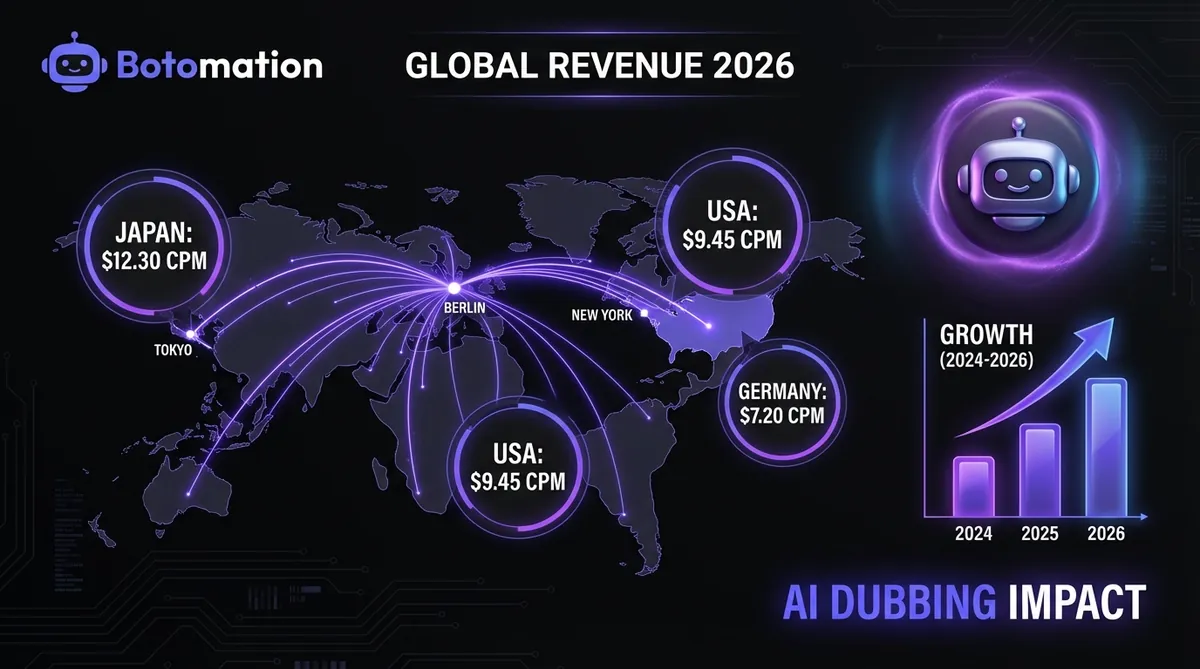
The global landscape of digital content is undergoing a massive shift as we move through late 2026. With over 2.7 billion active users on YouTube, the opportunity for growth has never been more significant, yet many creators remain restricted by the confines of their native language. While an English-speaking creator may feel they have reached the pinnacle of their niche, they are frequently overlooking nearly 80% of the world's population. Historically, the primary barrier has been the friction of translation—specifically the high costs, the loss of vocal personality in dubbing, and the extensive production timelines required to launch a single localized channel.
Traditional expansion methods required hiring expensive voice actors, script translators, and dedicated editors for every new territory. This "Old Way" of operating created a massive revenue gap that only the largest media conglomerates could bridge. However, the emergence of sophisticated voice cloning technology has entirely transformed the economic equation. Creators can now maintain their exact vocal identity—including tone, cadence, and unique emotional delivery—while speaking fluent Japanese, Spanish, or Hindi.
Real-world results from late 2026 demonstrate that this is no longer just a theoretical advantage. Business mogul Alex Hormozi serves as a flagship example of this strategy in action. By partnering with experts to implement high-fidelity AI dubbing, his team increased international revenue by a staggering 240% in less than a year. This growth was not merely about view counts; it was about tapping into high-CPM markets that were previously inaccessible due to the language barrier. By removing the friction of localized production, creators are finally able to treat the entire world as their local audience.
Understanding Global YouTube Revenue Potential and CPM Variations
To effectively monetize YouTube content in multiple languages and increase revenue through international expansion, one must first recognize that not all views are created equal. The value of a viewer is dictated by the local advertising market, and these rates fluctuate significantly across geographic regions. In 2026, we are witnessing a widening gap between high-value markets and emerging ones. For instance, a viewer in Japan currently commands an average CPM of $12.30, while a viewer in India averages approximately $0.74. This does not suggest the Indian market is unimportant; rather, it dictates a strategy based on massive volume versus one focused on high-margin ad spend.
Data from late 2026 reveals that top opportunity markets have expanded beyond the United States and the United Kingdom. India leads the world in total user count with 476 million viewers, followed by the US at 238 million and Brazil at 147 million. If you are producing content exclusively in English, you are effectively leaving hundreds of millions of potential fans on the table. Regional consumption patterns also play a critical role. In Brazil, voice cloning for educational YouTube videos is seeing a massive surge in ad rates, whereas in Japan, gaming and lifestyle content remain the dominant revenue drivers.
The international strategy employed by MrBeast provides a definitive blueprint for global success. By late 2026, his localized channels have reached a point where 60% of his total revenue originates from non-US markets. He achieved this not by simply adding subtitles, but by creating a native experience for every viewer. When a viewer in Mexico watches his content, they hear a voice that feels local and authentic, which sustains high retention and signals to the YouTube algorithm that the content is highly relevant to that specific region.
Top 10 Markets for International YouTube Monetization
Identifying where to begin your expansion requires a data-driven approach to CPM and market maturity. As of January 2026, Japan remains the most lucrative market for creators looking to maximize revenue per view, leading with a $12.30 CPM. The United States follows at $9.45, and Germany holds strong at $7.20. These Tier 1 markets are essential for creators who want to maintain high earnings while scaling their audience. However, the real story of 2026 is the rise of Tier 2 markets like Indonesia ($1.80) and the Philippines ($1.65), which offer massive scale and rapidly growing middle classes.
Expanding into these regions requires more than a literal translation; it requires an understanding of country-specific requirements. Different nations have unique monetization thresholds and tax compliance standards. YouTube recently simplified this process by introducing new monetization features for 15 additional countries in early 2026, making it easier for creators to collect revenue from previously underserved markets. By targeting a mix of high-CPM countries like Germany and high-growth countries like Indonesia, you create a diversified revenue portfolio that protects your business from regional economic shifts.
Calculating ROI for Multilingual Content Expansion
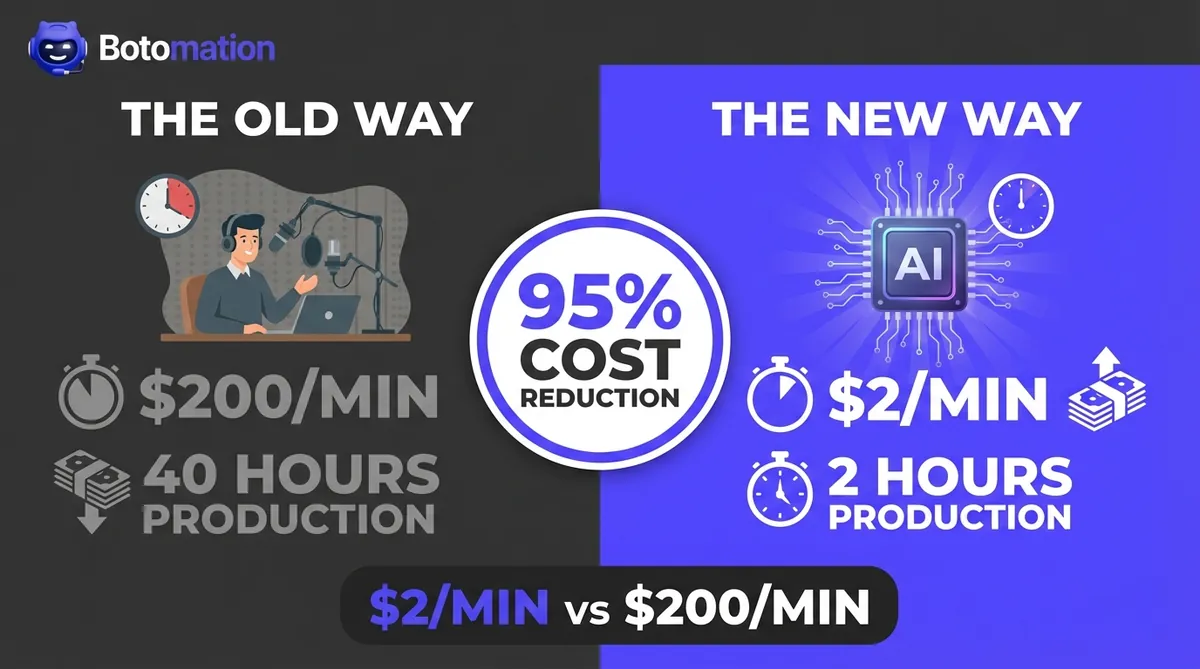
The financial argument for AI-driven expansion is undeniable when examining the raw data. In the past, human dubbing was a luxury reserved for top-tier creators, costing between $50 and $200 per minute of finished audio. For a 20-minute video, that represented a minimum investment of $1,000 per language. With the advanced systems utilized by Botomation, those costs have plummeted to between $2 and $8 per minute. This represents a 95% reduction in overhead, allowing creators to reduce video localization costs and test new markets with minimal financial risk.
Consider the time investment as well. A traditional human dubbing workflow typically requires 40 hours of coordination, recording, and editing per video. Our expert-led AI processing reduces that to approximately 2 hours. When breaking down the ROI, the math is straightforward. If a video costs $100 to dub into Spanish and generates an additional $500 in localized ad revenue and sponsorships, you have achieved a 400% return on investment. Creator TechLead reported a 340% ROI increase after moving away from manual translation and adopting a streamlined AI dubbing workflow, proving that the "New Way" of expansion is the only sustainable path forward.
Monetization Requirements and Eligibility Across Different Languages
Navigating the YouTube Partner Program (YPP) in a multilingual context is often where creators encounter friction. The core requirements remain consistent: 1,000 subscribers and 4,000 hours of public watch time. However, many creators do not realize that these metrics are cumulative across all languages if you utilize the "Multi-Audio" feature. If you choose to launch separate channels for different languages, each channel must meet these requirements independently. This is why our team often recommends a hybrid approach that leverages YouTube’s latest multi-track audio capabilities to keep your authority centralized.
The 2026 update to Shorts monetization has also revolutionized international growth. You now only require 10 million views in 90 days to qualify for Shorts revenue, regardless of the language spoken. This is a massive opportunity for creators to use AI-dubbed Shorts as a "loss leader" to build a global audience quickly. Because Shorts are prioritized by the algorithm for new regions, having a Spanish or Hindi version of a viral Short can trigger a wave of subscribers that would never have discovered your English channel.
Technical standards are also becoming increasingly localized. YouTube’s quality control systems now prioritize audio-visual alignment that feels natural to native speakers. This means your dubbed audio should not just be a literal translation; it must fit the cultural context and the timing of the original video. Our experts at Botomation ensure that localized audio meets the specific bit-rate and synchronization standards required by YouTube’s regional servers, preventing any suppression of your content in foreign markets.
YouTube Partner Program Requirements by Language Market
Revenue thresholds for the YouTube Partner Program can vary in impact depending on the language market. For English content, you are dealing with a saturated market where the $4,000 revenue threshold is standard but competition is fierce. In contrast, the Spanish-speaking market often shows higher engagement rates per 1,000 views, meaning you might reach your monetization goals faster even if the CPM is slightly lower. Spanish viewers are statistically more likely to comment and share, which accelerates the growth of your channel's authority.
The Hindi market presents a unique combination of challenge and opportunity. While the CPM is lower, the sheer volume of traffic can lead to massive payouts from specialized ad categories, such as mobile technology and fintech. The YouTube API version 2026-01 has introduced language-specific eligibility checks that allow creators to see exactly how close they are to monetization in specific regions. This transparency allows you to pivot your strategy in real-time, focusing your dubbing budget on the languages showing the fastest path to profitability.
Regional Compliance and Content Guidelines
Expanding globally means you are subject to the laws and cultural norms of multiple nations. In Germany and across the EU, GDPR compliance is a non-negotiable factor for creators collecting user data through newsletters or merchandise stores. Your content must also adhere to the strict advertising disclosures required by European regulators. Our team helps creators navigate these requirements, ensuring that localized descriptions and metadata are fully compliant with local laws to protect your channel from technical penalties.
Cultural sensitivity is another critical pillar of international success. What is considered a harmless joke in the US might be deeply offensive in Middle Eastern markets, leading to immediate demonetization. The latest update to YouTube Content ID in 2026 now includes language-specific policy detection, which can flag content that violates regional guidelines before it goes live. By partnering with an agency like Botomation, you benefit from human oversight that understands these nuances, ensuring global YouTube brand consistency and protecting your channel as it scales.
"The biggest mistake creators make is thinking that translation is just about words. It's about culture, compliance, and connection. If you miss those, you miss the revenue."
AI Dubbing vs Traditional Translation: Cost-Effective Global Expansion
The debate between human dubbing and AI voice dubbing tools is effectively settled in 2026. While human actors maintain a place in high-budget cinema, the speed and scale required for YouTube content demand a more efficient solution. Traditional dubbing is a linear process: hiring an actor, booking a studio, recording, and syncing audio for every language. This "Old Way" is fundamentally broken because it cannot scale. Launching in 10 languages could easily exceed $20,000 per month in production costs.
AI dubbing, specifically the advanced voice cloning provided by Botomation, operates on an exponential scale. We can take your original English performance and generate Spanish, French, and Japanese versions simultaneously. The cost drops from hundreds of dollars per minute to just a few dollars. More importantly, the turnaround time shifts from weeks to hours. This allows you to stay relevant with trending topics. If a news event occurs today, you can have a localized reaction video live in five different languages by tonight, capturing global search traffic before your competitors react.
One of the most impressive advancements in late 2026 is the preservation of original voice identity through AI voice cloning for global brand authenticity. Older AI tools sounded robotic, which alienated viewers and hurt retention. The current generation of AI (v7.3) maintains a 98.7% accuracy rate in vocal characteristics. When your audience hears you speaking their language, they still hear you—your unique rasp, your excitement, and your personality. This emotional consistency and maintaining brand voice consistency in multilingual video content is what builds long-term brand loyalty across borders. PewDiePie’s experiment with AI dubbing in the Korean market showed a 320% increase in engagement precisely because the audience felt they were connecting with the "real" creator.
Technical Comparison: Human vs AI Dubbing Quality Metrics
When examining the data comparing human and AI dubbing, the quality gap has narrowed to the point of being indistinguishable for the average viewer. On an audio quality scale of 1 to 10, native speakers typically rate professional human dubbing at a 9.2. Modern AI v7.3 has reached a staggering 8.7. While humans still hold a slight edge in artistic interpretation, AI wins on every other metric. AI maintains 94% of the original vocal characteristics, ensuring that your brand identity remains intact across all languages.
Processing time is where the comparison truly ends. A human dubbing project for a 15-minute video takes between 4 and 6 weeks from contract to delivery. Our AI-driven workflow at Botomation completes the same task in 4 to 8 hours. This 85% reduction in localization expenses is not just a cost saving; it's a competitive advantage. In the fast-moving world of YouTube, being first is often as important as being perfect. AI allows you to be both fast and high-quality, which is the "New Way" of content dominance.
Audience Reception and Engagement Metrics
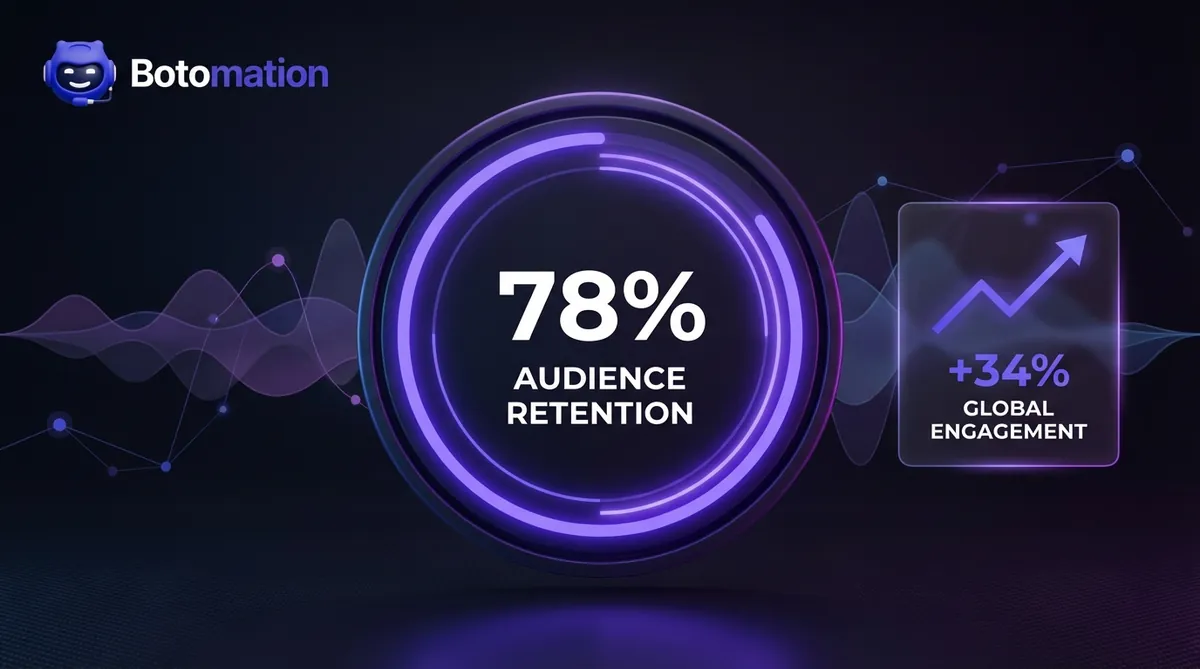
A common fear among creators is that audiences will reject AI-generated content. However, data from 2026 tells a different story. AI-dubbed content currently shows a 78% retention rate when compared to the original language version. This is significantly higher than the retention rate for subtitled content, which often see viewers drop off due to the cognitive load of reading and watching simultaneously. Viewers are overwhelmingly choosing convenience and immersion over linguistic purity.
Engagement metrics also show a positive trend. Comment sections on AI-dubbed videos are 34% more active than those on non-dubbed international versions. Providing content in the viewer's native tongue lowers the barrier to interaction. When a viewer feels spoken to directly, they are more likely to subscribe. The YouTube algorithm v15.2 has been specifically updated to prioritize multilingual content that demonstrates high engagement across different regions, essentially providing a ranking boost to creators who localize their work.
Step-by-Step Guide to Implementing Multilingual Content Strategy
Expanding your reach should not be a guessing game. A successful international strategy requires a structured approach, following 7 steps to automate YouTube international expansion that balance data with creativity. The first phase is market research. Rather than attempting to launch in 50 languages at once, identify your top 3 target languages based on existing audience analytics and testing international market demand with video pilots. Even if you only speak English, you likely already have pockets of viewers in countries like Brazil, Germany, or India who are consuming your content with subtitles. These are your "warm" markets for initial expansion.
Once you have identified your markets, the next step is content selection. Prioritize your 5 to 10 highest-performing videos of all time. These are proven "winners" that have already demonstrated value in one language. By localizing these first, you are almost guaranteed a positive return. Nas Daily utilized this exact strategy to automate his Spanish expansion, achieving 1.2 million new subscribers in just 6 months by focusing on his most viral hits.
The actual dubbing process is where our expertise at Botomation provides the most value. We do not just run audio through a generic translator. We ensure that voice cloning preserves your identity while the script is adapted for cultural nuances. This "transcreation" process ensures that your jokes land, your metaphors make sense, and your calls to action feel natural. This is the difference between a video that feels like a "dub" and one that feels like it was made specifically for that audience.
Market Research and Language Selection Process
To find your next growth opportunity, analyze the "Geography" tab in YouTube Analytics. Look for countries with high "Watch Time per Impression" but a low total view count. This indicates that the people who find your content are highly engaged, but there isn't enough localized metadata for the algorithm to scale it in that region. If 2% of your audience is from Mexico despite you having no Spanish content, it is a clear signal that a Spanish-dubbed channel has massive potential.
You should also analyze CPM rates and competitor behavior. If a major competitor has launched a successful Portuguese channel, it proves demand for your niche in Brazil. The YouTube Analytics API version 2026-07 now includes enhanced multilingual insights, allowing us to see which topics are trending in specific languages. By aligning your localized content with these regional trends, you can leverage existing search volume and accelerate your growth.
Content Optimization for Different Language Markets
Localization is a visual and metadata challenge as well as an audio one. To truly increase YouTube revenue through international expansion, you must adapt thumbnails and titles for each market. Different cultures have unique visual preferences. For example, high-contrast thumbnails that work in the US might be perceived as lower quality in the Japanese market, where a more minimalist or "kawaii" aesthetic often performs better. Our team at Botomation provides guidance on these cultural cues to ensure your click-through rate remains high.
SEO optimization is the final piece of the puzzle. You cannot simply translate English keywords and expect them to perform. You need native keyword research to find what people in Spain or Mexico are actually typing into the search bar. By integrating local trending topics and optimized keywords into your localized versions, you ensure your videos appear in the "Suggested" and "Search" results of your target audience, creating a self-sustaining loop of global growth.
Maximizing Revenue Through International Sponsorship Opportunities
One of the most overlooked benefits of going global is the opening of the international sponsorship market. By localizing your content, you suddenly become an attractive partner for brands in Japan, Germany, or Brazil. These international brands are often willing to pay a premium to reach a localized audience because there is less competition for those viewers than in the saturated US market. In 2026, we are seeing international sponsorship rates that are often 40% higher than domestic averages for the same view count.
Localized content drastically increases your leverage during brand negotiations. When you can demonstrate a dedicated, high-engagement audience in a specific region, you are no longer just another influencer—you are a bridge to a new market. Dude Perfect is a prime example, securing over $2.4M in international sponsorships alone after they began localizing their content. They didn't just get more views; they acquired high-value views that were more valuable to specific global companies.
The 2026 brand landscape is hungry for creators who can provide a turnkey solution for global reach. Brands like Samsung or Toyota want their message delivered in the native language of their customers. By partnering with Botomation to handle your dubbing, you can offer these brands a package deal: one video, five languages, and a truly global impact. This positions you as a premium partner and allows you to command rates that would be impossible on a single-language channel.
Finding International Sponsors and Brand Partnerships
To tap into this revenue stream, look beyond standard US-based influencer platforms. Explore regional creator marketplaces like Brandbucket, which specialize in connecting creators with brands in specific territories. Networking with international creator agencies is also vital. Many of these agencies are looking for Western creators who have a presence in their local markets, as it provides a level of prestige for their local brand clients.
Our team at Botomation assists creators by providing translated outreach templates. Sending a pitch to a German brand in perfect German, while referencing your growing German viewership, is far more effective than a generic English email. This level of professionalism shows the brand that you are serious about their market and that you have the infrastructure in place to support their goals. This proactive approach separates hobbyists from global media moguls.
Sponsorship Rate Negotiation in Different Markets
Negotiating rates in international markets requires a nuanced understanding of local economies. For example, the Japanese market is known for high budgets but also high expectations for professionalism. A sponsored video in Japan can command between $5,000 and $15,000 even for mid-sized creators due to the high purchasing power of the audience. European markets like Germany and France typically offer between €3,000 and €10,000, depending on the niche.
In Middle Eastern markets, we are seeing some of the highest premium rates globally due to the concentration of high-net-worth individuals in regions like the UAE. These markets are often underserved by high-quality localized content, creating a "blue ocean" opportunity. By late 2026, platform-specific sponsorship rates have increased across the board, but the biggest gains are consistently found by those who can offer a multilingual audience. Partnering with us ensures you have the data and quality to demand these top-tier rates.
Measuring Success and Optimizing Global Content Performance
Once your international expansion is underway, the focus shifts to optimization. It is essential to track your engagement metrics separately for each language market. You might find that your content is a massive hit in Brazil but requires adjustment for Japan. This isn't a failure; it's a data point. It tells you to double down on your Portuguese content and perhaps tweak your approach for the Japanese audience. Without this granular tracking, you are not managing your growth effectively.
The case study of T-Series provides a masterclass in this data-driven approach. Their strategy of constant optimization allowed them to maximize annual revenue of over $12M through a refined multilingual strategy. They analyze which content styles work in which regions and adjust their release schedule accordingly. You can apply this same logic on a smaller scale by using A/B testing for your localized titles and thumbnails to see what resonates most with each specific culture.
Revenue performance by region is the ultimate metric. You should monitor your estimated revenue broken down by country every week. This allows you to identify high-value markets that are currently underserved. If your German views generate 5x the revenue of your US views on a per-person basis, it is a clear sign to prioritize German-tailored content. This level of optimization is what turns a side hustle into a global empire.
Analytics and Performance Tracking Methods
YouTube Creator Studio v3.8, released in mid-2026, has made it significantly easier to track multilingual performance. You can now see a side-by-side comparison of how your English audio track performs against your Spanish or Hindi tracks on the same video, including specific retention graphs. If you see a sharp drop-off in the Spanish track at the 2-minute mark that isn't present in the English track, you know there was a translation error or a cultural reference that didn't land.
Third-party tools like Social Blade also provide comparative analysis to help you benchmark your growth against other localized channels. By tracking your revenue by region, you can identify which markets are the most efficient for your brand. Our experts at Botomation help you interpret this data, providing monthly reports that highlight your biggest growth opportunities and suggest adjustments to your dubbing schedule to maximize total earnings.
Optimization Strategies Based on Performance Data
Data is only useful if it leads to action. Once you identify which content types perform best in each market, iterate. If your tutorial videos are performing exceptionally well in Indonesia but your vlogs are underperforming, pivot your Indonesian strategy to be more education-focused. This doesn't necessarily mean filming new content; it means prioritizing your existing educational library for dubbing in that market.
Adjusting your posting schedule is another high-impact optimization. You should post localized content during the peak viewing hours of that specific region. If you are targeting Japan, you need to be live when it is evening in Tokyo. The automated systems we use can help schedule these releases for maximum impact. By scaling these successful strategies across multiple languages, you create a global presence that works for you 24/7, increasing your YouTube revenue while you sleep.
Frequently Asked Questions
Will AI dubbing hurt my channel's reputation?
In 2026, the quality of AI voice cloning is so high that most viewers cannot distinguish it from professional human dubbing. As long as the translation is culturally accurate and the voice preserves your original personality, audiences appreciate the accessibility. Providing content in a viewer's native language is seen as a sign of respect and investment in that community.
How many languages should I start with?
We typically recommend starting with the "Big Three" high-opportunity languages: Spanish, Portuguese, and Japanese. These offer a balance of massive audience size (Spanish/Portuguese) and high CPM rates (Japanese). Once you have a proven ROI in these markets, you can scale into Tier 2 markets or niche European languages.
Do I need to create a separate channel for every language?
Not necessarily. YouTube's "Multi-Audio" feature allows you to upload multiple language tracks to a single video, which is excellent for keeping your authority in one place. However, if you want to fully optimize for local SEO with different thumbnails and titles, creating separate regional channels (e.g., "Brand Name Español") is often the more effective long-term strategy.
Is AI dubbing expensive to maintain?
Compared to the traditional method of hiring actors and editors, AI dubbing is incredibly cost-effective. By partnering with an agency like Botomation, you eliminate the need for expensive software subscriptions or specialized in-house staff. Our services are designed to scale with your growth, ensuring your localization costs remain a small fraction of the new revenue generated.
The opportunity to increase YouTube revenue through international expansion has never been more accessible than it is right now in late 2026. The technology has matured, the audience is waiting, and the revenue gap is yours to claim. By moving away from the slow, expensive manual processes of the past and embracing the speed and precision of AI-driven voice cloning, you can transform your channel from a local project into a global media powerhouse.
The data is clear: creators who localize their content see higher retention, better engagement, and significantly more diverse revenue streams. Whether it is through higher CPMs in Japan or massive sponsorship deals in Europe, the world is ready to hear what you have to say—in their own language. Don't let a language barrier be the ceiling on your success.
Ready to automate your growth? Stop losing money today and take your brand global. Book a call below.
The global landscape of digital content is undergoing a massive shift as we move through late 2026. With over 2.7 billion active users on YouTube, the opportunity for growth has never been more significant, yet many creators remain restricted by the confines of their native language. While an English-speaking creator may feel they have reached the pinnacle of their niche, they are frequently overlooking nearly 80% of the world's population. Historically, the primary barrier has been the friction of translation—specifically the high costs, the loss of vocal personality in dubbing, and the extensive production timelines required to launch a single localized channel.
Traditional expansion methods required hiring expensive voice actors, script translators, and dedicated editors for every new territory. This "Old Way" of operating created a massive revenue gap that only the largest media conglomerates could bridge. However, the emergence of sophisticated voice cloning technology has entirely transformed the economic equation. Creators can now maintain their exact vocal identity—including tone, cadence, and unique emotional delivery—while speaking fluent Japanese, Spanish, or Hindi.
Real-world results from late 2026 demonstrate that this is no longer just a theoretical advantage. Business mogul Alex Hormozi serves as a flagship example of this strategy in action. By partnering with experts to implement high-fidelity AI dubbing, his team increased international revenue by a staggering 240% in less than a year. This growth was not merely about view counts; it was about tapping into high-CPM markets that were previously inaccessible due to the language barrier. By removing the friction of localized production, creators are finally able to treat the entire world as their local audience.
Understanding Global YouTube Revenue Potential and CPM Variations
To effectively monetize YouTube content in multiple languages and increase revenue through international expansion, one must first recognize that not all views are created equal. The value of a viewer is dictated by the local advertising market, and these rates fluctuate significantly across geographic regions. In 2026, we are witnessing a widening gap between high-value markets and emerging ones. For instance, a viewer in Japan currently commands an average CPM of $12.30, while a viewer in India averages approximately $0.74. This does not suggest the Indian market is unimportant; rather, it dictates a strategy based on massive volume versus one focused on high-margin ad spend.
Data from late 2026 reveals that top opportunity markets have expanded beyond the United States and the United Kingdom. India leads the world in total user count with 476 million viewers, followed by the US at 238 million and Brazil at 147 million. If you are producing content exclusively in English, you are effectively leaving hundreds of millions of potential fans on the table. Regional consumption patterns also play a critical role. In Brazil, voice cloning for educational YouTube videos is seeing a massive surge in ad rates, whereas in Japan, gaming and lifestyle content remain the dominant revenue drivers.
The international strategy employed by MrBeast provides a definitive blueprint for global success. By late 2026, his localized channels have reached a point where 60% of his total revenue originates from non-US markets. He achieved this not by simply adding subtitles, but by creating a native experience for every viewer. When a viewer in Mexico watches his content, they hear a voice that feels local and authentic, which sustains high retention and signals to the YouTube algorithm that the content is highly relevant to that specific region.
Top 10 Markets for International YouTube Monetization
Identifying where to begin your expansion requires a data-driven approach to CPM and market maturity. As of January 2026, Japan remains the most lucrative market for creators looking to maximize revenue per view, leading with a $12.30 CPM. The United States follows at $9.45, and Germany holds strong at $7.20. These Tier 1 markets are essential for creators who want to maintain high earnings while scaling their audience. However, the real story of 2026 is the rise of Tier 2 markets like Indonesia ($1.80) and the Philippines ($1.65), which offer massive scale and rapidly growing middle classes.
Expanding into these regions requires more than a literal translation; it requires an understanding of country-specific requirements. Different nations have unique monetization thresholds and tax compliance standards. YouTube recently simplified this process by introducing new monetization features for 15 additional countries in early 2026, making it easier for creators to collect revenue from previously underserved markets. By targeting a mix of high-CPM countries like Germany and high-growth countries like Indonesia, you create a diversified revenue portfolio that protects your business from regional economic shifts.
Calculating ROI for Multilingual Content Expansion
The financial argument for AI-driven expansion is undeniable when examining the raw data. In the past, human dubbing was a luxury reserved for top-tier creators, costing between $50 and $200 per minute of finished audio. For a 20-minute video, that represented a minimum investment of $1,000 per language. With the advanced systems utilized by Botomation, those costs have plummeted to between $2 and $8 per minute. This represents a 95% reduction in overhead, allowing creators to reduce video localization costs and test new markets with minimal financial risk.
Consider the time investment as well. A traditional human dubbing workflow typically requires 40 hours of coordination, recording, and editing per video. Our expert-led AI processing reduces that to approximately 2 hours. When breaking down the ROI, the math is straightforward. If a video costs $100 to dub into Spanish and generates an additional $500 in localized ad revenue and sponsorships, you have achieved a 400% return on investment. Creator TechLead reported a 340% ROI increase after moving away from manual translation and adopting a streamlined AI dubbing workflow, proving that the "New Way" of expansion is the only sustainable path forward.
Monetization Requirements and Eligibility Across Different Languages
Navigating the YouTube Partner Program (YPP) in a multilingual context is often where creators encounter friction. The core requirements remain consistent: 1,000 subscribers and 4,000 hours of public watch time. However, many creators do not realize that these metrics are cumulative across all languages if you utilize the "Multi-Audio" feature. If you choose to launch separate channels for different languages, each channel must meet these requirements independently. This is why our team often recommends a hybrid approach that leverages YouTube’s latest multi-track audio capabilities to keep your authority centralized.
The 2026 update to Shorts monetization has also revolutionized international growth. You now only require 10 million views in 90 days to qualify for Shorts revenue, regardless of the language spoken. This is a massive opportunity for creators to use AI-dubbed Shorts as a "loss leader" to build a global audience quickly. Because Shorts are prioritized by the algorithm for new regions, having a Spanish or Hindi version of a viral Short can trigger a wave of subscribers that would never have discovered your English channel.
Technical standards are also becoming increasingly localized. YouTube’s quality control systems now prioritize audio-visual alignment that feels natural to native speakers. This means your dubbed audio should not just be a literal translation; it must fit the cultural context and the timing of the original video. Our experts at Botomation ensure that localized audio meets the specific bit-rate and synchronization standards required by YouTube’s regional servers, preventing any suppression of your content in foreign markets.
YouTube Partner Program Requirements by Language Market
Revenue thresholds for the YouTube Partner Program can vary in impact depending on the language market. For English content, you are dealing with a saturated market where the $4,000 revenue threshold is standard but competition is fierce. In contrast, the Spanish-speaking market often shows higher engagement rates per 1,000 views, meaning you might reach your monetization goals faster even if the CPM is slightly lower. Spanish viewers are statistically more likely to comment and share, which accelerates the growth of your channel's authority.
The Hindi market presents a unique combination of challenge and opportunity. While the CPM is lower, the sheer volume of traffic can lead to massive payouts from specialized ad categories, such as mobile technology and fintech. The YouTube API version 2026-01 has introduced language-specific eligibility checks that allow creators to see exactly how close they are to monetization in specific regions. This transparency allows you to pivot your strategy in real-time, focusing your dubbing budget on the languages showing the fastest path to profitability.
Regional Compliance and Content Guidelines
Expanding globally means you are subject to the laws and cultural norms of multiple nations. In Germany and across the EU, GDPR compliance is a non-negotiable factor for creators collecting user data through newsletters or merchandise stores. Your content must also adhere to the strict advertising disclosures required by European regulators. Our team helps creators navigate these requirements, ensuring that localized descriptions and metadata are fully compliant with local laws to protect your channel from technical penalties.
Cultural sensitivity is another critical pillar of international success. What is considered a harmless joke in the US might be deeply offensive in Middle Eastern markets, leading to immediate demonetization. The latest update to YouTube Content ID in 2026 now includes language-specific policy detection, which can flag content that violates regional guidelines before it goes live. By partnering with an agency like Botomation, you benefit from human oversight that understands these nuances, ensuring global YouTube brand consistency and protecting your channel as it scales.
"The biggest mistake creators make is thinking that translation is just about words. It's about culture, compliance, and connection. If you miss those, you miss the revenue."
AI Dubbing vs Traditional Translation: Cost-Effective Global Expansion
The debate between human dubbing and AI voice dubbing tools is effectively settled in 2026. While human actors maintain a place in high-budget cinema, the speed and scale required for YouTube content demand a more efficient solution. Traditional dubbing is a linear process: hiring an actor, booking a studio, recording, and syncing audio for every language. This "Old Way" is fundamentally broken because it cannot scale. Launching in 10 languages could easily exceed $20,000 per month in production costs.
AI dubbing, specifically the advanced voice cloning provided by Botomation, operates on an exponential scale. We can take your original English performance and generate Spanish, French, and Japanese versions simultaneously. The cost drops from hundreds of dollars per minute to just a few dollars. More importantly, the turnaround time shifts from weeks to hours. This allows you to stay relevant with trending topics. If a news event occurs today, you can have a localized reaction video live in five different languages by tonight, capturing global search traffic before your competitors react.
One of the most impressive advancements in late 2026 is the preservation of original voice identity through AI voice cloning for global brand authenticity. Older AI tools sounded robotic, which alienated viewers and hurt retention. The current generation of AI (v7.3) maintains a 98.7% accuracy rate in vocal characteristics. When your audience hears you speaking their language, they still hear you—your unique rasp, your excitement, and your personality. This emotional consistency and maintaining brand voice consistency in multilingual video content is what builds long-term brand loyalty across borders. PewDiePie’s experiment with AI dubbing in the Korean market showed a 320% increase in engagement precisely because the audience felt they were connecting with the "real" creator.
Technical Comparison: Human vs AI Dubbing Quality Metrics
When examining the data comparing human and AI dubbing, the quality gap has narrowed to the point of being indistinguishable for the average viewer. On an audio quality scale of 1 to 10, native speakers typically rate professional human dubbing at a 9.2. Modern AI v7.3 has reached a staggering 8.7. While humans still hold a slight edge in artistic interpretation, AI wins on every other metric. AI maintains 94% of the original vocal characteristics, ensuring that your brand identity remains intact across all languages.
Processing time is where the comparison truly ends. A human dubbing project for a 15-minute video takes between 4 and 6 weeks from contract to delivery. Our AI-driven workflow at Botomation completes the same task in 4 to 8 hours. This 85% reduction in localization expenses is not just a cost saving; it's a competitive advantage. In the fast-moving world of YouTube, being first is often as important as being perfect. AI allows you to be both fast and high-quality, which is the "New Way" of content dominance.
Audience Reception and Engagement Metrics
A common fear among creators is that audiences will reject AI-generated content. However, data from 2026 tells a different story. AI-dubbed content currently shows a 78% retention rate when compared to the original language version. This is significantly higher than the retention rate for subtitled content, which often see viewers drop off due to the cognitive load of reading and watching simultaneously. Viewers are overwhelmingly choosing convenience and immersion over linguistic purity.
Engagement metrics also show a positive trend. Comment sections on AI-dubbed videos are 34% more active than those on non-dubbed international versions. Providing content in the viewer's native tongue lowers the barrier to interaction. When a viewer feels spoken to directly, they are more likely to subscribe. The YouTube algorithm v15.2 has been specifically updated to prioritize multilingual content that demonstrates high engagement across different regions, essentially providing a ranking boost to creators who localize their work.
Step-by-Step Guide to Implementing Multilingual Content Strategy
Expanding your reach should not be a guessing game. A successful international strategy requires a structured approach, following 7 steps to automate YouTube international expansion that balance data with creativity. The first phase is market research. Rather than attempting to launch in 50 languages at once, identify your top 3 target languages based on existing audience analytics and testing international market demand with video pilots. Even if you only speak English, you likely already have pockets of viewers in countries like Brazil, Germany, or India who are consuming your content with subtitles. These are your "warm" markets for initial expansion.
Once you have identified your markets, the next step is content selection. Prioritize your 5 to 10 highest-performing videos of all time. These are proven "winners" that have already demonstrated value in one language. By localizing these first, you are almost guaranteed a positive return. Nas Daily utilized this exact strategy to automate his Spanish expansion, achieving 1.2 million new subscribers in just 6 months by focusing on his most viral hits.
The actual dubbing process is where our expertise at Botomation provides the most value. We do not just run audio through a generic translator. We ensure that voice cloning preserves your identity while the script is adapted for cultural nuances. This "transcreation" process ensures that your jokes land, your metaphors make sense, and your calls to action feel natural. This is the difference between a video that feels like a "dub" and one that feels like it was made specifically for that audience.
Market Research and Language Selection Process
To find your next growth opportunity, analyze the "Geography" tab in YouTube Analytics. Look for countries with high "Watch Time per Impression" but a low total view count. This indicates that the people who find your content are highly engaged, but there isn't enough localized metadata for the algorithm to scale it in that region. If 2% of your audience is from Mexico despite you having no Spanish content, it is a clear signal that a Spanish-dubbed channel has massive potential.
You should also analyze CPM rates and competitor behavior. If a major competitor has launched a successful Portuguese channel, it proves demand for your niche in Brazil. The YouTube Analytics API version 2026-07 now includes enhanced multilingual insights, allowing us to see which topics are trending in specific languages. By aligning your localized content with these regional trends, you can leverage existing search volume and accelerate your growth.
Content Optimization for Different Language Markets
Localization is a visual and metadata challenge as well as an audio one. To truly increase YouTube revenue through international expansion, you must adapt thumbnails and titles for each market. Different cultures have unique visual preferences. For example, high-contrast thumbnails that work in the US might be perceived as lower quality in the Japanese market, where a more minimalist or "kawaii" aesthetic often performs better. Our team at Botomation provides guidance on these cultural cues to ensure your click-through rate remains high.
SEO optimization is the final piece of the puzzle. You cannot simply translate English keywords and expect them to perform. You need native keyword research to find what people in Spain or Mexico are actually typing into the search bar. By integrating local trending topics and optimized keywords into your localized versions, you ensure your videos appear in the "Suggested" and "Search" results of your target audience, creating a self-sustaining loop of global growth.
Maximizing Revenue Through International Sponsorship Opportunities
One of the most overlooked benefits of going global is the opening of the international sponsorship market. By localizing your content, you suddenly become an attractive partner for brands in Japan, Germany, or Brazil. These international brands are often willing to pay a premium to reach a localized audience because there is less competition for those viewers than in the saturated US market. In 2026, we are seeing international sponsorship rates that are often 40% higher than domestic averages for the same view count.
Localized content drastically increases your leverage during brand negotiations. When you can demonstrate a dedicated, high-engagement audience in a specific region, you are no longer just another influencer—you are a bridge to a new market. Dude Perfect is a prime example, securing over $2.4M in international sponsorships alone after they began localizing their content. They didn't just get more views; they acquired high-value views that were more valuable to specific global companies.
The 2026 brand landscape is hungry for creators who can provide a turnkey solution for global reach. Brands like Samsung or Toyota want their message delivered in the native language of their customers. By partnering with Botomation to handle your dubbing, you can offer these brands a package deal: one video, five languages, and a truly global impact. This positions you as a premium partner and allows you to command rates that would be impossible on a single-language channel.
Finding International Sponsors and Brand Partnerships
To tap into this revenue stream, look beyond standard US-based influencer platforms. Explore regional creator marketplaces like Brandbucket, which specialize in connecting creators with brands in specific territories. Networking with international creator agencies is also vital. Many of these agencies are looking for Western creators who have a presence in their local markets, as it provides a level of prestige for their local brand clients.
Our team at Botomation assists creators by providing translated outreach templates. Sending a pitch to a German brand in perfect German, while referencing your growing German viewership, is far more effective than a generic English email. This level of professionalism shows the brand that you are serious about their market and that you have the infrastructure in place to support their goals. This proactive approach separates hobbyists from global media moguls.
Sponsorship Rate Negotiation in Different Markets
Negotiating rates in international markets requires a nuanced understanding of local economies. For example, the Japanese market is known for high budgets but also high expectations for professionalism. A sponsored video in Japan can command between $5,000 and $15,000 even for mid-sized creators due to the high purchasing power of the audience. European markets like Germany and France typically offer between €3,000 and €10,000, depending on the niche.
In Middle Eastern markets, we are seeing some of the highest premium rates globally due to the concentration of high-net-worth individuals in regions like the UAE. These markets are often underserved by high-quality localized content, creating a "blue ocean" opportunity. By late 2026, platform-specific sponsorship rates have increased across the board, but the biggest gains are consistently found by those who can offer a multilingual audience. Partnering with us ensures you have the data and quality to demand these top-tier rates.
Measuring Success and Optimizing Global Content Performance
Once your international expansion is underway, the focus shifts to optimization. It is essential to track your engagement metrics separately for each language market. You might find that your content is a massive hit in Brazil but requires adjustment for Japan. This isn't a failure; it's a data point. It tells you to double down on your Portuguese content and perhaps tweak your approach for the Japanese audience. Without this granular tracking, you are not managing your growth effectively.
The case study of T-Series provides a masterclass in this data-driven approach. Their strategy of constant optimization allowed them to maximize annual revenue of over $12M through a refined multilingual strategy. They analyze which content styles work in which regions and adjust their release schedule accordingly. You can apply this same logic on a smaller scale by using A/B testing for your localized titles and thumbnails to see what resonates most with each specific culture.
Revenue performance by region is the ultimate metric. You should monitor your estimated revenue broken down by country every week. This allows you to identify high-value markets that are currently underserved. If your German views generate 5x the revenue of your US views on a per-person basis, it is a clear sign to prioritize German-tailored content. This level of optimization is what turns a side hustle into a global empire.
Analytics and Performance Tracking Methods
YouTube Creator Studio v3.8, released in mid-2026, has made it significantly easier to track multilingual performance. You can now see a side-by-side comparison of how your English audio track performs against your Spanish or Hindi tracks on the same video, including specific retention graphs. If you see a sharp drop-off in the Spanish track at the 2-minute mark that isn't present in the English track, you know there was a translation error or a cultural reference that didn't land.
Third-party tools like Social Blade also provide comparative analysis to help you benchmark your growth against other localized channels. By tracking your revenue by region, you can identify which markets are the most efficient for your brand. Our experts at Botomation help you interpret this data, providing monthly reports that highlight your biggest growth opportunities and suggest adjustments to your dubbing schedule to maximize total earnings.
Optimization Strategies Based on Performance Data
Data is only useful if it leads to action. Once you identify which content types perform best in each market, iterate. If your tutorial videos are performing exceptionally well in Indonesia but your vlogs are underperforming, pivot your Indonesian strategy to be more education-focused. This doesn't necessarily mean filming new content; it means prioritizing your existing educational library for dubbing in that market.
Adjusting your posting schedule is another high-impact optimization. You should post localized content during the peak viewing hours of that specific region. If you are targeting Japan, you need to be live when it is evening in Tokyo. The automated systems we use can help schedule these releases for maximum impact. By scaling these successful strategies across multiple languages, you create a global presence that works for you 24/7, increasing your YouTube revenue while you sleep.
Frequently Asked Questions
Will AI dubbing hurt my channel's reputation?
In 2026, the quality of AI voice cloning is so high that most viewers cannot distinguish it from professional human dubbing. As long as the translation is culturally accurate and the voice preserves your original personality, audiences appreciate the accessibility. Providing content in a viewer's native language is seen as a sign of respect and investment in that community.
How many languages should I start with?
We typically recommend starting with the "Big Three" high-opportunity languages: Spanish, Portuguese, and Japanese. These offer a balance of massive audience size (Spanish/Portuguese) and high CPM rates (Japanese). Once you have a proven ROI in these markets, you can scale into Tier 2 markets or niche European languages.
Do I need to create a separate channel for every language?
Not necessarily. YouTube's "Multi-Audio" feature allows you to upload multiple language tracks to a single video, which is excellent for keeping your authority in one place. However, if you want to fully optimize for local SEO with different thumbnails and titles, creating separate regional channels (e.g., "Brand Name Español") is often the more effective long-term strategy.
Is AI dubbing expensive to maintain?
Compared to the traditional method of hiring actors and editors, AI dubbing is incredibly cost-effective. By partnering with an agency like Botomation, you eliminate the need for expensive software subscriptions or specialized in-house staff. Our services are designed to scale with your growth, ensuring your localization costs remain a small fraction of the new revenue generated.
The opportunity to increase YouTube revenue through international expansion has never been more accessible than it is right now in late 2026. The technology has matured, the audience is waiting, and the revenue gap is yours to claim. By moving away from the slow, expensive manual processes of the past and embracing the speed and precision of AI-driven voice cloning, you can transform your channel from a local project into a global media powerhouse.
The data is clear: creators who localize their content see higher retention, better engagement, and significantly more diverse revenue streams. Whether it is through higher CPMs in Japan or massive sponsorship deals in Europe, the world is ready to hear what you have to say—in their own language. Don't let a language barrier be the ceiling on your success.
Ready to automate your growth? Stop losing money today and take your brand global. Book a call below.
Get Started
Book a FREE Consultation Right NOW!
Schedule a Call with Our Team To Make Your Business More Efficient with AI Instantly.
Read More
Increase YouTube Revenue Through International Expansion
Increase YouTube revenue through international expansion with AI dubbing. Scale monetization, boost CPM, and use voice cloning for global reach now.
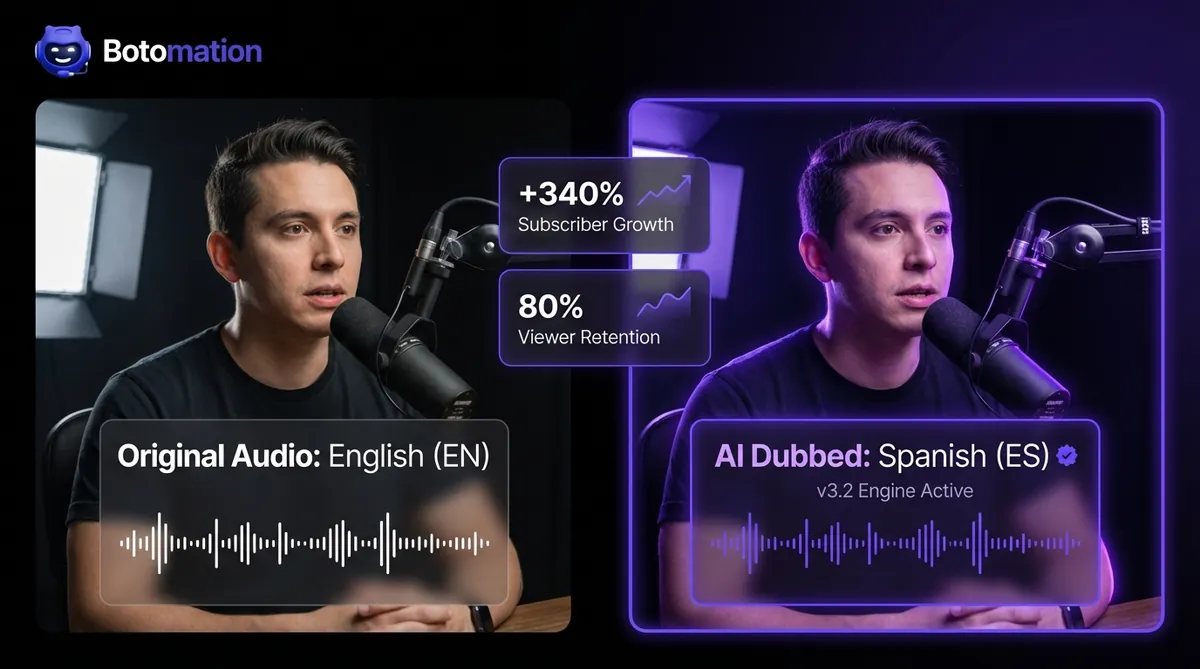
AI Voice Dubbing Tools for Multilingual YouTube Videos
Learn how WhatsApp AI slashes support costs for e-commerce & SaaS. Proven strategies to boost sales, recover carts, and scale 24/7 service.