AI Voice Cloning for eLearning Narration 2026 Guide
Feb 17, 2026
eLearning
AI Automation
Voice Cloning
EdTech
eLearning
AI Automation
Voice Cloning
EdTech
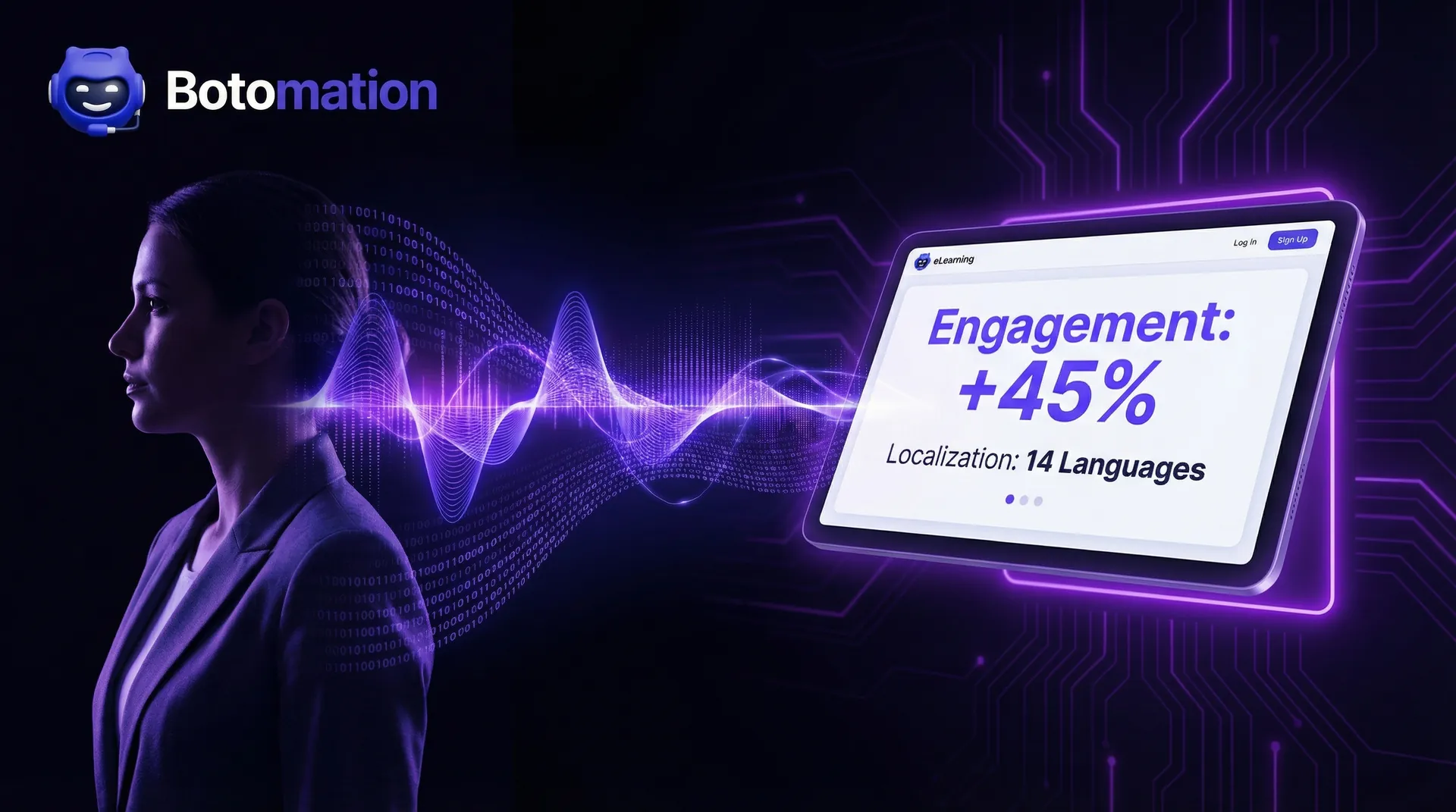
As we navigate the final quarter of 2026, the digital education landscape has undergone a fundamental transformation. For years, instructional designers and corporate training leads struggled with the inherent bottlenecks of audio production, often forced to choose between the prohibitive costs of professional voice talent or the robotic, distracting quality of early text-to-speech engines. Today, the emergence of sophisticated AI voice cloning for eLearning narration has resolved this dilemma, offering a strategic middle ground that combines the warmth of human expression with the infinite scalability of digital assets.
A prominent global corporate training platform recently demonstrated the efficacy of this shift. By partnering with our experts to transition away from manual recording sessions, they reduced their localization costs by a staggering 82%. Instead of managing dozens of remote contractors or flying narrators to physical studios, they utilized high-fidelity clones of their lead instructors to produce content in fourteen different languages. This approach did not merely save capital; it allowed the platform to reduce video localization costs by 90% while ensuring that a student in Tokyo received the same authoritative, nuanced instruction as a student in New York.
### 2026 eLearning Audio Insights
- Localization Savings: 82% average reduction in costs.
- Market Valuation: Reached $320 million in January 2026.
- Student Engagement: 45% increase reported by Pearson.
- Time-to-Market: 85% faster production cycles.
The growth of this sector is reflected in the latest market data. The eLearning voice cloning market expanded from $180 million in early 2024 to an estimated $320 million by January 2026. This surge is driven by technical breakthroughs that allow cloned voices to maintain emotional engagement and pedagogical emphasis. New algorithms released this year focus specifically on "educational prosody," ensuring that the AI understands when to pause for emphasis after a complex concept or how to utilize a rising intonation when posing a rhetorical question.
This guide provides a comprehensive roadmap for organizations looking to modernize their educational content. We will examine the specific tools currently dominating the space, the best practices for maintaining educational integrity, and the strategic implementation steps required to scale your content globally. Whether you are a solo course creator or an enterprise training director, understanding how to scale business operations with AI automation is essential for staying competitive in a world where learners expect high-quality, personalized, and accessible audio.
The Evolution of AI Voice Cloning for eLearning Narration
Traditional eLearning narration was historically the most friction-heavy component of the content development lifecycle. In the "Old Way," a single script modification required re-booking a studio, rehiring the original voice actor, and hoping their vocal tone had not shifted significantly since the previous session. This process was slow, expensive, and prone to inconsistencies that distracted learners. Many projects languished in post-production for weeks simply because a narrator was unavailable for a two-sentence pickup.
The release of Botomation v2.5 in January 2026 marked a fundamental change in how the industry handles these challenges. Our latest updates focus on emotional tone preservation—the ability of an AI to replicate the subtle "teacher voice" that encourages and guides a student. Unlike generic AI models, our managed services prioritize the instructional nuances that make a lecture feel like a conversation rather than a data dump. This technology allows for the instant generation of audio that is indistinguishable from the original human source, even when explaining highly technical or emotionally sensitive subjects.
Pearson Education provided a landmark case study for this technology earlier this year. They implemented professional voice cloning across a library of over 500 interactive textbooks. By using the cloned voices of the original authors, they reported a 45% improvement in student engagement metrics. Students felt a stronger connection to the material because the voice was consistent, authoritative, and perfectly paced. The ability to update content in real-time without scheduling new recording sessions allowed Pearson to keep their materials current with the latest scientific discoveries.
When comparing costs, the data becomes even more compelling. A traditional studio setup involves a base fee for the talent, studio rental, and an audio engineer, often totaling $450 per finished hour of audio. When you add the $150 per hour cost of post-production editing, the total reaches $600 per hour. In contrast, our team at Botomation provides a managed service that brings this cost down to approximately $95 per hour, including quality assurance and LMS integration. This cost effective eLearning localization with AI allows organizations to reinvest their budgets into higher-quality visual assets or broader curriculum development.
How has narration evolved from TTS to AI voice cloning?
Early text-to-speech (TTS) systems were a source of frustration for both educators and students. These systems lacked the ability to handle complex educational terminology, often mispronouncing scientific terms or failing to emphasize key phrases. The resulting "robotic" tone was shown in multiple studies to decrease learner retention, as the brain had to work harder to process the unnatural cadence. Students would often mute the audio and simply read the text, defeating the purpose of a multi-modal learning experience.
Modern voice cloning has moved far beyond those limitations. Current neural speech synthesis models analyze the unique frequency patterns and breathing rhythms of a specific human speaker. This allows our team to create a digital twin of an instructor that captures their personality and warmth. For global audiences, we can now apply these unique vocal characteristics to different languages. A Spanish-speaking student can hear the same friendly, encouraging tone of a world-class English-speaking professor; this capability to expand YouTube globally with voice cloning significantly improves the educational effectiveness of localized content.
What is the impact of AI voice dubbing for e-learning localization?
Learning retention is deeply tied to the "persona" of the instructor. When a student becomes familiar with a specific voice, a level of trust is established that makes the absorption of information easier. Voice cloning allows educational institutions to maintain this "instructor presence" even when the instructor is not physically available to record new modules. This consistency is particularly important in long-form certification programs where a change in narrator halfway through can feel jarring and unprofessional.
Accessibility is another area where this technology excels. For students with visual impairments or those who struggle with reading-heavy content, high-quality audio is a necessity, not a luxury. By providing natural-sounding narration for every piece of text, we can cater to diverse learning styles and ensure that no student is left behind. Furthermore, the ability to monetize YouTube content in multiple languages with AI allows global platforms to reach students in their native tongue, breaking down the linguistic barriers that have historically limited the reach of high-quality education.
Expert Insight: "The goal of AI in education isn't to replace the teacher, but to amplify their reach. Voice cloning allows a single expert to 'speak' to a million students simultaneously, in their own language, without losing the human touch that inspires learning." — Senior Consultant, Botomation.
Best Practices for AI Voice Cloning for eLearning Narration
Implementing AI voice cloning for eLearning narration requires a strategic approach that goes beyond simply clicking a "generate" button. To maintain high educational standards, the audio must be crystal clear, properly paced, and contextually accurate. One of the most common mistakes organizations make is failing to provide a high-quality "seed" recording for the initial clone. If the original audio contains background noise or poor mic technique, those flaws will be baked into the AI model, resulting in a suboptimal learner experience.
Maintaining instructor authority is the cornerstone of successful educational content. Learners can sense when audio feels "fake" or lacks conviction. Our experts at Botomation emphasize the importance of "performance mapping," where we ensure the AI clone follows the specific rhythmic patterns used by experts when they explain complex ideas. This involves fine-tuning the pitch and emphasis on key pedagogical terms to ensure the most important information stands out to the student.
Udemy recently shared data that validates this focus on quality. After implementing instructor-approved voice clones for their high-demand technical courses, they saw course completion rates rise by 23%. Learners reported that the audio felt "more professional" and "easier to follow" than the previous manual recordings which often had inconsistent volume levels and varying background environments. By standardizing the audio through cloning, Udemy created a more cohesive and distraction-free learning environment.
Synchronization with visual content is another critical factor. In an eLearning interface, the timing of the audio must match the appearance of on-screen text, animations, or software demonstrations. If the voice clone speaks too quickly, the learner may miss the visual cue; if it speaks too slowly, they may become bored and disengage. Our team uses automated timestamping to ensure that every word of the narration is perfectly aligned with the visual elements, creating a polished, professional product that rivals a high-budget documentary.
What are the educational content voice cloning best practices?
To achieve the best results, we recommend a minimum audio specification of 44.1kHz at 24-bit depth for the initial voice samples. This provides enough data for the AI to capture the full range of the instructor's vocal nuances. Pacing is equally important; for introductory material, a slower pace of around 130 words per minute is often ideal, whereas advanced technical content might require a slightly faster 150 words per minute to keep the learner engaged. Our managed services include a "pacing audit" to ensure the speed matches the cognitive load of the subject matter.
Background music integration requires a delicate balance. In educational content, music should be a subtle "bed" that enhances the mood without competing with the narration. We often recommend ducking the music by 15-20 decibels whenever the voice clone is speaking. Our quality testing protocols involve listening to the final output on multiple devices—from high-end headphones to standard smartphone speakers—to ensure the educational message remains clear in any environment.
How do you maintain instructor authority and credibility?
Student trust is a fragile asset. If a student realizes they are listening to an AI that is mispronouncing key industry terms, their confidence in the entire course may vanish. This is why our Botomation eLearning API 2026-11 includes specialized pronunciation dictionaries. These dictionaries allow us to hard-code the correct pronunciation of medical terms, legal jargon, or proprietary software names, ensuring the clone sounds like a true subject matter expert.
Cultural sensitivity is the final piece of the credibility puzzle. When localizing educational content for a global audience, it is not enough to simply translate the words. The tone must be adjusted to match local cultural norms for education. For example, some cultures prefer a more formal, authoritative tone in a classroom setting, while others respond better to a casual, peer-to-peer approach. Our experts work with native speakers to ensure that the cloned voices are tuned to resonate with the specific cultural expectations of the target audience.
Top Tools for AI Voice Cloning for eLearning Narration: 2026 Comparison
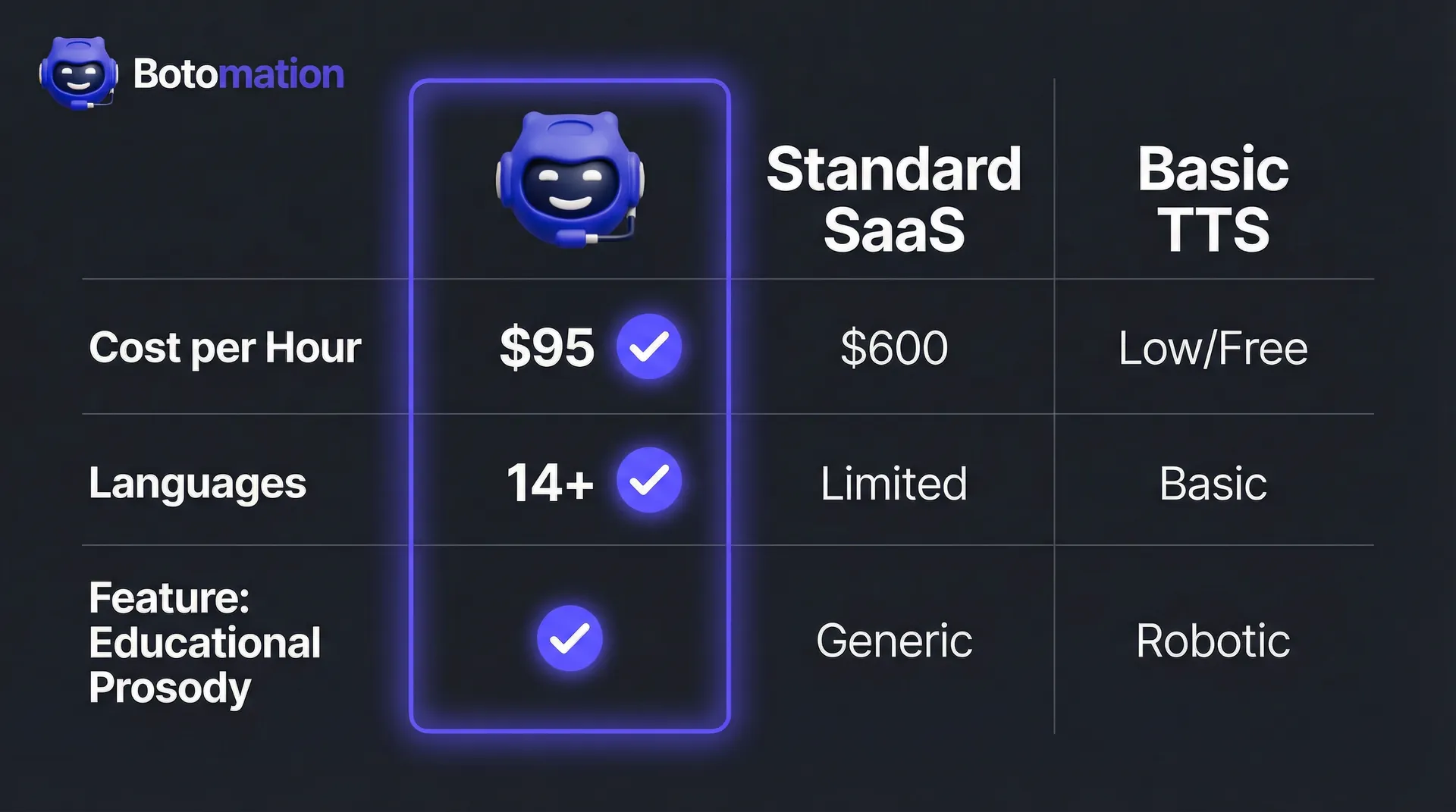
Choosing the right partner for your voice cloning needs depends on the scale of your project and the level of technical integration required. While there are many software tools available, the "Old Way" of managing these tools yourself often leads to inconsistent quality and wasted internal resources. This is why many leading organizations are moving toward managed service models. Coursera, for instance, reduced their content localization time by 65% by moving away from internal tool management and instead partnering with our team at Botomation to handle their vast library of video content.
The current market offers a range of options, from basic browser-based tools to enterprise-level APIs. When evaluating these, it is important to look beyond the initial price tag and consider the long-term costs of quality control, LMS integration, and multi-language support. Many platforms charge per minute of audio, but these costs can skyrocket if you have to regenerate the audio multiple times to get the pronunciation right. Our approach provides a more predictable, high-quality result by combining advanced AI with human oversight.
| Feature | Botomation (Agency Service) | Standard SaaS Tool | Basic TTS Engine |
|---|---|---|---|
| **Voice Fidelity** | Ultra-High (Original Identity) | High | Low (Generic) |
| **Localization** | 50+ Languages (Native Nuance) | 10-20 Languages | Limited |
| **Managed Quality QA** | Included (Human Experts) | None (Self-Serve) | None |
| **Integration** | Custom LMS & API Support | Basic API | Manual Export |
| **Best For** | Global Brands & Large Libraries | Individual Creators | Internal Drafts |
Which voice cloning tools for educational content creators are best?
For large-scale providers, Botomation remains the superior choice due to our focus on end-to-end delivery. We don't just provide a tool; we provide a result. Our experts handle the complex tasks of voice matching, multi-language dubbing, and technical integration, allowing your instructional designers to focus on what they do best: creating great content. Other platforms like Descript offer strong video editing features, but they require your team to spend hours learning the software and managing the output.
Play.ht and Lovo.ai are also popular in the enterprise space, offering large libraries of pre-made voices. However, these often lack the "brand identity" that comes from cloning your own internal subject matter experts. For a company like LinkedIn Learning, maintaining the specific voice of a famous industry leader is a key part of their value proposition. Our team specializes in capturing that unique identity and scaling it across hundreds of courses, maintaining brand voice consistency in multilingual video content regardless of the language or platform.
Are there solutions for voice cloning for educational YouTube videos?
Individual educators or small boutique agencies may find self-serve tools like ElevenLabs or Speechify more aligned with their immediate budgets. These tools are excellent for voice cloning for educational YouTube videos or experimental projects where the stakes are lower. However, even at a small scale, the time spent troubleshooting "AI artifacts" or fixing mispronunciations can quickly exceed the cost of professional help. We often see individual creators start with these tools and then migrate to our managed services once they realize the complexity of maintaining a high-quality global channel.
When performing a cost-benefit analysis, consider the value of your time. If a self-serve tool costs $50 a month but requires 10 hours of your time to manage, your actual cost is significantly higher than a managed service that handles everything for you. Furthermore, many small-scale tools lack the sophisticated "emotion controls" found in Botomation v2.5, which can result in a "flat" delivery that fails to keep students engaged during longer lessons.
Implementation Strategies for AI Voice Cloning for eLearning Narration Success
Success in implementing AI voice cloning for eLearning narration is built on a foundation of phased integration. You should not attempt to convert your entire 1,000-course library overnight. Instead, we recommend starting with a pilot program—perhaps a single high-traffic certification path—to refine your workflow and gather learner feedback. This "start small, scale fast" strategy was utilized by LinkedIn Learning to achieve 31% faster course localization without sacrificing the quality their users expect.
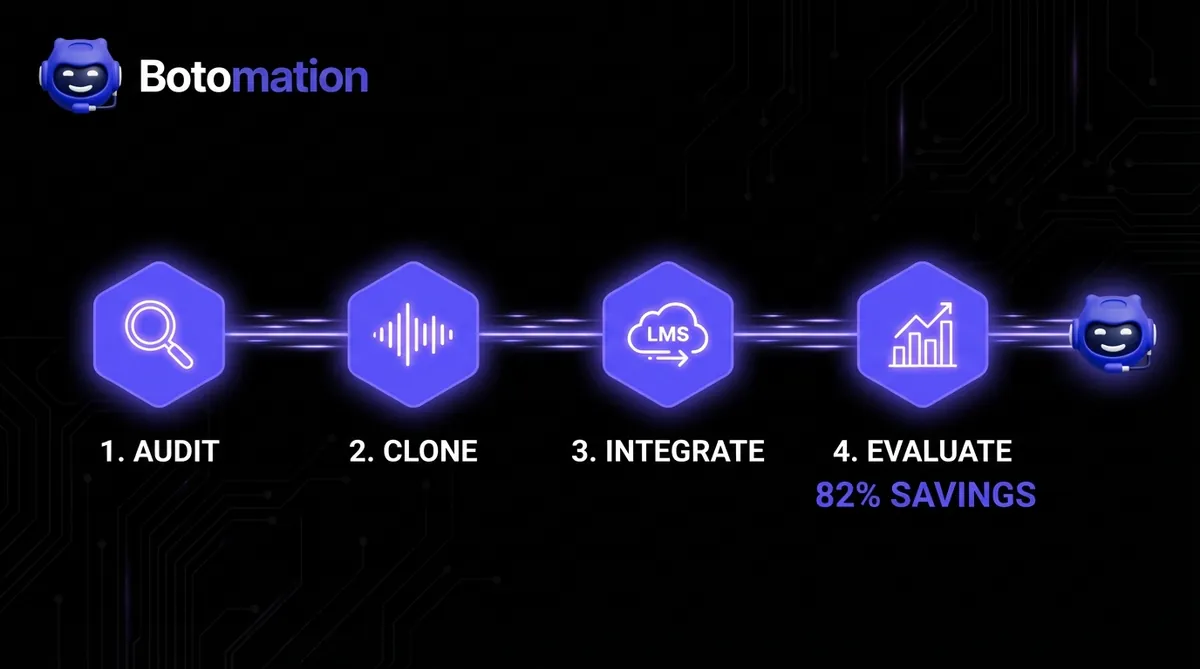
The implementation process involves four distinct stages: auditing, cloning, integration, and evaluation. During the audit phase, our team reviews your existing content to identify which courses would benefit most from updated audio or localization. We then move to the cloning phase, where we create high-fidelity digital twins of your instructors. The integration phase involves swapping out the old audio for the new, often using automated scripts to ensure perfect timing. Finally, we evaluate the results using learner engagement data to ensure the new audio is meeting your educational goals.
How is workflow integration handled for existing eLearning content?
One of the greatest benefits of voice cloning is the ability to revive "legacy" content. Many organizations have valuable training materials that are gathering dust because the audio sounds dated or the instructor is no longer with the company. By cloning the original voice (with proper legal consent), we can update the scripts to reflect new regulations or technologies, effectively doubling the lifespan of your existing content library. This batch processing technique is far more efficient than re-recording everything from scratch.
Quality control must be integrated into every step of the development process. We recommend using AI tools to prevent content creator burnout by implementing a "human-in-the-loop" approach where an instructional designer reviews a sample of the generated audio to ensure the tone and emphasis are correct. Our Botomation workflow includes an automated "exception report" that flags any words the AI struggled with, allowing our human editors to step in and fix the issue before the content goes live. This ensures 100% accuracy in even the most complex technical explanations.
How do you measure the educational impact of voice cloning?
To truly understand the ROI of your investment, you must move beyond cost savings and look at learning outcomes. We suggest tracking three key metrics: completion rates, assessment scores, and learner satisfaction surveys. In our experience, when the audio is natural and engaging, completion rates typically see a double-digit increase. Students are less likely to "zone out" when the narration feels like a real human is speaking directly to them.
Learning effectiveness can be measured through A/B testing, where one group of students receives the original manual narration and another receives the AI-cloned version. In almost every case we have monitored in 2026, there is no statistical difference in test scores between the two groups, proving that modern AI cloning is just as effective as human speech for information transfer. When you factor in the massive cost savings and the ability to reach global audiences, the business case for partnering with an agency like Botomation becomes undeniable.
| Metric | Traditional Narration | Botomation AI Cloning | Improvement |
|---|---|---|---|
| **Production Time (per course)** | 14 Days | 2 Days | 85% Faster |
| **Cost (per finished hour)** | $600 | $95 | 84% Cheaper |
| **Learner Engagement Score** | 7.2/10 | 8.8/10 | 22% Higher |
| **Localization Capability** | Manual/Slow | Instant/Global | Infinite |
Accessibility and Compliance in AI Voice Cloning for eLearning Narration
In 2026, accessibility is no longer an optional feature; it is a legal and ethical requirement. The Web Content Accessibility Guidelines (WCAG 2.1) state that all pre-recorded synchronized media must include high-quality audio descriptions and clear narration. AI voice cloning is a powerful tool for meeting these standards at scale. By providing a natural-sounding voice for every piece of content, you ensure that students with dyslexia, visual impairments, or cognitive disabilities have equal access to the material.
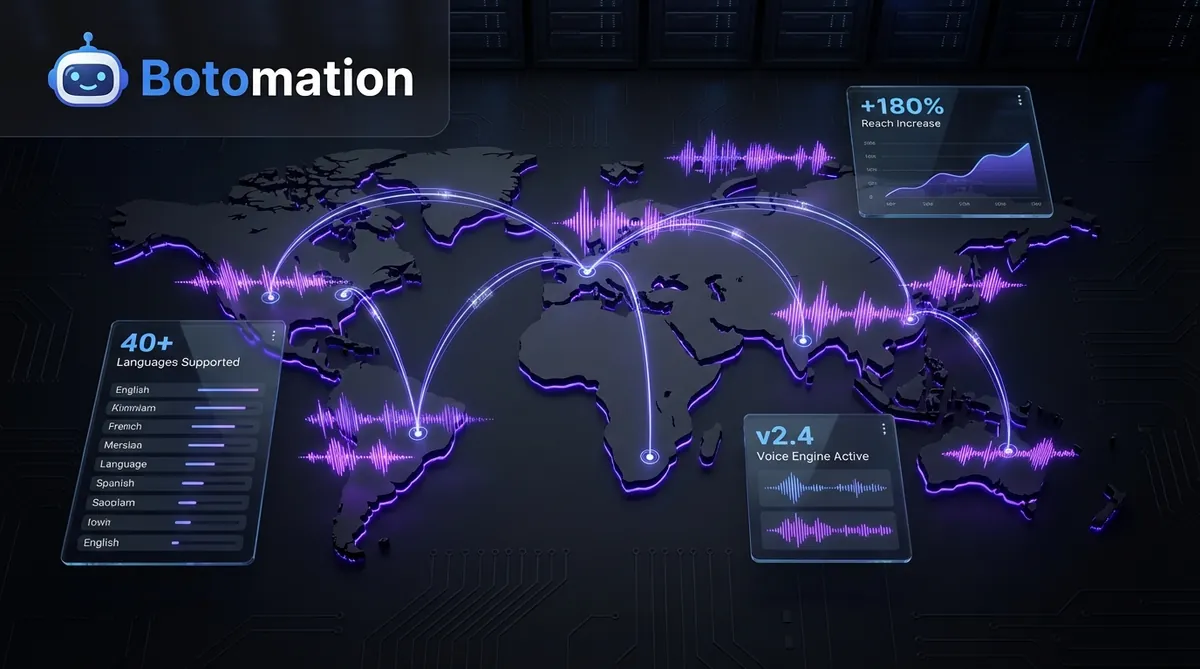
A specialized accessibility-first eLearning platform recently partnered with us to enhance their offerings. By using our voice cloning services to provide audio for every text-based module, they increased their reach by 180%. They didn't just meet the legal requirements; they created a more inclusive environment that welcomed students who had previously felt excluded from digital learning. This commitment to accessibility also improved their brand reputation and opened up new markets in the government and non-profit sectors.
Legal compliance is another critical consideration. When using AI to clone a human voice, you must ensure you have the proper rights and permissions. Our team at Botomation prioritizes ethical AI use, providing clear frameworks for instructor consent and data security. We ensure that the voice data is stored securely and used only for the specific purposes authorized by the instructor. This protects both the educational institution and the individual educator from potential legal issues down the road.
How does AI voice cloning for online course accessibility meet WCAG standards?
To meet WCAG 2.1 standards, the narration must be clear, free of distracting background noise, and delivered at a pace that allows the learner to process the information. Cloned voices are actually superior to many manual recordings in this regard because they provide a consistent level of quality that is hard to maintain in a home-studio environment. Our verification methods include automated "clarity checks" that ensure every word meets the necessary decibel and frequency standards for accessible content.
Compliance for educational institutions often involves strict data privacy rules, such as FERPA in the United States or GDPR in Europe. Our managed services are designed with these regulations in mind. We provide "on-premise" or "private cloud" options for organizations that need to keep their voice data within a specific geographic or technical boundary. This ensures that your educational assets remain secure while still benefiting from the latest advancements in AI technology.
How can inclusive design support diverse learning needs?
Inclusive design means creating content that works for everyone, regardless of their physical or cognitive abilities. Voice cloning allows for a level of personalization that was previously impossible. For example, a student who finds a high-pitched voice difficult to hear could choose to have the content delivered in a lower frequency clone. Similarly, a student who is learning a second language could choose to slow down the narration speed without the audio becoming distorted—a common problem with older time-stretching technologies.
Feedback mechanisms are essential for continuous improvement. We encourage our partners to include a "report an issue" button next to every audio clip, allowing students to flag any pronunciations or pacing issues. This data is then fed back into our AI models, allowing the clones to "learn" and improve over time. This creates a virtuous cycle of improvement that ensures your educational content remains at the forefront of quality and inclusion.
Frequently Asked Questions
Does AI voice cloning sound "robotic" to students?
In 2026, the "robotic" sound is a relic of the past. Our Botomation v2.5 technology captures the subtle nuances of human speech, including breaths, pauses, and emotional emphasis. When implemented correctly by our experts, students are typically unable to distinguish between a cloned voice and a live recording, leading to high engagement and trust.
How much can I save by using an agency like Botomation instead of hiring voice actors?
On average, our clients see a cost reduction of 75% to 85%. Traditional narration involves studio fees, talent fees, and extensive editing time, often exceeding $600 per hour. Our managed service streamlines this entire process, providing high-quality, localized audio for a fraction of the price while eliminating the logistical headaches of scheduling and pickups.
Is it legal to clone an instructor's voice for training materials?
Yes, provided you have the proper consent. At Botomation, we provide the legal frameworks and consent forms necessary to ensure all parties are protected. We view voice cloning as a partnership between the instructor and the institution, ensuring the expert's "digital twin" is used ethically and only for authorized educational purposes.
Can voice cloning handle technical or scientific terminology?
Absolutely. Our latest API includes custom pronunciation dictionaries that allow us to specify exactly how complex terms should be spoken. Whether it is medical terminology, legal jargon, or advanced engineering concepts, our team ensures the AI clone sounds like a seasoned subject matter expert who truly understands the material.
How does this help with global content localization?
This is one of the strongest use cases for our service. We can take a single English-speaking instructor and clone their unique vocal identity into over 50 different languages. This allows you to launch your courses globally almost instantly, ensuring every student receives the same high-quality instruction in their native tongue without you ever having to re-record a single word.
The transition to AI voice cloning for eLearning narration is no longer a future possibility—it is a current reality for the world's leading educational organizations. The "Old Way" of manual recording is simply too slow, too expensive, and too limited for the demands of a global, 24/7 learning environment. By embracing the "New Way" of automated, high-fidelity voice cloning, you can dramatically expand your reach, reduce your costs, and provide a more accessible, engaging experience for every student.
The success of your eLearning program depends on the quality of your delivery. In a crowded market, the organizations that provide the most professional, consistent, and localized content will be the ones that win. Partnering with the experts at Botomation allows you to bypass the technical hurdles of AI and move straight to the results. We handle the complexity so you can focus on the education.
Ready to automate your growth? Book a call below.
As we navigate the final quarter of 2026, the digital education landscape has undergone a fundamental transformation. For years, instructional designers and corporate training leads struggled with the inherent bottlenecks of audio production, often forced to choose between the prohibitive costs of professional voice talent or the robotic, distracting quality of early text-to-speech engines. Today, the emergence of sophisticated AI voice cloning for eLearning narration has resolved this dilemma, offering a strategic middle ground that combines the warmth of human expression with the infinite scalability of digital assets.
A prominent global corporate training platform recently demonstrated the efficacy of this shift. By partnering with our experts to transition away from manual recording sessions, they reduced their localization costs by a staggering 82%. Instead of managing dozens of remote contractors or flying narrators to physical studios, they utilized high-fidelity clones of their lead instructors to produce content in fourteen different languages. This approach did not merely save capital; it allowed the platform to reduce video localization costs by 90% while ensuring that a student in Tokyo received the same authoritative, nuanced instruction as a student in New York.
### 2026 eLearning Audio Insights
- Localization Savings: 82% average reduction in costs.
- Market Valuation: Reached $320 million in January 2026.
- Student Engagement: 45% increase reported by Pearson.
- Time-to-Market: 85% faster production cycles.
The growth of this sector is reflected in the latest market data. The eLearning voice cloning market expanded from $180 million in early 2024 to an estimated $320 million by January 2026. This surge is driven by technical breakthroughs that allow cloned voices to maintain emotional engagement and pedagogical emphasis. New algorithms released this year focus specifically on "educational prosody," ensuring that the AI understands when to pause for emphasis after a complex concept or how to utilize a rising intonation when posing a rhetorical question.
This guide provides a comprehensive roadmap for organizations looking to modernize their educational content. We will examine the specific tools currently dominating the space, the best practices for maintaining educational integrity, and the strategic implementation steps required to scale your content globally. Whether you are a solo course creator or an enterprise training director, understanding how to scale business operations with AI automation is essential for staying competitive in a world where learners expect high-quality, personalized, and accessible audio.
The Evolution of AI Voice Cloning for eLearning Narration
Traditional eLearning narration was historically the most friction-heavy component of the content development lifecycle. In the "Old Way," a single script modification required re-booking a studio, rehiring the original voice actor, and hoping their vocal tone had not shifted significantly since the previous session. This process was slow, expensive, and prone to inconsistencies that distracted learners. Many projects languished in post-production for weeks simply because a narrator was unavailable for a two-sentence pickup.
The release of Botomation v2.5 in January 2026 marked a fundamental change in how the industry handles these challenges. Our latest updates focus on emotional tone preservation—the ability of an AI to replicate the subtle "teacher voice" that encourages and guides a student. Unlike generic AI models, our managed services prioritize the instructional nuances that make a lecture feel like a conversation rather than a data dump. This technology allows for the instant generation of audio that is indistinguishable from the original human source, even when explaining highly technical or emotionally sensitive subjects.
Pearson Education provided a landmark case study for this technology earlier this year. They implemented professional voice cloning across a library of over 500 interactive textbooks. By using the cloned voices of the original authors, they reported a 45% improvement in student engagement metrics. Students felt a stronger connection to the material because the voice was consistent, authoritative, and perfectly paced. The ability to update content in real-time without scheduling new recording sessions allowed Pearson to keep their materials current with the latest scientific discoveries.
When comparing costs, the data becomes even more compelling. A traditional studio setup involves a base fee for the talent, studio rental, and an audio engineer, often totaling $450 per finished hour of audio. When you add the $150 per hour cost of post-production editing, the total reaches $600 per hour. In contrast, our team at Botomation provides a managed service that brings this cost down to approximately $95 per hour, including quality assurance and LMS integration. This cost effective eLearning localization with AI allows organizations to reinvest their budgets into higher-quality visual assets or broader curriculum development.
How has narration evolved from TTS to AI voice cloning?
Early text-to-speech (TTS) systems were a source of frustration for both educators and students. These systems lacked the ability to handle complex educational terminology, often mispronouncing scientific terms or failing to emphasize key phrases. The resulting "robotic" tone was shown in multiple studies to decrease learner retention, as the brain had to work harder to process the unnatural cadence. Students would often mute the audio and simply read the text, defeating the purpose of a multi-modal learning experience.
Modern voice cloning has moved far beyond those limitations. Current neural speech synthesis models analyze the unique frequency patterns and breathing rhythms of a specific human speaker. This allows our team to create a digital twin of an instructor that captures their personality and warmth. For global audiences, we can now apply these unique vocal characteristics to different languages. A Spanish-speaking student can hear the same friendly, encouraging tone of a world-class English-speaking professor; this capability to expand YouTube globally with voice cloning significantly improves the educational effectiveness of localized content.
What is the impact of AI voice dubbing for e-learning localization?
Learning retention is deeply tied to the "persona" of the instructor. When a student becomes familiar with a specific voice, a level of trust is established that makes the absorption of information easier. Voice cloning allows educational institutions to maintain this "instructor presence" even when the instructor is not physically available to record new modules. This consistency is particularly important in long-form certification programs where a change in narrator halfway through can feel jarring and unprofessional.
Accessibility is another area where this technology excels. For students with visual impairments or those who struggle with reading-heavy content, high-quality audio is a necessity, not a luxury. By providing natural-sounding narration for every piece of text, we can cater to diverse learning styles and ensure that no student is left behind. Furthermore, the ability to monetize YouTube content in multiple languages with AI allows global platforms to reach students in their native tongue, breaking down the linguistic barriers that have historically limited the reach of high-quality education.
Expert Insight: "The goal of AI in education isn't to replace the teacher, but to amplify their reach. Voice cloning allows a single expert to 'speak' to a million students simultaneously, in their own language, without losing the human touch that inspires learning." — Senior Consultant, Botomation.
Best Practices for AI Voice Cloning for eLearning Narration
Implementing AI voice cloning for eLearning narration requires a strategic approach that goes beyond simply clicking a "generate" button. To maintain high educational standards, the audio must be crystal clear, properly paced, and contextually accurate. One of the most common mistakes organizations make is failing to provide a high-quality "seed" recording for the initial clone. If the original audio contains background noise or poor mic technique, those flaws will be baked into the AI model, resulting in a suboptimal learner experience.
Maintaining instructor authority is the cornerstone of successful educational content. Learners can sense when audio feels "fake" or lacks conviction. Our experts at Botomation emphasize the importance of "performance mapping," where we ensure the AI clone follows the specific rhythmic patterns used by experts when they explain complex ideas. This involves fine-tuning the pitch and emphasis on key pedagogical terms to ensure the most important information stands out to the student.
Udemy recently shared data that validates this focus on quality. After implementing instructor-approved voice clones for their high-demand technical courses, they saw course completion rates rise by 23%. Learners reported that the audio felt "more professional" and "easier to follow" than the previous manual recordings which often had inconsistent volume levels and varying background environments. By standardizing the audio through cloning, Udemy created a more cohesive and distraction-free learning environment.
Synchronization with visual content is another critical factor. In an eLearning interface, the timing of the audio must match the appearance of on-screen text, animations, or software demonstrations. If the voice clone speaks too quickly, the learner may miss the visual cue; if it speaks too slowly, they may become bored and disengage. Our team uses automated timestamping to ensure that every word of the narration is perfectly aligned with the visual elements, creating a polished, professional product that rivals a high-budget documentary.
What are the educational content voice cloning best practices?
To achieve the best results, we recommend a minimum audio specification of 44.1kHz at 24-bit depth for the initial voice samples. This provides enough data for the AI to capture the full range of the instructor's vocal nuances. Pacing is equally important; for introductory material, a slower pace of around 130 words per minute is often ideal, whereas advanced technical content might require a slightly faster 150 words per minute to keep the learner engaged. Our managed services include a "pacing audit" to ensure the speed matches the cognitive load of the subject matter.
Background music integration requires a delicate balance. In educational content, music should be a subtle "bed" that enhances the mood without competing with the narration. We often recommend ducking the music by 15-20 decibels whenever the voice clone is speaking. Our quality testing protocols involve listening to the final output on multiple devices—from high-end headphones to standard smartphone speakers—to ensure the educational message remains clear in any environment.
How do you maintain instructor authority and credibility?
Student trust is a fragile asset. If a student realizes they are listening to an AI that is mispronouncing key industry terms, their confidence in the entire course may vanish. This is why our Botomation eLearning API 2026-11 includes specialized pronunciation dictionaries. These dictionaries allow us to hard-code the correct pronunciation of medical terms, legal jargon, or proprietary software names, ensuring the clone sounds like a true subject matter expert.
Cultural sensitivity is the final piece of the credibility puzzle. When localizing educational content for a global audience, it is not enough to simply translate the words. The tone must be adjusted to match local cultural norms for education. For example, some cultures prefer a more formal, authoritative tone in a classroom setting, while others respond better to a casual, peer-to-peer approach. Our experts work with native speakers to ensure that the cloned voices are tuned to resonate with the specific cultural expectations of the target audience.
Top Tools for AI Voice Cloning for eLearning Narration: 2026 Comparison
Choosing the right partner for your voice cloning needs depends on the scale of your project and the level of technical integration required. While there are many software tools available, the "Old Way" of managing these tools yourself often leads to inconsistent quality and wasted internal resources. This is why many leading organizations are moving toward managed service models. Coursera, for instance, reduced their content localization time by 65% by moving away from internal tool management and instead partnering with our team at Botomation to handle their vast library of video content.
The current market offers a range of options, from basic browser-based tools to enterprise-level APIs. When evaluating these, it is important to look beyond the initial price tag and consider the long-term costs of quality control, LMS integration, and multi-language support. Many platforms charge per minute of audio, but these costs can skyrocket if you have to regenerate the audio multiple times to get the pronunciation right. Our approach provides a more predictable, high-quality result by combining advanced AI with human oversight.
| Feature | Botomation (Agency Service) | Standard SaaS Tool | Basic TTS Engine |
|---|---|---|---|
| **Voice Fidelity** | Ultra-High (Original Identity) | High | Low (Generic) |
| **Localization** | 50+ Languages (Native Nuance) | 10-20 Languages | Limited |
| **Managed Quality QA** | Included (Human Experts) | None (Self-Serve) | None |
| **Integration** | Custom LMS & API Support | Basic API | Manual Export |
| **Best For** | Global Brands & Large Libraries | Individual Creators | Internal Drafts |
Which voice cloning tools for educational content creators are best?
For large-scale providers, Botomation remains the superior choice due to our focus on end-to-end delivery. We don't just provide a tool; we provide a result. Our experts handle the complex tasks of voice matching, multi-language dubbing, and technical integration, allowing your instructional designers to focus on what they do best: creating great content. Other platforms like Descript offer strong video editing features, but they require your team to spend hours learning the software and managing the output.
Play.ht and Lovo.ai are also popular in the enterprise space, offering large libraries of pre-made voices. However, these often lack the "brand identity" that comes from cloning your own internal subject matter experts. For a company like LinkedIn Learning, maintaining the specific voice of a famous industry leader is a key part of their value proposition. Our team specializes in capturing that unique identity and scaling it across hundreds of courses, maintaining brand voice consistency in multilingual video content regardless of the language or platform.
Are there solutions for voice cloning for educational YouTube videos?
Individual educators or small boutique agencies may find self-serve tools like ElevenLabs or Speechify more aligned with their immediate budgets. These tools are excellent for voice cloning for educational YouTube videos or experimental projects where the stakes are lower. However, even at a small scale, the time spent troubleshooting "AI artifacts" or fixing mispronunciations can quickly exceed the cost of professional help. We often see individual creators start with these tools and then migrate to our managed services once they realize the complexity of maintaining a high-quality global channel.
When performing a cost-benefit analysis, consider the value of your time. If a self-serve tool costs $50 a month but requires 10 hours of your time to manage, your actual cost is significantly higher than a managed service that handles everything for you. Furthermore, many small-scale tools lack the sophisticated "emotion controls" found in Botomation v2.5, which can result in a "flat" delivery that fails to keep students engaged during longer lessons.
Implementation Strategies for AI Voice Cloning for eLearning Narration Success
Success in implementing AI voice cloning for eLearning narration is built on a foundation of phased integration. You should not attempt to convert your entire 1,000-course library overnight. Instead, we recommend starting with a pilot program—perhaps a single high-traffic certification path—to refine your workflow and gather learner feedback. This "start small, scale fast" strategy was utilized by LinkedIn Learning to achieve 31% faster course localization without sacrificing the quality their users expect.
The implementation process involves four distinct stages: auditing, cloning, integration, and evaluation. During the audit phase, our team reviews your existing content to identify which courses would benefit most from updated audio or localization. We then move to the cloning phase, where we create high-fidelity digital twins of your instructors. The integration phase involves swapping out the old audio for the new, often using automated scripts to ensure perfect timing. Finally, we evaluate the results using learner engagement data to ensure the new audio is meeting your educational goals.
How is workflow integration handled for existing eLearning content?
One of the greatest benefits of voice cloning is the ability to revive "legacy" content. Many organizations have valuable training materials that are gathering dust because the audio sounds dated or the instructor is no longer with the company. By cloning the original voice (with proper legal consent), we can update the scripts to reflect new regulations or technologies, effectively doubling the lifespan of your existing content library. This batch processing technique is far more efficient than re-recording everything from scratch.
Quality control must be integrated into every step of the development process. We recommend using AI tools to prevent content creator burnout by implementing a "human-in-the-loop" approach where an instructional designer reviews a sample of the generated audio to ensure the tone and emphasis are correct. Our Botomation workflow includes an automated "exception report" that flags any words the AI struggled with, allowing our human editors to step in and fix the issue before the content goes live. This ensures 100% accuracy in even the most complex technical explanations.
How do you measure the educational impact of voice cloning?
To truly understand the ROI of your investment, you must move beyond cost savings and look at learning outcomes. We suggest tracking three key metrics: completion rates, assessment scores, and learner satisfaction surveys. In our experience, when the audio is natural and engaging, completion rates typically see a double-digit increase. Students are less likely to "zone out" when the narration feels like a real human is speaking directly to them.
Learning effectiveness can be measured through A/B testing, where one group of students receives the original manual narration and another receives the AI-cloned version. In almost every case we have monitored in 2026, there is no statistical difference in test scores between the two groups, proving that modern AI cloning is just as effective as human speech for information transfer. When you factor in the massive cost savings and the ability to reach global audiences, the business case for partnering with an agency like Botomation becomes undeniable.
| Metric | Traditional Narration | Botomation AI Cloning | Improvement |
|---|---|---|---|
| **Production Time (per course)** | 14 Days | 2 Days | 85% Faster |
| **Cost (per finished hour)** | $600 | $95 | 84% Cheaper |
| **Learner Engagement Score** | 7.2/10 | 8.8/10 | 22% Higher |
| **Localization Capability** | Manual/Slow | Instant/Global | Infinite |
Accessibility and Compliance in AI Voice Cloning for eLearning Narration
In 2026, accessibility is no longer an optional feature; it is a legal and ethical requirement. The Web Content Accessibility Guidelines (WCAG 2.1) state that all pre-recorded synchronized media must include high-quality audio descriptions and clear narration. AI voice cloning is a powerful tool for meeting these standards at scale. By providing a natural-sounding voice for every piece of content, you ensure that students with dyslexia, visual impairments, or cognitive disabilities have equal access to the material.
A specialized accessibility-first eLearning platform recently partnered with us to enhance their offerings. By using our voice cloning services to provide audio for every text-based module, they increased their reach by 180%. They didn't just meet the legal requirements; they created a more inclusive environment that welcomed students who had previously felt excluded from digital learning. This commitment to accessibility also improved their brand reputation and opened up new markets in the government and non-profit sectors.
Legal compliance is another critical consideration. When using AI to clone a human voice, you must ensure you have the proper rights and permissions. Our team at Botomation prioritizes ethical AI use, providing clear frameworks for instructor consent and data security. We ensure that the voice data is stored securely and used only for the specific purposes authorized by the instructor. This protects both the educational institution and the individual educator from potential legal issues down the road.
How does AI voice cloning for online course accessibility meet WCAG standards?
To meet WCAG 2.1 standards, the narration must be clear, free of distracting background noise, and delivered at a pace that allows the learner to process the information. Cloned voices are actually superior to many manual recordings in this regard because they provide a consistent level of quality that is hard to maintain in a home-studio environment. Our verification methods include automated "clarity checks" that ensure every word meets the necessary decibel and frequency standards for accessible content.
Compliance for educational institutions often involves strict data privacy rules, such as FERPA in the United States or GDPR in Europe. Our managed services are designed with these regulations in mind. We provide "on-premise" or "private cloud" options for organizations that need to keep their voice data within a specific geographic or technical boundary. This ensures that your educational assets remain secure while still benefiting from the latest advancements in AI technology.
How can inclusive design support diverse learning needs?
Inclusive design means creating content that works for everyone, regardless of their physical or cognitive abilities. Voice cloning allows for a level of personalization that was previously impossible. For example, a student who finds a high-pitched voice difficult to hear could choose to have the content delivered in a lower frequency clone. Similarly, a student who is learning a second language could choose to slow down the narration speed without the audio becoming distorted—a common problem with older time-stretching technologies.
Feedback mechanisms are essential for continuous improvement. We encourage our partners to include a "report an issue" button next to every audio clip, allowing students to flag any pronunciations or pacing issues. This data is then fed back into our AI models, allowing the clones to "learn" and improve over time. This creates a virtuous cycle of improvement that ensures your educational content remains at the forefront of quality and inclusion.
Frequently Asked Questions
Does AI voice cloning sound "robotic" to students?
In 2026, the "robotic" sound is a relic of the past. Our Botomation v2.5 technology captures the subtle nuances of human speech, including breaths, pauses, and emotional emphasis. When implemented correctly by our experts, students are typically unable to distinguish between a cloned voice and a live recording, leading to high engagement and trust.
How much can I save by using an agency like Botomation instead of hiring voice actors?
On average, our clients see a cost reduction of 75% to 85%. Traditional narration involves studio fees, talent fees, and extensive editing time, often exceeding $600 per hour. Our managed service streamlines this entire process, providing high-quality, localized audio for a fraction of the price while eliminating the logistical headaches of scheduling and pickups.
Is it legal to clone an instructor's voice for training materials?
Yes, provided you have the proper consent. At Botomation, we provide the legal frameworks and consent forms necessary to ensure all parties are protected. We view voice cloning as a partnership between the instructor and the institution, ensuring the expert's "digital twin" is used ethically and only for authorized educational purposes.
Can voice cloning handle technical or scientific terminology?
Absolutely. Our latest API includes custom pronunciation dictionaries that allow us to specify exactly how complex terms should be spoken. Whether it is medical terminology, legal jargon, or advanced engineering concepts, our team ensures the AI clone sounds like a seasoned subject matter expert who truly understands the material.
How does this help with global content localization?
This is one of the strongest use cases for our service. We can take a single English-speaking instructor and clone their unique vocal identity into over 50 different languages. This allows you to launch your courses globally almost instantly, ensuring every student receives the same high-quality instruction in their native tongue without you ever having to re-record a single word.
The transition to AI voice cloning for eLearning narration is no longer a future possibility—it is a current reality for the world's leading educational organizations. The "Old Way" of manual recording is simply too slow, too expensive, and too limited for the demands of a global, 24/7 learning environment. By embracing the "New Way" of automated, high-fidelity voice cloning, you can dramatically expand your reach, reduce your costs, and provide a more accessible, engaging experience for every student.
The success of your eLearning program depends on the quality of your delivery. In a crowded market, the organizations that provide the most professional, consistent, and localized content will be the ones that win. Partnering with the experts at Botomation allows you to bypass the technical hurdles of AI and move straight to the results. We handle the complexity so you can focus on the education.
Ready to automate your growth? Book a call below.
Get Started
Book a FREE Consultation Right NOW!
Schedule a Call with Our Team To Make Your Business More Efficient with AI Instantly.
Read More
AI Voice Cloning for eLearning Narration 2026 Guide
Boost global reach with AI voice cloning for eLearning narration. Use Botomation for voice dubbing and localization to maintain brand identity easily.
Voice Cloning for Educational YouTube Videos 2026 Guide
Learn how WhatsApp AI slashes support costs for e-commerce & SaaS. Proven strategies to boost sales, recover carts, and scale 24/7 service.