Automated Daily Market Intelligence Reports for Sales Teams
Feb 17, 2026
Sales Intelligence
AI Automation
B2B Sales
Sales Intelligence
AI Automation
B2B Sales
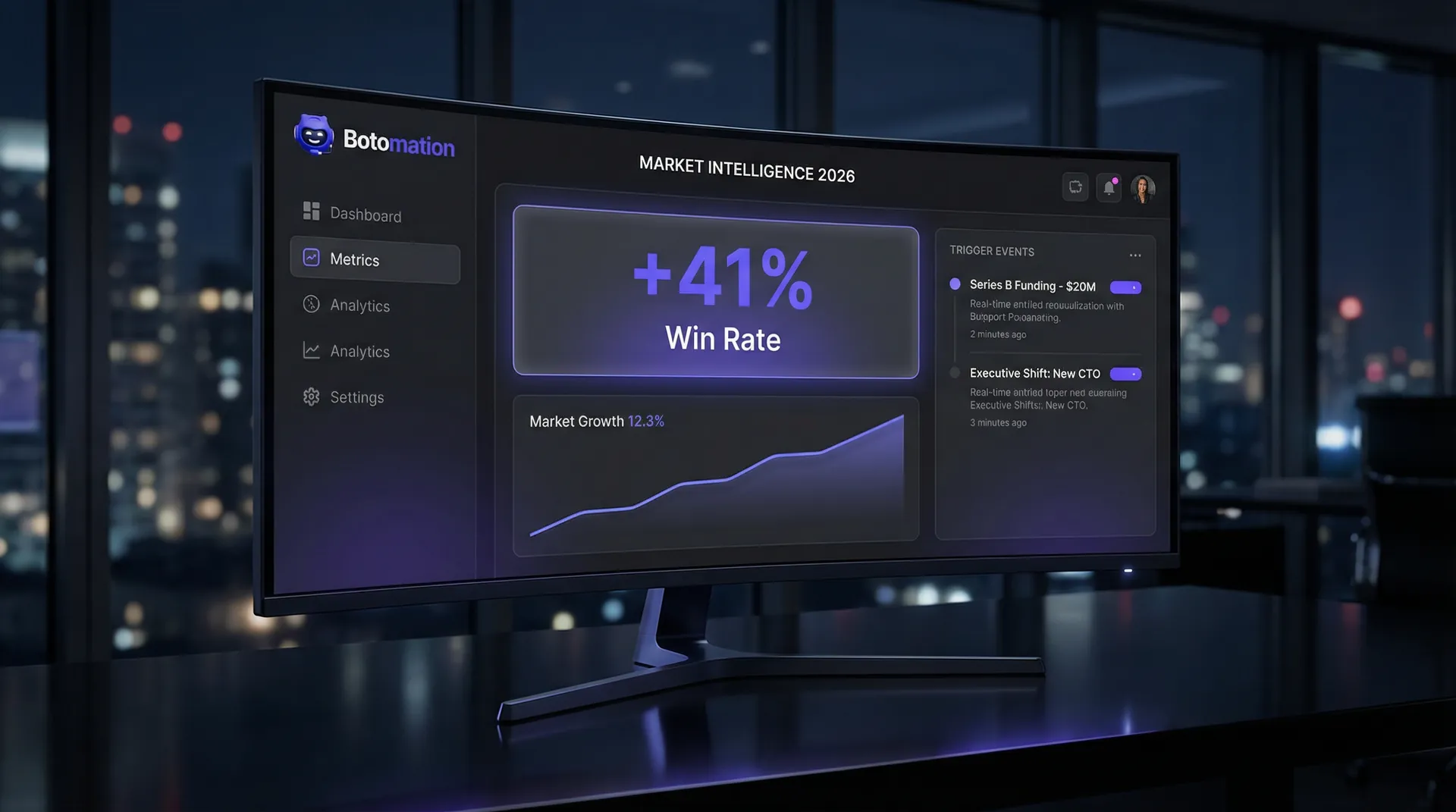
In the high-stakes world of B2B sales, the implementation of automated daily market intelligence reports for sales teams has shifted from a luxury to a necessity. As we navigate through January 2026, the ability to identify a prospect's needs before they even articulate them has become the primary differentiator between market leaders and those struggling to stay relevant. The global sales intelligence market is no longer a niche luxury; it is projected to reach a staggering $3.99 billion by the end of this year. This growth, averaging between 10.3% and 12.3% annually, reflects a fundamental change in how high-performing organizations approach their pipeline.
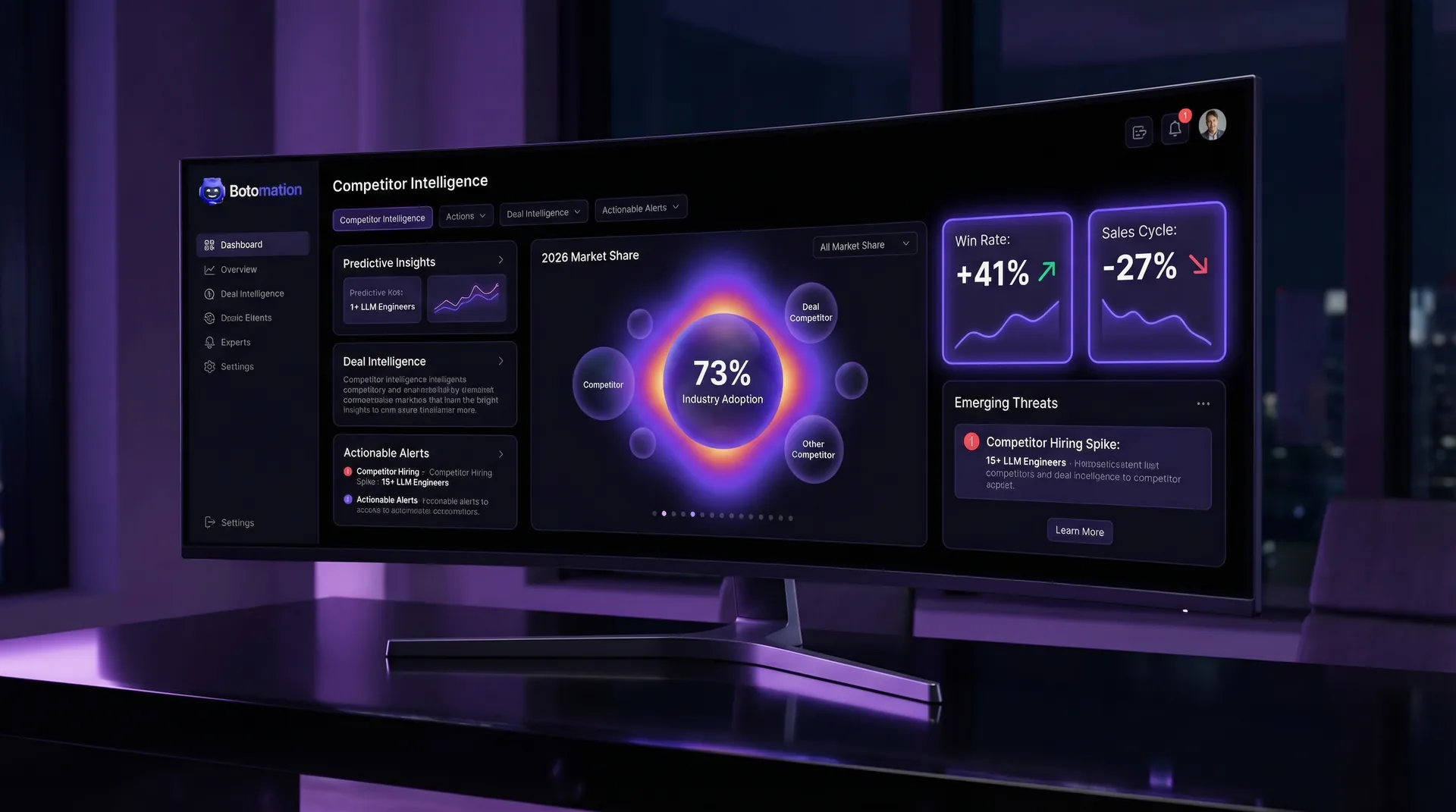
Recent research from MarketsandMarkets highlights a stark reality for those still relying on manual research methods. Organizations that have successfully implemented automated intelligence solutions report a 41% improvement in win rates and a 27% reduction in the time it takes to close a deal. These numbers are not just incremental gains but represent a total transformation of the sales cycle. By removing the guesswork from prospecting, sales representatives can focus their energy on high-value conversations rather than digging through LinkedIn profiles or news releases. The efficiency gap is widening, with 73% of high-growth companies having fully integrated sales intelligence into their daily workflows.
The challenge most firms face is not a lack of data, but an overwhelming surplus of noise. Every day, thousands of signals are generated across the web—funding rounds, executive shifts, product launches, and regulatory changes. Without a structured system to filter and deliver this information, sales teams suffer from analysis paralysis. Our team at Botomation has observed that the most successful sales organizations in 2026 have moved away from the "Old Way" of manual searching and have embraced a "New Way" where intelligence is delivered directly to their inbox every morning.
Why Automated Daily Market Intelligence Reports for Sales Teams Drive Growth
Understanding the distinction between market intelligence and sales intelligence is the first step toward building a high-performance sales machine. While many leaders use these terms interchangeably, they serve different functions in a 2026 sales environment. Market intelligence provides the "macro" view, focusing on industry-wide trends, competitor pricing shifts, and emerging regulatory hurdles that could impact your entire territory. Sales intelligence is the "micro" view, offering granular details about specific leads, such as direct-dial phone numbers, verified email addresses, and specific behavioral triggers.
The competitive dynamics of 2026 are being reshaped by the fact that 80% of companies are now using AI-powered sales tools to some degree. This creates a high-pressure environment where the window of opportunity for a "warm" lead is smaller than ever. In 2024, only 57% of salespeople reached their targets, which was the lowest rate recorded in five years. This decline is largely attributed to the increasing difficulty of breaking through the noise with generic messaging. Automated intelligence solves this by providing the "why" behind the outreach.
Market Intelligence vs Sales Intelligence: Key Differences
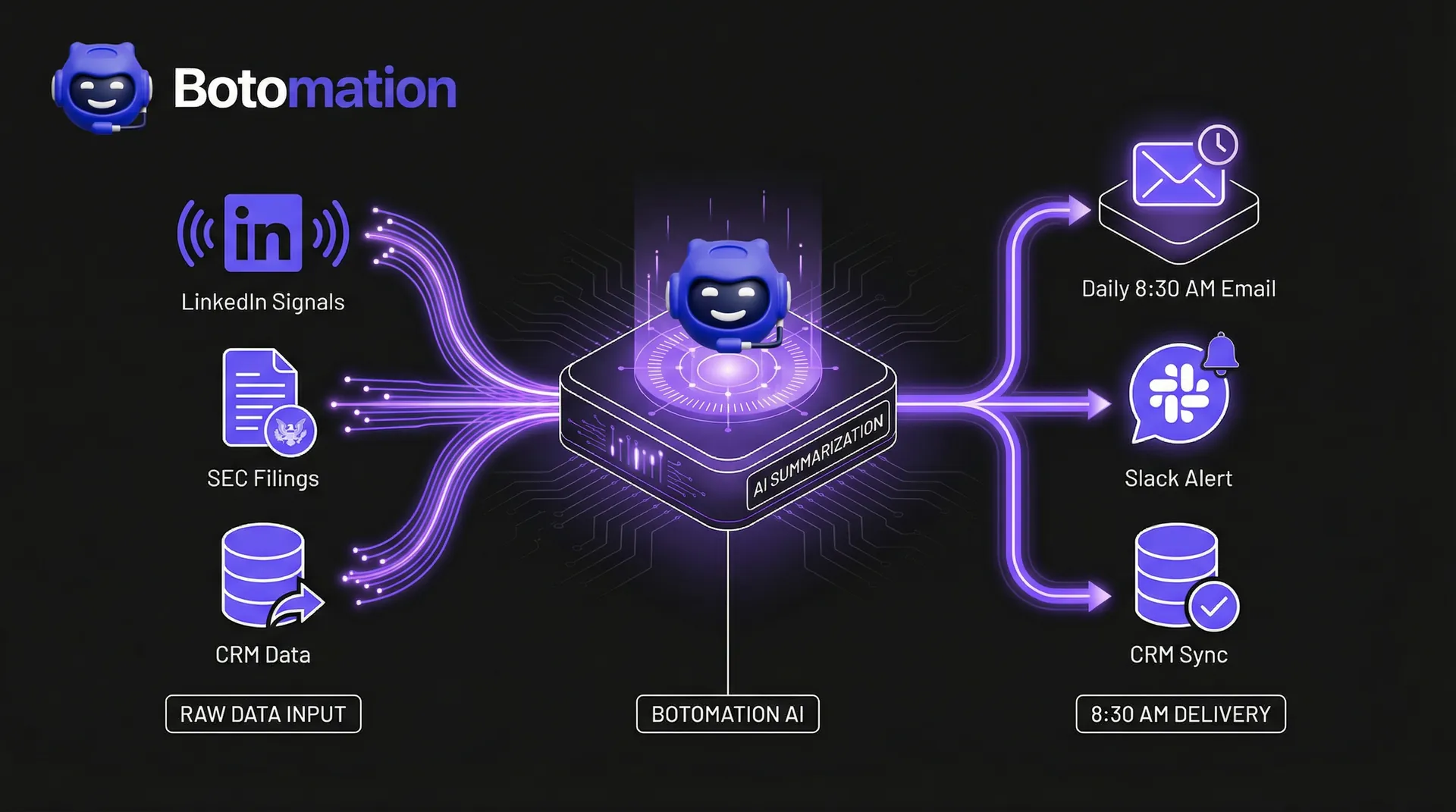
Market intelligence is your radar for the entire industry. By utilizing automated competitor intelligence, it tells you that the manufacturing sector is shifting toward green energy or that a major competitor is discounting their enterprise tier by 20%. This information is vital for positioning and long-term strategy, helping your team understand the broader "weather" of the market. Without it, you might be pitching a solution that is no longer relevant to the industry's current challenges.
Sales intelligence, on the other hand, is your sniper scope. It provides the specific contact data and intent signals for a single person at a single company. In 2026, this includes tracking "dark social" mentions or identifying when a decision-maker visits your pricing page three times in 24 hours. By integrating both, you ensure that your sales reps aren't just calling the right people, but they are saying the right things based on the current industry climate.
Why Your Sales Strategy Needs Daily Intelligence Feeds
Waiting for a weekly report in 2026 is equivalent to reading last month's newspaper. The speed at which businesses move today means that a lead can go from "unaware" to "signed with a competitor" in a matter of days. Daily reports ensure that your team is the first to respond to a "trigger event," such as a new round of funding or a strategic partnership announcement. Being first to the table often results in a 50% higher chance of winning the deal.
Consider the case of a major e-commerce provider that transitioned to daily intelligence. Before automation, their reps spent 15 hours a week on research, often reaching out to leads that had already made a decision. After implementing a custom automated system, they achieved a 215% increase in qualified leads within the first three months. The cost of not having this real-time visibility is measured in lost commissions and stagnant growth.
Evaluating Platforms for Automated Daily Market Intelligence Reports for Sales Teams
The market for intelligence tools is more crowded than ever, but not all solutions are created equal. Enterprise-grade platforms like ZoomInfo continue to lead the pack by offering massive databases, boasting over 70 million direct phone numbers and 174 million verified email addresses. Their new Copilot feature, powered by advanced language models, helps reps draft messaging that aligns with the intelligence gathered. However, these platforms are often part of the "Old Way" in the sense that they provide a tool you have to manage yourself, rather than a finished result.
Emerging platforms are taking a more "agentic" approach, where the software does the thinking for you. MarketsandMarkets SalesPlay, for example, utilizes seven distinct AI agents to deliver a 3x productivity gain. These agents don't just find data; they build hyper-personalized sales kits for every lead. Similarly, Salesforce Einstein has evolved to automatically update lead scores every 10 days, ensuring that your CRM reflects the most current reality of your pipeline.
| Feature | ZoomInfo Copilot | Gong Intelligence | Botomation Custom Agency Service |
|---|---|---|---|
| **Data Source** | Internal Database | Call/Email Logs | Custom Web Scrapers & API Aggregation |
| **Primary Use** | Contact Discovery | Conversation Analytics | End-to-End Prospecting & Market Tracking |
| **Delivery** | In-Platform | In-Platform | Custom Daily Reports (Email/Slack/CRM) |
| **Setup Time** | 2-4 Weeks | 4-6 Weeks | 2-3 Weeks (Full Implementation) |
| **Personalization** | Template-Based | Behavioral | Deep Contextual Intelligence |
A Look at Enterprise Grade Solutions
ZoomInfo remains a powerhouse for B2B teams due to the sheer volume of its data. Its ability to track intent across thousands of websites allows sales teams to see which companies are researching specific keywords. Meanwhile, Gong has revolutionized conversation intelligence. By analyzing thousands of hours of sales calls, Gong provides a 48% improvement in customer ratings by identifying the specific phrases and questions that lead to successful outcomes.
Power BI also plays a critical role for organizations that want to visualize their intelligence. Its drag-and-drop analytics allow sales leaders to track revenue and opportunity trends in real-time. By connecting your intelligence feed to a Power BI dashboard, you can see at a glance which territories are heating up and which are cooling down. This level of visibility is essential for making data-driven decisions about where to allocate your most expensive sales resources.
The Rise of Agentic AI Intelligence Platforms
The most exciting development in 2026 is the rise of agentic CRM systems like SuperAGI. These systems are designed to reduce deal cycles by up to 32% by handling the repetitive tasks of data entry and automated lead qualification autonomously. SuperAGI's agentic approach has been shown to increase win rates by 27% because it ensures that no lead ever falls through the cracks.
Another major player is Bombora, which specializes in intent data. They track prospect activity across more than 5,000 B2B websites, providing 70% exclusive data that you won't find on standard social platforms. At Botomation, we don't just point you toward these tools; we build the custom infrastructure that connects them all, delivering a seamless flow of actionable leads to your team every single morning.
Setting Up Automated Daily Market Intelligence Workflows Step-by-Step
Setting up an automated intelligence workflow is a technical undertaking that requires a clear strategy. You cannot simply "turn on" automation and expect results; it requires a deep understanding of your ideal customer profile (ICP) and the specific signals that indicate a readiness to buy. The most successful implementations typically follow a six-week rollout plan, with the first results appearing within 90 days.
The first step is establishing an API-first architecture. This allows your different tools—your CRM, your web scrapers, and your analytics platforms—to communicate without manual intervention. By using cloud service connectors like AWS or Google Cloud, you can build a scalable processing engine that handles thousands of data points every hour. This infrastructure is the backbone of your daily reports.
Technical Foundations and Integration Needs
To build a truly automated system, your CRM must be the "single source of truth." This means every piece of intelligence gathered from the web must be automatically synced to the relevant customer record. If a prospect's company is mentioned in a news article about a new merger, that article should appear in the salesperson's CRM view instantly. This requires robust CRM integration through API connections between your intelligence tools and platforms like Salesforce or HubSpot.
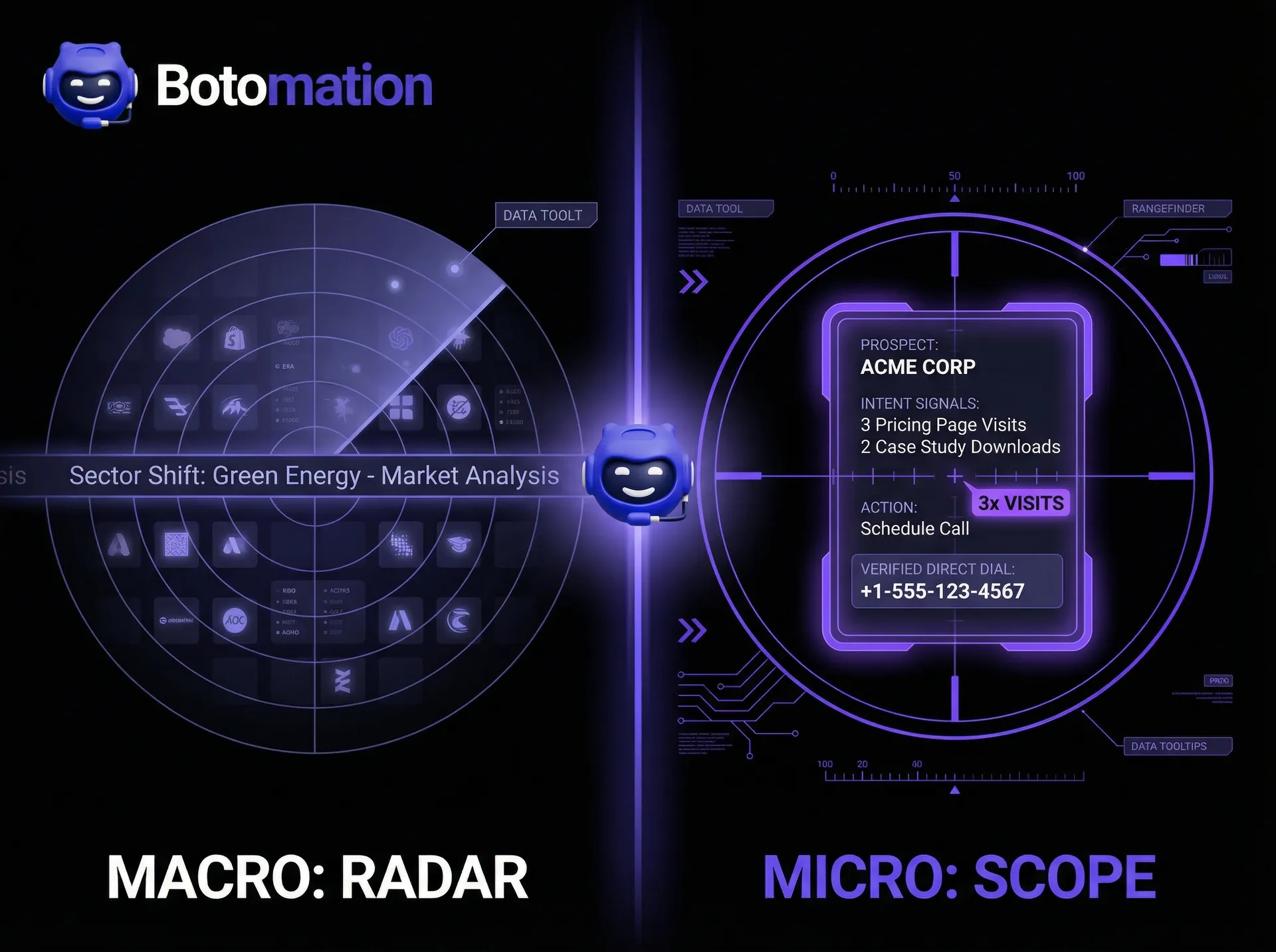
Beyond the CRM, you need a way to process unstructured data from the web. Our team at Botomation utilizes web scraping for industry trend analysis, employing custom scrapers that scan for specific keywords, job postings, and financial filings. We then use advanced LLMs to summarize this data into "executive briefs." This turns a 20-page annual report into a three-sentence bulleted list of why a company needs your services today.
Configuring Daily Intelligence Delivery Systems
The final piece of the puzzle is how the information reaches your sales team. In 2026, the most effective delivery method is a multi-channel approach. A daily email summary at 8:00 AM provides a high-level overview of the day's opportunities, while real-time Slack or Microsoft Teams alerts notify reps of urgent "trigger events" as they happen.
Customization is key here. A representative covering the Northeast territory doesn't need to see news about companies in California. Your delivery system should be configured to filter intelligence based on territory, account size, or industry vertical. By tailoring the feed to each individual's needs, you ensure a high adoption rate. When a salesperson sees that their daily report consistently provides them with "easy wins," they will quickly make it the centerpiece of their daily routine.
Real-World Case Studies: Companies That Automated Market Intelligence
The impact of automated intelligence is best seen through the lens of those who have already made the transition. We recently worked with a global e-commerce giant that was struggling with a bloated sales cycle and a low lead-to-opportunity conversion rate. Their reps were spending nearly 30% of their week on manual prospecting. By implementing a custom intelligence suite that integrated SuperAGI with their existing Salesforce instance, they saw a 215% increase in qualified leads in just three months.
In the B2B SaaS space, the results are equally compelling. One firm we partnered with used a multi-channel AI orchestration strategy to monitor LinkedIn, news sites, and financial databases. This system didn't just find leads; it suggested the exact talking points based on recent market shifts. The result was a 40% increase in automated pipeline building and a 25% reduction in their average sales cycle length.
E-commerce Success Story: 215% Lead Growth
For the e-commerce giant mentioned above, the key was speed. In the fast-moving world of online retail, a company's needs can change overnight based on a single viral trend or a supply chain disruption. Our automated system scanned for these specific stressors and alerted the sales team immediately. This proactive approach allowed them to pitch "recovery solutions" to companies experiencing downtime or logistics hurdles.
This implementation also had a profound effect on team morale. Salespeople are notoriously frustrated by "admin work." By removing the burden of research, the e-commerce firm saw a significant drop in staff turnover. The reps felt empowered because they were spending their time doing what they do best: closing deals.
B2B SaaS Breakthrough: 40% Pipeline Growth
In the SaaS world, the "Old Way" of cold calling is dead. Today, you need a "warm" entry point. The SaaS firm we assisted achieved this by using personalized intelligence to drive their email outreach. Instead of generic templates, their emails referenced specific challenges the prospect's company was facing, as identified by our daily reports. This led to a 25% email open rate, nearly double the industry average of 15%.
The reduction in the sales cycle was perhaps the most significant outcome. When a salesperson enters a conversation with a deep understanding of the prospect's pain points, they can skip the "education" phase and move straight to the "solution" phase. This not only saves time but also builds immediate trust.
Measuring ROI and Performance of Daily Market Intelligence Systems
Measuring the success of an automated intelligence system requires looking beyond simple vanity metrics. While "number of leads found" is a useful data point, the true value lies in win rates and deal velocity. Organizations with advanced intelligence systems see win rates that are 41% higher than their peers. This is because they are focus their efforts on the accounts that are most likely to convert right now.
Revenue attribution is the ultimate goal of any performance tracking. By tagging every lead generated or enriched by your automated system, you can track exactly how much closed-won revenue is tied back to your intelligence investment. Most of our clients at Botomation find that the system pays for itself within the first 60 to 90 days.
Essential Performance Metrics to Monitor
To truly understand your ROI, you must track the lead qualification rate. If your automated system is working correctly, the percentage of leads that move from "prospect" to "qualified opportunity" should increase significantly. In our experience, a 35% improvement in this metric is a realistic benchmark. Furthermore, keep a close eye on deal velocity. If your average sales cycle drops from 6 months to 4.5 months (a 25% reduction), your team can effectively handle 25% more deals in the same calendar year.
Customer retention is another critical metric. Market intelligence isn't just for finding new clients; it's for keeping the ones you have. By monitoring your existing clients for "churn signals" account management teams can intervene before a contract is canceled. Firms using data-driven engagement strategies see a 25% increase in client retention rates.
How to Calculate Your Return on Investment
Let's break down a conservative ROI calculation for a team of 10 sales reps. If each rep spends 2 hours a day on manual research, that is 20 hours a day across the team. At an average hourly cost of $45 (including benefits), that is $900 a day, or $18,000 a month, spent on manual labor.
- Manual Research Cost: $18,000 / month
- Automation Service Cost: (Example) $5,000 / month
- Immediate Monthly Savings: $13,000
However, the real gains come from the increased win rate. If the team typically closes $500,000 in new business a month with a 20% win rate, and the automated intelligence bumps that win rate to 28% (a 40% increase), the new monthly revenue becomes $700,000. When you combine the labor savings with the revenue growth, the ROI of partnering with an agency like Botomation becomes undeniable.
Frequently Asked Questions
What is the difference between sales intelligence and market intelligence?
Market intelligence focuses on the "big picture" of your industry, including competitor movements, pricing trends, and regulatory changes. Sales intelligence is more granular, focusing on specific lead data like direct contact info and individual buyer intent signals. A truly effective automated report utilizes the best competitor analysis tools to combine macro and micro data, giving your team a complete strategic advantage.
How do you deliver market intelligence to sales teams?
The most effective delivery method is a multi-channel approach. This typically includes a "Daily Intelligence Brief" sent via email every morning, combined with real-time alerts through Slack or Microsoft Teams for high-priority events. We also ensure that all data is automatically synced directly into your CRM so reps never have to leave their primary workspace.
What are the technical requirements for daily automation?
To achieve full automation, you need an API-enabled CRM (like Salesforce or HubSpot) and a data processing layer. Our team at Botomation handles the heavy lifting by building custom scrapers and integrating them with AI summarization tools. We use cloud-based infrastructure to ensure the system is scalable and runs reliably every single day.
What are the best practices for market intelligence in B2B sales?
The most important practice is to focus on "Actionable Data" rather than just "More Data." Your reports should clearly highlight why a piece of information matters and suggest a specific next step for the salesperson. Additionally, you should review your intelligence filters every month to ensure they are still aligned with your evolving Ideal Customer Profile.
How do you create a market intelligence dashboard for sales?
A great dashboard should be visual and easy to interpret at a glance. We recommend using tools like Power BI or Tableau to visualize trends in lead quality, territory activity, and competitor mentions. The dashboard should serve as a strategic map that helps sales leaders decide where to focus their team's energy each week.
Conclusion
The window of opportunity for manual sales processes is closing rapidly. In 2026, the companies that thrive will be those that treat market intelligence as a utility—something that is always on, always accurate, and always delivered directly to the people who need it. By moving away from the "Old Way" of fragmented research and embracing the "New Way" of automated, daily insights, you aren't just improving your sales process; you are future-proofing your entire organization. The data is clear: early adopters of AI-powered intelligence are already seeing 41% higher win rates and significantly shorter sales cycles.
The choice is no longer whether to automate, but how quickly you can implement a system that works. Partnering with an expert agency like Botomation allows you to skip the months of trial and error and move straight to a fully functional, high-ROI intelligence machine. Our team has the technical expertise and the strategic vision to turn the vast noise of the web into a daily stream of qualified leads and actionable insights for your sales team.
Ready to automate your growth? Book a call below.
In the high-stakes world of B2B sales, the implementation of automated daily market intelligence reports for sales teams has shifted from a luxury to a necessity. As we navigate through January 2026, the ability to identify a prospect's needs before they even articulate them has become the primary differentiator between market leaders and those struggling to stay relevant. The global sales intelligence market is no longer a niche luxury; it is projected to reach a staggering $3.99 billion by the end of this year. This growth, averaging between 10.3% and 12.3% annually, reflects a fundamental change in how high-performing organizations approach their pipeline.
Recent research from MarketsandMarkets highlights a stark reality for those still relying on manual research methods. Organizations that have successfully implemented automated intelligence solutions report a 41% improvement in win rates and a 27% reduction in the time it takes to close a deal. These numbers are not just incremental gains but represent a total transformation of the sales cycle. By removing the guesswork from prospecting, sales representatives can focus their energy on high-value conversations rather than digging through LinkedIn profiles or news releases. The efficiency gap is widening, with 73% of high-growth companies having fully integrated sales intelligence into their daily workflows.
The challenge most firms face is not a lack of data, but an overwhelming surplus of noise. Every day, thousands of signals are generated across the web—funding rounds, executive shifts, product launches, and regulatory changes. Without a structured system to filter and deliver this information, sales teams suffer from analysis paralysis. Our team at Botomation has observed that the most successful sales organizations in 2026 have moved away from the "Old Way" of manual searching and have embraced a "New Way" where intelligence is delivered directly to their inbox every morning.
Why Automated Daily Market Intelligence Reports for Sales Teams Drive Growth
Understanding the distinction between market intelligence and sales intelligence is the first step toward building a high-performance sales machine. While many leaders use these terms interchangeably, they serve different functions in a 2026 sales environment. Market intelligence provides the "macro" view, focusing on industry-wide trends, competitor pricing shifts, and emerging regulatory hurdles that could impact your entire territory. Sales intelligence is the "micro" view, offering granular details about specific leads, such as direct-dial phone numbers, verified email addresses, and specific behavioral triggers.
The competitive dynamics of 2026 are being reshaped by the fact that 80% of companies are now using AI-powered sales tools to some degree. This creates a high-pressure environment where the window of opportunity for a "warm" lead is smaller than ever. In 2024, only 57% of salespeople reached their targets, which was the lowest rate recorded in five years. This decline is largely attributed to the increasing difficulty of breaking through the noise with generic messaging. Automated intelligence solves this by providing the "why" behind the outreach.
Market Intelligence vs Sales Intelligence: Key Differences
Market intelligence is your radar for the entire industry. By utilizing automated competitor intelligence, it tells you that the manufacturing sector is shifting toward green energy or that a major competitor is discounting their enterprise tier by 20%. This information is vital for positioning and long-term strategy, helping your team understand the broader "weather" of the market. Without it, you might be pitching a solution that is no longer relevant to the industry's current challenges.
Sales intelligence, on the other hand, is your sniper scope. It provides the specific contact data and intent signals for a single person at a single company. In 2026, this includes tracking "dark social" mentions or identifying when a decision-maker visits your pricing page three times in 24 hours. By integrating both, you ensure that your sales reps aren't just calling the right people, but they are saying the right things based on the current industry climate.
Why Your Sales Strategy Needs Daily Intelligence Feeds
Waiting for a weekly report in 2026 is equivalent to reading last month's newspaper. The speed at which businesses move today means that a lead can go from "unaware" to "signed with a competitor" in a matter of days. Daily reports ensure that your team is the first to respond to a "trigger event," such as a new round of funding or a strategic partnership announcement. Being first to the table often results in a 50% higher chance of winning the deal.
Consider the case of a major e-commerce provider that transitioned to daily intelligence. Before automation, their reps spent 15 hours a week on research, often reaching out to leads that had already made a decision. After implementing a custom automated system, they achieved a 215% increase in qualified leads within the first three months. The cost of not having this real-time visibility is measured in lost commissions and stagnant growth.
Evaluating Platforms for Automated Daily Market Intelligence Reports for Sales Teams
The market for intelligence tools is more crowded than ever, but not all solutions are created equal. Enterprise-grade platforms like ZoomInfo continue to lead the pack by offering massive databases, boasting over 70 million direct phone numbers and 174 million verified email addresses. Their new Copilot feature, powered by advanced language models, helps reps draft messaging that aligns with the intelligence gathered. However, these platforms are often part of the "Old Way" in the sense that they provide a tool you have to manage yourself, rather than a finished result.
Emerging platforms are taking a more "agentic" approach, where the software does the thinking for you. MarketsandMarkets SalesPlay, for example, utilizes seven distinct AI agents to deliver a 3x productivity gain. These agents don't just find data; they build hyper-personalized sales kits for every lead. Similarly, Salesforce Einstein has evolved to automatically update lead scores every 10 days, ensuring that your CRM reflects the most current reality of your pipeline.
| Feature | ZoomInfo Copilot | Gong Intelligence | Botomation Custom Agency Service |
|---|---|---|---|
| **Data Source** | Internal Database | Call/Email Logs | Custom Web Scrapers & API Aggregation |
| **Primary Use** | Contact Discovery | Conversation Analytics | End-to-End Prospecting & Market Tracking |
| **Delivery** | In-Platform | In-Platform | Custom Daily Reports (Email/Slack/CRM) |
| **Setup Time** | 2-4 Weeks | 4-6 Weeks | 2-3 Weeks (Full Implementation) |
| **Personalization** | Template-Based | Behavioral | Deep Contextual Intelligence |
A Look at Enterprise Grade Solutions
ZoomInfo remains a powerhouse for B2B teams due to the sheer volume of its data. Its ability to track intent across thousands of websites allows sales teams to see which companies are researching specific keywords. Meanwhile, Gong has revolutionized conversation intelligence. By analyzing thousands of hours of sales calls, Gong provides a 48% improvement in customer ratings by identifying the specific phrases and questions that lead to successful outcomes.
Power BI also plays a critical role for organizations that want to visualize their intelligence. Its drag-and-drop analytics allow sales leaders to track revenue and opportunity trends in real-time. By connecting your intelligence feed to a Power BI dashboard, you can see at a glance which territories are heating up and which are cooling down. This level of visibility is essential for making data-driven decisions about where to allocate your most expensive sales resources.
The Rise of Agentic AI Intelligence Platforms
The most exciting development in 2026 is the rise of agentic CRM systems like SuperAGI. These systems are designed to reduce deal cycles by up to 32% by handling the repetitive tasks of data entry and automated lead qualification autonomously. SuperAGI's agentic approach has been shown to increase win rates by 27% because it ensures that no lead ever falls through the cracks.
Another major player is Bombora, which specializes in intent data. They track prospect activity across more than 5,000 B2B websites, providing 70% exclusive data that you won't find on standard social platforms. At Botomation, we don't just point you toward these tools; we build the custom infrastructure that connects them all, delivering a seamless flow of actionable leads to your team every single morning.
Setting Up Automated Daily Market Intelligence Workflows Step-by-Step
Setting up an automated intelligence workflow is a technical undertaking that requires a clear strategy. You cannot simply "turn on" automation and expect results; it requires a deep understanding of your ideal customer profile (ICP) and the specific signals that indicate a readiness to buy. The most successful implementations typically follow a six-week rollout plan, with the first results appearing within 90 days.
The first step is establishing an API-first architecture. This allows your different tools—your CRM, your web scrapers, and your analytics platforms—to communicate without manual intervention. By using cloud service connectors like AWS or Google Cloud, you can build a scalable processing engine that handles thousands of data points every hour. This infrastructure is the backbone of your daily reports.
Technical Foundations and Integration Needs
To build a truly automated system, your CRM must be the "single source of truth." This means every piece of intelligence gathered from the web must be automatically synced to the relevant customer record. If a prospect's company is mentioned in a news article about a new merger, that article should appear in the salesperson's CRM view instantly. This requires robust CRM integration through API connections between your intelligence tools and platforms like Salesforce or HubSpot.
Beyond the CRM, you need a way to process unstructured data from the web. Our team at Botomation utilizes web scraping for industry trend analysis, employing custom scrapers that scan for specific keywords, job postings, and financial filings. We then use advanced LLMs to summarize this data into "executive briefs." This turns a 20-page annual report into a three-sentence bulleted list of why a company needs your services today.
Configuring Daily Intelligence Delivery Systems
The final piece of the puzzle is how the information reaches your sales team. In 2026, the most effective delivery method is a multi-channel approach. A daily email summary at 8:00 AM provides a high-level overview of the day's opportunities, while real-time Slack or Microsoft Teams alerts notify reps of urgent "trigger events" as they happen.
Customization is key here. A representative covering the Northeast territory doesn't need to see news about companies in California. Your delivery system should be configured to filter intelligence based on territory, account size, or industry vertical. By tailoring the feed to each individual's needs, you ensure a high adoption rate. When a salesperson sees that their daily report consistently provides them with "easy wins," they will quickly make it the centerpiece of their daily routine.
Real-World Case Studies: Companies That Automated Market Intelligence
The impact of automated intelligence is best seen through the lens of those who have already made the transition. We recently worked with a global e-commerce giant that was struggling with a bloated sales cycle and a low lead-to-opportunity conversion rate. Their reps were spending nearly 30% of their week on manual prospecting. By implementing a custom intelligence suite that integrated SuperAGI with their existing Salesforce instance, they saw a 215% increase in qualified leads in just three months.
In the B2B SaaS space, the results are equally compelling. One firm we partnered with used a multi-channel AI orchestration strategy to monitor LinkedIn, news sites, and financial databases. This system didn't just find leads; it suggested the exact talking points based on recent market shifts. The result was a 40% increase in automated pipeline building and a 25% reduction in their average sales cycle length.
E-commerce Success Story: 215% Lead Growth
For the e-commerce giant mentioned above, the key was speed. In the fast-moving world of online retail, a company's needs can change overnight based on a single viral trend or a supply chain disruption. Our automated system scanned for these specific stressors and alerted the sales team immediately. This proactive approach allowed them to pitch "recovery solutions" to companies experiencing downtime or logistics hurdles.
This implementation also had a profound effect on team morale. Salespeople are notoriously frustrated by "admin work." By removing the burden of research, the e-commerce firm saw a significant drop in staff turnover. The reps felt empowered because they were spending their time doing what they do best: closing deals.
B2B SaaS Breakthrough: 40% Pipeline Growth
In the SaaS world, the "Old Way" of cold calling is dead. Today, you need a "warm" entry point. The SaaS firm we assisted achieved this by using personalized intelligence to drive their email outreach. Instead of generic templates, their emails referenced specific challenges the prospect's company was facing, as identified by our daily reports. This led to a 25% email open rate, nearly double the industry average of 15%.
The reduction in the sales cycle was perhaps the most significant outcome. When a salesperson enters a conversation with a deep understanding of the prospect's pain points, they can skip the "education" phase and move straight to the "solution" phase. This not only saves time but also builds immediate trust.
Measuring ROI and Performance of Daily Market Intelligence Systems
Measuring the success of an automated intelligence system requires looking beyond simple vanity metrics. While "number of leads found" is a useful data point, the true value lies in win rates and deal velocity. Organizations with advanced intelligence systems see win rates that are 41% higher than their peers. This is because they are focus their efforts on the accounts that are most likely to convert right now.
Revenue attribution is the ultimate goal of any performance tracking. By tagging every lead generated or enriched by your automated system, you can track exactly how much closed-won revenue is tied back to your intelligence investment. Most of our clients at Botomation find that the system pays for itself within the first 60 to 90 days.
Essential Performance Metrics to Monitor
To truly understand your ROI, you must track the lead qualification rate. If your automated system is working correctly, the percentage of leads that move from "prospect" to "qualified opportunity" should increase significantly. In our experience, a 35% improvement in this metric is a realistic benchmark. Furthermore, keep a close eye on deal velocity. If your average sales cycle drops from 6 months to 4.5 months (a 25% reduction), your team can effectively handle 25% more deals in the same calendar year.
Customer retention is another critical metric. Market intelligence isn't just for finding new clients; it's for keeping the ones you have. By monitoring your existing clients for "churn signals" account management teams can intervene before a contract is canceled. Firms using data-driven engagement strategies see a 25% increase in client retention rates.
How to Calculate Your Return on Investment
Let's break down a conservative ROI calculation for a team of 10 sales reps. If each rep spends 2 hours a day on manual research, that is 20 hours a day across the team. At an average hourly cost of $45 (including benefits), that is $900 a day, or $18,000 a month, spent on manual labor.
- Manual Research Cost: $18,000 / month
- Automation Service Cost: (Example) $5,000 / month
- Immediate Monthly Savings: $13,000
However, the real gains come from the increased win rate. If the team typically closes $500,000 in new business a month with a 20% win rate, and the automated intelligence bumps that win rate to 28% (a 40% increase), the new monthly revenue becomes $700,000. When you combine the labor savings with the revenue growth, the ROI of partnering with an agency like Botomation becomes undeniable.
Frequently Asked Questions
What is the difference between sales intelligence and market intelligence?
Market intelligence focuses on the "big picture" of your industry, including competitor movements, pricing trends, and regulatory changes. Sales intelligence is more granular, focusing on specific lead data like direct contact info and individual buyer intent signals. A truly effective automated report utilizes the best competitor analysis tools to combine macro and micro data, giving your team a complete strategic advantage.
How do you deliver market intelligence to sales teams?
The most effective delivery method is a multi-channel approach. This typically includes a "Daily Intelligence Brief" sent via email every morning, combined with real-time alerts through Slack or Microsoft Teams for high-priority events. We also ensure that all data is automatically synced directly into your CRM so reps never have to leave their primary workspace.
What are the technical requirements for daily automation?
To achieve full automation, you need an API-enabled CRM (like Salesforce or HubSpot) and a data processing layer. Our team at Botomation handles the heavy lifting by building custom scrapers and integrating them with AI summarization tools. We use cloud-based infrastructure to ensure the system is scalable and runs reliably every single day.
What are the best practices for market intelligence in B2B sales?
The most important practice is to focus on "Actionable Data" rather than just "More Data." Your reports should clearly highlight why a piece of information matters and suggest a specific next step for the salesperson. Additionally, you should review your intelligence filters every month to ensure they are still aligned with your evolving Ideal Customer Profile.
How do you create a market intelligence dashboard for sales?
A great dashboard should be visual and easy to interpret at a glance. We recommend using tools like Power BI or Tableau to visualize trends in lead quality, territory activity, and competitor mentions. The dashboard should serve as a strategic map that helps sales leaders decide where to focus their team's energy each week.
Conclusion
The window of opportunity for manual sales processes is closing rapidly. In 2026, the companies that thrive will be those that treat market intelligence as a utility—something that is always on, always accurate, and always delivered directly to the people who need it. By moving away from the "Old Way" of fragmented research and embracing the "New Way" of automated, daily insights, you aren't just improving your sales process; you are future-proofing your entire organization. The data is clear: early adopters of AI-powered intelligence are already seeing 41% higher win rates and significantly shorter sales cycles.
The choice is no longer whether to automate, but how quickly you can implement a system that works. Partnering with an expert agency like Botomation allows you to skip the months of trial and error and move straight to a fully functional, high-ROI intelligence machine. Our team has the technical expertise and the strategic vision to turn the vast noise of the web into a daily stream of qualified leads and actionable insights for your sales team.
Ready to automate your growth? Book a call below.
Get Started
Book a FREE Consultation Right NOW!
Schedule a Call with Our Team To Make Your Business More Efficient with AI Instantly.
Read More
Automated Daily Market Intelligence Reports for Sales Teams
Get automated daily market intelligence reports for sales teams. Drive B2B growth with AI lead generation, competitor tracking, and fresh data now.
How to Prevent Lead List Decay Marketing - 2026 Guide
Learn how WhatsApp AI slashes support costs for e-commerce & SaaS. Proven strategies to boost sales, recover carts, and scale 24/7 service.