Boost Shopify AOV with AI WhatsApp Product Recommendations
Jan 8, 2026
AI Automation
E-commerce
AI Automation
E-commerce
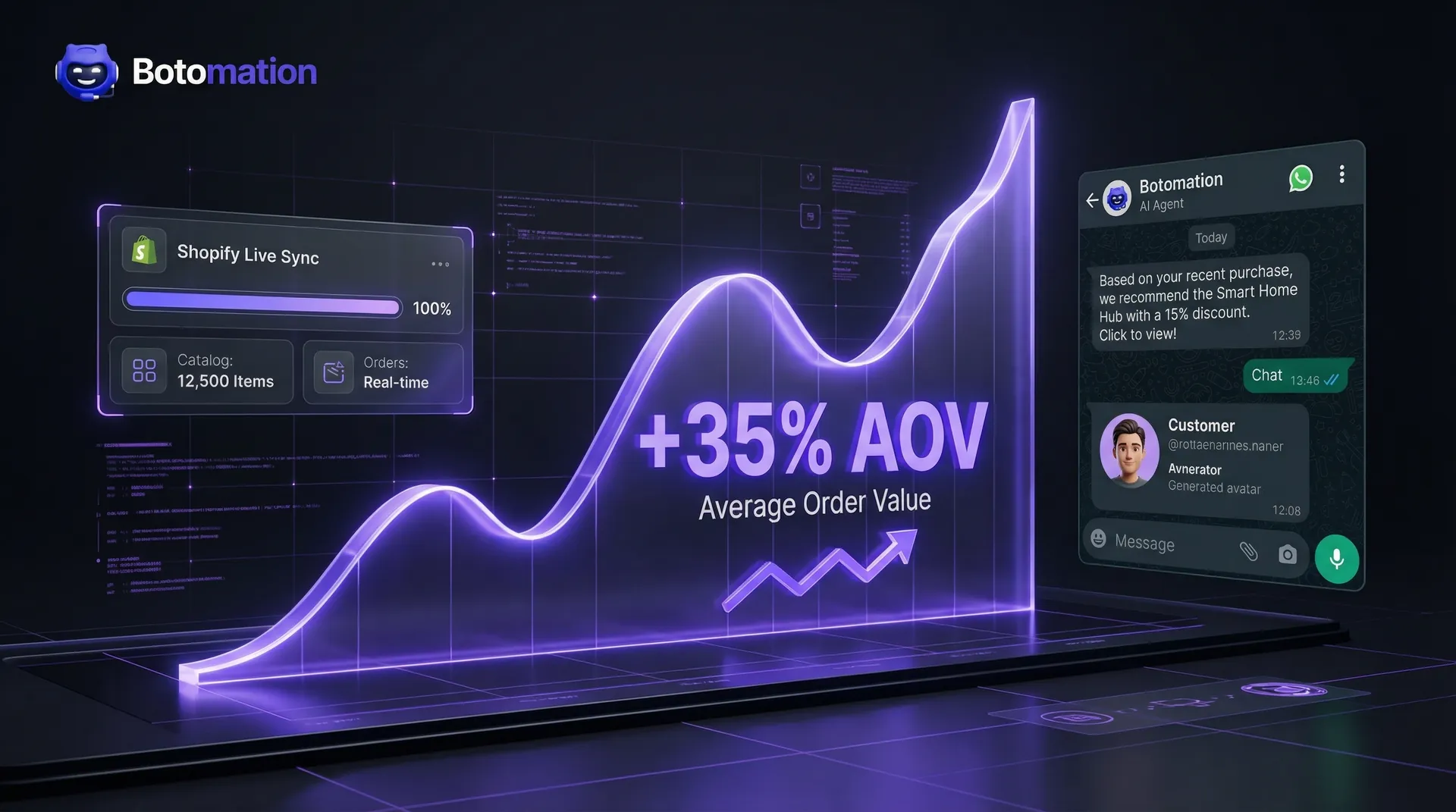
The digital landscape in January 2026 has shifted fundamentally, moving away from crowded email inboxes and toward the immediate, personal nature of messaging apps. With over 3 billion active users globally, WhatsApp has become the primary bridge between e-commerce brands and their customers, offering a level of intimacy that traditional marketing channels simply cannot replicate. For Shopify store owners, this shift represents a massive opportunity to drive revenue through hyper-personalized interactions. By implementing ai product recommendations whatsapp automation, brands are seeing a transformative impact on their bottom line, specifically regarding the Average Order Value (AOV).
Recent data from late 2026 suggests that AI-driven product suggestions delivered via WhatsApp can boost AOV by as much as 35% compared to static web-based recommendations. This isn't just about sending a "you might also like" text; it is about deploying sophisticated AI agents that understand customer intent, purchase history, and real-time browsing behavior. In markets like Mexico and Brazil, where Meta has recently expanded its Business AI pilot programs, early adopters are reporting engagement rates that dwarf traditional SMS or email campaigns. These businesses are moving beyond simple notifications—like recovering abandoned carts on Shopify—and are instead building conversational sales funnels that guide a customer from a simple inquiry to a high-value multi-item checkout.
The 2026 updates to the WhatsApp Business API have introduced native AI capabilities that allow for deeper integration with Shopify’s backend. These updates enable the automation of complex sales dialogues that feel natural and helpful rather than intrusive. As we look at the current state of e-commerce, it is clear that the brands winning the most market share are those that treat WhatsApp as a high-performance sales channel rather than just a support tool for automated order tracking. Our team at Botomation has seen firsthand how moving from manual support to an automated, AI-first approach can turn a standard Shopify store into a 24/7 revenue-generating machine.
Understanding AI-Powered WhatsApp Product Recommendations in 2026
The technological landscape of the WhatsApp Business API has evolved significantly as we move through 2026. Meta has introduced a suite of AI-powered personalization features that allow businesses to do more than just send templates. These new tools are designed to interpret the nuances of customer conversations, allowing an AI agent to suggest products that align perfectly with the user's current needs. This level of context-aware communication is what separates the modern "New Way" of selling from the outdated, rigid automation of the past.
The expansion of Meta’s Business AI tools, which saw a major rollout in Latin American markets earlier this year, has now become a global standard for high-growth DTC brands. These tools include a sophisticated product recommendation engine that integrates directly with your Shopify catalog. When a customer asks a question about a specific item, the AI doesn't just answer the question; it analyzes the customer’s entire profile to suggest complementary products. This isn't a random guess; it is a calculated recommendation powered by the Advantage+ AI optimization system, which has been adapted from Meta’s ad platform specifically for conversational commerce.
WhatsApp Business API 2026 Technical Updates
The current version of the WhatsApp Business API includes several technical enhancements that make AI-driven sales more effective. One of the most significant changes is the rollout of the context-aware communication layer. This allows the AI to remember previous interactions across different sessions, providing a continuous conversation thread that feels human. Furthermore, the integration with Meta Ads Manager has been unified, meaning that a lead captured through a WhatsApp Status Ad can be immediately funneled into a personalized recommendation sequence without any data loss.
AI Capabilities for Product Recommendations
Modern AI agents, like those we deploy at Botomation, utilize advanced large language models to analyze vast amounts of customer data in milliseconds. When a customer interacts with your brand on WhatsApp, the AI looks at their Shopify purchase history, their recent clicks on your website, and even the sentiment of their current messages. This allows for a level of personalization that was previously impossible. For example, if a customer previously bought a high-end camera, the AI understands they are likely interested in premium lenses or specialized tripods, rather than entry-level accessories.
Key Insight: In 2026, the distinction between "support" and "sales" on WhatsApp has disappeared. Every support interaction is an opportunity for an AI-driven product recommendation that increases the total basket value.
Setting Up WhatsApp Business API for Shopify Product Recommendations
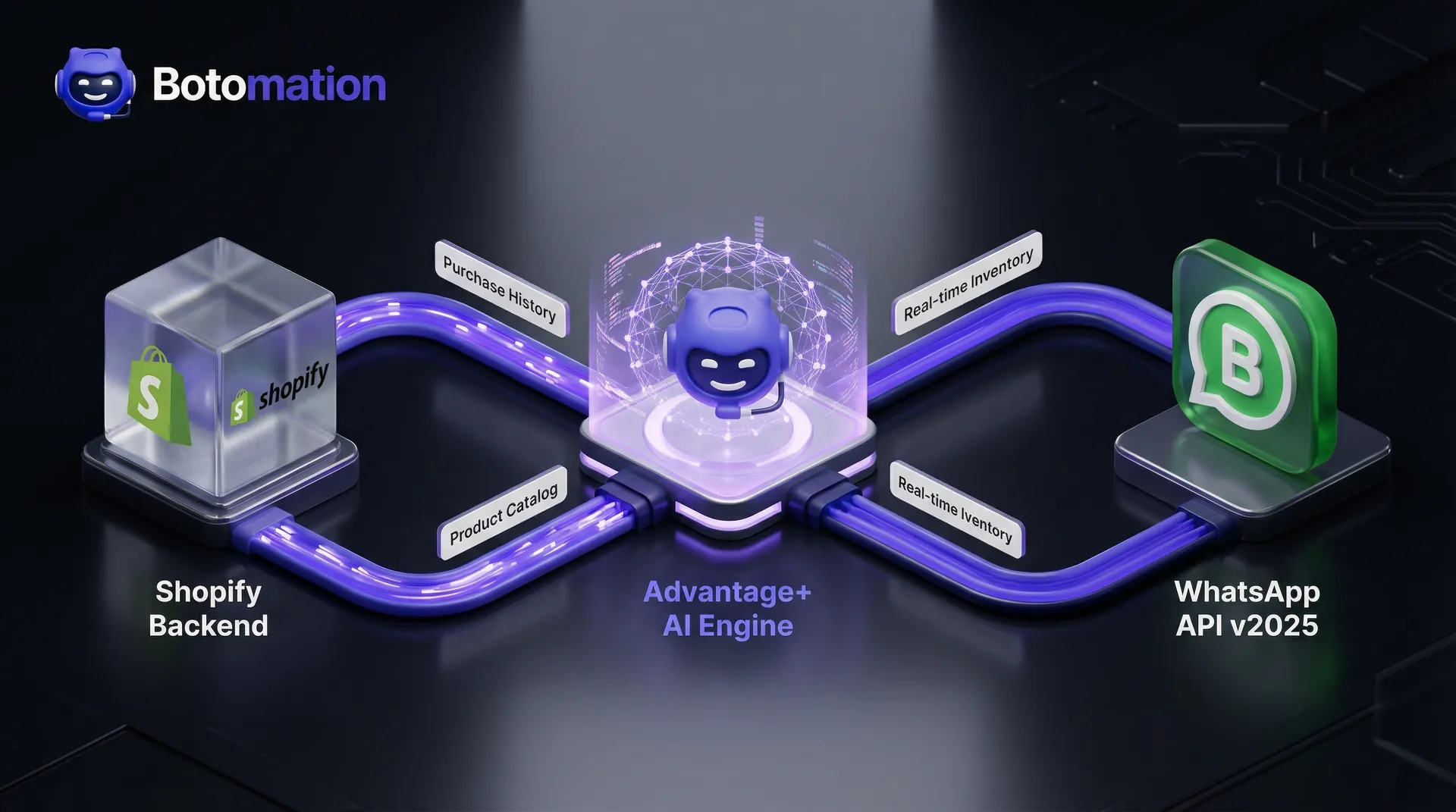
Successfully integrating the WhatsApp Business API with a Shopify store requires a strategic approach that goes beyond simply installing a plugin. The "Old Way" involved using basic apps that offered limited customization and often resulted in "bot-like" experiences that frustrated customers. The "New Way," championed by our experts at Botomation, involves a deep technical integration that synchronizes your entire product catalog with Meta’s Commerce Manager, ensuring that every recommendation is backed by real-time data.
The setup process begins with securing an official WhatsApp Business Account (WABA) through a verified partner. This step is crucial for maintaining brand authority and accessing the full range of AI features. Once the account is approved, the focus shifts to data synchronization. Every product in your Shopify store, including variants, pricing, and stock levels, must be mapped to the WhatsApp environment.
WhatsApp Business API Account Setup
Getting started requires a clean registration process through the Meta Business Suite. You must verify your business identity to gain access to the higher messaging tiers, which is essential for scaling your recommendation campaigns. Our team handles this entire process for our clients, navigating the complexities of API approvals and template registrations. Message templates in 2026 have become more flexible, allowing for dynamic content blocks where the AI can insert personalized product cards based on the recipient's profile.
Shopify Integration Process
The actual integration with Shopify involves more than just a data feed. It requires setting up logic gates that determine when and how the AI should intervene. We typically recommend a multi-layered approach where the AI monitors the customer journey in real-time. By connecting the Shopify API with the WhatsApp recommendation engine, we can create automated follow-up sequences triggered by specific browsing behaviors. This strategy is most effective when paired with high-speed, conversion-optimized websites that ensure a seamless transition from browser to chat.
AI-Powered Personalization Strategies for Product Recommendations
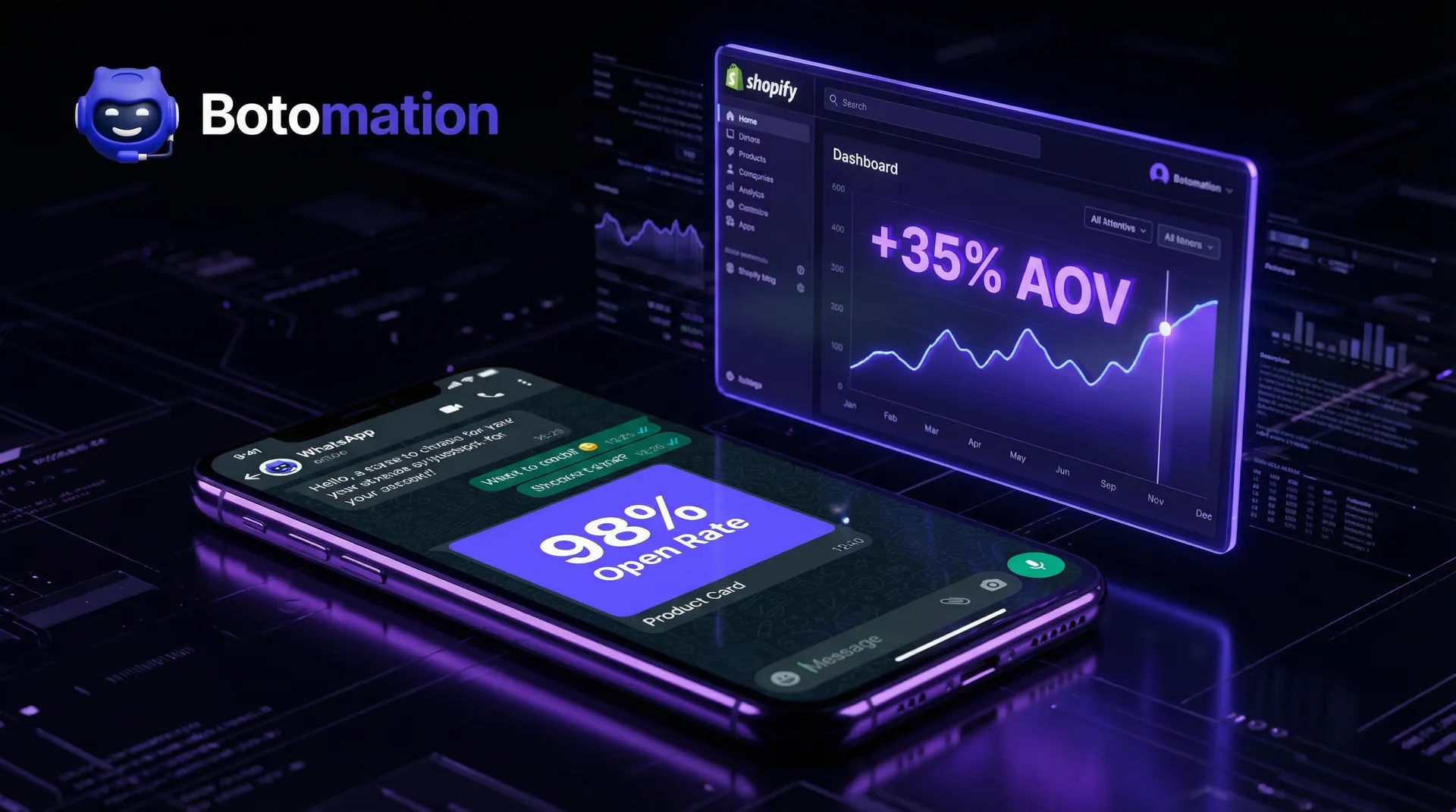
To truly achieve a 35% increase in AOV, your personalization strategy must be rooted in deep data analysis. The 98% open rate of WhatsApp is a powerful tool, but it can be easily wasted if the content of the messages is irrelevant. The goal is to make the customer feel like they are chatting with a knowledgeable personal shopper who understands their style and preferences. This requires moving beyond simple segmentation and into the realm of individual behavioral modeling.
At Botomation, we focus on using the "New Way" of behavioral targeting. Instead of just looking at what a customer bought last month, our AI agents analyze the intent behind their current browsing session. If a customer is looking at winter coats, the AI doesn't just suggest another coat; it suggests a matching scarf and high-quality gloves.
Behavior-Based Recommendation Algorithms
The algorithms used in 2026 are significantly more advanced than the basic collaborative filtering of the past. They now incorporate natural language processing to understand the "why" behind a purchase. Cross-selling and upselling are handled with surgical precision. When a customer adds a base product to their cart, the AI calculates the most statistically likely "add-on" that will result in a successful conversion.
Segmentation and Targeting Techniques
While individual behavior is key, broader segmentation still plays a vital role in initial outreach. We group customers not just by demographics, but by their "Customer Lifetime Value" (CLV) potential. High-value customers might receive early access to new collections via WhatsApp, accompanied by AI-driven suggestions based on their extensive purchase history.
| Feature | The Old Way (Manual/Email) | The New Way (Botomation AI) |
|---|---|---|
| Open Rates | 15-20% (Email) | 98% (WhatsApp) |
| Response Time | Hours or Days | Instant (Under 2 seconds) |
| Personalization | Basic Name Tags | Deep Behavioral AI |
| AOV Impact | Negligible | +35% Increase |
| Support Overhead | High (Manual Tickets) | Low (80% Automated) |
Automated Post-Purchase Upsell Sequences via WhatsApp
The period immediately following a purchase is the most critical window for increasing AOV. Most brands stop communicating once the "Order Confirmed" email is sent, but this is a missed opportunity. In the "New Way" of e-commerce, the post-purchase phase is the beginning of the next sale. By deploying AI-driven post-purchase follow-up sequences on WhatsApp, brands can capture additional revenue while the customer's excitement is at its peak.
Post-Purchase Communication Strategy
A successful post-purchase strategy starts with a genuine "Thank You" message that provides immediate value. This could be a link to a "How-to" guide for the product they just bought. Once the value is established, the AI transitions into the recommendation. For example, "We're getting your coffee machine ready! Many of our customers find that our organic bean sampler is the perfect way to start. Would you like to add it to your shipment for an extra 10% off?"
Upselling Techniques and Timing
The logic behind these upsells is driven by the AI's understanding of product relationships. We don't just suggest random items; we suggest "logical extensions" of the initial purchase. If the customer bought a high-end skincare serum, the AI suggests a moisturizer that enhances the serum's effects. This helpful approach is perceived as expert advice rather than a sales pitch.
WhatsApp Catalog Integration for Dynamic Product Suggestions
The backbone of any effective ai product recommendations whatsapp automation system is the integration with the WhatsApp Catalog. In January 2026, this is no longer a static list of items. It is a dynamic, living entity that reflects the real-time state of your Shopify store. When our team sets up these integrations, we ensure that every change made in the Shopify admin is instantly mirrored in the WhatsApp environment.
Catalog Setup and Management
Setting up the Meta Commerce Manager correctly is a prerequisite for high-performance automation. This involves more than just uploading a CSV file; it requires configuring the "Catalog Segment" features that allow the AI to pull specific groups of products based on the conversation context. Rich media plays a massive role in catalog engagement. Instead of a simple text link, the AI sends "Multi-Product Messages" (MPMs) that allow the customer to swipe through a curated selection within the WhatsApp interface.
Dynamic Recommendation Features
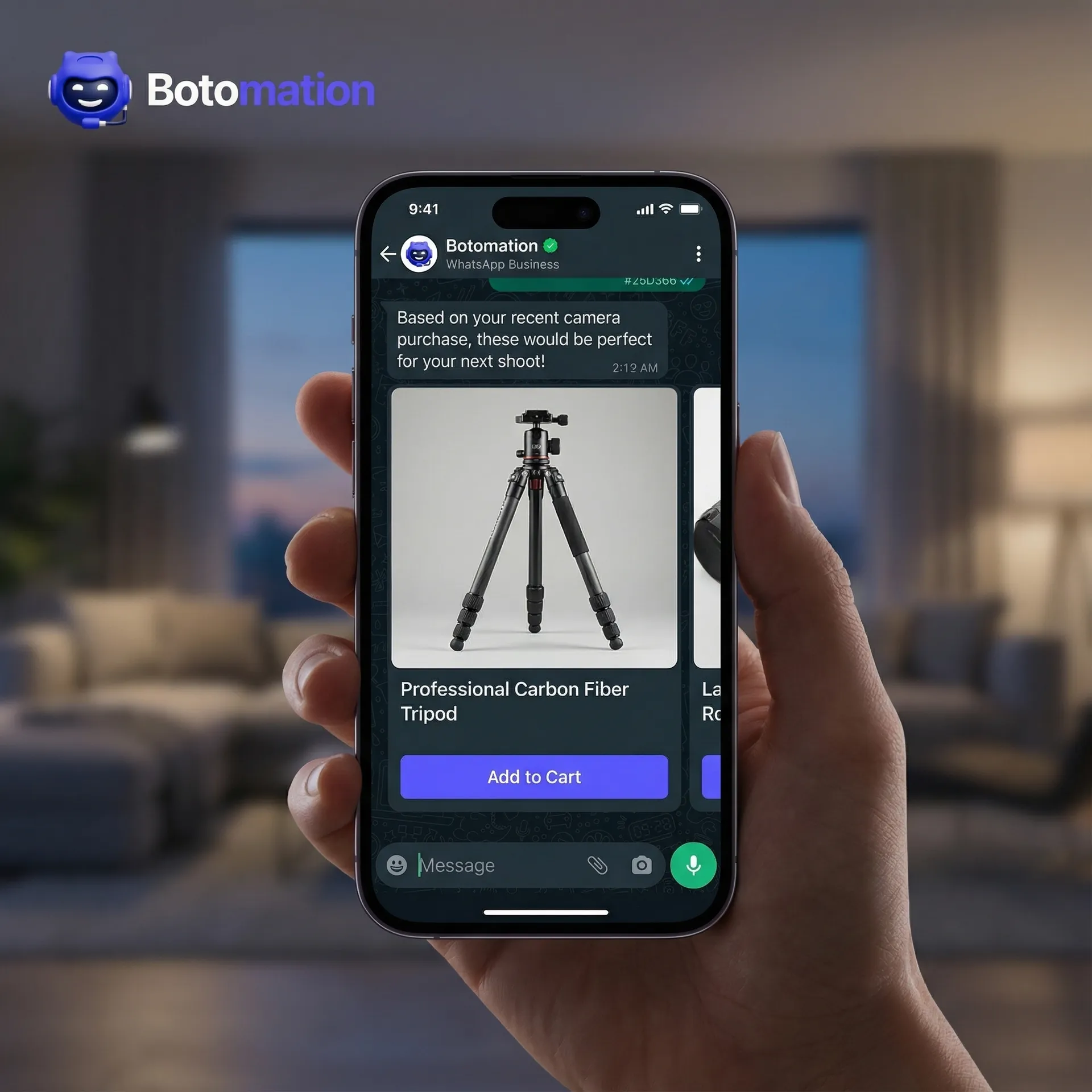
The AI doesn't just show products; it explains why it is showing them. A message might say, "Based on your interest in sustainable materials, I thought you might like these recycled cotton tees." This transparency builds trust. Furthermore, the AI uses real-time inventory data to create a sense of urgency. If a recommended item is low on stock, the AI can add a "Only 3 left in your size!" tag to the product card.
Stat Box: The Power of Conversational Sales
* Open Rates: WhatsApp averages 98%, compared to 21% for email.
* Click-Through Rates: 45-60% for AI-driven WhatsApp messages.
* Conversion Lift: Brands see a 35% average increase in AOV within the first 90 days of implementation.
* Support Efficiency: 80% reduction in manual support tickets through AI automation.
Measuring Success: KPIs and Analytics for WhatsApp Product Recommendations
To sustain a 35% increase in AOV, you must move beyond "gut feeling" and rely on hard data. The 2026 e-commerce environment provides an abundance of metrics, but the key is knowing which ones actually move the needle. At Botomation, we focus on a specific set of KPIs that correlate directly with revenue growth and customer satisfaction.
Critical Performance Metrics
Average Order Value (AOV) is, of course, the primary metric we are discussing here. We track the delta between orders placed through the standard Shopify checkout and those influenced by a WhatsApp AI interaction. Typically, we see that customers who engage with the AI end up purchasing more items per order, as the AI is adept at identifying and suggesting the "missing pieces" of their purchase.
Analytics and Optimization Tools
We utilize a combination of Meta’s native analytics and our own proprietary tracking layers to get a full 360-degree view of the customer journey. This allows us to see exactly where a customer might be dropping off in the conversation. A/B testing remains a cornerstone of our optimization strategy. We constantly test different AI "personalities," messaging cadences, and offer structures to ensure maximum ROI.
The Step-by-Step Path to 35% AOV Growth
- Audit and Catalog Sync: Connect your Shopify store to the Meta Commerce Manager.
- AI Agent Deployment: Partner with Botomation to deploy a custom-trained AI agent for your brand voice.
- Trigger Configuration: Set up webhooks for cart abandonment, product views, and purchases.
- Flow Design: Create conversational paths for upsells and cross-sells.
- Testing and Refinement: Verify the AI's logic in a sandbox environment before full rollout.
- Scale and Optimize: Use real-time analytics to double down on high-performing strategies.
Frequently Asked Questions
How does WhatsApp automation actually increase my AOV?
The AI increases AOV by identifying the most relevant complementary products for a customer in real-time. Because it happens within a personal chat, the customer is more likely to trust the recommendation and add the item to their order with a single click.
Is this different from a basic chatbot?
Yes, significantly. A basic chatbot follows a rigid logic tree. The AI agents we build at Botomation use advanced language models to understand the context and intent of the customer's message, providing a human-like shopping experience.
Will my customers find these messages intrusive?
When done correctly, no. The "New Way" focuses on being helpful and timely. By sending recommendations based on actual behavior—like an abandoned cart—you are providing a service that adds value to their journey.
How long does it take to see results?
Most of our clients see a measurable lift in their AOV within the first 30 to 60 days of full implementation. The AI needs a short period to learn from your specific customer base, but the impact is often immediate.
Can this handle my customer support too?
Absolutely. Our AI agents handle up to 80% of routine support tickets, such as order tracking and automated return requests, allowing your human team to focus on complex high-value interactions.
The shift toward AI-powered WhatsApp automation is the new standard for Shopify stores in 2026, serving as a primary driver to increase AOV through personalized recommendations. By moving away from the "Old Way" of disconnected emails and rigid chatbots, and embracing a deeply integrated, conversational AI strategy, you can realize significant gains in your average order value and overall revenue.
Ready to automate your growth? Stop losing money today and transform your Shopify store into a high-conversion sales engine. Book a call below.
The digital landscape in January 2026 has shifted fundamentally, moving away from crowded email inboxes and toward the immediate, personal nature of messaging apps. With over 3 billion active users globally, WhatsApp has become the primary bridge between e-commerce brands and their customers, offering a level of intimacy that traditional marketing channels simply cannot replicate. For Shopify store owners, this shift represents a massive opportunity to drive revenue through hyper-personalized interactions. By implementing ai product recommendations whatsapp automation, brands are seeing a transformative impact on their bottom line, specifically regarding the Average Order Value (AOV).
Recent data from late 2026 suggests that AI-driven product suggestions delivered via WhatsApp can boost AOV by as much as 35% compared to static web-based recommendations. This isn't just about sending a "you might also like" text; it is about deploying sophisticated AI agents that understand customer intent, purchase history, and real-time browsing behavior. In markets like Mexico and Brazil, where Meta has recently expanded its Business AI pilot programs, early adopters are reporting engagement rates that dwarf traditional SMS or email campaigns. These businesses are moving beyond simple notifications—like recovering abandoned carts on Shopify—and are instead building conversational sales funnels that guide a customer from a simple inquiry to a high-value multi-item checkout.
The 2026 updates to the WhatsApp Business API have introduced native AI capabilities that allow for deeper integration with Shopify’s backend. These updates enable the automation of complex sales dialogues that feel natural and helpful rather than intrusive. As we look at the current state of e-commerce, it is clear that the brands winning the most market share are those that treat WhatsApp as a high-performance sales channel rather than just a support tool for automated order tracking. Our team at Botomation has seen firsthand how moving from manual support to an automated, AI-first approach can turn a standard Shopify store into a 24/7 revenue-generating machine.
Understanding AI-Powered WhatsApp Product Recommendations in 2026
The technological landscape of the WhatsApp Business API has evolved significantly as we move through 2026. Meta has introduced a suite of AI-powered personalization features that allow businesses to do more than just send templates. These new tools are designed to interpret the nuances of customer conversations, allowing an AI agent to suggest products that align perfectly with the user's current needs. This level of context-aware communication is what separates the modern "New Way" of selling from the outdated, rigid automation of the past.
The expansion of Meta’s Business AI tools, which saw a major rollout in Latin American markets earlier this year, has now become a global standard for high-growth DTC brands. These tools include a sophisticated product recommendation engine that integrates directly with your Shopify catalog. When a customer asks a question about a specific item, the AI doesn't just answer the question; it analyzes the customer’s entire profile to suggest complementary products. This isn't a random guess; it is a calculated recommendation powered by the Advantage+ AI optimization system, which has been adapted from Meta’s ad platform specifically for conversational commerce.
WhatsApp Business API 2026 Technical Updates
The current version of the WhatsApp Business API includes several technical enhancements that make AI-driven sales more effective. One of the most significant changes is the rollout of the context-aware communication layer. This allows the AI to remember previous interactions across different sessions, providing a continuous conversation thread that feels human. Furthermore, the integration with Meta Ads Manager has been unified, meaning that a lead captured through a WhatsApp Status Ad can be immediately funneled into a personalized recommendation sequence without any data loss.
AI Capabilities for Product Recommendations
Modern AI agents, like those we deploy at Botomation, utilize advanced large language models to analyze vast amounts of customer data in milliseconds. When a customer interacts with your brand on WhatsApp, the AI looks at their Shopify purchase history, their recent clicks on your website, and even the sentiment of their current messages. This allows for a level of personalization that was previously impossible. For example, if a customer previously bought a high-end camera, the AI understands they are likely interested in premium lenses or specialized tripods, rather than entry-level accessories.
Key Insight: In 2026, the distinction between "support" and "sales" on WhatsApp has disappeared. Every support interaction is an opportunity for an AI-driven product recommendation that increases the total basket value.
Setting Up WhatsApp Business API for Shopify Product Recommendations
Successfully integrating the WhatsApp Business API with a Shopify store requires a strategic approach that goes beyond simply installing a plugin. The "Old Way" involved using basic apps that offered limited customization and often resulted in "bot-like" experiences that frustrated customers. The "New Way," championed by our experts at Botomation, involves a deep technical integration that synchronizes your entire product catalog with Meta’s Commerce Manager, ensuring that every recommendation is backed by real-time data.
The setup process begins with securing an official WhatsApp Business Account (WABA) through a verified partner. This step is crucial for maintaining brand authority and accessing the full range of AI features. Once the account is approved, the focus shifts to data synchronization. Every product in your Shopify store, including variants, pricing, and stock levels, must be mapped to the WhatsApp environment.
WhatsApp Business API Account Setup
Getting started requires a clean registration process through the Meta Business Suite. You must verify your business identity to gain access to the higher messaging tiers, which is essential for scaling your recommendation campaigns. Our team handles this entire process for our clients, navigating the complexities of API approvals and template registrations. Message templates in 2026 have become more flexible, allowing for dynamic content blocks where the AI can insert personalized product cards based on the recipient's profile.
Shopify Integration Process
The actual integration with Shopify involves more than just a data feed. It requires setting up logic gates that determine when and how the AI should intervene. We typically recommend a multi-layered approach where the AI monitors the customer journey in real-time. By connecting the Shopify API with the WhatsApp recommendation engine, we can create automated follow-up sequences triggered by specific browsing behaviors. This strategy is most effective when paired with high-speed, conversion-optimized websites that ensure a seamless transition from browser to chat.
AI-Powered Personalization Strategies for Product Recommendations
To truly achieve a 35% increase in AOV, your personalization strategy must be rooted in deep data analysis. The 98% open rate of WhatsApp is a powerful tool, but it can be easily wasted if the content of the messages is irrelevant. The goal is to make the customer feel like they are chatting with a knowledgeable personal shopper who understands their style and preferences. This requires moving beyond simple segmentation and into the realm of individual behavioral modeling.
At Botomation, we focus on using the "New Way" of behavioral targeting. Instead of just looking at what a customer bought last month, our AI agents analyze the intent behind their current browsing session. If a customer is looking at winter coats, the AI doesn't just suggest another coat; it suggests a matching scarf and high-quality gloves.
Behavior-Based Recommendation Algorithms
The algorithms used in 2026 are significantly more advanced than the basic collaborative filtering of the past. They now incorporate natural language processing to understand the "why" behind a purchase. Cross-selling and upselling are handled with surgical precision. When a customer adds a base product to their cart, the AI calculates the most statistically likely "add-on" that will result in a successful conversion.
Segmentation and Targeting Techniques
While individual behavior is key, broader segmentation still plays a vital role in initial outreach. We group customers not just by demographics, but by their "Customer Lifetime Value" (CLV) potential. High-value customers might receive early access to new collections via WhatsApp, accompanied by AI-driven suggestions based on their extensive purchase history.
| Feature | The Old Way (Manual/Email) | The New Way (Botomation AI) |
|---|---|---|
| Open Rates | 15-20% (Email) | 98% (WhatsApp) |
| Response Time | Hours or Days | Instant (Under 2 seconds) |
| Personalization | Basic Name Tags | Deep Behavioral AI |
| AOV Impact | Negligible | +35% Increase |
| Support Overhead | High (Manual Tickets) | Low (80% Automated) |
Automated Post-Purchase Upsell Sequences via WhatsApp
The period immediately following a purchase is the most critical window for increasing AOV. Most brands stop communicating once the "Order Confirmed" email is sent, but this is a missed opportunity. In the "New Way" of e-commerce, the post-purchase phase is the beginning of the next sale. By deploying AI-driven post-purchase follow-up sequences on WhatsApp, brands can capture additional revenue while the customer's excitement is at its peak.
Post-Purchase Communication Strategy
A successful post-purchase strategy starts with a genuine "Thank You" message that provides immediate value. This could be a link to a "How-to" guide for the product they just bought. Once the value is established, the AI transitions into the recommendation. For example, "We're getting your coffee machine ready! Many of our customers find that our organic bean sampler is the perfect way to start. Would you like to add it to your shipment for an extra 10% off?"
Upselling Techniques and Timing
The logic behind these upsells is driven by the AI's understanding of product relationships. We don't just suggest random items; we suggest "logical extensions" of the initial purchase. If the customer bought a high-end skincare serum, the AI suggests a moisturizer that enhances the serum's effects. This helpful approach is perceived as expert advice rather than a sales pitch.
WhatsApp Catalog Integration for Dynamic Product Suggestions
The backbone of any effective ai product recommendations whatsapp automation system is the integration with the WhatsApp Catalog. In January 2026, this is no longer a static list of items. It is a dynamic, living entity that reflects the real-time state of your Shopify store. When our team sets up these integrations, we ensure that every change made in the Shopify admin is instantly mirrored in the WhatsApp environment.
Catalog Setup and Management
Setting up the Meta Commerce Manager correctly is a prerequisite for high-performance automation. This involves more than just uploading a CSV file; it requires configuring the "Catalog Segment" features that allow the AI to pull specific groups of products based on the conversation context. Rich media plays a massive role in catalog engagement. Instead of a simple text link, the AI sends "Multi-Product Messages" (MPMs) that allow the customer to swipe through a curated selection within the WhatsApp interface.
Dynamic Recommendation Features
The AI doesn't just show products; it explains why it is showing them. A message might say, "Based on your interest in sustainable materials, I thought you might like these recycled cotton tees." This transparency builds trust. Furthermore, the AI uses real-time inventory data to create a sense of urgency. If a recommended item is low on stock, the AI can add a "Only 3 left in your size!" tag to the product card.
Stat Box: The Power of Conversational Sales
* Open Rates: WhatsApp averages 98%, compared to 21% for email.
* Click-Through Rates: 45-60% for AI-driven WhatsApp messages.
* Conversion Lift: Brands see a 35% average increase in AOV within the first 90 days of implementation.
* Support Efficiency: 80% reduction in manual support tickets through AI automation.
Measuring Success: KPIs and Analytics for WhatsApp Product Recommendations
To sustain a 35% increase in AOV, you must move beyond "gut feeling" and rely on hard data. The 2026 e-commerce environment provides an abundance of metrics, but the key is knowing which ones actually move the needle. At Botomation, we focus on a specific set of KPIs that correlate directly with revenue growth and customer satisfaction.
Critical Performance Metrics
Average Order Value (AOV) is, of course, the primary metric we are discussing here. We track the delta between orders placed through the standard Shopify checkout and those influenced by a WhatsApp AI interaction. Typically, we see that customers who engage with the AI end up purchasing more items per order, as the AI is adept at identifying and suggesting the "missing pieces" of their purchase.
Analytics and Optimization Tools
We utilize a combination of Meta’s native analytics and our own proprietary tracking layers to get a full 360-degree view of the customer journey. This allows us to see exactly where a customer might be dropping off in the conversation. A/B testing remains a cornerstone of our optimization strategy. We constantly test different AI "personalities," messaging cadences, and offer structures to ensure maximum ROI.
The Step-by-Step Path to 35% AOV Growth
- Audit and Catalog Sync: Connect your Shopify store to the Meta Commerce Manager.
- AI Agent Deployment: Partner with Botomation to deploy a custom-trained AI agent for your brand voice.
- Trigger Configuration: Set up webhooks for cart abandonment, product views, and purchases.
- Flow Design: Create conversational paths for upsells and cross-sells.
- Testing and Refinement: Verify the AI's logic in a sandbox environment before full rollout.
- Scale and Optimize: Use real-time analytics to double down on high-performing strategies.
Frequently Asked Questions
How does WhatsApp automation actually increase my AOV?
The AI increases AOV by identifying the most relevant complementary products for a customer in real-time. Because it happens within a personal chat, the customer is more likely to trust the recommendation and add the item to their order with a single click.
Is this different from a basic chatbot?
Yes, significantly. A basic chatbot follows a rigid logic tree. The AI agents we build at Botomation use advanced language models to understand the context and intent of the customer's message, providing a human-like shopping experience.
Will my customers find these messages intrusive?
When done correctly, no. The "New Way" focuses on being helpful and timely. By sending recommendations based on actual behavior—like an abandoned cart—you are providing a service that adds value to their journey.
How long does it take to see results?
Most of our clients see a measurable lift in their AOV within the first 30 to 60 days of full implementation. The AI needs a short period to learn from your specific customer base, but the impact is often immediate.
Can this handle my customer support too?
Absolutely. Our AI agents handle up to 80% of routine support tickets, such as order tracking and automated return requests, allowing your human team to focus on complex high-value interactions.
The shift toward AI-powered WhatsApp automation is the new standard for Shopify stores in 2026, serving as a primary driver to increase AOV through personalized recommendations. By moving away from the "Old Way" of disconnected emails and rigid chatbots, and embracing a deeply integrated, conversational AI strategy, you can realize significant gains in your average order value and overall revenue.
Ready to automate your growth? Stop losing money today and transform your Shopify store into a high-conversion sales engine. Book a call below.
Get Started
Book a FREE Consultation Right NOW!
Schedule a Call with Our Team To Make Your Business More Efficient with AI Instantly.
Read More
Boost Shopify AOV with AI WhatsApp Product Recommendations
Boost Shopify AOV with ai product recommendations whatsapp automation. Use Botomation AI for cart recovery, support, and conversational commerce.
Shopify WhatsApp Shipping Notifications - 2026 Integration
Learn how WhatsApp AI slashes support costs for e-commerce & SaaS. Proven strategies to boost sales, recover carts, and scale 24/7 service.