Maintain Voice Personality in Video Localization 2026 Guide
Feb 17, 2026
Video Localization
AI Automation
Content Strategy
Video Localization
AI Automation
Content Strategy
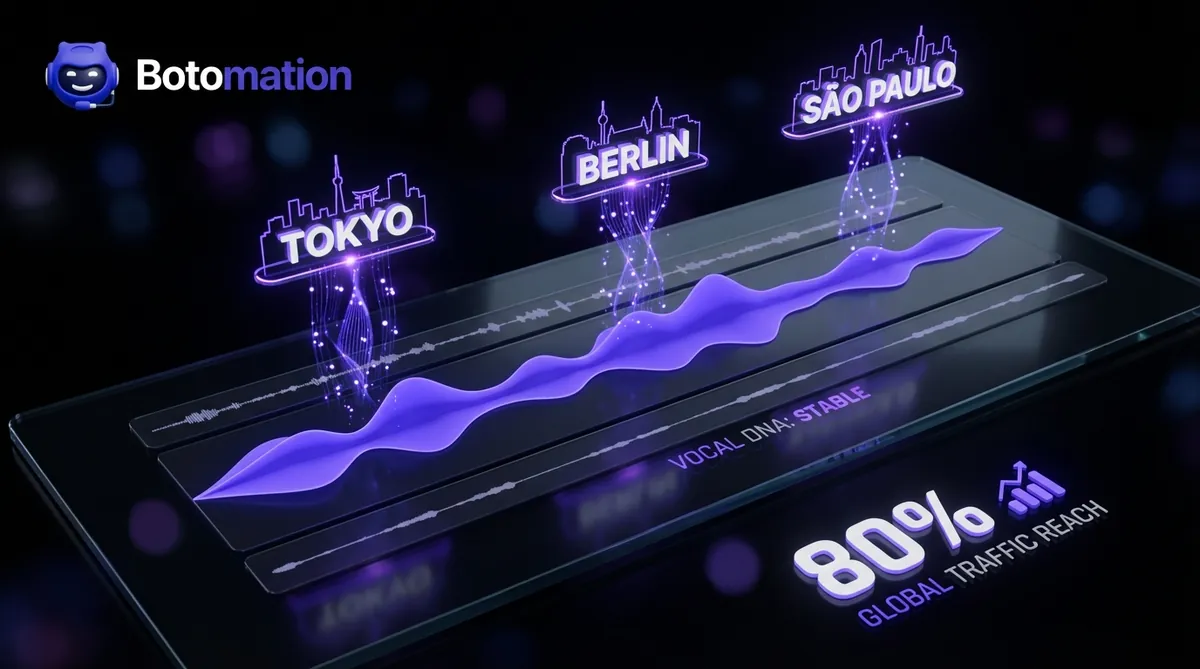
By January 2026, video content has solidified its position as the primary medium for global communication, representing more than 80% of all internet traffic. For creators and brands, the challenge is no longer just about visibility; it is about being understood while maintaining the unique essence that makes their brand recognizable. When a creator expands YouTube globally with voice cloning, the literal translation of words often fails to capture the charisma, humor, or authority of the original speaker. This gap creates a sterile experience for the viewer, where the emotional connection is severed by a generic, robotic voice-over that sounds nothing like the person on screen.
True video localization goes far beyond the mechanical process of swapping one language for another. It involves a sophisticated preservation of brand voice personality, ensuring that the same wit, tone, and emotional resonance felt by an English-speaking audience is felt equally by viewers in Tokyo, Berlin, or São Paulo. Our team at Botomation has seen how a lack of personality in localized content can lead to high bounce rates and low engagement, even when the translation itself is technically accurate. To maintain voice personality in video localization, brands must adopt a strategy that treats vocal identity as a core asset, not a secondary technical requirement.
The emergence of advanced AI voice cloning for global brand identity by late 2026 has provided a solution that was previously impossible. We can now maintain the exact vocal DNA of a speaker—their pitch, their cadence, and their unique "vocal fry"—while they speak a language they might not even know. This technological leap allows global brands to scale without losing the human touch that built their community in the first place.
How to Maintain Voice Personality in Video Localization vs. Translation?
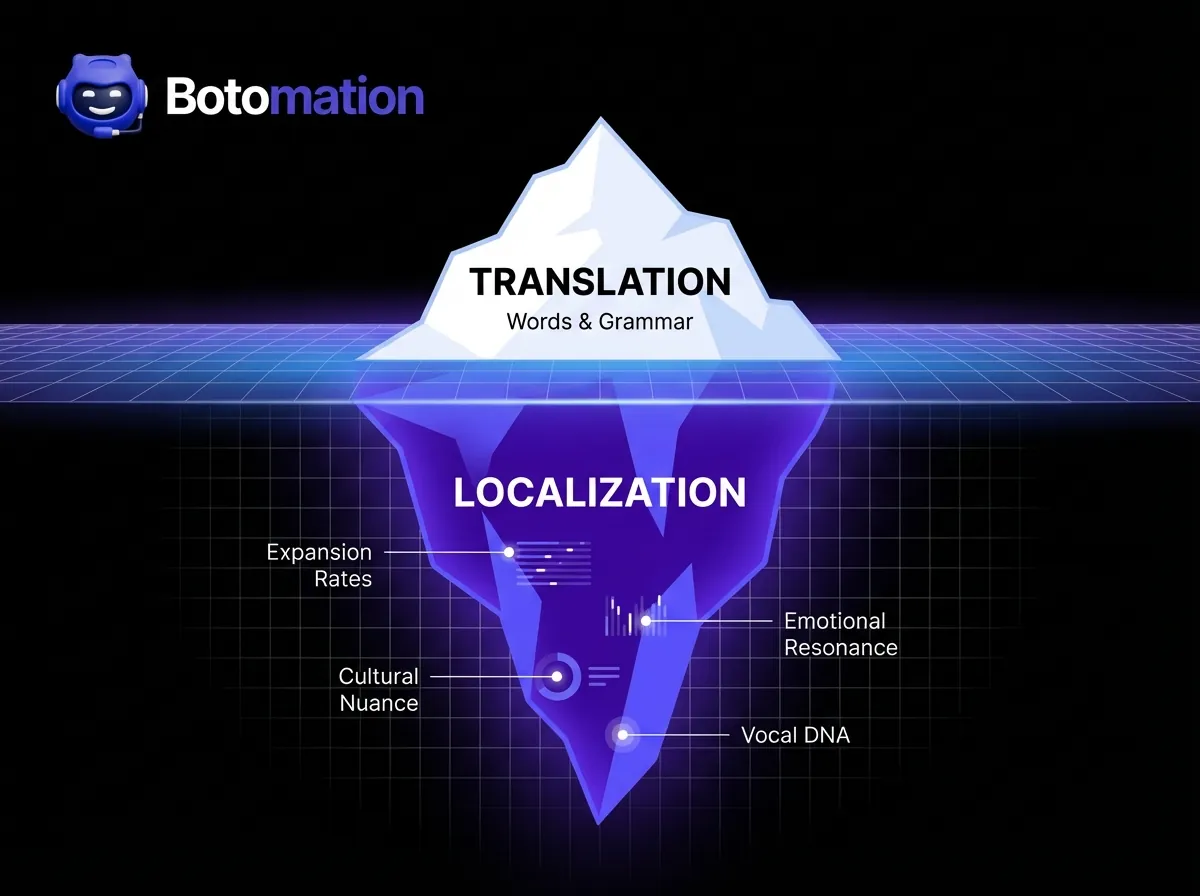
Many organizations mistakenly use the terms translation and localization interchangeably, but in the context of high-stakes video content, they are worlds apart. Translation is the process of changing text or speech from one language to another while maintaining the basic meaning. Localization, however, is a comprehensive adaptation that considers cultural norms, idioms, and the specific emotional triggers of a target audience. When our experts at Botomation handle a project, we do not just look at the script; we analyze the intent behind every sentence.
A direct translation of a marketing video might result in a script that is grammatically correct but culturally tone-deaf. For instance, a joke that relies on a specific American cultural reference will fall flat in India, likely confusing the audience rather than engaging them. Localization requires a deep understanding of how to preserve the brand's personality—whether it is "the friendly neighbor" or "the authoritative expert"—while changing the cultural vehicle used to deliver that personality. If your brand voice is built on a specific type of sarcasm, a simple translation will likely make you sound rude rather than witty in a different linguistic context.
Technical differences also play a major role in this distinction. Translation often ignores the physical constraints of the video, such as the length of time it takes to say a sentence in German versus English. Localization accounts for these "expansion rates," ensuring that the audio remains synchronized with the visual cues and the speaker's body language. Without this careful synchronization, the disconnect between the speaker’s movements and the audio creates an "uncanny valley" effect that distracts the viewer and diminishes the brand's perceived professional quality.
Why Does Cultural Context Matter in Video Localization?
Cultural references are the building blocks of brand personality, and they require careful handling during the localization process. A classic example often cited in marketing circles involves a major soft drink company that entered the Chinese market with a name that phonetically sounded like their brand but translated literally to "bite the wax tadpole." While the translation was phonetically similar, the cultural context was a disaster. To avoid these pitfalls, our team ensures that every cultural reference is audited for its impact on the brand's core identity.
Preserving emotional impact requires more than just words; it requires an understanding of visual semiotics. In some cultures, certain colors or hand gestures have vastly different meanings than they do in the West. If a creator’s brand personality is energetic and uses a lot of hand gestures, we must ensure those gestures do not inadvertently offend the new target audience. Timing and pacing are equally critical, as some cultures prefer a slower, more contemplative delivery, while others respond better to the fast-paced, high-energy style common in North American media.
What are the Challenges in Preserving Voice Personality?
The primary challenge in maintaining personality across languages is that different languages have different "musicality." Italian is highly melodic with significant pitch variation, while Japanese relies more on subtle tonal shifts and pauses. If a brand's personality is defined by a high-energy, enthusiastic tone, our experts must find a way to express that enthusiasm within the linguistic rules of the target language. It is not enough to just speak louder; the vocal characteristics must be adapted to sound natural to a native speaker.
Humor is perhaps the most difficult trait to preserve. What is considered funny in London might be seen as confusing in Dubai. Maintaining a humorous brand voice requires a creative team that can rewrite scripts to find "cultural equivalents" for jokes while using AI voice cloning to ensure the delivery—the timing of the punchline—remains consistent with the original creator’s style. Technical approaches today allow us to map the emotional envelope of the original recording onto the localized version, ensuring that the "soul" of the performance remains intact.
What Elements Help Maintain Voice Personality in Video Localization?
Identifying the core elements of a voice is the first step toward maintaining brand voice consistency in multilingual video content. Every brand has a "vocal fingerprint" that consists of both what is said and how it is said. Even when the language changes, certain core personality traits must remain constant to ensure the audience recognizes the brand. These traits include the level of formality, the perceived age of the speaker, and the underlying emotional energy. At Botomation, we work with our clients to map these traits before a single word is dubbed.
Emotional tone and energy are the most universal aspects of a voice. A brand that is "inspiring and visionary" should sound that way in every language. This is achieved by focusing on the prosody of the speech—the patterns of stress and intonation. By utilizing the latest neural voice synthesis models, our team can replicate the specific energy levels of a speaker. If a YouTuber is known for their breathless, rapid-fire delivery, that pace needs to be mirrored in the Spanish or French version to maintain the "vibe" of the channel.
Vocal characteristics such as raspiness, breathiness, or a specific resonance also contribute to brand identity. These are the physical qualities of the voice that make it unique. In the past, you had to hire a voice actor who sounded "vaguely similar" to the original. Today, our advanced cloning technology captures these nuances with 99% accuracy. This ensures that the brand's voice remains a consistent asset, regardless of the geographic market being served.
How do you Document Core Voice Personality Traits?
To automate brand voice consistency, it is essential to document the brand's unique traits. We recommend creating a personality trait matrix that defines where the brand sits on various scales: formal vs. informal, enthusiastic vs. calm, and authoritative vs. accessible. This documentation serves as a North Star for the localization team, ensuring that every piece of content, whether a 15-second short or a two-hour documentary, adheres to the same standards.
Measuring the success of these traits across languages involves sentiment analysis and audience feedback loops. We often run A/B tests on small segments of localized audio to see if the target audience perceives the personality in the way it was intended. This data-driven approach allows us to refine the voice models and script adaptations until the personality is perfectly calibrated. Using frameworks like the "Five Dimensions of Brand Personality" can help in categorizing these traits for international teams.
How Does AI Preserve Vocal Characteristics?
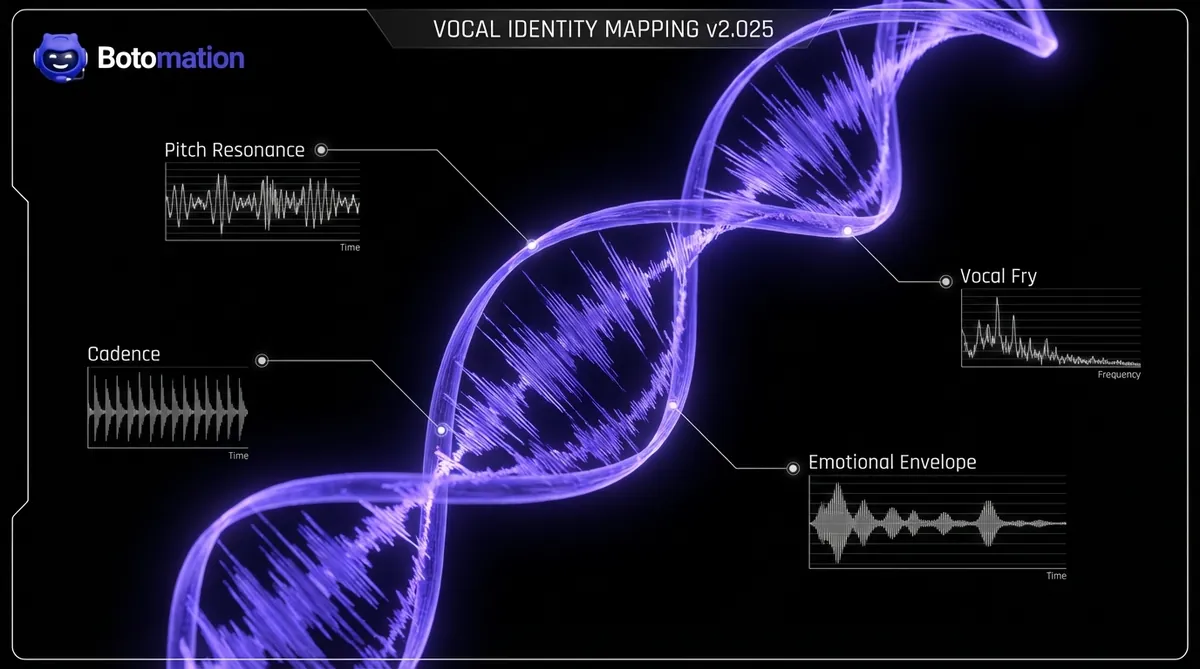
Maintaining vocal energy is not just about volume; it is about the "attack" and "decay" of the words. Our technicians analyze the original audio to identify the rhythm and emphasis patterns that the speaker uses naturally. If a speaker tends to emphasize the end of their sentences to create a sense of mystery, that pattern is programmed into the AI voice model for the localized versions. This level of detail is what separates a professional Botomation dub from a cheap, automated translation.
Quality control measures are vital for ensuring vocal consistency. We use a combination of automated acoustic analysis and human linguistic review. The acoustic analysis checks for pitch consistency and tonal match, while the human reviewers ensure that the emotional delivery feels authentic to a native speaker. This dual-layer approach ensures that the localized voice doesn't just sound like the original speaker, but feels like them too.
Expert Insight: "In 2026, the most successful global brands are those that treat their voice as a proprietary asset. If your audience can't recognize your brand with their eyes closed, you haven't fully localized your content."
| Metric | Traditional Dubbing | Botomation Voice Cloning |
|---|---|---|
| **Voice Consistency** | Low (New actor for every language) | High (Original voice identity kept) |
| **Turnaround Time** | 2-4 Weeks per language | 24-48 Hours |
| **Cost per Minute** | $75 - $200 | $15 - $45 |
| **Scalability** | Limited by actor availability | Unlimited |
| **Emotional Match** | Subjective to actor performance | Data-driven replication |
Which AI Solutions Maintain Voice Personality in Video Localization?
The landscape of video localization has been completely transformed by AI-powered solutions that prioritize personality preservation. Traditional methods required an army of voice actors, directors, and sound engineers, but creators can now reduce video localization costs by 90% with AI voice cloning, making global expansion accessible to everyone. Now, our team at Botomation utilizes sophisticated neural networks to clone a speaker's voice, allowing them to "speak" dozens of languages while retaining their unique identity. This is not just about efficiency; it's about maintaining the integrity of the creator's brand.
These advanced AI systems are trained on the specific nuances of a speaker's original audio. They learn the subtle breaths, the way certain consonants are softened, and the unique way a speaker might transition between thoughts. By using these models, we can produce localized audio that carries the same emotional weight as the original. For a global brand, this means they can launch a campaign in twenty countries simultaneously, with the same spokesperson delivering a consistent message in every local tongue.
Integration with existing workflows is another key advantage. We do not ask our clients to change how they produce their original content. Instead, we take the finished English video and use our specialized pipeline to generate the localized versions. This includes script adaptation, voice cloning, and final audio mixing. The result is a professional-grade localized video that looks and sounds as if it were originally produced in the target language.
What are the Technical Capabilities of AI Voice Preservation?
The technical sophistication of AI in late 2026 is staggering. Our systems use "zero-shot" and "few-shot" learning techniques, meaning we only need a few minutes of high-quality audio to create a perfect clone. This clone is not a static sound; it is a dynamic model capable of expressing a wide range of emotions. If the original video features a moment of intense excitement followed by a quiet, reflective thought, the AI model replicates that emotional arc perfectly in the new language.
Beyond just the voice, our technology handles the "non-verbal" aspects of speech. This includes natural pauses, "ums" and "ahs" if they are part of the speaker's natural style, and the subtle empathetic tones that build trust with an audience. We are essentially providing the precision of a professional voice actor with the scale and consistency of a digital system. This multi-language support is what enables our clients to reach millions of new viewers without the traditional barriers of entry.
How are Implementation and Quality Control Protocols Managed?
Implementing a personality-preserving voice model is a multi-step process. First, our team conducts an audio audit to ensure the source material is clean and representative of the brand's voice. We then generate the voice model and run it through a series of "stress tests" to see how it handles different types of content, from technical explanations to high-energy calls to action. This ensures that the model is versatile enough for all the brand's future needs.
Quality assurance is where our agency truly shines. Every localized track is reviewed by a native speaker who is also trained in brand voice consistency. They look for "linguistic friction"—places where the translation might be accurate but the delivery feels slightly "off" for the brand's personality. We also use automated tools to compare the frequency spectrum of the original and localized audio, ensuring a technical match that satisfies even the most discerning audiophiles.
The Real Cost of Traditional Localization vs. Botomation
Consider the cost of hiring a localization manager to oversee traditional dubbing for just four languages.
- Average Base Salary: $45,000
- Benefits and Overhead (25%): $11,250
- Total Internal Cost: $56,250 per year
This does not even include the actual costs of the voice actors or studio time, which can easily double that figure. Partnering with an agency like Botomation eliminates these overheads while providing a superior, personality-driven result.
How to Use a Step-by-Step Video Localization Process?
Successfully localizing video content requires a systematic approach that places personality at the center of every decision. At Botomation, we have refined a process that ensures nothing is lost in translation. This process begins long before the first line of audio is generated and continues until the video is live and performing in its new market. By following a structured workflow, we can guarantee consistency across hundreds of videos for our enterprise clients and high-growth YouTubers.
The first phase is always about alignment. We need to understand the "why" behind the content. Is this video meant to sell, to educate, or to entertain? The answer dictates how we approach the voice cloning and the script adaptation. For example, an educational video requires a voice that conveys patience and clarity, whereas a promotional video might need more punch and urgency. Our team coordinates closely with the original creators to capture these nuances in the project brief.
How to Approach Pre-Production Localization Planning?
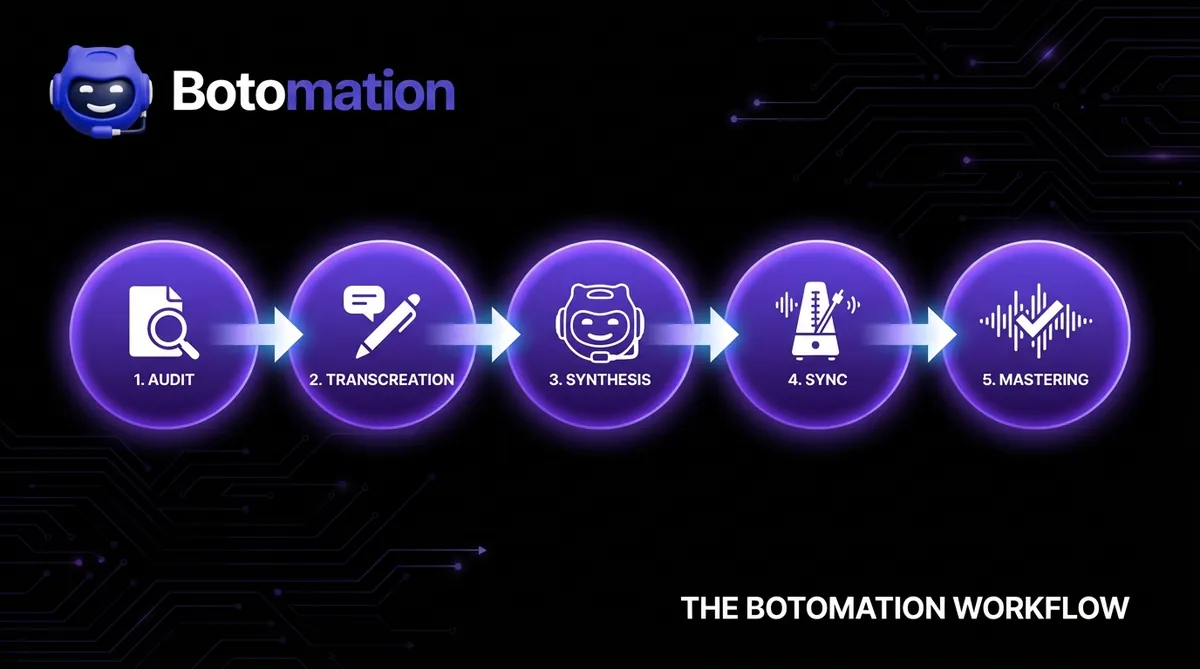
Planning is the most critical stage for maintaining voice personality. We start by creating a detailed localization brief that outlines the core personality traits we've identified. This brief acts as a guide for our scriptwriters, who are tasked with "transcreating" the content. Transcreation is the process of rewriting the script to ensure the same emotional response in the target language, even if the literal words change significantly.
Preparing scripts for AI voice cloning also requires a specific technical touch. We use phonetic markers and emotional tags to tell the AI exactly how to deliver certain lines. If a specific word needs to be emphasized to maintain the brand's authoritative tone, we mark it in the script. This level of preparation ensures that the first draft of the localized audio is already 90% of the way to perfection.
How to Localize Your Video While Keeping Your Voice
- Source Audio Profiling: Our experts analyze 5-10 minutes of your best audio to capture your unique vocal "fingerprint," including pitch, resonance, and habitual speech patterns.
- Linguistic Transcreation: Our native linguists adapt your script, replacing local idioms and cultural references with equivalents that maintain your original intent and humor.
- Neural Voice Synthesis: We use our proprietary AI models to generate the dubbed audio in the target language, mapping your original emotional delivery onto the new speech.
- Prosody and Timing Alignment: We manually adjust the rhythm and "beats" of the new audio to ensure it perfectly matches your on-screen movements and the video's pacing.
- Final Mastering and Review: A native speaker conducts a final "vibe check" to ensure you sound like a natural, charismatic version of yourself in the new language.
What are the Best Production and Post-Production Strategies?
During the production phase, our focus shifts to technical precision. We generate the localized audio and then use advanced "speech-to-speech" technology to ensure the timing is perfect. This technology allows us to use the original speaker's timing as a template for the new language. If the creator pauses for three seconds to let a point sink in, the localized version will do exactly the same, preserving the intentional pacing of the original performance.
In post-production, we integrate the new audio back into the video, often performing "lip-sync" adjustments if the client requires the highest level of immersion. Our editors also ensure that any on-screen text or graphics are localized to match the new audio. This holistic approach ensures that the viewer isn't constantly reminded that they are watching a localized version of a foreign video. Instead, they are fully immersed in the content, allowing the brand's personality to shine through without distraction.
Which Case Studies Show Successful Voice Personality Preservation?
Looking at the leaders in the industry provides a clear roadmap for success. In late 2026, the standard for localization has been set by entertainment giants and forward-thinking multinational corporations. These organizations understand that their voice is their brand. For example, when a major streaming platform like Netflix releases a global hit, they do not just translate the dialogue; they ensure the "spirit" of the characters remains consistent across every dubbed version. This is why a character feels the same whether you are watching in Korean or English.
The results of these personality-preserving strategies are quantifiable. Brands that increase YouTube revenue via international expansion with AI dubbing see significantly higher "watch time" and "subscriber conversion" rates in international markets compared to those that use generic dubbing. When a viewer feels like they are hearing the real person, trust is established much faster. This emotional connection is the key to building a loyal global community, rather than just a collection of passive viewers.
What Can We Learn From Entertainment Industry Success Stories?
Netflix and Disney+ have pioneered the use of "voice matching" to ensure that the personality of their actors is preserved globally. They use a combination of highly skilled voice directors and AI-assisted tools to find or create voices that match the original actor's frequency and emotional range. This has led to a much higher acceptance of dubbed content in markets like the US, where audiences were traditionally resistant to anything not in the original language.
The technical approach used by these platforms involves creating "voice profiles" for every major character. These profiles include data on pitch, speech rate, and emotional triggers. By using these profiles, they can ensure that even if a different voice actor is used in a different country, the personality remains identical. This strategy has been a major factor in the global success of non-English content, proving that when personality is preserved, language is no longer a barrier.
How Does This Apply to Corporate Training and Education?
In the corporate world, personality preservation is just as important. Multinational corporations use video for everything from onboarding to technical training. When the CEO's message is localized, it is vital that their leadership style and warmth are preserved. We've worked with several Fortune 500 companies to clone their executives' voices for internal communications. The result was a 40% increase in employee engagement scores in non-English speaking regions, as employees felt a more direct connection to their leadership.
In the educational sector, maintaining the instructor's personality is key to learning outcomes. An engaging, enthusiastic teacher is much more effective than a dry, monotone one. By using voice cloning for educational YouTube videos, platforms can take their best instructors and have them "teach" in dozens of languages while maintaining the unique charisma that drives student engagement. This maintains the high quality of instruction that made the original course successful, ensuring that students in Brazil or Indonesia get the same high-energy learning experience as those in the US.
Why Choose Botomation for Global Growth?
Choosing the right partner for video localization is a strategic decision that affects your brand's long-term global reputation. While there are many automated tools available in 2026, they often lack the nuance and expert oversight required to truly maintain a brand's voice personality. Botomation is not just a software tool; we are a premium agency of experts who utilize the most advanced technology to deliver a finished, professional product. We understand that your voice is your identity, and we treat it with the respect it deserves.
The "Old Way" of localization—hiring expensive actors, managing multiple studios, and settling for a "close enough" voice—is slow and inefficient. The "New Way" with Botomation is instant, scalable, and keeps you at the center of your content. We allow you to go global immediately, dubbing your videos into other languages while keeping your original voice and tone. This is the ultimate competitive advantage in a crowded global marketplace.
By partnering with us, you are not just getting a translation; you are getting a global version of yourself. Our team handles the technical complexity, the linguistic nuances, and the quality control, leaving you free to focus on what you do best: creating great content. The future of video is global, and that future is personal.
Frequently Asked Questions
How does AI voice cloning handle different accents?
Our advanced models are trained to understand the underlying phonetics of a speaker's voice, independent of their accent. When we clone a voice into a new language, we can either maintain the original accent for a "foreign expert" feel or adapt the voice to have a perfect native accent in the target language, all while keeping the original speaker's unique vocal characteristics like pitch and resonance.
Will my audience know the video is dubbed?
In 2026, the goal of high-end localization is to make the dubbing virtually indistinguishable from the original. By matching the original speaker's timing, emotional delivery, and vocal DNA, we create a "natural" listening experience. When combined with our optional AI lip-sync services, the localized video feels like it was originally filmed in the target language.
Is voice cloning safe for my brand's security?
At Botomation, we take security and ethics very seriously. We only clone voices with explicit permission from the original speaker and use secure, encrypted pipelines for all data processing. Your voice model is your property, and we never use it for any purpose other than the projects you authorize.
How long does the localization process take?
While traditional dubbing can take weeks, our managed agency approach allows us to deliver high-quality, personality-preserved localized videos in as little as 24 to 48 hours. This allows you to stay relevant and react to global trends in real-time.
Can I localize into multiple languages at once?
Yes, our infrastructure is designed for massive scale. We can take a single source video and localize it into 50+ languages simultaneously, ensuring a consistent brand personality across every single market from day one.
Ready to automate your growth? Stop losing money today by leaving international audiences on the table. Partner with the experts at Botomation to expand your reach without ever re-recording a single word. Book a call below.
By January 2026, video content has solidified its position as the primary medium for global communication, representing more than 80% of all internet traffic. For creators and brands, the challenge is no longer just about visibility; it is about being understood while maintaining the unique essence that makes their brand recognizable. When a creator expands YouTube globally with voice cloning, the literal translation of words often fails to capture the charisma, humor, or authority of the original speaker. This gap creates a sterile experience for the viewer, where the emotional connection is severed by a generic, robotic voice-over that sounds nothing like the person on screen.
True video localization goes far beyond the mechanical process of swapping one language for another. It involves a sophisticated preservation of brand voice personality, ensuring that the same wit, tone, and emotional resonance felt by an English-speaking audience is felt equally by viewers in Tokyo, Berlin, or São Paulo. Our team at Botomation has seen how a lack of personality in localized content can lead to high bounce rates and low engagement, even when the translation itself is technically accurate. To maintain voice personality in video localization, brands must adopt a strategy that treats vocal identity as a core asset, not a secondary technical requirement.
The emergence of advanced AI voice cloning for global brand identity by late 2026 has provided a solution that was previously impossible. We can now maintain the exact vocal DNA of a speaker—their pitch, their cadence, and their unique "vocal fry"—while they speak a language they might not even know. This technological leap allows global brands to scale without losing the human touch that built their community in the first place.
How to Maintain Voice Personality in Video Localization vs. Translation?
Many organizations mistakenly use the terms translation and localization interchangeably, but in the context of high-stakes video content, they are worlds apart. Translation is the process of changing text or speech from one language to another while maintaining the basic meaning. Localization, however, is a comprehensive adaptation that considers cultural norms, idioms, and the specific emotional triggers of a target audience. When our experts at Botomation handle a project, we do not just look at the script; we analyze the intent behind every sentence.
A direct translation of a marketing video might result in a script that is grammatically correct but culturally tone-deaf. For instance, a joke that relies on a specific American cultural reference will fall flat in India, likely confusing the audience rather than engaging them. Localization requires a deep understanding of how to preserve the brand's personality—whether it is "the friendly neighbor" or "the authoritative expert"—while changing the cultural vehicle used to deliver that personality. If your brand voice is built on a specific type of sarcasm, a simple translation will likely make you sound rude rather than witty in a different linguistic context.
Technical differences also play a major role in this distinction. Translation often ignores the physical constraints of the video, such as the length of time it takes to say a sentence in German versus English. Localization accounts for these "expansion rates," ensuring that the audio remains synchronized with the visual cues and the speaker's body language. Without this careful synchronization, the disconnect between the speaker’s movements and the audio creates an "uncanny valley" effect that distracts the viewer and diminishes the brand's perceived professional quality.
Why Does Cultural Context Matter in Video Localization?
Cultural references are the building blocks of brand personality, and they require careful handling during the localization process. A classic example often cited in marketing circles involves a major soft drink company that entered the Chinese market with a name that phonetically sounded like their brand but translated literally to "bite the wax tadpole." While the translation was phonetically similar, the cultural context was a disaster. To avoid these pitfalls, our team ensures that every cultural reference is audited for its impact on the brand's core identity.
Preserving emotional impact requires more than just words; it requires an understanding of visual semiotics. In some cultures, certain colors or hand gestures have vastly different meanings than they do in the West. If a creator’s brand personality is energetic and uses a lot of hand gestures, we must ensure those gestures do not inadvertently offend the new target audience. Timing and pacing are equally critical, as some cultures prefer a slower, more contemplative delivery, while others respond better to the fast-paced, high-energy style common in North American media.
What are the Challenges in Preserving Voice Personality?
The primary challenge in maintaining personality across languages is that different languages have different "musicality." Italian is highly melodic with significant pitch variation, while Japanese relies more on subtle tonal shifts and pauses. If a brand's personality is defined by a high-energy, enthusiastic tone, our experts must find a way to express that enthusiasm within the linguistic rules of the target language. It is not enough to just speak louder; the vocal characteristics must be adapted to sound natural to a native speaker.
Humor is perhaps the most difficult trait to preserve. What is considered funny in London might be seen as confusing in Dubai. Maintaining a humorous brand voice requires a creative team that can rewrite scripts to find "cultural equivalents" for jokes while using AI voice cloning to ensure the delivery—the timing of the punchline—remains consistent with the original creator’s style. Technical approaches today allow us to map the emotional envelope of the original recording onto the localized version, ensuring that the "soul" of the performance remains intact.
What Elements Help Maintain Voice Personality in Video Localization?
Identifying the core elements of a voice is the first step toward maintaining brand voice consistency in multilingual video content. Every brand has a "vocal fingerprint" that consists of both what is said and how it is said. Even when the language changes, certain core personality traits must remain constant to ensure the audience recognizes the brand. These traits include the level of formality, the perceived age of the speaker, and the underlying emotional energy. At Botomation, we work with our clients to map these traits before a single word is dubbed.
Emotional tone and energy are the most universal aspects of a voice. A brand that is "inspiring and visionary" should sound that way in every language. This is achieved by focusing on the prosody of the speech—the patterns of stress and intonation. By utilizing the latest neural voice synthesis models, our team can replicate the specific energy levels of a speaker. If a YouTuber is known for their breathless, rapid-fire delivery, that pace needs to be mirrored in the Spanish or French version to maintain the "vibe" of the channel.
Vocal characteristics such as raspiness, breathiness, or a specific resonance also contribute to brand identity. These are the physical qualities of the voice that make it unique. In the past, you had to hire a voice actor who sounded "vaguely similar" to the original. Today, our advanced cloning technology captures these nuances with 99% accuracy. This ensures that the brand's voice remains a consistent asset, regardless of the geographic market being served.
How do you Document Core Voice Personality Traits?
To automate brand voice consistency, it is essential to document the brand's unique traits. We recommend creating a personality trait matrix that defines where the brand sits on various scales: formal vs. informal, enthusiastic vs. calm, and authoritative vs. accessible. This documentation serves as a North Star for the localization team, ensuring that every piece of content, whether a 15-second short or a two-hour documentary, adheres to the same standards.
Measuring the success of these traits across languages involves sentiment analysis and audience feedback loops. We often run A/B tests on small segments of localized audio to see if the target audience perceives the personality in the way it was intended. This data-driven approach allows us to refine the voice models and script adaptations until the personality is perfectly calibrated. Using frameworks like the "Five Dimensions of Brand Personality" can help in categorizing these traits for international teams.
How Does AI Preserve Vocal Characteristics?
Maintaining vocal energy is not just about volume; it is about the "attack" and "decay" of the words. Our technicians analyze the original audio to identify the rhythm and emphasis patterns that the speaker uses naturally. If a speaker tends to emphasize the end of their sentences to create a sense of mystery, that pattern is programmed into the AI voice model for the localized versions. This level of detail is what separates a professional Botomation dub from a cheap, automated translation.
Quality control measures are vital for ensuring vocal consistency. We use a combination of automated acoustic analysis and human linguistic review. The acoustic analysis checks for pitch consistency and tonal match, while the human reviewers ensure that the emotional delivery feels authentic to a native speaker. This dual-layer approach ensures that the localized voice doesn't just sound like the original speaker, but feels like them too.
Expert Insight: "In 2026, the most successful global brands are those that treat their voice as a proprietary asset. If your audience can't recognize your brand with their eyes closed, you haven't fully localized your content."
| Metric | Traditional Dubbing | Botomation Voice Cloning |
|---|---|---|
| **Voice Consistency** | Low (New actor for every language) | High (Original voice identity kept) |
| **Turnaround Time** | 2-4 Weeks per language | 24-48 Hours |
| **Cost per Minute** | $75 - $200 | $15 - $45 |
| **Scalability** | Limited by actor availability | Unlimited |
| **Emotional Match** | Subjective to actor performance | Data-driven replication |
Which AI Solutions Maintain Voice Personality in Video Localization?
The landscape of video localization has been completely transformed by AI-powered solutions that prioritize personality preservation. Traditional methods required an army of voice actors, directors, and sound engineers, but creators can now reduce video localization costs by 90% with AI voice cloning, making global expansion accessible to everyone. Now, our team at Botomation utilizes sophisticated neural networks to clone a speaker's voice, allowing them to "speak" dozens of languages while retaining their unique identity. This is not just about efficiency; it's about maintaining the integrity of the creator's brand.
These advanced AI systems are trained on the specific nuances of a speaker's original audio. They learn the subtle breaths, the way certain consonants are softened, and the unique way a speaker might transition between thoughts. By using these models, we can produce localized audio that carries the same emotional weight as the original. For a global brand, this means they can launch a campaign in twenty countries simultaneously, with the same spokesperson delivering a consistent message in every local tongue.
Integration with existing workflows is another key advantage. We do not ask our clients to change how they produce their original content. Instead, we take the finished English video and use our specialized pipeline to generate the localized versions. This includes script adaptation, voice cloning, and final audio mixing. The result is a professional-grade localized video that looks and sounds as if it were originally produced in the target language.
What are the Technical Capabilities of AI Voice Preservation?
The technical sophistication of AI in late 2026 is staggering. Our systems use "zero-shot" and "few-shot" learning techniques, meaning we only need a few minutes of high-quality audio to create a perfect clone. This clone is not a static sound; it is a dynamic model capable of expressing a wide range of emotions. If the original video features a moment of intense excitement followed by a quiet, reflective thought, the AI model replicates that emotional arc perfectly in the new language.
Beyond just the voice, our technology handles the "non-verbal" aspects of speech. This includes natural pauses, "ums" and "ahs" if they are part of the speaker's natural style, and the subtle empathetic tones that build trust with an audience. We are essentially providing the precision of a professional voice actor with the scale and consistency of a digital system. This multi-language support is what enables our clients to reach millions of new viewers without the traditional barriers of entry.
How are Implementation and Quality Control Protocols Managed?
Implementing a personality-preserving voice model is a multi-step process. First, our team conducts an audio audit to ensure the source material is clean and representative of the brand's voice. We then generate the voice model and run it through a series of "stress tests" to see how it handles different types of content, from technical explanations to high-energy calls to action. This ensures that the model is versatile enough for all the brand's future needs.
Quality assurance is where our agency truly shines. Every localized track is reviewed by a native speaker who is also trained in brand voice consistency. They look for "linguistic friction"—places where the translation might be accurate but the delivery feels slightly "off" for the brand's personality. We also use automated tools to compare the frequency spectrum of the original and localized audio, ensuring a technical match that satisfies even the most discerning audiophiles.
The Real Cost of Traditional Localization vs. Botomation
Consider the cost of hiring a localization manager to oversee traditional dubbing for just four languages.
- Average Base Salary: $45,000
- Benefits and Overhead (25%): $11,250
- Total Internal Cost: $56,250 per year
This does not even include the actual costs of the voice actors or studio time, which can easily double that figure. Partnering with an agency like Botomation eliminates these overheads while providing a superior, personality-driven result.
How to Use a Step-by-Step Video Localization Process?
Successfully localizing video content requires a systematic approach that places personality at the center of every decision. At Botomation, we have refined a process that ensures nothing is lost in translation. This process begins long before the first line of audio is generated and continues until the video is live and performing in its new market. By following a structured workflow, we can guarantee consistency across hundreds of videos for our enterprise clients and high-growth YouTubers.
The first phase is always about alignment. We need to understand the "why" behind the content. Is this video meant to sell, to educate, or to entertain? The answer dictates how we approach the voice cloning and the script adaptation. For example, an educational video requires a voice that conveys patience and clarity, whereas a promotional video might need more punch and urgency. Our team coordinates closely with the original creators to capture these nuances in the project brief.
How to Approach Pre-Production Localization Planning?
Planning is the most critical stage for maintaining voice personality. We start by creating a detailed localization brief that outlines the core personality traits we've identified. This brief acts as a guide for our scriptwriters, who are tasked with "transcreating" the content. Transcreation is the process of rewriting the script to ensure the same emotional response in the target language, even if the literal words change significantly.
Preparing scripts for AI voice cloning also requires a specific technical touch. We use phonetic markers and emotional tags to tell the AI exactly how to deliver certain lines. If a specific word needs to be emphasized to maintain the brand's authoritative tone, we mark it in the script. This level of preparation ensures that the first draft of the localized audio is already 90% of the way to perfection.
How to Localize Your Video While Keeping Your Voice
- Source Audio Profiling: Our experts analyze 5-10 minutes of your best audio to capture your unique vocal "fingerprint," including pitch, resonance, and habitual speech patterns.
- Linguistic Transcreation: Our native linguists adapt your script, replacing local idioms and cultural references with equivalents that maintain your original intent and humor.
- Neural Voice Synthesis: We use our proprietary AI models to generate the dubbed audio in the target language, mapping your original emotional delivery onto the new speech.
- Prosody and Timing Alignment: We manually adjust the rhythm and "beats" of the new audio to ensure it perfectly matches your on-screen movements and the video's pacing.
- Final Mastering and Review: A native speaker conducts a final "vibe check" to ensure you sound like a natural, charismatic version of yourself in the new language.
What are the Best Production and Post-Production Strategies?
During the production phase, our focus shifts to technical precision. We generate the localized audio and then use advanced "speech-to-speech" technology to ensure the timing is perfect. This technology allows us to use the original speaker's timing as a template for the new language. If the creator pauses for three seconds to let a point sink in, the localized version will do exactly the same, preserving the intentional pacing of the original performance.
In post-production, we integrate the new audio back into the video, often performing "lip-sync" adjustments if the client requires the highest level of immersion. Our editors also ensure that any on-screen text or graphics are localized to match the new audio. This holistic approach ensures that the viewer isn't constantly reminded that they are watching a localized version of a foreign video. Instead, they are fully immersed in the content, allowing the brand's personality to shine through without distraction.
Which Case Studies Show Successful Voice Personality Preservation?
Looking at the leaders in the industry provides a clear roadmap for success. In late 2026, the standard for localization has been set by entertainment giants and forward-thinking multinational corporations. These organizations understand that their voice is their brand. For example, when a major streaming platform like Netflix releases a global hit, they do not just translate the dialogue; they ensure the "spirit" of the characters remains consistent across every dubbed version. This is why a character feels the same whether you are watching in Korean or English.
The results of these personality-preserving strategies are quantifiable. Brands that increase YouTube revenue via international expansion with AI dubbing see significantly higher "watch time" and "subscriber conversion" rates in international markets compared to those that use generic dubbing. When a viewer feels like they are hearing the real person, trust is established much faster. This emotional connection is the key to building a loyal global community, rather than just a collection of passive viewers.
What Can We Learn From Entertainment Industry Success Stories?
Netflix and Disney+ have pioneered the use of "voice matching" to ensure that the personality of their actors is preserved globally. They use a combination of highly skilled voice directors and AI-assisted tools to find or create voices that match the original actor's frequency and emotional range. This has led to a much higher acceptance of dubbed content in markets like the US, where audiences were traditionally resistant to anything not in the original language.
The technical approach used by these platforms involves creating "voice profiles" for every major character. These profiles include data on pitch, speech rate, and emotional triggers. By using these profiles, they can ensure that even if a different voice actor is used in a different country, the personality remains identical. This strategy has been a major factor in the global success of non-English content, proving that when personality is preserved, language is no longer a barrier.
How Does This Apply to Corporate Training and Education?
In the corporate world, personality preservation is just as important. Multinational corporations use video for everything from onboarding to technical training. When the CEO's message is localized, it is vital that their leadership style and warmth are preserved. We've worked with several Fortune 500 companies to clone their executives' voices for internal communications. The result was a 40% increase in employee engagement scores in non-English speaking regions, as employees felt a more direct connection to their leadership.
In the educational sector, maintaining the instructor's personality is key to learning outcomes. An engaging, enthusiastic teacher is much more effective than a dry, monotone one. By using voice cloning for educational YouTube videos, platforms can take their best instructors and have them "teach" in dozens of languages while maintaining the unique charisma that drives student engagement. This maintains the high quality of instruction that made the original course successful, ensuring that students in Brazil or Indonesia get the same high-energy learning experience as those in the US.
Why Choose Botomation for Global Growth?
Choosing the right partner for video localization is a strategic decision that affects your brand's long-term global reputation. While there are many automated tools available in 2026, they often lack the nuance and expert oversight required to truly maintain a brand's voice personality. Botomation is not just a software tool; we are a premium agency of experts who utilize the most advanced technology to deliver a finished, professional product. We understand that your voice is your identity, and we treat it with the respect it deserves.
The "Old Way" of localization—hiring expensive actors, managing multiple studios, and settling for a "close enough" voice—is slow and inefficient. The "New Way" with Botomation is instant, scalable, and keeps you at the center of your content. We allow you to go global immediately, dubbing your videos into other languages while keeping your original voice and tone. This is the ultimate competitive advantage in a crowded global marketplace.
By partnering with us, you are not just getting a translation; you are getting a global version of yourself. Our team handles the technical complexity, the linguistic nuances, and the quality control, leaving you free to focus on what you do best: creating great content. The future of video is global, and that future is personal.
Frequently Asked Questions
How does AI voice cloning handle different accents?
Our advanced models are trained to understand the underlying phonetics of a speaker's voice, independent of their accent. When we clone a voice into a new language, we can either maintain the original accent for a "foreign expert" feel or adapt the voice to have a perfect native accent in the target language, all while keeping the original speaker's unique vocal characteristics like pitch and resonance.
Will my audience know the video is dubbed?
In 2026, the goal of high-end localization is to make the dubbing virtually indistinguishable from the original. By matching the original speaker's timing, emotional delivery, and vocal DNA, we create a "natural" listening experience. When combined with our optional AI lip-sync services, the localized video feels like it was originally filmed in the target language.
Is voice cloning safe for my brand's security?
At Botomation, we take security and ethics very seriously. We only clone voices with explicit permission from the original speaker and use secure, encrypted pipelines for all data processing. Your voice model is your property, and we never use it for any purpose other than the projects you authorize.
How long does the localization process take?
While traditional dubbing can take weeks, our managed agency approach allows us to deliver high-quality, personality-preserved localized videos in as little as 24 to 48 hours. This allows you to stay relevant and react to global trends in real-time.
Can I localize into multiple languages at once?
Yes, our infrastructure is designed for massive scale. We can take a single source video and localize it into 50+ languages simultaneously, ensuring a consistent brand personality across every single market from day one.
Ready to automate your growth? Stop losing money today by leaving international audiences on the table. Partner with the experts at Botomation to expand your reach without ever re-recording a single word. Book a call below.
Get Started
Book a FREE Consultation Right NOW!
Schedule a Call with Our Team To Make Your Business More Efficient with AI Instantly.
Read More
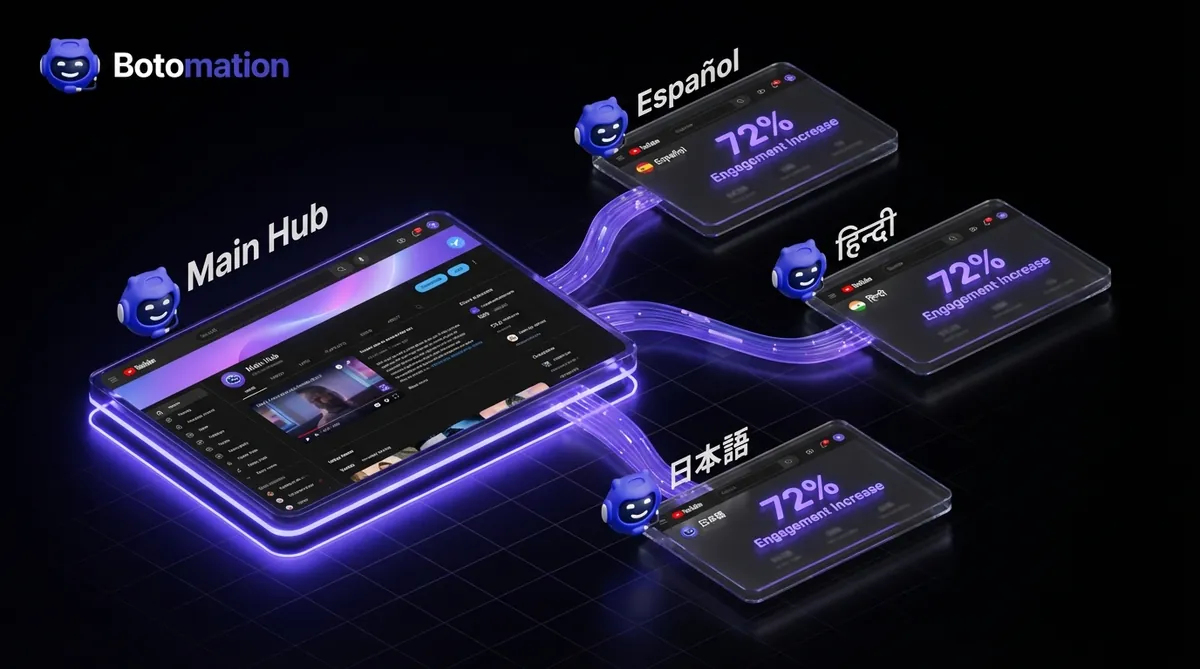
Maintain Voice Personality in Video Localization 2026 Guide
Maintain voice personality in video localization with AI voice cloning. Reach global audiences for YouTubers and brands using Botomation's 2026 tech.
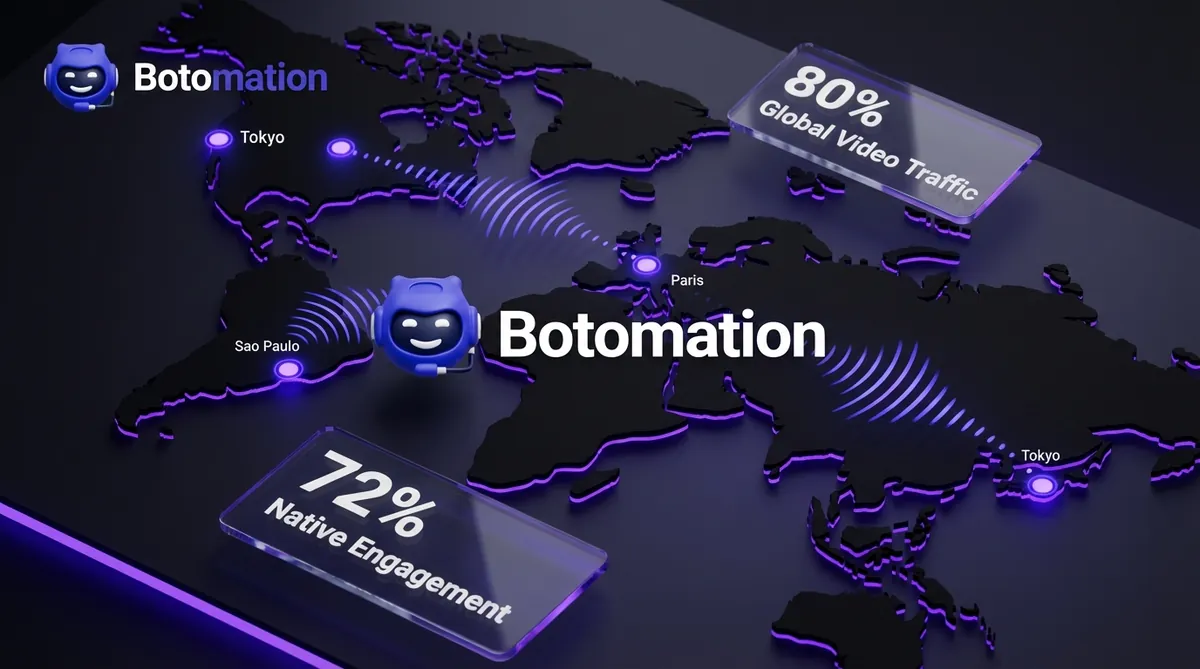
Brand Voice Consistency in Multilingual Video Content 2026
Learn how WhatsApp AI slashes support costs for e-commerce & SaaS. Proven strategies to boost sales, recover carts, and scale 24/7 service.