YouTube Brand Consistency International Channels in 2026
Feb 17, 2026
YouTube
AI Automation
Brand Strategy
YouTube
AI Automation
Brand Strategy
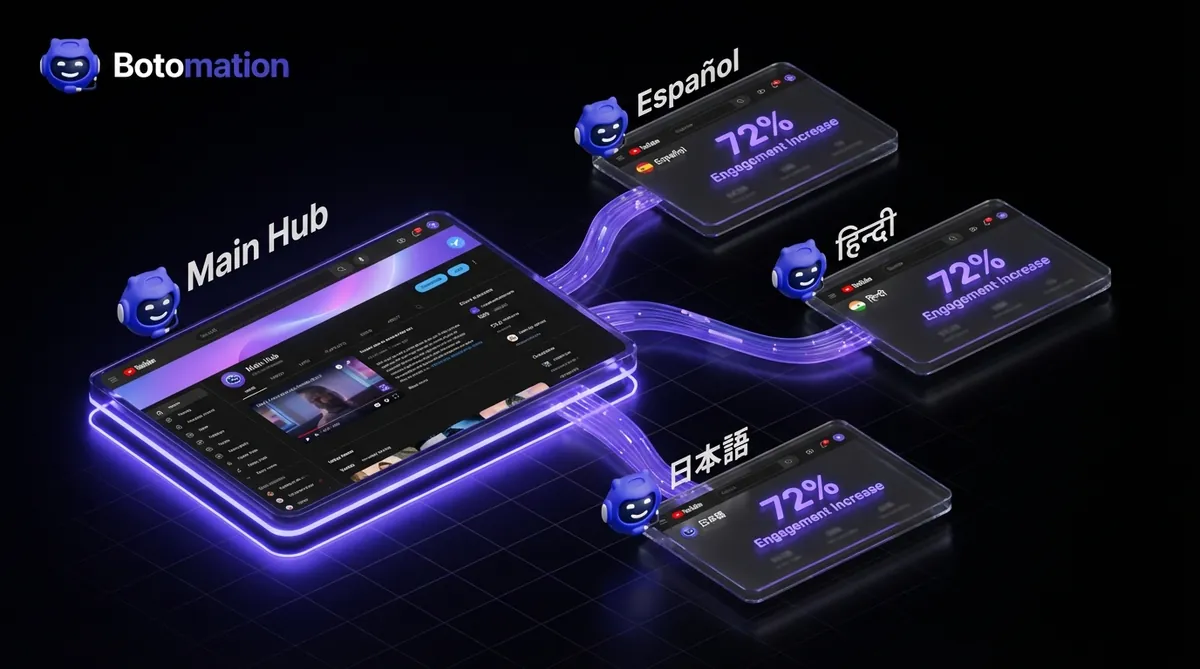
Maintaining YouTube brand consistency international channels is the primary challenge for creators navigating the global landscape of January 2026. Expanding a YouTube presence beyond a single language used to be a luxury reserved for media giants with massive localization budgets, but creators can now reduce video localization costs by 90% with AI voice cloning. In the current environment, that dynamic has shifted entirely. Creators and brands now face a high-stakes environment where global reach is a necessity, yet the risk of diluting a brand’s identity through poor localization is higher than ever. When you decide to launch a Spanish, Hindi, or German version of your channel, you aren't just translating words; you are attempting to transplant the "soul" of your content into a new cultural context.
Studies consistently show that viewers are 72% more likely to engage with content in their native language, but that engagement is contingent on quality. A disconnected voice creates a cognitive dissonance that drives viewers away. Our team at Botomation has observed that the most successful global brands in 2026 are those that treat their international channels as clones of the original experience, rather than secondary translations. Achieving this level of consistency requires a sophisticated blend of strategic channel architecture and advanced technology, as detailed in our complete guide to YouTube voice cloning, which preserves the original creator's unique vocal DNA.
The challenge lies in the nuance of human communication. Every creator has a specific cadence, a way of emphasizing certain syllables, and a unique emotional range that their audience grows to love. When you move into international markets, maintaining this "vocal fingerprint" becomes the primary hurdle. Traditional dubbing often fails because it replaces a familiar personality with a stranger’s voice. This is where modern advancements in AI voice cloning, managed by experts, have changed the game, allowing for a unified brand identity that speaks every language fluently while sounding exactly like the original source.
Understanding YouTube Brand Consistency International Channels Strategy
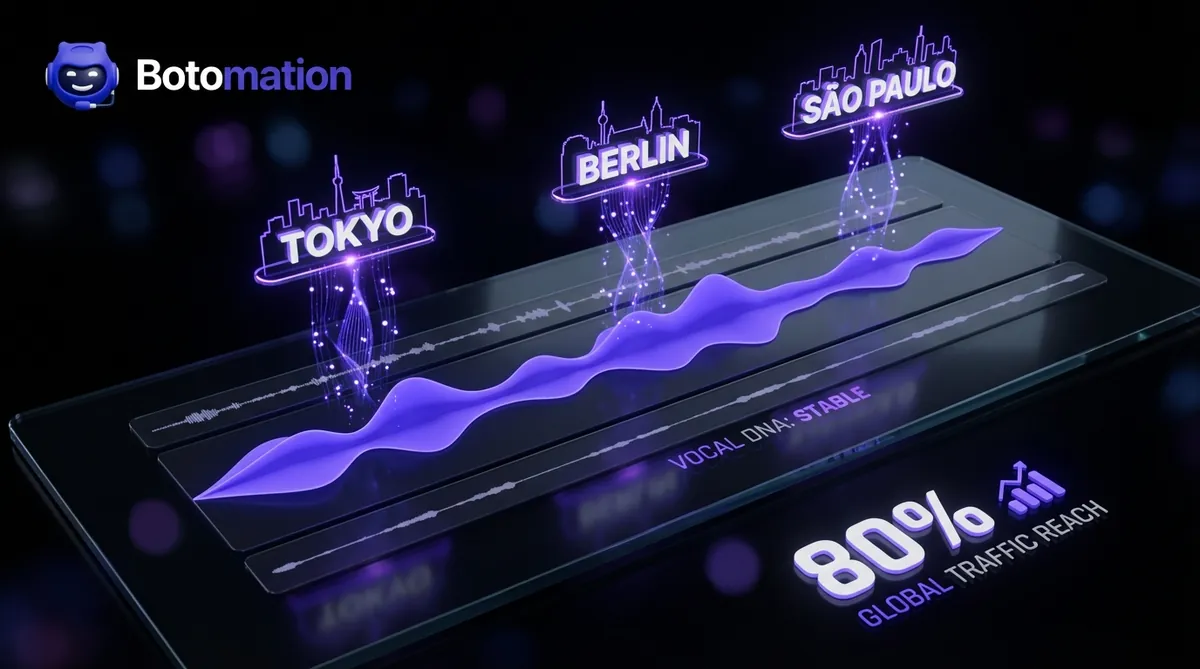
Launching into global markets requires more than just a translation of your script; it requires a comprehensive structural strategy to ensure long-term success. Many creators struggle because they treat international channels as an afterthought, leading to a fragmented brand image. In 2026, the standard for global reach involves a "hub and spoke" model where the primary channel sets the tone, and international channels mirror that tone with precision. This approach ensures that a viewer in Tokyo receives the same brand promise as a viewer in New York, allowing creators to expand YouTube globally with voice cloning while maintaining their unique identity. We see this strategy perfected by major streaming platforms like Netflix and Disney+, which maintain a rigorous standard for their dubbed content to ensure the character's personality remains intact across sixty different languages.
Strategic management of multiple channels also involves understanding the platform's technical evolution. YouTube’s Multi-Language Audio (MLA) feature has become a cornerstone for many, but for those seeking maximum visibility and localized SEO, separate channels often remain the superior choice. This allows for localized titles, descriptions, and community engagement that a single-channel multi-audio setup can't always match. Balancing this consistency with the necessary cultural adaptations is where the real work begins. You must decide which elements of your brand are non-negotiable and which can be tweaked to better resonate with local sensibilities.
Channel Architecture for Global Reach
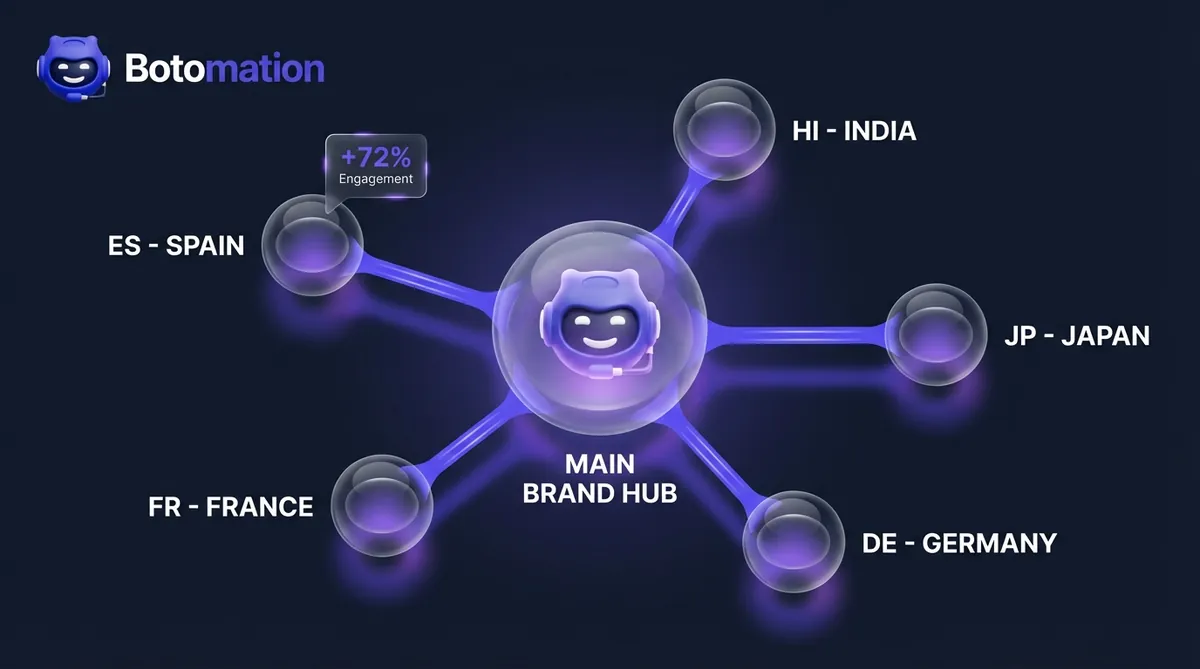
Organizing a network of international channels demands a disciplined approach to branding. Every visual element—from the banner art to the thumbnail style—must be instantly recognizable across all languages. However, the most critical element of this architecture is the auditory experience. When a viewer clicks on a video, the voice they hear must align with the visual branding they’ve seen on the main channel. Our experts at Botomation emphasize that consistency across channels isn't just about using the same logo; it's about the "vibe" that the voice carries.
Technical setup also plays a massive role in how these channels are perceived by YouTube's algorithm. Each international channel should be linked via the "Featured Channels" section of the main hub, creating a clear map for both users and the platform. Furthermore, cross-promotion must be handled delicately. Instead of simply telling your English audience to visit your Spanish channel, use the Spanish channel to capture a completely new demographic that would have never found your English content. This creates a self-sustaining ecosystem where the brand grows globally without cannibalizing its original audience.
Audience Expectations and Cultural Adaptation
Audience expectations vary wildly between regions, and a "one size fits all" approach to voice and tone will inevitably fail. For instance, a high-energy, fast-paced delivery that works in the United States might be perceived as aggressive or exhausting in certain European or Asian markets. Conversely, a technical, dry delivery might be seen as boring in Latin American markets where a more expressive tone is often preferred. The key is to find the "global core" of your brand voice and then allow for subtle shifts in energy and expression that respect local norms.
Measuring engagement across these different contexts requires a nuanced look at metrics. A high click-through rate (CTR) on a German channel might mean something different than the same CTR on a Brazilian channel due to differing viewer behaviors and competition levels. Adaptation strategies must maintain brand integrity while acknowledging these differences. This is why we focus on "localization" rather than just "translation." Localization involves adapting the humor, the cultural references, and the emotional weight of the speech to ensure the message lands exactly as intended, regardless of the language.
Expert Insight: "Global brand consistency is not about making every channel identical; it is about making every channel feel like the same brand. The voice is the bridge that connects different cultures to a single identity." — Senior Consultant at Botomation.
Standards for YouTube Brand Consistency International Channels
To maintain a cohesive identity, you must establish core voice characteristics that are considered "sacred" across all languages. These characteristics might include your level of authority, your sense of humor, or your specific pacing. If your brand is built on being a "trusted friend," that persona must be translated into the French "ami de confiance" or the Spanish "amigo de confianza" with the same warmth and sincerity. Documentation is the only way to automate brand voice consistency across a growing network of channels. Without a written "Voice Bible," you are left at the mercy of individual translators or voice actors who may interpret your brand differently.
Developing these guidelines requires a deep dive into the psychology of your content. Why do people listen to you? Is it because you sound like an expert, or because you sound like a peer? Once you identify these pillars, you can create training materials and quality assurance checklists that help maintain consistency. In late 2024, a major luxury fashion house implemented a rigorous voice consistency protocol across its global YouTube presence. By ensuring that their "sophisticated and understated" tone was replicated perfectly in Mandarin, Japanese, and Arabic, they saw a 40% increase in engagement from those regions. This proves that high-value audiences respond to the effort put into professional voice management.
Creating Comprehensive Voice Guidelines
A truly comprehensive voice guide goes beyond simple adjectives. It should include specific examples of how to handle technical jargon, how to pronounce brand-specific terms, and even the "vocal fry" or "breathiness" levels that are acceptable. We recommend creating a voice sample library that serves as a reference for every new localized project. This library should contain snippets of the original voice in various emotional states—excited, serious, instructional, and casual.
These guidelines also need to define the boundaries of cultural variation. For example, if your brand uses a lot of slang, your guidelines should specify whether that slang should be translated literally (rarely a good idea) or replaced with a local equivalent that carries the same social weight. Quality assurance checklists should then be used to audit every localized video before it goes live. This ensures that the final product doesn't just "sound okay," but actually contributes to the long-term equity of the brand.
Implementation and Training Protocols
The implementation of these standards is where many projects fall apart. When working with various teams across the globe, communication gaps are inevitable. This is why we advocate for centralized quality control. Instead of hiring five different local agencies to handle your dubbing, partnering with a specialized agency like Botomation allows for a single point of oversight. Our experts manage the entire process, ensuring that the voice cloning technology is tuned to the specific nuances defined in your brand guidelines.
Regular review processes are also essential. As a channel evolves, its voice often changes—becoming more confident or perhaps more experimental. Your international channels must evolve in lockstep. The luxury fashion house mentioned earlier didn't just set their guidelines once; they conducted monthly audits to ensure their global voice stayed aligned with their shifting brand identity. This proactive approach prevents "brand drift," where international channels slowly become unrecognizable from the original source over time.
AI Voice Cloning Solutions for YouTube Brand Consistency International Channels
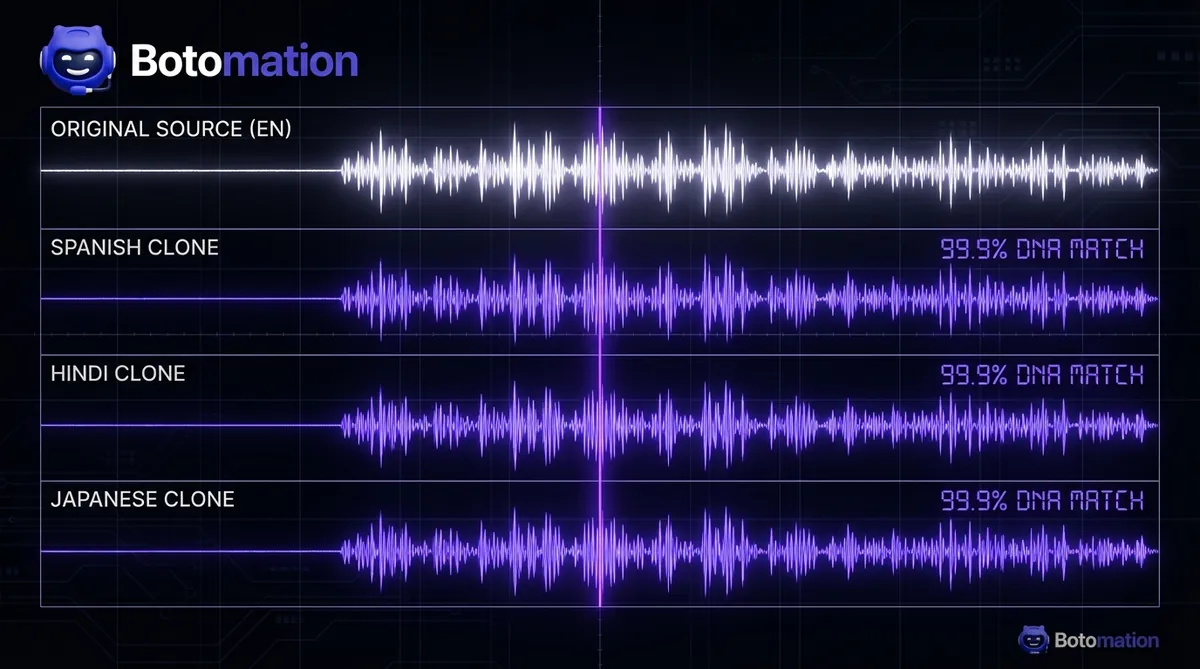
The most significant breakthrough for global YouTube growth in 2026 is the perfection of AI voice cloning. In the "Old Way" of doing things, you had to hire a voice actor for every language, hope they could mimic your energy, and spend weeks in a back-and-forth feedback loop. The "New Way" utilizes advanced cloning technology like ElevenLabs v3 or custom-trained GPT-5 models to take your original voice and make it speak any language. This isn't just a generic text-to-speech; it is a high-fidelity reconstruction of your actual vocal identity that maintains global brand identity and authenticity.
This technology allows for a level of scalability that was previously impossible. You can now take a 20-minute deep-dive video and have it ready for five different international markets in a fraction of the time it would take to record manually. More importantly, it maintains the "authentic you." When your fans in Italy hear your voice, they recognize the same inflections and "soul" that your fans in the UK do. This creates a powerful emotional connection that transcends language barriers.
Technical Features of AI Voice Solutions
Botomation’s voice cloning services focus on three primary technical pillars: identity preservation, emotional nuance, and multi-language fluidity. Identity preservation ensures that the unique frequencies of your voice—the parts that make you sound like you—are carried over into the target language. Emotional nuance is perhaps even more critical. If you are telling a sad story, the AI must understand how to lower the pitch and slow the tempo, just as you did in the original recording.
Modern AI voice generators have moved beyond the "robotic" phase. With the integration of advanced neural networks, we can now control the "expressiveness" of the voice in real-time. This means if a specific sentence needs more "punch" or a more "questioning" tone, our experts can fine-tune the output to match the original video's energy perfectly. This level of technical control is what separates a professional localized production from a cheap, automated translation.
Implementation and Scaling Strategies
Scaling a YouTube network from one channel to ten is a massive undertaking, but AI voice cloning makes the process manageable. The first step is creating a "Base Voice Model" from your best audio samples. This model becomes the foundation for all future international content. Once the model is perfected, the workflow becomes highly efficient. You provide the original video, and our team handles the transcription, translation, cultural adaptation, and voice synthesis.
Testing procedures are a vital part of the scaling process. Before a full channel launch, we recommend testing international market demand with video pilots to ensure the tone and pronunciation are flawless. This feedback loop allows us to calibrate the AI model for specific regional dialects, ensuring that your Spanish channel sounds natural to a viewer in Mexico City as well as one in Madrid.
Content Strategy for Multiple International YouTube Channels
A global YouTube presence requires a synchronized content strategy. You cannot simply upload videos at random and expect to build a loyal following. Coordination is key. If you are launching a major product review or a high-stakes documentary, that content should ideally drop across all international channels simultaneously, or at the peak viewing times for each specific region. This creates a "global moment" for your brand, maximizing the impact of the YouTube algorithm as it sees a surge of engagement across multiple territories.
We often look at video game developers as a prime example of this strategy. When a major studio like Rockstar or Ubisoft releases a trailer, it is localized and released in dozens of regions at once. This ensures that the hype is unified and that spoilers don't ruin the experience for international fans. For a YouTuber, this means having a centralized content calendar that tracks release times in GMT, EST, JST, and beyond.
Content Calendar Coordination
Aligning release schedules across different time zones is a logistical challenge that requires dedicated planning. While your primary audience might be most active at 10:00 AM EST, your Japanese audience is likely asleep at that time. Using scheduling tools and maintaining a consistent publishing frequency for each specific channel is vital. If your Spanish audience expects a video every Tuesday, you must meet that expectation, even if your English channel is on a different schedule.
Adapting topics for cultural relevance is another layer of the strategy. A video about "The Best Tax-Saving Tips" will need completely different content for a UK channel versus a German channel. However, the voice and style of the presentation should remain consistent. You are still the same "helpful expert," even if the specific facts you are sharing have changed to suit the local laws. This is where Botomation’s service excels—we help you maintain that expert persona while you adapt the substance of your message.
Performance Measurement and Optimization
To grow, you must measure. Tracking engagement metrics across different languages allows you to see which markets are responding best to your efforts in maintaining brand voice consistency in multilingual video content. Are your German viewers watching until the end, or are they dropping off after the first minute? If there is a high drop-off rate, it might indicate that the translation is too literal or that the voice tone isn't quite right for that culture.
Comparative analysis tools are essential for this. By looking at your channels side-by-side, you can identify patterns. Perhaps your "storytelling" videos perform better in Brazil, while your "how-to" videos dominate in South Korea. These insights allow you to optimize your content strategy for each region while keeping your brand voice as the unifying thread. Continuous improvement is the name of the game; the data will tell you exactly where your brand consistency is winning and where it needs refinement.
Best Practices for Sustaining International Channel Consistency
Maintaining consistency is not a one-time task; it is a long-term commitment. As your network grows, the complexity of managing it increases exponentially. This is why automated systems for monitoring brand voice are becoming standard in 2026. Large multinational corporations use these systems to ensure that their employee training videos and external marketing materials remain "on-brand" across 50+ countries. For a YouTuber, this means having a reliable partner who can provide consistent quality month after month.
Community management is another often-overlooked aspect of brand consistency. If your video voice is friendly and humorous, but your comment moderators are cold and robotic, the brand experience is fractured. You need to develop response templates and moderation guidelines that reflect your brand’s personality in every language. This reinforces the "authentic" feel of the channel and builds deep loyalty among your international viewers.
Quality Management Systems
The most effective way to manage quality at scale is through a combination of AI and human oversight. At Botomation, we don't just "set and forget" the AI. Our team of experts conducts regular audits of the generated audio to ensure that it meets our high standards for clarity and emotional resonance. We also collect feedback from native speakers to stay ahead of any linguistic shifts or cultural sensitivities.
Documentation remains your best friend. Every time you learn something new about a specific market—like a word that has a double meaning or a tone that was particularly well-received—you should add it to your Voice Bible. This creates a "living document" that grows with your brand, ensuring that as you add more channels, the quality only improves rather than dilutes.
Community Management and Engagement
Building a community across different languages requires a personal touch. When a viewer in Italy leaves a comment, they should receive a reply that sounds like it came from you. While you might use translation tools to help draft these replies, they must be edited to fit your brand voice. Using the same catchphrases or "sign-offs" across all languages helps reinforce your identity.
| Metric | Impact of Localization & Voice Cloning |
|---|---|
| **Engagement Increase** | 72% higher when content is in native language |
| **Retention Growth** | 40% average boost using original-voice cloning |
| **Turnaround Time** | 24 Hours for standard 10-minute localization |
Engagement strategies like "Community Polls" or "Q&A" videos should also be localized. If you do a Q&A on your main channel, consider doing a "Global Q&A" where you answer questions from your Spanish, French, and Japanese audiences using your cloned voice. This makes your international fans feel seen and valued, which is the ultimate key to long-term channel growth.
How to Launch Your First International Channel with Botomation
- Select Your Target Market: Analyze your current YouTube analytics to see where your non-English traffic is coming from. If you have a significant number of viewers from Brazil, a Portuguese channel is a logical first step.
- Provide Your Best Audio: Send us 10-15 minutes of your high-quality original audio. This allows us to create a high-fidelity voice clone that captures your unique personality.
- Translate and Localize: Our team takes your scripts and adapts them for the target culture, ensuring that jokes and technical terms land perfectly.
- Synthesize and Review: We use your custom voice model to generate the dubbed audio. Our experts review the output for emotional accuracy and timing.
- Upload and Engage: We provide the final audio files (or the fully edited video) ready for upload. You can then use our voice-consistent templates to engage with your new global community.
Frequently Asked Questions
Will my voice really sound like me in another language?
Yes. Using advanced voice cloning technology, we capture the unique timbre, pitch, and cadence of your voice. When this is mapped onto a new language, the "identity" of the speaker remains unmistakably yours. It is far more authentic than hiring a separate voice actor who has a completely different vocal profile.
How do you handle cultural nuances and slang?
We don't just translate; we localize. Our team of linguistic experts reviews the scripts to ensure that slang is replaced with appropriate local equivalents and that cultural references are relevant to the target audience. This prevents the "uncanny valley" feeling of a literal translation that doesn't make sense in context.
Is it better to use YouTube's Multi-Language Audio or separate channels?
This depends on your goals. Multi-Language Audio is great for keeping all your views on one video, but separate channels are often better for localized SEO and building a dedicated community in a specific region. Most of our high-growth clients prefer separate channels to maximize their footprint in each market.
How long does the process take?
The "Old Way" of manual dubbing could take weeks. With Botomation's expert-managed AI workflow, we can typically turn around a localized video in 24 to 48 hours, allowing you to stay current with your content schedule.
Successfully managing international YouTube channels in 2026 is no longer about just "getting the words right." It is about a strategic, technology-driven approach to brand consistency. By preserving your authentic voice across every language, you break down the barriers between you and your global audience. This creates a unified brand that is as powerful in Tokyo as it is in London. Long-term success in the global creator economy depends on this systematic approach to quality and identity.
The "Old Way" of hiring expensive, inconsistent voice actors is dead. The "New Way" is here, and it is powered by the expertise of the Botomation team. We provide the bridge that allows you to go global immediately without ever losing the personality that made you successful in the first place. Stop leaving money on the table and start speaking to the world in your own voice.
Ready to automate your growth? Book a call below.
Maintaining YouTube brand consistency international channels is the primary challenge for creators navigating the global landscape of January 2026. Expanding a YouTube presence beyond a single language used to be a luxury reserved for media giants with massive localization budgets, but creators can now reduce video localization costs by 90% with AI voice cloning. In the current environment, that dynamic has shifted entirely. Creators and brands now face a high-stakes environment where global reach is a necessity, yet the risk of diluting a brand’s identity through poor localization is higher than ever. When you decide to launch a Spanish, Hindi, or German version of your channel, you aren't just translating words; you are attempting to transplant the "soul" of your content into a new cultural context.
Studies consistently show that viewers are 72% more likely to engage with content in their native language, but that engagement is contingent on quality. A disconnected voice creates a cognitive dissonance that drives viewers away. Our team at Botomation has observed that the most successful global brands in 2026 are those that treat their international channels as clones of the original experience, rather than secondary translations. Achieving this level of consistency requires a sophisticated blend of strategic channel architecture and advanced technology, as detailed in our complete guide to YouTube voice cloning, which preserves the original creator's unique vocal DNA.
The challenge lies in the nuance of human communication. Every creator has a specific cadence, a way of emphasizing certain syllables, and a unique emotional range that their audience grows to love. When you move into international markets, maintaining this "vocal fingerprint" becomes the primary hurdle. Traditional dubbing often fails because it replaces a familiar personality with a stranger’s voice. This is where modern advancements in AI voice cloning, managed by experts, have changed the game, allowing for a unified brand identity that speaks every language fluently while sounding exactly like the original source.
Understanding YouTube Brand Consistency International Channels Strategy
Launching into global markets requires more than just a translation of your script; it requires a comprehensive structural strategy to ensure long-term success. Many creators struggle because they treat international channels as an afterthought, leading to a fragmented brand image. In 2026, the standard for global reach involves a "hub and spoke" model where the primary channel sets the tone, and international channels mirror that tone with precision. This approach ensures that a viewer in Tokyo receives the same brand promise as a viewer in New York, allowing creators to expand YouTube globally with voice cloning while maintaining their unique identity. We see this strategy perfected by major streaming platforms like Netflix and Disney+, which maintain a rigorous standard for their dubbed content to ensure the character's personality remains intact across sixty different languages.
Strategic management of multiple channels also involves understanding the platform's technical evolution. YouTube’s Multi-Language Audio (MLA) feature has become a cornerstone for many, but for those seeking maximum visibility and localized SEO, separate channels often remain the superior choice. This allows for localized titles, descriptions, and community engagement that a single-channel multi-audio setup can't always match. Balancing this consistency with the necessary cultural adaptations is where the real work begins. You must decide which elements of your brand are non-negotiable and which can be tweaked to better resonate with local sensibilities.
Channel Architecture for Global Reach
Organizing a network of international channels demands a disciplined approach to branding. Every visual element—from the banner art to the thumbnail style—must be instantly recognizable across all languages. However, the most critical element of this architecture is the auditory experience. When a viewer clicks on a video, the voice they hear must align with the visual branding they’ve seen on the main channel. Our experts at Botomation emphasize that consistency across channels isn't just about using the same logo; it's about the "vibe" that the voice carries.
Technical setup also plays a massive role in how these channels are perceived by YouTube's algorithm. Each international channel should be linked via the "Featured Channels" section of the main hub, creating a clear map for both users and the platform. Furthermore, cross-promotion must be handled delicately. Instead of simply telling your English audience to visit your Spanish channel, use the Spanish channel to capture a completely new demographic that would have never found your English content. This creates a self-sustaining ecosystem where the brand grows globally without cannibalizing its original audience.
Audience Expectations and Cultural Adaptation
Audience expectations vary wildly between regions, and a "one size fits all" approach to voice and tone will inevitably fail. For instance, a high-energy, fast-paced delivery that works in the United States might be perceived as aggressive or exhausting in certain European or Asian markets. Conversely, a technical, dry delivery might be seen as boring in Latin American markets where a more expressive tone is often preferred. The key is to find the "global core" of your brand voice and then allow for subtle shifts in energy and expression that respect local norms.
Measuring engagement across these different contexts requires a nuanced look at metrics. A high click-through rate (CTR) on a German channel might mean something different than the same CTR on a Brazilian channel due to differing viewer behaviors and competition levels. Adaptation strategies must maintain brand integrity while acknowledging these differences. This is why we focus on "localization" rather than just "translation." Localization involves adapting the humor, the cultural references, and the emotional weight of the speech to ensure the message lands exactly as intended, regardless of the language.
Expert Insight: "Global brand consistency is not about making every channel identical; it is about making every channel feel like the same brand. The voice is the bridge that connects different cultures to a single identity." — Senior Consultant at Botomation.
Standards for YouTube Brand Consistency International Channels
To maintain a cohesive identity, you must establish core voice characteristics that are considered "sacred" across all languages. These characteristics might include your level of authority, your sense of humor, or your specific pacing. If your brand is built on being a "trusted friend," that persona must be translated into the French "ami de confiance" or the Spanish "amigo de confianza" with the same warmth and sincerity. Documentation is the only way to automate brand voice consistency across a growing network of channels. Without a written "Voice Bible," you are left at the mercy of individual translators or voice actors who may interpret your brand differently.
Developing these guidelines requires a deep dive into the psychology of your content. Why do people listen to you? Is it because you sound like an expert, or because you sound like a peer? Once you identify these pillars, you can create training materials and quality assurance checklists that help maintain consistency. In late 2024, a major luxury fashion house implemented a rigorous voice consistency protocol across its global YouTube presence. By ensuring that their "sophisticated and understated" tone was replicated perfectly in Mandarin, Japanese, and Arabic, they saw a 40% increase in engagement from those regions. This proves that high-value audiences respond to the effort put into professional voice management.
Creating Comprehensive Voice Guidelines
A truly comprehensive voice guide goes beyond simple adjectives. It should include specific examples of how to handle technical jargon, how to pronounce brand-specific terms, and even the "vocal fry" or "breathiness" levels that are acceptable. We recommend creating a voice sample library that serves as a reference for every new localized project. This library should contain snippets of the original voice in various emotional states—excited, serious, instructional, and casual.
These guidelines also need to define the boundaries of cultural variation. For example, if your brand uses a lot of slang, your guidelines should specify whether that slang should be translated literally (rarely a good idea) or replaced with a local equivalent that carries the same social weight. Quality assurance checklists should then be used to audit every localized video before it goes live. This ensures that the final product doesn't just "sound okay," but actually contributes to the long-term equity of the brand.
Implementation and Training Protocols
The implementation of these standards is where many projects fall apart. When working with various teams across the globe, communication gaps are inevitable. This is why we advocate for centralized quality control. Instead of hiring five different local agencies to handle your dubbing, partnering with a specialized agency like Botomation allows for a single point of oversight. Our experts manage the entire process, ensuring that the voice cloning technology is tuned to the specific nuances defined in your brand guidelines.
Regular review processes are also essential. As a channel evolves, its voice often changes—becoming more confident or perhaps more experimental. Your international channels must evolve in lockstep. The luxury fashion house mentioned earlier didn't just set their guidelines once; they conducted monthly audits to ensure their global voice stayed aligned with their shifting brand identity. This proactive approach prevents "brand drift," where international channels slowly become unrecognizable from the original source over time.
AI Voice Cloning Solutions for YouTube Brand Consistency International Channels
The most significant breakthrough for global YouTube growth in 2026 is the perfection of AI voice cloning. In the "Old Way" of doing things, you had to hire a voice actor for every language, hope they could mimic your energy, and spend weeks in a back-and-forth feedback loop. The "New Way" utilizes advanced cloning technology like ElevenLabs v3 or custom-trained GPT-5 models to take your original voice and make it speak any language. This isn't just a generic text-to-speech; it is a high-fidelity reconstruction of your actual vocal identity that maintains global brand identity and authenticity.
This technology allows for a level of scalability that was previously impossible. You can now take a 20-minute deep-dive video and have it ready for five different international markets in a fraction of the time it would take to record manually. More importantly, it maintains the "authentic you." When your fans in Italy hear your voice, they recognize the same inflections and "soul" that your fans in the UK do. This creates a powerful emotional connection that transcends language barriers.
Technical Features of AI Voice Solutions
Botomation’s voice cloning services focus on three primary technical pillars: identity preservation, emotional nuance, and multi-language fluidity. Identity preservation ensures that the unique frequencies of your voice—the parts that make you sound like you—are carried over into the target language. Emotional nuance is perhaps even more critical. If you are telling a sad story, the AI must understand how to lower the pitch and slow the tempo, just as you did in the original recording.
Modern AI voice generators have moved beyond the "robotic" phase. With the integration of advanced neural networks, we can now control the "expressiveness" of the voice in real-time. This means if a specific sentence needs more "punch" or a more "questioning" tone, our experts can fine-tune the output to match the original video's energy perfectly. This level of technical control is what separates a professional localized production from a cheap, automated translation.
Implementation and Scaling Strategies
Scaling a YouTube network from one channel to ten is a massive undertaking, but AI voice cloning makes the process manageable. The first step is creating a "Base Voice Model" from your best audio samples. This model becomes the foundation for all future international content. Once the model is perfected, the workflow becomes highly efficient. You provide the original video, and our team handles the transcription, translation, cultural adaptation, and voice synthesis.
Testing procedures are a vital part of the scaling process. Before a full channel launch, we recommend testing international market demand with video pilots to ensure the tone and pronunciation are flawless. This feedback loop allows us to calibrate the AI model for specific regional dialects, ensuring that your Spanish channel sounds natural to a viewer in Mexico City as well as one in Madrid.
Content Strategy for Multiple International YouTube Channels
A global YouTube presence requires a synchronized content strategy. You cannot simply upload videos at random and expect to build a loyal following. Coordination is key. If you are launching a major product review or a high-stakes documentary, that content should ideally drop across all international channels simultaneously, or at the peak viewing times for each specific region. This creates a "global moment" for your brand, maximizing the impact of the YouTube algorithm as it sees a surge of engagement across multiple territories.
We often look at video game developers as a prime example of this strategy. When a major studio like Rockstar or Ubisoft releases a trailer, it is localized and released in dozens of regions at once. This ensures that the hype is unified and that spoilers don't ruin the experience for international fans. For a YouTuber, this means having a centralized content calendar that tracks release times in GMT, EST, JST, and beyond.
Content Calendar Coordination
Aligning release schedules across different time zones is a logistical challenge that requires dedicated planning. While your primary audience might be most active at 10:00 AM EST, your Japanese audience is likely asleep at that time. Using scheduling tools and maintaining a consistent publishing frequency for each specific channel is vital. If your Spanish audience expects a video every Tuesday, you must meet that expectation, even if your English channel is on a different schedule.
Adapting topics for cultural relevance is another layer of the strategy. A video about "The Best Tax-Saving Tips" will need completely different content for a UK channel versus a German channel. However, the voice and style of the presentation should remain consistent. You are still the same "helpful expert," even if the specific facts you are sharing have changed to suit the local laws. This is where Botomation’s service excels—we help you maintain that expert persona while you adapt the substance of your message.
Performance Measurement and Optimization
To grow, you must measure. Tracking engagement metrics across different languages allows you to see which markets are responding best to your efforts in maintaining brand voice consistency in multilingual video content. Are your German viewers watching until the end, or are they dropping off after the first minute? If there is a high drop-off rate, it might indicate that the translation is too literal or that the voice tone isn't quite right for that culture.
Comparative analysis tools are essential for this. By looking at your channels side-by-side, you can identify patterns. Perhaps your "storytelling" videos perform better in Brazil, while your "how-to" videos dominate in South Korea. These insights allow you to optimize your content strategy for each region while keeping your brand voice as the unifying thread. Continuous improvement is the name of the game; the data will tell you exactly where your brand consistency is winning and where it needs refinement.
Best Practices for Sustaining International Channel Consistency
Maintaining consistency is not a one-time task; it is a long-term commitment. As your network grows, the complexity of managing it increases exponentially. This is why automated systems for monitoring brand voice are becoming standard in 2026. Large multinational corporations use these systems to ensure that their employee training videos and external marketing materials remain "on-brand" across 50+ countries. For a YouTuber, this means having a reliable partner who can provide consistent quality month after month.
Community management is another often-overlooked aspect of brand consistency. If your video voice is friendly and humorous, but your comment moderators are cold and robotic, the brand experience is fractured. You need to develop response templates and moderation guidelines that reflect your brand’s personality in every language. This reinforces the "authentic" feel of the channel and builds deep loyalty among your international viewers.
Quality Management Systems
The most effective way to manage quality at scale is through a combination of AI and human oversight. At Botomation, we don't just "set and forget" the AI. Our team of experts conducts regular audits of the generated audio to ensure that it meets our high standards for clarity and emotional resonance. We also collect feedback from native speakers to stay ahead of any linguistic shifts or cultural sensitivities.
Documentation remains your best friend. Every time you learn something new about a specific market—like a word that has a double meaning or a tone that was particularly well-received—you should add it to your Voice Bible. This creates a "living document" that grows with your brand, ensuring that as you add more channels, the quality only improves rather than dilutes.
Community Management and Engagement
Building a community across different languages requires a personal touch. When a viewer in Italy leaves a comment, they should receive a reply that sounds like it came from you. While you might use translation tools to help draft these replies, they must be edited to fit your brand voice. Using the same catchphrases or "sign-offs" across all languages helps reinforce your identity.
| Metric | Impact of Localization & Voice Cloning |
|---|---|
| **Engagement Increase** | 72% higher when content is in native language |
| **Retention Growth** | 40% average boost using original-voice cloning |
| **Turnaround Time** | 24 Hours for standard 10-minute localization |
Engagement strategies like "Community Polls" or "Q&A" videos should also be localized. If you do a Q&A on your main channel, consider doing a "Global Q&A" where you answer questions from your Spanish, French, and Japanese audiences using your cloned voice. This makes your international fans feel seen and valued, which is the ultimate key to long-term channel growth.
How to Launch Your First International Channel with Botomation
- Select Your Target Market: Analyze your current YouTube analytics to see where your non-English traffic is coming from. If you have a significant number of viewers from Brazil, a Portuguese channel is a logical first step.
- Provide Your Best Audio: Send us 10-15 minutes of your high-quality original audio. This allows us to create a high-fidelity voice clone that captures your unique personality.
- Translate and Localize: Our team takes your scripts and adapts them for the target culture, ensuring that jokes and technical terms land perfectly.
- Synthesize and Review: We use your custom voice model to generate the dubbed audio. Our experts review the output for emotional accuracy and timing.
- Upload and Engage: We provide the final audio files (or the fully edited video) ready for upload. You can then use our voice-consistent templates to engage with your new global community.
Frequently Asked Questions
Will my voice really sound like me in another language?
Yes. Using advanced voice cloning technology, we capture the unique timbre, pitch, and cadence of your voice. When this is mapped onto a new language, the "identity" of the speaker remains unmistakably yours. It is far more authentic than hiring a separate voice actor who has a completely different vocal profile.
How do you handle cultural nuances and slang?
We don't just translate; we localize. Our team of linguistic experts reviews the scripts to ensure that slang is replaced with appropriate local equivalents and that cultural references are relevant to the target audience. This prevents the "uncanny valley" feeling of a literal translation that doesn't make sense in context.
Is it better to use YouTube's Multi-Language Audio or separate channels?
This depends on your goals. Multi-Language Audio is great for keeping all your views on one video, but separate channels are often better for localized SEO and building a dedicated community in a specific region. Most of our high-growth clients prefer separate channels to maximize their footprint in each market.
How long does the process take?
The "Old Way" of manual dubbing could take weeks. With Botomation's expert-managed AI workflow, we can typically turn around a localized video in 24 to 48 hours, allowing you to stay current with your content schedule.
Successfully managing international YouTube channels in 2026 is no longer about just "getting the words right." It is about a strategic, technology-driven approach to brand consistency. By preserving your authentic voice across every language, you break down the barriers between you and your global audience. This creates a unified brand that is as powerful in Tokyo as it is in London. Long-term success in the global creator economy depends on this systematic approach to quality and identity.
The "Old Way" of hiring expensive, inconsistent voice actors is dead. The "New Way" is here, and it is powered by the expertise of the Botomation team. We provide the bridge that allows you to go global immediately without ever losing the personality that made you successful in the first place. Stop leaving money on the table and start speaking to the world in your own voice.
Ready to automate your growth? Book a call below.
Get Started
Book a FREE Consultation Right NOW!
Schedule a Call with Our Team To Make Your Business More Efficient with AI Instantly.
Read More
YouTube Brand Consistency International Channels in 2026
Master YouTube brand consistency international channels using AI voice cloning. Localize content, scale reach, and retain your original voice in 2026.
Maintain Voice Personality in Video Localization 2026 Guide
Learn how WhatsApp AI slashes support costs for e-commerce & SaaS. Proven strategies to boost sales, recover carts, and scale 24/7 service.