Real-Time Data Entry Validation - 2026 Efficiency Guide
Jan 8, 2026
AI Automation
Data Integrity
Retail Tech
AI Automation
Data Integrity
Retail Tech
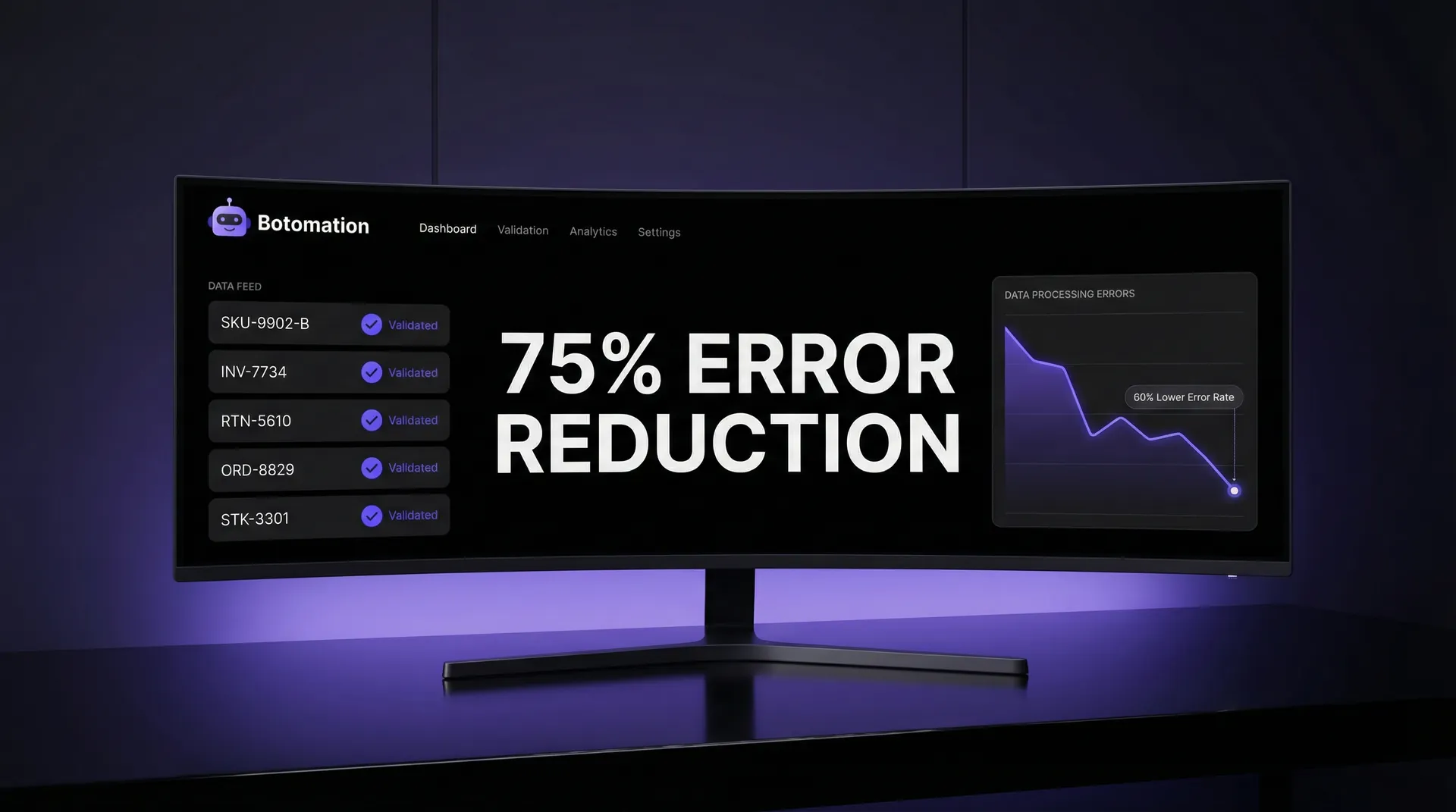
In the competitive retail environment of January 2026, implementing robust real-time data entry validation has moved from a 'nice-to-have' to a survival requirement for modern enterprises. Data entry errors are no longer just a minor nuisance for back-office teams; they have evolved into a multi-million dollar drain on corporate resources. As we navigate through late 2026, the sheer volume of data being processed by retail organizations has reached a tipping point where manual oversight is physically impossible. Gartner recently released a report indicating that data entry errors cost organizations an average of $12.9 million annually. This figure accounts for the immediate labor costs of correcting mistakes and the downstream impact on supply chain logistics, customer trust, and regulatory compliance.
### 2026 Data Integrity Impact
- $12.9M: Average annual cost of data errors (Gartner 2026).
- 75%: Error reduction seen by retail giants using AI-driven validation.
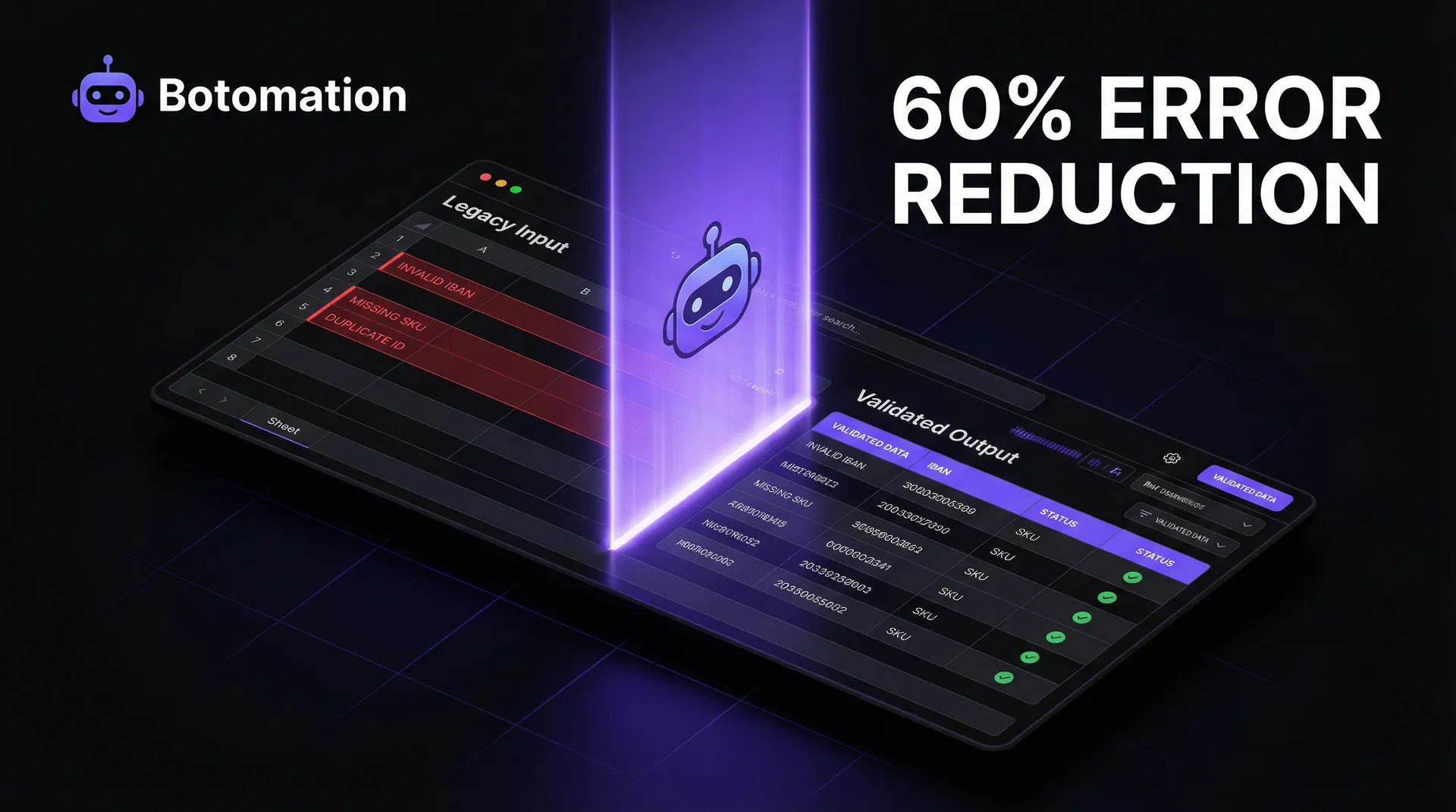
- 60%: Decrease in processing errors via real-time vs. batch methods.
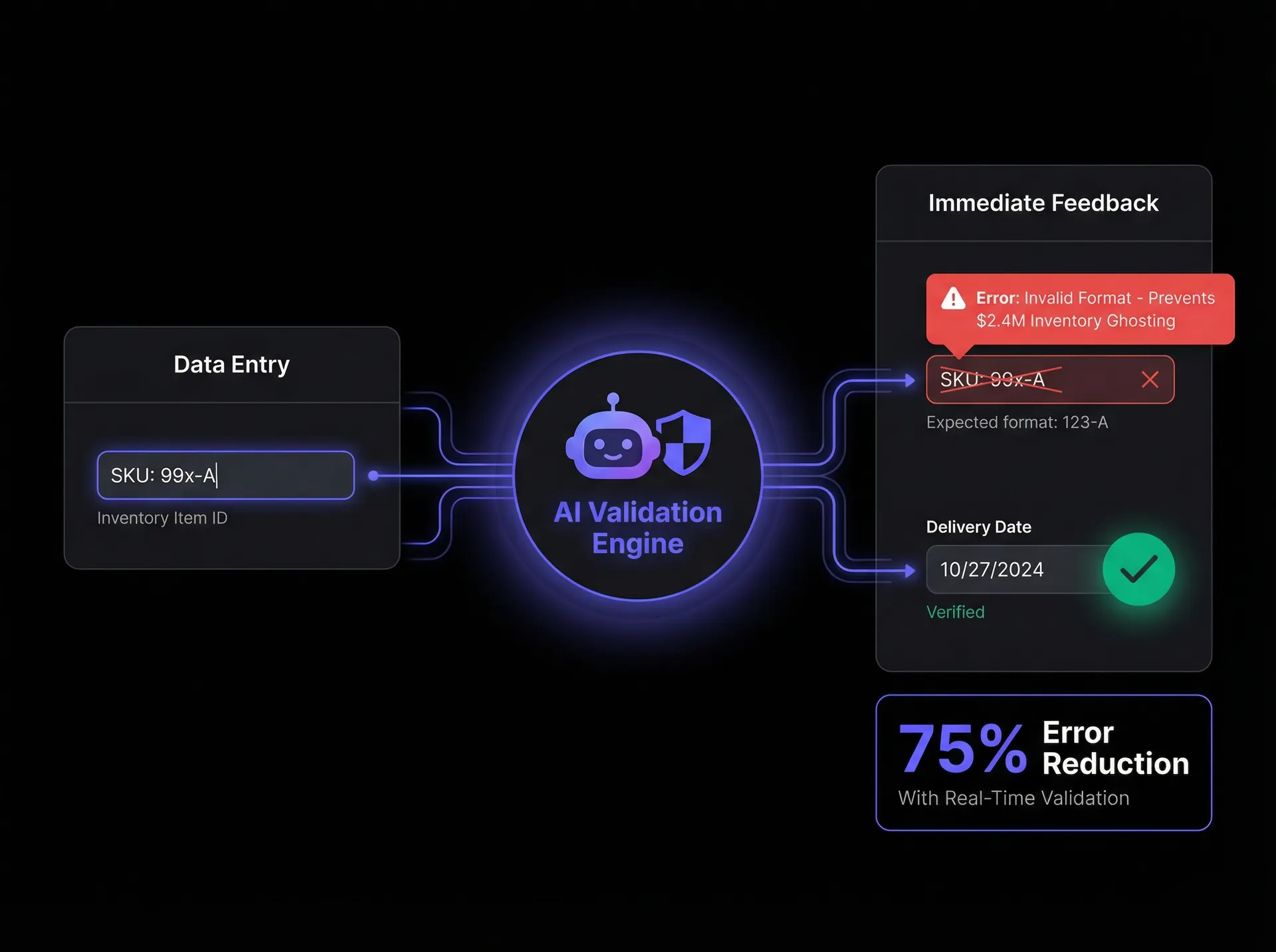
One of the world’s largest retail giants recently faced a crisis where incorrect SKU data led to a $2.4 million inventory ghosting issue. By partnering with our team to deploy an AI-driven data validation system, they managed to reduce their data error rates by over 75% within the first six months. This wasn't just about catching typos; it was about creating a system that understands the context of the data being entered. Statistics from Tech Data 2026 reveals that organizations employing real-time validation reported a 60% reduction in data processing errors compared to those relying on traditional end-of-day batch processing.
The shift toward real-time validation is driven by the need for immediate accuracy in an era of instant gratification. When a customer enters their address or a warehouse manager logs a shipment, the validation must happen at the point of entry. Waiting for a nightly audit means the error has already propagated through your CRM, your shipping software, and your accounting platform, highlighting the need for a complete guide to automated data sync. This guide explores the technical and strategic framework required to implement real-time validation that mirrors the success of industry leaders, incorporating data entry validation best practices.
Understanding Real-Time Data Entry Validation and Its Business Impact
Real-time data validation refers to the automated process of checking data for accuracy, completeness, and logical consistency at the exact moment it is entered into a system. Unlike traditional methods that scan databases periodically, real-time systems act as a filter that prevents "dirty data" from ever reaching your core infrastructure. This transition toward data validation automation is what separates market leaders from laggards. For operations managers, this represents a fundamental shift from being "firefighters" who fix problems to "architects" who ensure the integrity of the entire business ecosystem.
The financial implications of ignoring this shift are staggering. When we look at the $12.9 million average annual cost cited by Gartner, we have to break down where that money actually goes. It isn't just the salary of the person re-typing a form. It is the cost of a lost customer who didn't receive their package because of a zip code error. It is the cost of a compliance fine because a financial record was missing a mandatory field. Real-time validation addresses these pain points by providing an immediate feedback loop, ensuring that every piece of information is verified before it can cause damage.
The True Cost of Data Entry Errors in 2026
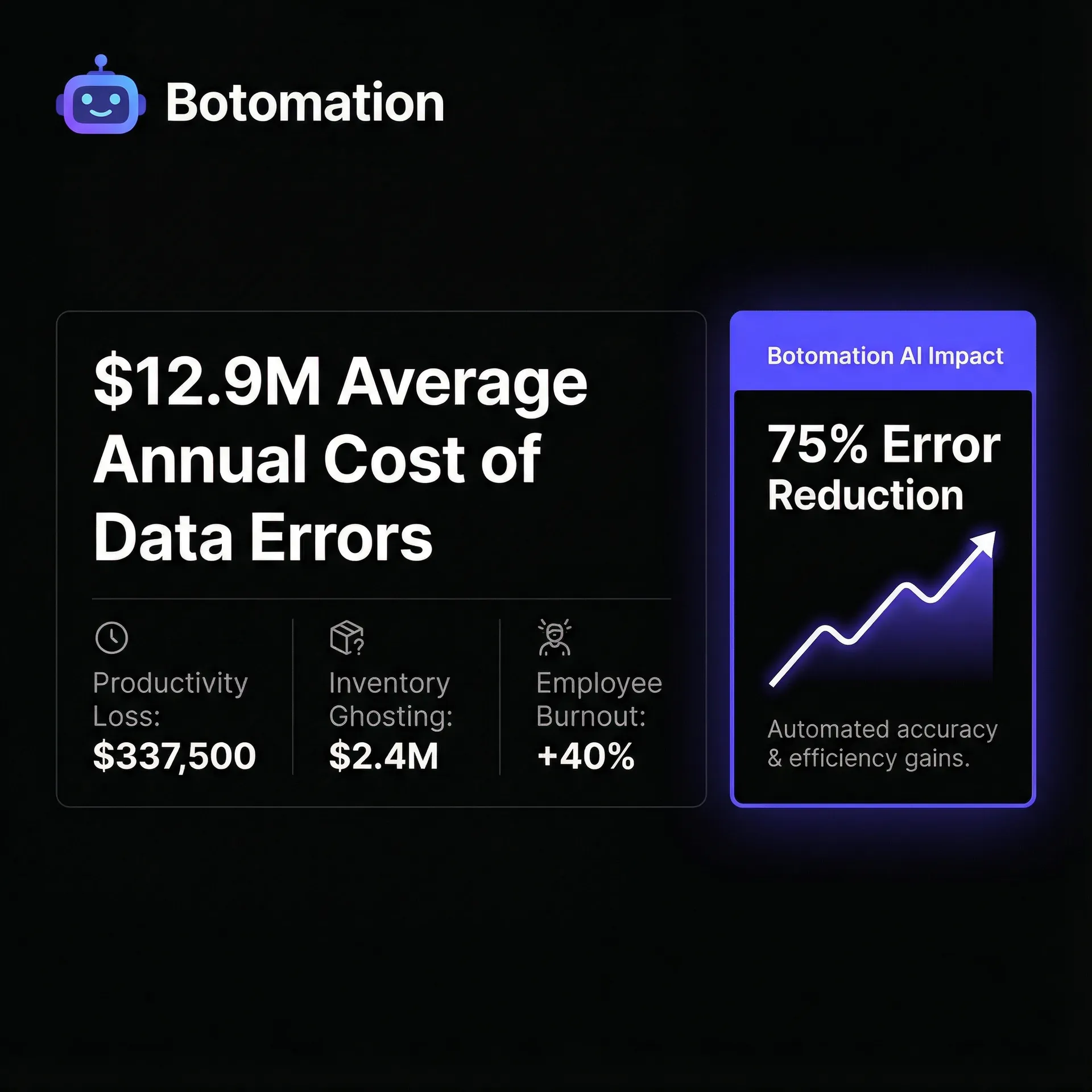
In the current landscape, the cost of poor data quality is often hidden within various operational line items. If we look at a standard back-office operation, a single administrative employee might earn a base salary of $45,000. When you add 25% for benefits and overhead ($11,250), the total cost to the company is $56,250. If that employee spends 30% of their time identifying and fixing data entry errors, the company is effectively throwing away $16,875 per year on one person. By prioritizing error prevention in data entry and learning how to automate data entry and admin tasks with AI, companies can reallocate human capital to high-value strategic work.
Retail operations face even higher stakes. An error in a pricing field can lead to thousands of items being sold at a loss before the mistake is caught. Beyond the direct financial loss, there is the psychological toll on the workforce. Employees who spend their days performing repetitive "rework" tasks report 40% higher burnout rates than those who focus on high-value strategic work. By late 2026, the labor market has become so competitive that retaining talent requires removing these soul-crushing manual tasks from their daily routines by understanding how AI agents replace manual data entry work.
How Real-Time Validation Differs from Traditional Methods
Traditional data validation usually involves a "batch" approach where data is collected throughout the day and run through a validation script overnight. The problem with this "Old Way" is the time lag. If an error is discovered at 2:00 AM, the business has already spent 12 hours acting on false information. Real-time validation, the "New Way" championed by our experts at Botomation, uses an active listening approach. As soon as a user moves their cursor from one field to the next, the system performs a multi-point check for real-time data quality.
The role of AI has fundamentally changed this process. Traditional validation relied on rigid rules, such as "this field must contain 10 digits." Modern AI-driven validation uses predictive logic to understand if the data makes sense in context. For example, if a user enters a delivery date that falls on a national holiday for a region where the carrier doesn't operate, the system can flag it immediately. This immediate feedback mechanism ensures that the person entering the data is the one who corrects it, which is significantly more efficient than having a third-party auditor try to guess the intended meaning hours later.
Real-Time Data Entry Validation Primary Keyword and Core Techniques
To achieve the 75% error reduction seen by industry leaders, organizations must move beyond simple "required field" checks. The foundation of a high-performing real-time data entry validation system rests on three pillars: format validation, consistency checks, and accuracy verification. These techniques must be integrated directly into the user interface so that they feel like a helpful assistant rather than a restrictive barrier.
Our team focuses on building "the glue" that connects your disparate tools, helping to eliminate data silos between business applications. Whether you are using a custom internal portal, a CRM like Salesforce, or a simple Google Sheet, the validation logic must be consistent across all platforms, especially when you connect Excel to CRM systems. This prevents a situation where data is valid in one system but triggers an error when it is synced to another. By standardizing these checks, businesses can ensure that their data remains a reliable asset as it flows through the organization.
Data Format Validation in Real-Time
Format validation is the first line of defense. It ensures that data follows a specific structure, such as an email address containing an "@" symbol or a phone number having the correct number of digits for its country code. In 2026, we use advanced Regular Expression (Regex) patterns that are optimized for speed. These patterns can validate complex strings like international VAT numbers or specialized product codes in milliseconds.
The key to successful format validation is the way feedback is presented. Instead of a generic "Invalid Input" message, our systems provide specific guidance like "Please include the country code (e.g., +1 for USA)." This reduces user frustration and speeds up the entry process. We also implement "masking" techniques where the field automatically formats the data as the user types, such as adding dashes to a social security number or slashes to a date. This proactive approach prevents the error from occurring in the first place.
Data Consistency and Accuracy Verification
Consistency checks look at the relationship between different data points. For instance, if a user selects "United Kingdom" as the country, the system should automatically restrict the "State/Province" field to UK counties. This prevents the logical impossibility of having a customer located in "London, Texas" unless that is specifically intended. Our experts implement these business logic rules to ensure that the data captured is not just formatted correctly but is also internally consistent.
Accuracy verification goes a step further by cross-referencing the input with external authoritative sources. Using APIs, we can verify a physical address against postal service databases in real-time. We can check if a business name matches its registered tax ID. This level of verification is what allowed our retail clients to slash their shipping errors. By confirming the address is deliverable before the order is even placed, they eliminated the costs associated with returned packages and re-shipping fees.
| Feature | Traditional Validation | Real-Time AI Validation |
|---|---|---|
| **Feedback Loop** | Delayed (Hours or Days) | Instant (Milliseconds) |
| **Logic Type** | Static Rules | Predictive & Contextual |
| **Error Handling** | Manual Rework | User-Led Correction |
| **Data Integrity** | Periodic Checks | Constant Protection |
| **Scalability** | Limited by Human Audit | Infinite via Automation |
Advanced AI and Machine Learning Solutions for Automated Validation
The introduction of advanced LLMs and specialized machine learning models has changed the landscape of data validation. We are no longer limited to checking if a field is empty; we can now check if the content of the field is meaningful. AI-driven validation can detect sentiment, categorize unstructured text, and even spot fraudulent entries that would bypass traditional logic. This is particularly useful for admin-heavy service businesses that deal with large volumes of customer-submitted forms.
A recent smart city project we observed utilized these AI techniques to manage municipal data. By implementing predictive validation algorithms, they achieved a 40% improvement in the accuracy of their infrastructure maintenance predictions. The AI was able to identify when a sensor reading was "technically valid" but "statistically improbable" based on historical patterns, flagging potential equipment failures before they occurred. This same logic is applied to business data to identify outliers that suggest entry errors.
AI-Driven Validation Current Capabilities and 2026 Trends
As we move through late 2026, the trend is toward "Self-Healing Data." This refers to systems that don't just flag an error but suggest the most likely correction based on historical data. If a frequent customer’s name is misspelled as "Jhon" instead of "John," the AI can prompt the user: "Did you mean John? This matches our existing records for this email address." This level of intelligence turns the data entry process into a collaborative effort between the human and the machine.
Industry forecasts suggest a 30% increase in organizations adopting automated data validation this year. This is driven by the decreasing cost of compute power and the availability of pre-trained models that can be customized for specific industries. Our team at Botomation specializes in taking these high-level AI capabilities and tailoring them to the specific workflows of our clients, ensuring that the technology serves the business goals rather than becoming a technical burden.
Implementing Machine Learning Models for Validation
The process of implementing an ML validation model starts with data preparation. We analyze your historical "clean" data to teach the model what "correct" looks like. Once the model is trained, it is integrated into your data entry pipeline via an API. Every time a new entry is made, the model assigns a "confidence score" to the data. If the score falls below a certain threshold, the entry is flagged for human review or the user is asked to double-check their input.
Monitoring these systems is vital for long-term success. Machine learning models can suffer from "drift" if the nature of the data changes over time. For example, if your company launches a new product line with a different naming convention, the model needs to be updated to recognize these new patterns. Our experts provide ongoing support to ensure that your validation layers evolve alongside your business, maintaining peak performance year after year.
"The goal of automation isn't just to do things faster; it's to do things so accurately that you never have to do them twice." — Senior Automation Consultant at Botomation.
OCR and Robotic Process Automation Integration for Validation
For many businesses, the challenge isn't just digital data entry; it's converting physical or PDF documents into digital records. This is where Optical Character Recognition (OCR) and Robotic Process Automation (RPA) come into play. In 2026, OCR has reached a level of precision where it can read even messy handwriting with high degrees of accuracy. However, even the best OCR needs a validation layer to ensure that the "read" data is actually correct.
By combining OCR with RPA, we can create a fully automated pipeline for processing invoices, contracts, and applications. The RPA bot picks up the document, the OCR extracts the text, and our validation engine checks the data against your business rules. If everything passes, the data is automatically entered into your CRM or ERP. This "Human-in-the-loop" approach ensures 100% accuracy while automating 95% of the workload, serving as a complete guide to automating administrative tasks.
OCR Technology in Real-Time Validation Workflows
In a typical back-office scenario, an accounts payable clerk might spend hours typing data from paper invoices into an accounting system. With integrated OCR validation, this process happens in seconds. The system doesn't just "see" the numbers; it understands that the "Total" must equal the "Subtotal" plus "Tax." If the math doesn't add up, the system flags the invoice immediately, preventing a potential overpayment.
Quality control measures are essential when dealing with OCR. We implement "confidence thresholds" for every character read. If the system is only 80% sure that a digit is an '8' and not a 'B', it will highlight that specific field for the user. This targeted approach is much faster than having a human read the entire document. It allows your team to focus only on the ambiguous cases, significantly increasing their daily output.
RPA Integration with Validation Systems
RPA acts as the "hands" of the operation, moving data between systems that don't naturally talk to each other. To scale effectively, businesses should follow specific 7 steps to scale business operations with RPA. For example, a bot can take a validated lead from a web form and enter it into both a legacy database and a modern marketing platform. Without integrated validation, the bot would simply copy-paste errors from one system to another, magnifying the problem.
Our team ensures that validation is a core part of the RPA workflow. Before the bot clicks "Submit" on any form, it runs a final validation check. This acts as a "sanity check" to ensure that no data was corrupted during the transfer process. By building these checkpoints, we help businesses create a "zero-error" environment where manual data entry becomes a relic of the past.
Compliance Validation and Data Quality Assurance Techniques
In 2026, data validation is a legal necessity as much as an operational one. Regulations like GDPR, HIPAA, and various industry-specific mandates require organizations to maintain accurate and secure records. A single data entry error that accidentally shares sensitive information with the wrong person can lead to catastrophic fines and reputational damage. Our validation systems are designed with "Compliance-First" logic to mitigate these risks.
Data quality assurance isn't a one-time event; it's a continuous process of monitoring and improvement. We help our clients establish Key Performance Indicators (KPIs) for their data, such as "Error Rate per 1,000 Entries" or "Average Time to Correction." By tracking these metrics, operations managers can see the tangible ROI of their automation investments and identify areas where further optimization is needed.
Regulatory Requirements for Data Validation
Different industries have vastly different requirements. In healthcare, a typo in a patient's medication dosage can be life-threatening. Therefore, validation systems in this sector must be incredibly stringent, often requiring double-verification for critical fields. In the financial sector, SOX compliance requires a clear audit trail of who entered what data and when it was validated.
Our experts design systems that automatically generate these audit trails. Every validation event is logged, providing a transparent record for regulators. This reduces the stress of audits, as the necessary documentation is always at your fingertips. By building compliance into the data entry process, we ensure that your business remains protected without adding extra administrative burden to your staff.
Data Quality Assurance in Validation Systems
To maintain high data quality, we implement a multi-layered approach. The first layer is the real-time validation we’ve discussed. The second layer is a periodic "Data Scrubbing" process that looks for duplicates or outdated information that may have bypassed initial checks. For example, if a customer hasn't updated their address in three years, the system might flag the record for a quick verification email.
We also utilize tools that measure "Data Completeness." It’s not enough for the data to be correct; it also needs to be whole. If your marketing team needs a "Company Size" field to segment their leads, but that field is only filled out 20% of the time, your data quality is poor. Our validation systems can make these fields "conditionally mandatory," ensuring that the data collected is actually useful for the business's strategic goals.
Implementation Strategies and Best Practices for SMBs
While retail giants have massive IT budgets, small-to-medium businesses (SMBs) often feel left behind in the automation race. However, the "Old Way" of manual entry is actually more expensive for SMBs because they have fewer resources to waste. Our agency specializes in bringing enterprise-grade validation to the SMB market through cost-effective, scalable solutions. You don't need a team of developers; you just need the right partner to connect your existing data entry accuracy tools.
The key for SMBs is a gradual implementation. We recommend starting with the "high-pain" areas—the processes that take the most time or cause the most frequent errors. Once the ROI is proven in one department, the system can be expanded to other areas of the business. This "start small, scale fast" approach minimizes disruption while delivering immediate value to the bottom line.
Step-by-Step Implementation for SMBs
Implementing a real-time validation system doesn't have to be a daunting task. We follow 7 steps to automate data entry validation to ensure a smooth transition:
- Audit Your Current Workflow: Identify where data enters your business. Is it via website forms, emails, or manual entry into a spreadsheet?
- Prioritize Pain Points: Which errors are costing you the most money or causing the most customer complaints? Start there.
- Map the Data Flow: Understand how data moves from point A to point B. This is where Botomation identifies the "integration points."
- Select the Validation Rules: Define what "good data" looks like for your specific business.
- Deploy the Validation Layer: Our team sets up the automation that sits between your input source and your destination database.
- Train Your Team: Ensure your staff understands how to use the new system and interpret the feedback it provides.
- Monitor and Refine: Use the data quality metrics to tweak the rules for even better performance over time.
This structured approach ensures that the technology aligns with your business processes, rather than forcing you to change how you work to fit the software.
Integration with Business Process Automation Tools
One of the biggest mistakes SMBs make is trying to build a "siloed" validation tool. True efficiency comes from integration. Your validation system should talk to your email provider, your CRM, and your accounting software simultaneously. This is the core of what we do at Botomation. We act as the "glue" that allows these disparate tools to function as a single, cohesive unit.
For example, when a new lead comes in through a website form, our system can validate the email address, check the CRM for duplicates, and then automatically send a personalized welcome email—all in the time it takes for the user to click "Submit." This level of back-office automation removes the need for copy-pasting and ensures that your data is always up-to-date across all platforms. By removing the human element from these repetitive tasks, you eliminate the possibility of human error.
Frequently Asked Questions
What is the difference between data validation and data verification?
Data validation checks if the data follows the correct format and rules (e.g., is this a valid email structure?). Data verification checks if the data is actually true (e.g., does this email address actually belong to the person who entered it?). A robust system uses both to ensure maximum accuracy.
Will real-time validation slow down my employees' data entry speed?
Quite the opposite. While it may take a fraction of a second longer to process a field, it prevents the hours of rework required to fix errors later. Furthermore, features like auto-formatting and predictive suggestions actually speed up the initial entry process.
Can I implement real-time validation with my existing legacy software?
Yes. Our team at Botomation specializes in connecting modern automation layers to older systems. We can often build a "bridge" that adds validation capabilities to your current software without requiring a complete system overhaul, or assist in replacing legacy systems with custom web development if needed.
Is AI-driven validation expensive for a small business?
The cost of implementing AI-driven validation is significantly lower than the cost of the errors it prevents. With the rise of modular automation tools in 2026, these solutions are now accessible to businesses of all sizes, often paying for themselves within the first few months of operation.
How does real-time validation help with GDPR compliance?
GDPR requires that personal data be accurate and kept up to date. Real-time validation ensures that data is checked for accuracy at the point of collection, which is a key component of "privacy by design" and helps you meet your legal obligations.
The evidence is clear: the manual "Old Way" of handling data is a liability that your business can no longer afford to carry. As we've seen with retail giants, the transition to AI-driven, real-time validation is the most effective way to protect your bottom line, empower your employees, and ensure your operations run on autopilot. By catching errors before they enter your system, you transform your data from a source of stress into a powerful engine for growth.
At Botomation, we don't just provide tools; we provide the expertise to transform your back-office into a high-efficiency machine. Our team of specialists is ready to help you eliminate manual entry, erase human error, and connect your entire business ecosystem. Partnering with us means choosing a future where your data is always accurate, your systems are always synced, and your team is free to focus on what truly matters.
Ready to automate your growth? Book a call below.
In the competitive retail environment of January 2026, implementing robust real-time data entry validation has moved from a 'nice-to-have' to a survival requirement for modern enterprises. Data entry errors are no longer just a minor nuisance for back-office teams; they have evolved into a multi-million dollar drain on corporate resources. As we navigate through late 2026, the sheer volume of data being processed by retail organizations has reached a tipping point where manual oversight is physically impossible. Gartner recently released a report indicating that data entry errors cost organizations an average of $12.9 million annually. This figure accounts for the immediate labor costs of correcting mistakes and the downstream impact on supply chain logistics, customer trust, and regulatory compliance.
### 2026 Data Integrity Impact
- $12.9M: Average annual cost of data errors (Gartner 2026).
- 75%: Error reduction seen by retail giants using AI-driven validation.
- 60%: Decrease in processing errors via real-time vs. batch methods.
One of the world’s largest retail giants recently faced a crisis where incorrect SKU data led to a $2.4 million inventory ghosting issue. By partnering with our team to deploy an AI-driven data validation system, they managed to reduce their data error rates by over 75% within the first six months. This wasn't just about catching typos; it was about creating a system that understands the context of the data being entered. Statistics from Tech Data 2026 reveals that organizations employing real-time validation reported a 60% reduction in data processing errors compared to those relying on traditional end-of-day batch processing.
The shift toward real-time validation is driven by the need for immediate accuracy in an era of instant gratification. When a customer enters their address or a warehouse manager logs a shipment, the validation must happen at the point of entry. Waiting for a nightly audit means the error has already propagated through your CRM, your shipping software, and your accounting platform, highlighting the need for a complete guide to automated data sync. This guide explores the technical and strategic framework required to implement real-time validation that mirrors the success of industry leaders, incorporating data entry validation best practices.
Understanding Real-Time Data Entry Validation and Its Business Impact
Real-time data validation refers to the automated process of checking data for accuracy, completeness, and logical consistency at the exact moment it is entered into a system. Unlike traditional methods that scan databases periodically, real-time systems act as a filter that prevents "dirty data" from ever reaching your core infrastructure. This transition toward data validation automation is what separates market leaders from laggards. For operations managers, this represents a fundamental shift from being "firefighters" who fix problems to "architects" who ensure the integrity of the entire business ecosystem.
The financial implications of ignoring this shift are staggering. When we look at the $12.9 million average annual cost cited by Gartner, we have to break down where that money actually goes. It isn't just the salary of the person re-typing a form. It is the cost of a lost customer who didn't receive their package because of a zip code error. It is the cost of a compliance fine because a financial record was missing a mandatory field. Real-time validation addresses these pain points by providing an immediate feedback loop, ensuring that every piece of information is verified before it can cause damage.
The True Cost of Data Entry Errors in 2026
In the current landscape, the cost of poor data quality is often hidden within various operational line items. If we look at a standard back-office operation, a single administrative employee might earn a base salary of $45,000. When you add 25% for benefits and overhead ($11,250), the total cost to the company is $56,250. If that employee spends 30% of their time identifying and fixing data entry errors, the company is effectively throwing away $16,875 per year on one person. By prioritizing error prevention in data entry and learning how to automate data entry and admin tasks with AI, companies can reallocate human capital to high-value strategic work.
Retail operations face even higher stakes. An error in a pricing field can lead to thousands of items being sold at a loss before the mistake is caught. Beyond the direct financial loss, there is the psychological toll on the workforce. Employees who spend their days performing repetitive "rework" tasks report 40% higher burnout rates than those who focus on high-value strategic work. By late 2026, the labor market has become so competitive that retaining talent requires removing these soul-crushing manual tasks from their daily routines by understanding how AI agents replace manual data entry work.
How Real-Time Validation Differs from Traditional Methods
Traditional data validation usually involves a "batch" approach where data is collected throughout the day and run through a validation script overnight. The problem with this "Old Way" is the time lag. If an error is discovered at 2:00 AM, the business has already spent 12 hours acting on false information. Real-time validation, the "New Way" championed by our experts at Botomation, uses an active listening approach. As soon as a user moves their cursor from one field to the next, the system performs a multi-point check for real-time data quality.
The role of AI has fundamentally changed this process. Traditional validation relied on rigid rules, such as "this field must contain 10 digits." Modern AI-driven validation uses predictive logic to understand if the data makes sense in context. For example, if a user enters a delivery date that falls on a national holiday for a region where the carrier doesn't operate, the system can flag it immediately. This immediate feedback mechanism ensures that the person entering the data is the one who corrects it, which is significantly more efficient than having a third-party auditor try to guess the intended meaning hours later.
Real-Time Data Entry Validation Primary Keyword and Core Techniques
To achieve the 75% error reduction seen by industry leaders, organizations must move beyond simple "required field" checks. The foundation of a high-performing real-time data entry validation system rests on three pillars: format validation, consistency checks, and accuracy verification. These techniques must be integrated directly into the user interface so that they feel like a helpful assistant rather than a restrictive barrier.
Our team focuses on building "the glue" that connects your disparate tools, helping to eliminate data silos between business applications. Whether you are using a custom internal portal, a CRM like Salesforce, or a simple Google Sheet, the validation logic must be consistent across all platforms, especially when you connect Excel to CRM systems. This prevents a situation where data is valid in one system but triggers an error when it is synced to another. By standardizing these checks, businesses can ensure that their data remains a reliable asset as it flows through the organization.
Data Format Validation in Real-Time
Format validation is the first line of defense. It ensures that data follows a specific structure, such as an email address containing an "@" symbol or a phone number having the correct number of digits for its country code. In 2026, we use advanced Regular Expression (Regex) patterns that are optimized for speed. These patterns can validate complex strings like international VAT numbers or specialized product codes in milliseconds.
The key to successful format validation is the way feedback is presented. Instead of a generic "Invalid Input" message, our systems provide specific guidance like "Please include the country code (e.g., +1 for USA)." This reduces user frustration and speeds up the entry process. We also implement "masking" techniques where the field automatically formats the data as the user types, such as adding dashes to a social security number or slashes to a date. This proactive approach prevents the error from occurring in the first place.
Data Consistency and Accuracy Verification
Consistency checks look at the relationship between different data points. For instance, if a user selects "United Kingdom" as the country, the system should automatically restrict the "State/Province" field to UK counties. This prevents the logical impossibility of having a customer located in "London, Texas" unless that is specifically intended. Our experts implement these business logic rules to ensure that the data captured is not just formatted correctly but is also internally consistent.
Accuracy verification goes a step further by cross-referencing the input with external authoritative sources. Using APIs, we can verify a physical address against postal service databases in real-time. We can check if a business name matches its registered tax ID. This level of verification is what allowed our retail clients to slash their shipping errors. By confirming the address is deliverable before the order is even placed, they eliminated the costs associated with returned packages and re-shipping fees.
| Feature | Traditional Validation | Real-Time AI Validation |
|---|---|---|
| **Feedback Loop** | Delayed (Hours or Days) | Instant (Milliseconds) |
| **Logic Type** | Static Rules | Predictive & Contextual |
| **Error Handling** | Manual Rework | User-Led Correction |
| **Data Integrity** | Periodic Checks | Constant Protection |
| **Scalability** | Limited by Human Audit | Infinite via Automation |
Advanced AI and Machine Learning Solutions for Automated Validation
The introduction of advanced LLMs and specialized machine learning models has changed the landscape of data validation. We are no longer limited to checking if a field is empty; we can now check if the content of the field is meaningful. AI-driven validation can detect sentiment, categorize unstructured text, and even spot fraudulent entries that would bypass traditional logic. This is particularly useful for admin-heavy service businesses that deal with large volumes of customer-submitted forms.
A recent smart city project we observed utilized these AI techniques to manage municipal data. By implementing predictive validation algorithms, they achieved a 40% improvement in the accuracy of their infrastructure maintenance predictions. The AI was able to identify when a sensor reading was "technically valid" but "statistically improbable" based on historical patterns, flagging potential equipment failures before they occurred. This same logic is applied to business data to identify outliers that suggest entry errors.
AI-Driven Validation Current Capabilities and 2026 Trends
As we move through late 2026, the trend is toward "Self-Healing Data." This refers to systems that don't just flag an error but suggest the most likely correction based on historical data. If a frequent customer’s name is misspelled as "Jhon" instead of "John," the AI can prompt the user: "Did you mean John? This matches our existing records for this email address." This level of intelligence turns the data entry process into a collaborative effort between the human and the machine.
Industry forecasts suggest a 30% increase in organizations adopting automated data validation this year. This is driven by the decreasing cost of compute power and the availability of pre-trained models that can be customized for specific industries. Our team at Botomation specializes in taking these high-level AI capabilities and tailoring them to the specific workflows of our clients, ensuring that the technology serves the business goals rather than becoming a technical burden.
Implementing Machine Learning Models for Validation
The process of implementing an ML validation model starts with data preparation. We analyze your historical "clean" data to teach the model what "correct" looks like. Once the model is trained, it is integrated into your data entry pipeline via an API. Every time a new entry is made, the model assigns a "confidence score" to the data. If the score falls below a certain threshold, the entry is flagged for human review or the user is asked to double-check their input.
Monitoring these systems is vital for long-term success. Machine learning models can suffer from "drift" if the nature of the data changes over time. For example, if your company launches a new product line with a different naming convention, the model needs to be updated to recognize these new patterns. Our experts provide ongoing support to ensure that your validation layers evolve alongside your business, maintaining peak performance year after year.
"The goal of automation isn't just to do things faster; it's to do things so accurately that you never have to do them twice." — Senior Automation Consultant at Botomation.
OCR and Robotic Process Automation Integration for Validation
For many businesses, the challenge isn't just digital data entry; it's converting physical or PDF documents into digital records. This is where Optical Character Recognition (OCR) and Robotic Process Automation (RPA) come into play. In 2026, OCR has reached a level of precision where it can read even messy handwriting with high degrees of accuracy. However, even the best OCR needs a validation layer to ensure that the "read" data is actually correct.
By combining OCR with RPA, we can create a fully automated pipeline for processing invoices, contracts, and applications. The RPA bot picks up the document, the OCR extracts the text, and our validation engine checks the data against your business rules. If everything passes, the data is automatically entered into your CRM or ERP. This "Human-in-the-loop" approach ensures 100% accuracy while automating 95% of the workload, serving as a complete guide to automating administrative tasks.
OCR Technology in Real-Time Validation Workflows
In a typical back-office scenario, an accounts payable clerk might spend hours typing data from paper invoices into an accounting system. With integrated OCR validation, this process happens in seconds. The system doesn't just "see" the numbers; it understands that the "Total" must equal the "Subtotal" plus "Tax." If the math doesn't add up, the system flags the invoice immediately, preventing a potential overpayment.
Quality control measures are essential when dealing with OCR. We implement "confidence thresholds" for every character read. If the system is only 80% sure that a digit is an '8' and not a 'B', it will highlight that specific field for the user. This targeted approach is much faster than having a human read the entire document. It allows your team to focus only on the ambiguous cases, significantly increasing their daily output.
RPA Integration with Validation Systems
RPA acts as the "hands" of the operation, moving data between systems that don't naturally talk to each other. To scale effectively, businesses should follow specific 7 steps to scale business operations with RPA. For example, a bot can take a validated lead from a web form and enter it into both a legacy database and a modern marketing platform. Without integrated validation, the bot would simply copy-paste errors from one system to another, magnifying the problem.
Our team ensures that validation is a core part of the RPA workflow. Before the bot clicks "Submit" on any form, it runs a final validation check. This acts as a "sanity check" to ensure that no data was corrupted during the transfer process. By building these checkpoints, we help businesses create a "zero-error" environment where manual data entry becomes a relic of the past.
Compliance Validation and Data Quality Assurance Techniques
In 2026, data validation is a legal necessity as much as an operational one. Regulations like GDPR, HIPAA, and various industry-specific mandates require organizations to maintain accurate and secure records. A single data entry error that accidentally shares sensitive information with the wrong person can lead to catastrophic fines and reputational damage. Our validation systems are designed with "Compliance-First" logic to mitigate these risks.
Data quality assurance isn't a one-time event; it's a continuous process of monitoring and improvement. We help our clients establish Key Performance Indicators (KPIs) for their data, such as "Error Rate per 1,000 Entries" or "Average Time to Correction." By tracking these metrics, operations managers can see the tangible ROI of their automation investments and identify areas where further optimization is needed.
Regulatory Requirements for Data Validation
Different industries have vastly different requirements. In healthcare, a typo in a patient's medication dosage can be life-threatening. Therefore, validation systems in this sector must be incredibly stringent, often requiring double-verification for critical fields. In the financial sector, SOX compliance requires a clear audit trail of who entered what data and when it was validated.
Our experts design systems that automatically generate these audit trails. Every validation event is logged, providing a transparent record for regulators. This reduces the stress of audits, as the necessary documentation is always at your fingertips. By building compliance into the data entry process, we ensure that your business remains protected without adding extra administrative burden to your staff.
Data Quality Assurance in Validation Systems
To maintain high data quality, we implement a multi-layered approach. The first layer is the real-time validation we’ve discussed. The second layer is a periodic "Data Scrubbing" process that looks for duplicates or outdated information that may have bypassed initial checks. For example, if a customer hasn't updated their address in three years, the system might flag the record for a quick verification email.
We also utilize tools that measure "Data Completeness." It’s not enough for the data to be correct; it also needs to be whole. If your marketing team needs a "Company Size" field to segment their leads, but that field is only filled out 20% of the time, your data quality is poor. Our validation systems can make these fields "conditionally mandatory," ensuring that the data collected is actually useful for the business's strategic goals.
Implementation Strategies and Best Practices for SMBs
While retail giants have massive IT budgets, small-to-medium businesses (SMBs) often feel left behind in the automation race. However, the "Old Way" of manual entry is actually more expensive for SMBs because they have fewer resources to waste. Our agency specializes in bringing enterprise-grade validation to the SMB market through cost-effective, scalable solutions. You don't need a team of developers; you just need the right partner to connect your existing data entry accuracy tools.
The key for SMBs is a gradual implementation. We recommend starting with the "high-pain" areas—the processes that take the most time or cause the most frequent errors. Once the ROI is proven in one department, the system can be expanded to other areas of the business. This "start small, scale fast" approach minimizes disruption while delivering immediate value to the bottom line.
Step-by-Step Implementation for SMBs
Implementing a real-time validation system doesn't have to be a daunting task. We follow 7 steps to automate data entry validation to ensure a smooth transition:
- Audit Your Current Workflow: Identify where data enters your business. Is it via website forms, emails, or manual entry into a spreadsheet?
- Prioritize Pain Points: Which errors are costing you the most money or causing the most customer complaints? Start there.
- Map the Data Flow: Understand how data moves from point A to point B. This is where Botomation identifies the "integration points."
- Select the Validation Rules: Define what "good data" looks like for your specific business.
- Deploy the Validation Layer: Our team sets up the automation that sits between your input source and your destination database.
- Train Your Team: Ensure your staff understands how to use the new system and interpret the feedback it provides.
- Monitor and Refine: Use the data quality metrics to tweak the rules for even better performance over time.
This structured approach ensures that the technology aligns with your business processes, rather than forcing you to change how you work to fit the software.
Integration with Business Process Automation Tools
One of the biggest mistakes SMBs make is trying to build a "siloed" validation tool. True efficiency comes from integration. Your validation system should talk to your email provider, your CRM, and your accounting software simultaneously. This is the core of what we do at Botomation. We act as the "glue" that allows these disparate tools to function as a single, cohesive unit.
For example, when a new lead comes in through a website form, our system can validate the email address, check the CRM for duplicates, and then automatically send a personalized welcome email—all in the time it takes for the user to click "Submit." This level of back-office automation removes the need for copy-pasting and ensures that your data is always up-to-date across all platforms. By removing the human element from these repetitive tasks, you eliminate the possibility of human error.
Frequently Asked Questions
What is the difference between data validation and data verification?
Data validation checks if the data follows the correct format and rules (e.g., is this a valid email structure?). Data verification checks if the data is actually true (e.g., does this email address actually belong to the person who entered it?). A robust system uses both to ensure maximum accuracy.
Will real-time validation slow down my employees' data entry speed?
Quite the opposite. While it may take a fraction of a second longer to process a field, it prevents the hours of rework required to fix errors later. Furthermore, features like auto-formatting and predictive suggestions actually speed up the initial entry process.
Can I implement real-time validation with my existing legacy software?
Yes. Our team at Botomation specializes in connecting modern automation layers to older systems. We can often build a "bridge" that adds validation capabilities to your current software without requiring a complete system overhaul, or assist in replacing legacy systems with custom web development if needed.
Is AI-driven validation expensive for a small business?
The cost of implementing AI-driven validation is significantly lower than the cost of the errors it prevents. With the rise of modular automation tools in 2026, these solutions are now accessible to businesses of all sizes, often paying for themselves within the first few months of operation.
How does real-time validation help with GDPR compliance?
GDPR requires that personal data be accurate and kept up to date. Real-time validation ensures that data is checked for accuracy at the point of collection, which is a key component of "privacy by design" and helps you meet your legal obligations.
The evidence is clear: the manual "Old Way" of handling data is a liability that your business can no longer afford to carry. As we've seen with retail giants, the transition to AI-driven, real-time validation is the most effective way to protect your bottom line, empower your employees, and ensure your operations run on autopilot. By catching errors before they enter your system, you transform your data from a source of stress into a powerful engine for growth.
At Botomation, we don't just provide tools; we provide the expertise to transform your back-office into a high-efficiency machine. Our team of specialists is ready to help you eliminate manual entry, erase human error, and connect your entire business ecosystem. Partnering with us means choosing a future where your data is always accurate, your systems are always synced, and your team is free to focus on what truly matters.
Ready to automate your growth? Book a call below.
Get Started
Book a FREE Consultation Right NOW!
Schedule a Call with Our Team To Make Your Business More Efficient with AI Instantly.
Read More
Real-Time Data Entry Validation - 2026 Efficiency Guide
Boost accuracy with real-time data entry validation. Our 2026 guide shows how AI-driven automation reduces errors by 75% for retail giants and SMBs.
Reduce Admin Tasks in Service Business Operations in 2026
Learn how WhatsApp AI slashes support costs for e-commerce & SaaS. Proven strategies to boost sales, recover carts, and scale 24/7 service.