7 Steps to Automate Lead Verification and Updating Tools
Feb 17, 2026
Lead Generation
AI Automation
Sales Operations
Lead Generation
AI Automation
Sales Operations
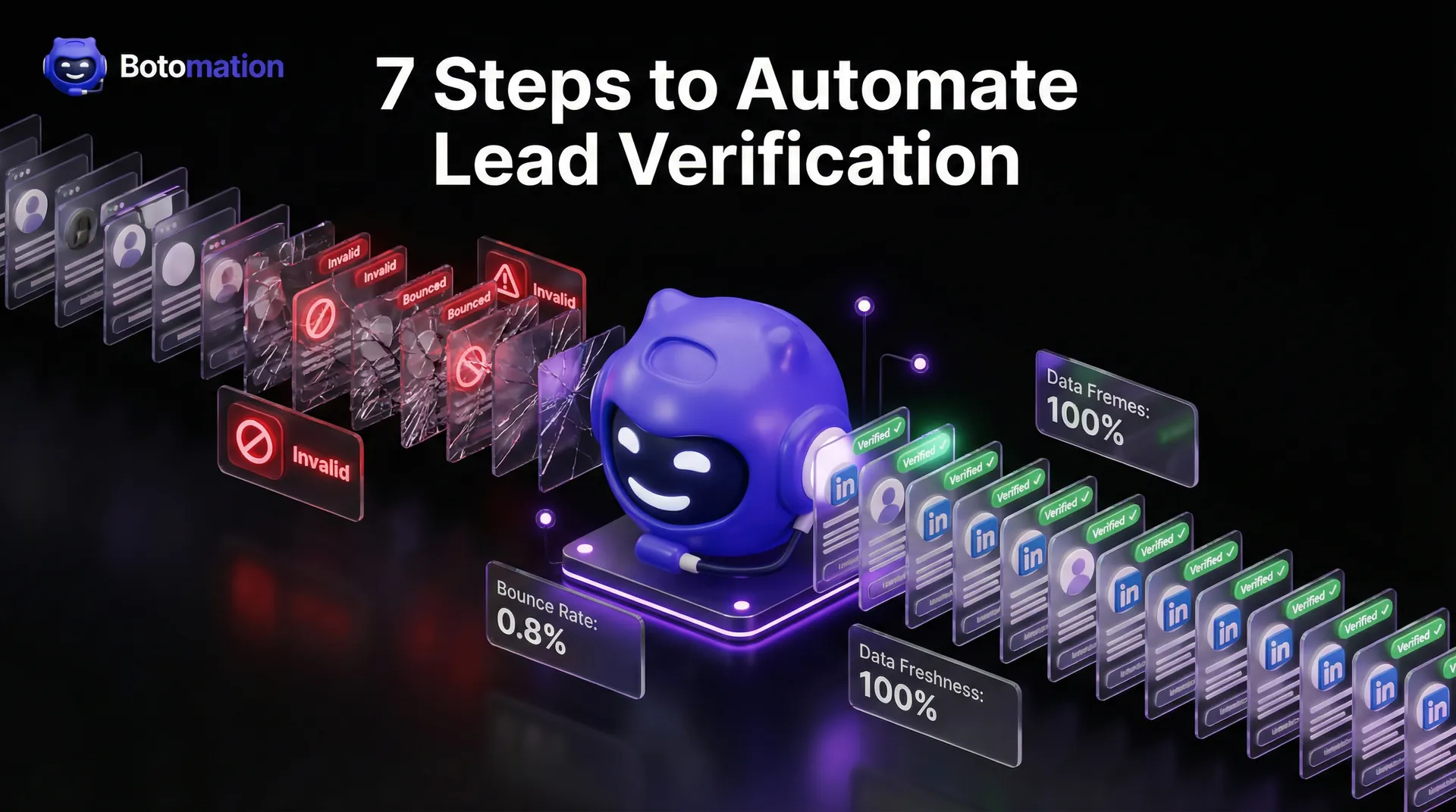
Imagine your top-performing sales representative spending four hours every Monday morning reaching out to a "fresh" list of prospects, only to realize by noon that half the emails bounced and three of the key decision-makers left their companies six months ago. This isn't just a minor annoyance; it is a systemic drain on your company's resources. When marketing teams rely on manual lead verification, they aren't just wasting time—they are actively damaging their sender reputation and demoralizing their sales force. The traditional approach to marketing lead management often involves fragmented spreadsheets, manual LinkedIn searches, and the constant fear of hitting a "no longer at company" auto-responder.
As of January 2026, the sheer volume of data moving through the B2B ecosystem makes manual upkeep impossible. Forward-thinking agencies are moving away from static lists and toward dynamic, self-healing databases. Utilizing automated lead verification and updating tools is no longer a luxury for enterprise firms; it is a foundational requirement for any growth-oriented marketing team. This transition allows your staff to stop acting as data janitors and start acting as strategists.
In this guide, Botomation presents a comprehensive seven-step framework to transition your lead management from a manual burden to an automated engine. We will cover everything from initial health audits to the implementation of automated lead scoring systems that ensure your sales team receives fresh, qualified leads every single morning.
Assessing Your Current Lead Database Health
Before you can build a high-speed automation engine, you must understand the quality of the fuel you are currently using. Most organizations are surprised to find that their internal data is far more decayed than they realized. Industry benchmarks consistently demonstrate that B2B data decays at an alarming rate. Professionals are promoted, companies merge, and email structures change without warning. If you haven't conducted a database health check in the last ninety days, you are likely working with a significant percentage of "ghost" leads.
Data Decay Reality Check
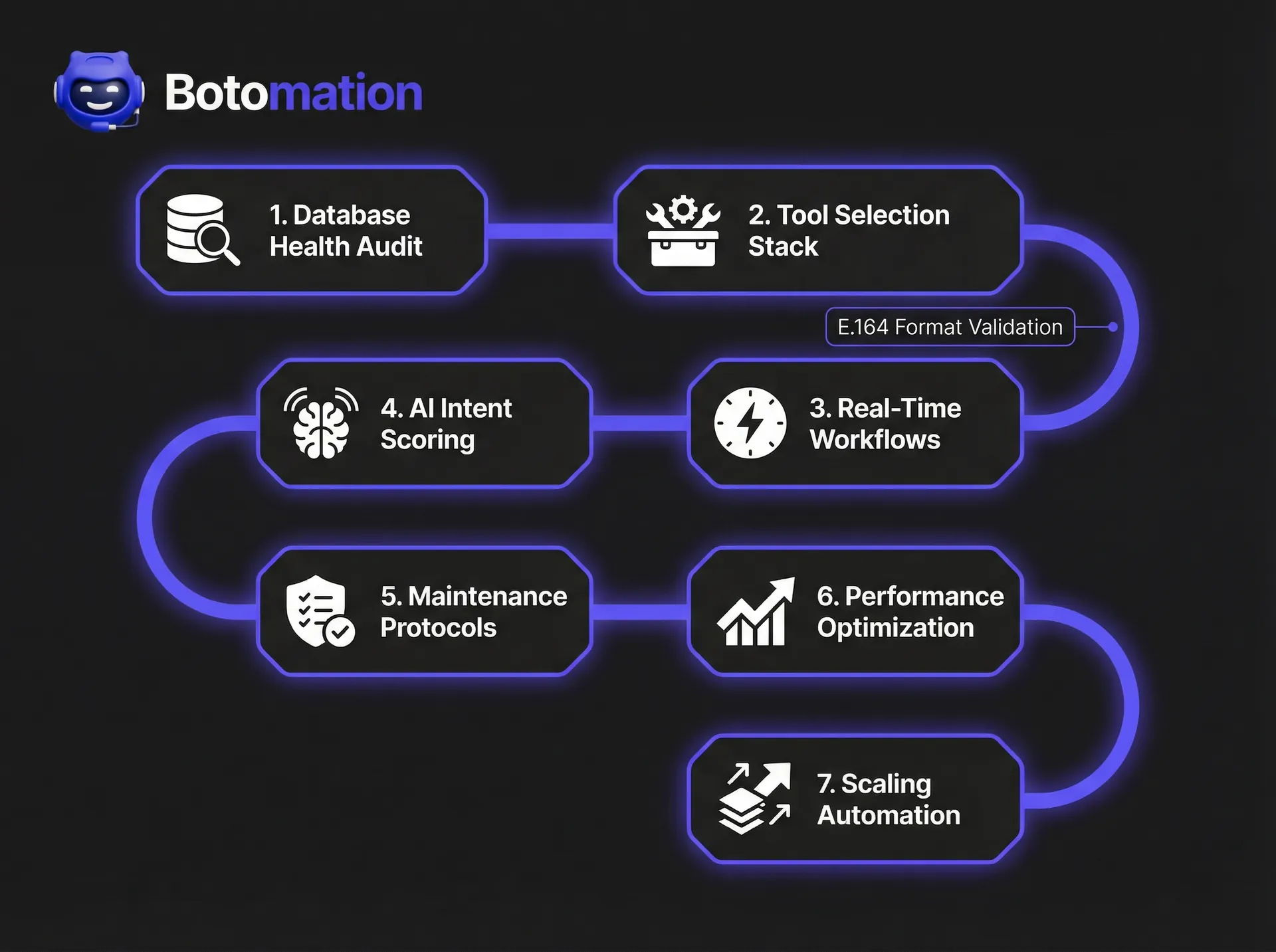
Recent industry analysis indicates that approximately 75% of B2B leads go stale within 90 days. This means that without a proactive update strategy, three-quarters of your outbound efforts could be targeting non-existent or irrelevant contacts.
The first step in our process involves a rigorous evaluation of your existing records. We look for patterns of failure. Are certain industries seeing higher bounce rates? Is there a specific lead source that consistently provides outdated phone numbers? By establishing these baseline metrics, you create a "before" snapshot that allows you to calculate the exact ROI of your lead database automation efforts later. Our experts often find that marketing teams are sitting on thousands of leads that are technically "valid" but practically useless because the job titles no longer match the current buying committee's needs.
The Database Audit Process
A thorough audit starts with a deep dive into email validity. We don't just look for "hard bounces"; we identify "catch-all" domains and "disposable" email addresses that skew your engagement metrics. Beyond the email address, we must analyze the accuracy of phone numbers. In late 2026, direct-dial accuracy is the primary difference between a booked meeting and a wasted afternoon navigating switchboards.
We also review the job titles and company information currently in your CRM. If your "VP of Marketing" lead is now a "Chief Revenue Officer" at a different firm, your automated sequence will sound tone-deaf and unprofessional. The audit identifies these gaps so we can program the automation to fill them specifically.
Performance Baseline Metrics
To measure success, you need to document your current conversion rates and email bounce rates accurately. If your current bounce rate is 8%, that is a red flag requiring immediate intervention. We also look at lead response rates. A slow response to a lead is often a symptom of a sales rep having to manually "check" if the lead is real; however, you can significantly reduce lead response time by automating the verification and outreach process.
Once we have these numbers, we can calculate the "Cost of Inaction." If your team manages 5,000 leads and 20% are invalid, you are paying for CRM seats and marketing automation licenses for 1,000 people who will never buy. These baseline metrics serve as the foundation for the business case for full automation.
Selecting the Right Automated Lead Verification and Updating Tools
The market for data tools has shifted significantly as we head into 2026. Modern AI B2B prospecting tools allow you to move away from the "Old Way" of purchasing massive, static databases and hoping for the best. The "New Way"—the Botomation way—is to use a stack of specialized, interconnected tools that communicate in real-time. Selecting the right lead verification software and updating tools requires a deep understanding of your specific sales motion. You need tools that don't just "verify" but actually "enrich" and "update" as the market shifts.
Our team evaluates these platforms based on their ability to integrate with your existing CRM. A tool that lives in a vacuum is just another tab for your team to manage. We look for solutions that offer "live" data through automated data sync—meaning they ping the mail server or check the LinkedIn API the moment a lead is moved into a specific stage of your pipeline. This ensures that the data is never more than a few seconds old when a sales rep picks up the phone.
Tool Selection Criteria
When we help clients choose their stack, we prioritize verification speed and accuracy above all else. A tool that takes 24 hours to verify a list is useless for a high-velocity sales team. We also look closely at the API capabilities. Can the tool automatically push an update to Salesforce or HubSpot when it detects a job change?
Scalability is another major factor. Your costs shouldn't explode just because your lead volume grew. We look for pricing models that reward growth rather than punishing it. Finally, we examine the source of the data. In 2026, tools that rely on "scraped" data from three years ago are being outperformed by those using real-time social signals and verified business registries.
Popular 2026 Verification Platforms
Woodpecker has recently introduced advanced LinkedIn Outreach Automation, which allows for a multi-channel approach where the verification happens across both email and social profiles simultaneously. This is a massive leap forward for teams that need to ensure they are reaching the right person on their preferred platform.
Lusha remains a powerhouse for Chrome extension-based verification, allowing your team to verify a prospect's direct dial while browsing their profile. Meanwhile, UpLead has expanded its search filters to over 50 specific criteria, including technographics—allowing you to see exactly what software your prospects are currently using before you even send the first email.
Integration Capabilities
The true power of these tools is realized through CRM sync options. We don't want your team exporting and importing CSV files like it is 2015. We set up marketing automation workflows where the verification happens "behind the scenes." For example, when a lead downloads a whitepaper, the system automatically runs a verification check before the lead even appears in the SDR's dashboard.
For enterprise clients, we often develop custom API connections. This allows for a level of precision that "off-the-shelf" integrations cannot match. By connecting your verification tool directly to your proprietary lead scoring model, you create a seamless flow of high-quality data that requires zero human intervention.
Why Automated Lead Verification and Updating Tools Require Real-Time Workflows
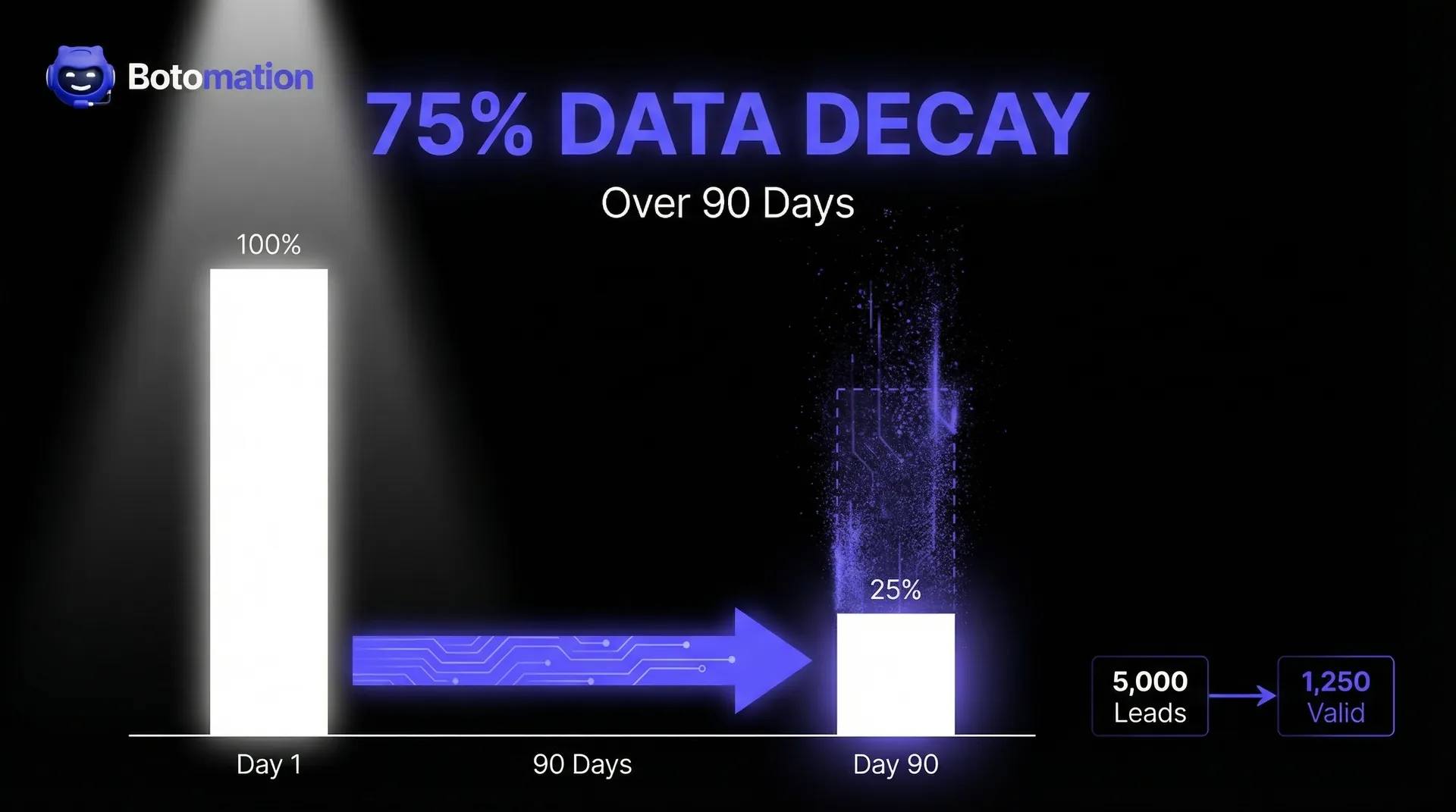
Setting up a "batch" process once a month is a recipe for failure. Real-time validation is the only way to maintain a competitive edge in 2026. When a prospect enters their information into a form, that is the moment of highest intent. If you wait three days to verify that lead, the "incumbency advantage" is lost. Real-time workflows ensure that every piece of data entering your system is scrubbed, polished, and ready for action immediately. Lead data verification at the point of entry is what separates market leaders from those struggling with high bounce rates.
We focus on technical implementation that prevents "dirty data" from ever reaching your CRM. Think of it as a filter on a water line; it’s much easier to keep the tank clean than it is to try and purify 10,000 gallons of contaminated water later. By implementing real-time checks, you protect your domain reputation and ensure your sales team remains focused on selling rather than researching.
Real-Time Validation Rules
The first line of defense is email format and domain verification. We set up rules that instantly flag "free" email addresses (like Gmail or Yahoo) if your business model requires B2B corporate domains. We also validate company information in real-time. If a lead claims to work at "Google" but their domain is "google-support-agent.com," the system should catch that immediately.
Phone number format checks are equally vital. Our workflows automatically format numbers into a standardized E.164 format, ensuring that your click-to-dial systems work perfectly every time. This small technical detail saves seconds on every call, which adds up to hours of productivity across a large team over a month.
Workflow Automation Setup
We utilize trigger-based processes to handle the heavy lifting. For instance, if a lead's status changes from "Marketing Qualified" to "Sales Accepted," a final verification trigger is fired. If the email is no longer valid, the lead is automatically moved back to a "Nurture" or "Research" bucket rather than being handed to a rep.
Conditional actions based on these results are what make the system "smart." If a phone number is flagged as a mobile line, the system might trigger an SMS-based outreach instead of a standard desk-phone call. We also build notification systems that alert the marketing team if a specific lead source starts producing a high volume of failed verifications, allowing for instant budget reallocation.
Case Study: VTT Technical Research Center
By implementing real-time automated verification workflows, VTT was able to replace manual data entry and verification tasks, reducing their workload by over 1,000 hours annually. This allowed their research and sales teams to focus on high-level partnerships rather than administrative tasks, resulting in a significantly faster pipeline velocity.
Configuring Automated Lead Scoring Systems
Verification tells you if a lead is "real," but lead scoring tells you if they are "ready." In 2026, basic scoring—like giving five points for an email click—is outdated. Partnering with Botomation allows you to implement automated lead scoring that looks at behavioral patterns across the entire web. We look for "intent signals" that suggest a company is currently in a buying cycle for your specific solution.
When your scoring system is aligned with sales team expectations, the friction between marketing and sales disappears. The sales team stops complaining about "bad leads" because every lead they receive has passed a rigorous, automated gauntlet of verification and intent-based scoring. This alignment is the "secret sauce" of high-growth agencies.
Scoring Algorithm Development
Our algorithms look at a mix of behavioral, demographic, and firmographic criteria. We might assign a higher weight to a lead who has visited your pricing page three times in the last 48 hours and also happens to work at a company that just secured Series C funding. This "contextual scoring" is far more accurate than traditional methods.
Engagement-based elements are also crucial. We track how a lead interacts with your content over time. Are they reading technical whitepapers or just high-level blog posts? The former suggests a "user" or "implementer" role, while the latter might suggest a "decision-maker" or "executive" role. Our systems distinguish between these naturally.
AI-Powered Scoring Benefits
The leap from manual scoring to AI-driven models typically results in a 30% increase in conversion rates. This is because machine learning can identify patterns that a human eye would miss. For example, the AI might notice that leads from a specific geographic region convert 50% better when they are contacted on Tuesday afternoons.
Dynamic score adjustments are another major advantage. As the market changes, your scoring model should change too. If a competitor releases a new feature, your system can automatically increase the "intent score" for prospects searching for that specific feature. This level of agility is simply impossible to maintain manually.
Establishing Data Maintenance and Update Protocols
Automation is not a "set it and forget it" project. It is a living system that requires clear protocols for maintenance. Even with the best automated lead verification and updating tools, you need a strategy for how often you "refresh" your entire database. At Botomation, we recommend a tiered approach where high-value accounts are refreshed more frequently than cold prospects.
Data maintenance also involves handling "negative signals." If a lead unsubscribes from an email, that information needs to propagate across all your systems instantly. If a company goes out of business, every lead associated with that domain should be flagged. This "hygiene" is what keeps your CRM from becoming a graveyard of dead opportunities.
Regular Maintenance Schedules
We implement monthly data hygiene routines that look for duplicates and formatting errors that might have slipped through. On a quarterly basis, we perform a comprehensive audit of the entire database to identify long-term trends in data decay. This allows us to adjust our automation rules to stay ahead of the curve.
An annual data strategy review is also essential. This is when we look at the "big picture"—are we collecting the right data points? Has our target audience shifted? By taking a step back once a year, we ensure that the automation is still serving the core business goals.
External Data Integration
The most powerful automation systems are those that pull from a variety of external sources. We monitor corporate changes, such as mergers and acquisitions, through news feeds and business registries. If a target company is acquired, the "buying committee" usually changes overnight. Our systems flag these events so your sales team can pivot their strategy immediately.
We also track social media profile updates and industry event attendance. If a key prospect speaks at a major conference, that is a high-intent signal that should be captured in your CRM. By integrating these external data points, you create a "360-degree view" of your prospects that manual research could never achieve.
Monitoring Performance and Optimization Processes
How do you know if your automation is actually working? You need a dashboard that tracks the health of your system in real-time. We don't just look at "leads generated"; we look at "automation success rates." If the system is successfully filtering out 20% of bad leads before they reach sales, that is a win that should be quantified and celebrated.
Optimization is a continuous loop. We use the data we gather to refine the verification rules and scoring algorithms. If we notice that "verified" leads from a certain source are still bouncing at a high rate, we dig into the technical reason why and adjust the filter. This relentless focus on optimization is what drives the 40% increase in lead generation efficiency we often see with our clients.
Performance Monitoring Dashboards
Our dashboards focus on three core pillars: lead quality, automation efficiency, and cost analysis. We track the "Cost per Verified Lead" to ensure that your marketing spend is being used effectively. If one channel has a high "raw lead" cost but a very low "verified lead" cost, it might actually be your most efficient channel.
We also monitor the "time-to-verify." In a world where speed-to-lead is king, every second counts. If the verification process is creating a bottleneck, we look for ways to parallel-process the checks or upgrade the API connections to reduce latency.
Step-by-Step: Optimizing Your Verification Workflow
- Identify the Leak: Look at your CRM data from the last 30 days. Which leads were marked as "Bad Data" by the sales team? Trace those back to their original source.
- Analyze the Failure: Did the email bounce, or was the job title wrong? If it was a bounce, your verification tool's "strictness" setting might need to be increased.
- Adjust the Trigger: Move the verification step earlier in the process. If it's currently happening after the SDR picks up the lead, move it to the moment the form is submitted.
- Test and Validate: Run 100 leads through the new "strict" workflow and compare the results to the previous month.
- Scale the Change: Once the new rule is proven to increase accuracy without dropping too many "good" leads, roll it out across all lead sources.
Scaling and Enhancing Your Lead Verification System
As your company grows, your automation needs to grow with it. Scaling isn't just about "more leads"; it's about "more complexity." You might need to coordinate across multiple teams, different regions, and various product lines. A system that works for a 10-person startup will break for a 500-person enterprise.
Future-proofing your system involves preparing for the shifts we expect in 2026. This includes deeper integration of "intent data" and the use of behavioral pattern recognition to predict when a lead is about to change jobs before they even update their LinkedIn profile. By staying ahead of these trends, Botomation ensures our clients are never caught off guard by changes in the digital landscape.
Scaling Strategies
When handling larger data volumes, the "cost of a mistake" grows exponentially. We implement multi-team coordination protocols to ensure that marketing, sales, and operations are all working from the same "source of truth." This prevents the common problem of "data silos" where different departments have different versions of the same lead's information.
Cross-platform integration becomes even more critical at scale. Your lead verification system needs to talk to your CRM, your email platform, your ad platforms, and your customer success software. We build "data bridges" that ensure a lead's status is consistent across every touchpoint in the customer journey.
Advanced Features and Capabilities
In 2026, we expect "Predictive Lead Scoring" to become the standard. This involves using historical data to predict the "Lifetime Value" of a lead before they have even made their first purchase. By focusing your sales team's energy on the leads with the highest predicted value, you maximize your ROI.
Behavioral pattern recognition is another area of rapid growth. Our systems are beginning to look at how groups of people within a single company interact with your brand. If five different people from the same firm all download the same case study within a week, that company is in a "buying mode," even if no single individual has reached a high enough score on their own. This "account-based" automation is the future of B2B marketing.
Frequently Asked Questions
How long does it take to see results from automated lead verification?
Most of our clients see an immediate drop in email bounce rates within the first 48 hours of implementation. However, the full impact on sales productivity and conversion rates typically becomes clear after one full sales cycle (usually 30 to 90 days), as the sales team begins to trust the data and increase their outreach velocity.
Will these tools work with my specific CRM?
Yes. Our team specializes in building custom integrations for major platforms like Salesforce, HubSpot, and Pipedrive, as well as more niche or proprietary systems. The goal is to make the automation feel like a native part of your existing workflow so your team doesn't have to learn a new piece of software.
Is automated verification 100% accurate?
No tool is 100% accurate because the B2B world moves too fast. However, moving from manual processes to an automated system typically increases data accuracy from roughly 60-70% to over 95%. The small margin of error that remains is handled through our continuous optimization and "negative signal" monitoring processes.
How does Botomation differ from just buying a software subscription?
Software is just a tool; Botomation is the expert team that builds the engine. We don't just give you an API key and wish you luck. We design the strategy, implement the technical workflows, monitor the performance, and constantly optimize the system to ensure it delivers fresh, qualified leads to your sales team every single morning. We provide the expertise that turns a "tool" into a "competitive advantage."
The transition from manual lead management to a fully automated system is the single most impactful change a B2B marketing team can make in 2026. By following these seven steps, you move away from the "Old Way" of wasted hours and frustrated sales reps and into the "New Way" of instant, verified, and actionable data. You stop searching for customers and start closing them.
The cost of waiting is measured in bounced emails, missed quotas, and burnt-out employees. Every day you spend manually cleaning a spreadsheet is a day your competitors are using automated systems to reach your best prospects first. Partnering with the experts at Botomation gives you the custom-built infrastructure needed to dominate your market through superior intelligence and execution.
Ready to automate your growth? Book a call below.
Imagine your top-performing sales representative spending four hours every Monday morning reaching out to a "fresh" list of prospects, only to realize by noon that half the emails bounced and three of the key decision-makers left their companies six months ago. This isn't just a minor annoyance; it is a systemic drain on your company's resources. When marketing teams rely on manual lead verification, they aren't just wasting time—they are actively damaging their sender reputation and demoralizing their sales force. The traditional approach to marketing lead management often involves fragmented spreadsheets, manual LinkedIn searches, and the constant fear of hitting a "no longer at company" auto-responder.
As of January 2026, the sheer volume of data moving through the B2B ecosystem makes manual upkeep impossible. Forward-thinking agencies are moving away from static lists and toward dynamic, self-healing databases. Utilizing automated lead verification and updating tools is no longer a luxury for enterprise firms; it is a foundational requirement for any growth-oriented marketing team. This transition allows your staff to stop acting as data janitors and start acting as strategists.
In this guide, Botomation presents a comprehensive seven-step framework to transition your lead management from a manual burden to an automated engine. We will cover everything from initial health audits to the implementation of automated lead scoring systems that ensure your sales team receives fresh, qualified leads every single morning.
Assessing Your Current Lead Database Health
Before you can build a high-speed automation engine, you must understand the quality of the fuel you are currently using. Most organizations are surprised to find that their internal data is far more decayed than they realized. Industry benchmarks consistently demonstrate that B2B data decays at an alarming rate. Professionals are promoted, companies merge, and email structures change without warning. If you haven't conducted a database health check in the last ninety days, you are likely working with a significant percentage of "ghost" leads.
Data Decay Reality Check
Recent industry analysis indicates that approximately 75% of B2B leads go stale within 90 days. This means that without a proactive update strategy, three-quarters of your outbound efforts could be targeting non-existent or irrelevant contacts.
The first step in our process involves a rigorous evaluation of your existing records. We look for patterns of failure. Are certain industries seeing higher bounce rates? Is there a specific lead source that consistently provides outdated phone numbers? By establishing these baseline metrics, you create a "before" snapshot that allows you to calculate the exact ROI of your lead database automation efforts later. Our experts often find that marketing teams are sitting on thousands of leads that are technically "valid" but practically useless because the job titles no longer match the current buying committee's needs.
The Database Audit Process
A thorough audit starts with a deep dive into email validity. We don't just look for "hard bounces"; we identify "catch-all" domains and "disposable" email addresses that skew your engagement metrics. Beyond the email address, we must analyze the accuracy of phone numbers. In late 2026, direct-dial accuracy is the primary difference between a booked meeting and a wasted afternoon navigating switchboards.
We also review the job titles and company information currently in your CRM. If your "VP of Marketing" lead is now a "Chief Revenue Officer" at a different firm, your automated sequence will sound tone-deaf and unprofessional. The audit identifies these gaps so we can program the automation to fill them specifically.
Performance Baseline Metrics
To measure success, you need to document your current conversion rates and email bounce rates accurately. If your current bounce rate is 8%, that is a red flag requiring immediate intervention. We also look at lead response rates. A slow response to a lead is often a symptom of a sales rep having to manually "check" if the lead is real; however, you can significantly reduce lead response time by automating the verification and outreach process.
Once we have these numbers, we can calculate the "Cost of Inaction." If your team manages 5,000 leads and 20% are invalid, you are paying for CRM seats and marketing automation licenses for 1,000 people who will never buy. These baseline metrics serve as the foundation for the business case for full automation.
Selecting the Right Automated Lead Verification and Updating Tools
The market for data tools has shifted significantly as we head into 2026. Modern AI B2B prospecting tools allow you to move away from the "Old Way" of purchasing massive, static databases and hoping for the best. The "New Way"—the Botomation way—is to use a stack of specialized, interconnected tools that communicate in real-time. Selecting the right lead verification software and updating tools requires a deep understanding of your specific sales motion. You need tools that don't just "verify" but actually "enrich" and "update" as the market shifts.
Our team evaluates these platforms based on their ability to integrate with your existing CRM. A tool that lives in a vacuum is just another tab for your team to manage. We look for solutions that offer "live" data through automated data sync—meaning they ping the mail server or check the LinkedIn API the moment a lead is moved into a specific stage of your pipeline. This ensures that the data is never more than a few seconds old when a sales rep picks up the phone.
Tool Selection Criteria
When we help clients choose their stack, we prioritize verification speed and accuracy above all else. A tool that takes 24 hours to verify a list is useless for a high-velocity sales team. We also look closely at the API capabilities. Can the tool automatically push an update to Salesforce or HubSpot when it detects a job change?
Scalability is another major factor. Your costs shouldn't explode just because your lead volume grew. We look for pricing models that reward growth rather than punishing it. Finally, we examine the source of the data. In 2026, tools that rely on "scraped" data from three years ago are being outperformed by those using real-time social signals and verified business registries.
Popular 2026 Verification Platforms
Woodpecker has recently introduced advanced LinkedIn Outreach Automation, which allows for a multi-channel approach where the verification happens across both email and social profiles simultaneously. This is a massive leap forward for teams that need to ensure they are reaching the right person on their preferred platform.
Lusha remains a powerhouse for Chrome extension-based verification, allowing your team to verify a prospect's direct dial while browsing their profile. Meanwhile, UpLead has expanded its search filters to over 50 specific criteria, including technographics—allowing you to see exactly what software your prospects are currently using before you even send the first email.
Integration Capabilities
The true power of these tools is realized through CRM sync options. We don't want your team exporting and importing CSV files like it is 2015. We set up marketing automation workflows where the verification happens "behind the scenes." For example, when a lead downloads a whitepaper, the system automatically runs a verification check before the lead even appears in the SDR's dashboard.
For enterprise clients, we often develop custom API connections. This allows for a level of precision that "off-the-shelf" integrations cannot match. By connecting your verification tool directly to your proprietary lead scoring model, you create a seamless flow of high-quality data that requires zero human intervention.
Why Automated Lead Verification and Updating Tools Require Real-Time Workflows
Setting up a "batch" process once a month is a recipe for failure. Real-time validation is the only way to maintain a competitive edge in 2026. When a prospect enters their information into a form, that is the moment of highest intent. If you wait three days to verify that lead, the "incumbency advantage" is lost. Real-time workflows ensure that every piece of data entering your system is scrubbed, polished, and ready for action immediately. Lead data verification at the point of entry is what separates market leaders from those struggling with high bounce rates.
We focus on technical implementation that prevents "dirty data" from ever reaching your CRM. Think of it as a filter on a water line; it’s much easier to keep the tank clean than it is to try and purify 10,000 gallons of contaminated water later. By implementing real-time checks, you protect your domain reputation and ensure your sales team remains focused on selling rather than researching.
Real-Time Validation Rules
The first line of defense is email format and domain verification. We set up rules that instantly flag "free" email addresses (like Gmail or Yahoo) if your business model requires B2B corporate domains. We also validate company information in real-time. If a lead claims to work at "Google" but their domain is "google-support-agent.com," the system should catch that immediately.
Phone number format checks are equally vital. Our workflows automatically format numbers into a standardized E.164 format, ensuring that your click-to-dial systems work perfectly every time. This small technical detail saves seconds on every call, which adds up to hours of productivity across a large team over a month.
Workflow Automation Setup
We utilize trigger-based processes to handle the heavy lifting. For instance, if a lead's status changes from "Marketing Qualified" to "Sales Accepted," a final verification trigger is fired. If the email is no longer valid, the lead is automatically moved back to a "Nurture" or "Research" bucket rather than being handed to a rep.
Conditional actions based on these results are what make the system "smart." If a phone number is flagged as a mobile line, the system might trigger an SMS-based outreach instead of a standard desk-phone call. We also build notification systems that alert the marketing team if a specific lead source starts producing a high volume of failed verifications, allowing for instant budget reallocation.
Case Study: VTT Technical Research Center
By implementing real-time automated verification workflows, VTT was able to replace manual data entry and verification tasks, reducing their workload by over 1,000 hours annually. This allowed their research and sales teams to focus on high-level partnerships rather than administrative tasks, resulting in a significantly faster pipeline velocity.
Configuring Automated Lead Scoring Systems
Verification tells you if a lead is "real," but lead scoring tells you if they are "ready." In 2026, basic scoring—like giving five points for an email click—is outdated. Partnering with Botomation allows you to implement automated lead scoring that looks at behavioral patterns across the entire web. We look for "intent signals" that suggest a company is currently in a buying cycle for your specific solution.
When your scoring system is aligned with sales team expectations, the friction between marketing and sales disappears. The sales team stops complaining about "bad leads" because every lead they receive has passed a rigorous, automated gauntlet of verification and intent-based scoring. This alignment is the "secret sauce" of high-growth agencies.
Scoring Algorithm Development
Our algorithms look at a mix of behavioral, demographic, and firmographic criteria. We might assign a higher weight to a lead who has visited your pricing page three times in the last 48 hours and also happens to work at a company that just secured Series C funding. This "contextual scoring" is far more accurate than traditional methods.
Engagement-based elements are also crucial. We track how a lead interacts with your content over time. Are they reading technical whitepapers or just high-level blog posts? The former suggests a "user" or "implementer" role, while the latter might suggest a "decision-maker" or "executive" role. Our systems distinguish between these naturally.
AI-Powered Scoring Benefits
The leap from manual scoring to AI-driven models typically results in a 30% increase in conversion rates. This is because machine learning can identify patterns that a human eye would miss. For example, the AI might notice that leads from a specific geographic region convert 50% better when they are contacted on Tuesday afternoons.
Dynamic score adjustments are another major advantage. As the market changes, your scoring model should change too. If a competitor releases a new feature, your system can automatically increase the "intent score" for prospects searching for that specific feature. This level of agility is simply impossible to maintain manually.
Establishing Data Maintenance and Update Protocols
Automation is not a "set it and forget it" project. It is a living system that requires clear protocols for maintenance. Even with the best automated lead verification and updating tools, you need a strategy for how often you "refresh" your entire database. At Botomation, we recommend a tiered approach where high-value accounts are refreshed more frequently than cold prospects.
Data maintenance also involves handling "negative signals." If a lead unsubscribes from an email, that information needs to propagate across all your systems instantly. If a company goes out of business, every lead associated with that domain should be flagged. This "hygiene" is what keeps your CRM from becoming a graveyard of dead opportunities.
Regular Maintenance Schedules
We implement monthly data hygiene routines that look for duplicates and formatting errors that might have slipped through. On a quarterly basis, we perform a comprehensive audit of the entire database to identify long-term trends in data decay. This allows us to adjust our automation rules to stay ahead of the curve.
An annual data strategy review is also essential. This is when we look at the "big picture"—are we collecting the right data points? Has our target audience shifted? By taking a step back once a year, we ensure that the automation is still serving the core business goals.
External Data Integration
The most powerful automation systems are those that pull from a variety of external sources. We monitor corporate changes, such as mergers and acquisitions, through news feeds and business registries. If a target company is acquired, the "buying committee" usually changes overnight. Our systems flag these events so your sales team can pivot their strategy immediately.
We also track social media profile updates and industry event attendance. If a key prospect speaks at a major conference, that is a high-intent signal that should be captured in your CRM. By integrating these external data points, you create a "360-degree view" of your prospects that manual research could never achieve.
Monitoring Performance and Optimization Processes
How do you know if your automation is actually working? You need a dashboard that tracks the health of your system in real-time. We don't just look at "leads generated"; we look at "automation success rates." If the system is successfully filtering out 20% of bad leads before they reach sales, that is a win that should be quantified and celebrated.
Optimization is a continuous loop. We use the data we gather to refine the verification rules and scoring algorithms. If we notice that "verified" leads from a certain source are still bouncing at a high rate, we dig into the technical reason why and adjust the filter. This relentless focus on optimization is what drives the 40% increase in lead generation efficiency we often see with our clients.
Performance Monitoring Dashboards
Our dashboards focus on three core pillars: lead quality, automation efficiency, and cost analysis. We track the "Cost per Verified Lead" to ensure that your marketing spend is being used effectively. If one channel has a high "raw lead" cost but a very low "verified lead" cost, it might actually be your most efficient channel.
We also monitor the "time-to-verify." In a world where speed-to-lead is king, every second counts. If the verification process is creating a bottleneck, we look for ways to parallel-process the checks or upgrade the API connections to reduce latency.
Step-by-Step: Optimizing Your Verification Workflow
- Identify the Leak: Look at your CRM data from the last 30 days. Which leads were marked as "Bad Data" by the sales team? Trace those back to their original source.
- Analyze the Failure: Did the email bounce, or was the job title wrong? If it was a bounce, your verification tool's "strictness" setting might need to be increased.
- Adjust the Trigger: Move the verification step earlier in the process. If it's currently happening after the SDR picks up the lead, move it to the moment the form is submitted.
- Test and Validate: Run 100 leads through the new "strict" workflow and compare the results to the previous month.
- Scale the Change: Once the new rule is proven to increase accuracy without dropping too many "good" leads, roll it out across all lead sources.
Scaling and Enhancing Your Lead Verification System
As your company grows, your automation needs to grow with it. Scaling isn't just about "more leads"; it's about "more complexity." You might need to coordinate across multiple teams, different regions, and various product lines. A system that works for a 10-person startup will break for a 500-person enterprise.
Future-proofing your system involves preparing for the shifts we expect in 2026. This includes deeper integration of "intent data" and the use of behavioral pattern recognition to predict when a lead is about to change jobs before they even update their LinkedIn profile. By staying ahead of these trends, Botomation ensures our clients are never caught off guard by changes in the digital landscape.
Scaling Strategies
When handling larger data volumes, the "cost of a mistake" grows exponentially. We implement multi-team coordination protocols to ensure that marketing, sales, and operations are all working from the same "source of truth." This prevents the common problem of "data silos" where different departments have different versions of the same lead's information.
Cross-platform integration becomes even more critical at scale. Your lead verification system needs to talk to your CRM, your email platform, your ad platforms, and your customer success software. We build "data bridges" that ensure a lead's status is consistent across every touchpoint in the customer journey.
Advanced Features and Capabilities
In 2026, we expect "Predictive Lead Scoring" to become the standard. This involves using historical data to predict the "Lifetime Value" of a lead before they have even made their first purchase. By focusing your sales team's energy on the leads with the highest predicted value, you maximize your ROI.
Behavioral pattern recognition is another area of rapid growth. Our systems are beginning to look at how groups of people within a single company interact with your brand. If five different people from the same firm all download the same case study within a week, that company is in a "buying mode," even if no single individual has reached a high enough score on their own. This "account-based" automation is the future of B2B marketing.
Frequently Asked Questions
How long does it take to see results from automated lead verification?
Most of our clients see an immediate drop in email bounce rates within the first 48 hours of implementation. However, the full impact on sales productivity and conversion rates typically becomes clear after one full sales cycle (usually 30 to 90 days), as the sales team begins to trust the data and increase their outreach velocity.
Will these tools work with my specific CRM?
Yes. Our team specializes in building custom integrations for major platforms like Salesforce, HubSpot, and Pipedrive, as well as more niche or proprietary systems. The goal is to make the automation feel like a native part of your existing workflow so your team doesn't have to learn a new piece of software.
Is automated verification 100% accurate?
No tool is 100% accurate because the B2B world moves too fast. However, moving from manual processes to an automated system typically increases data accuracy from roughly 60-70% to over 95%. The small margin of error that remains is handled through our continuous optimization and "negative signal" monitoring processes.
How does Botomation differ from just buying a software subscription?
Software is just a tool; Botomation is the expert team that builds the engine. We don't just give you an API key and wish you luck. We design the strategy, implement the technical workflows, monitor the performance, and constantly optimize the system to ensure it delivers fresh, qualified leads to your sales team every single morning. We provide the expertise that turns a "tool" into a "competitive advantage."
The transition from manual lead management to a fully automated system is the single most impactful change a B2B marketing team can make in 2026. By following these seven steps, you move away from the "Old Way" of wasted hours and frustrated sales reps and into the "New Way" of instant, verified, and actionable data. You stop searching for customers and start closing them.
The cost of waiting is measured in bounced emails, missed quotas, and burnt-out employees. Every day you spend manually cleaning a spreadsheet is a day your competitors are using automated systems to reach your best prospects first. Partnering with the experts at Botomation gives you the custom-built infrastructure needed to dominate your market through superior intelligence and execution.
Ready to automate your growth? Book a call below.
Get Started
Book a FREE Consultation Right NOW!
Schedule a Call with Our Team To Make Your Business More Efficient with AI Instantly.
Read More
7 Steps to Automate Lead Verification and Updating Tools
Scale B2B growth with automated lead verification and updating tools. Enhance CRM data, reduce bounces, and optimize lead scoring with Botomation.
Best Tools for Competitor Analysis and Market Trends 2026
Learn how WhatsApp AI slashes support costs for e-commerce & SaaS. Proven strategies to boost sales, recover carts, and scale 24/7 service.